
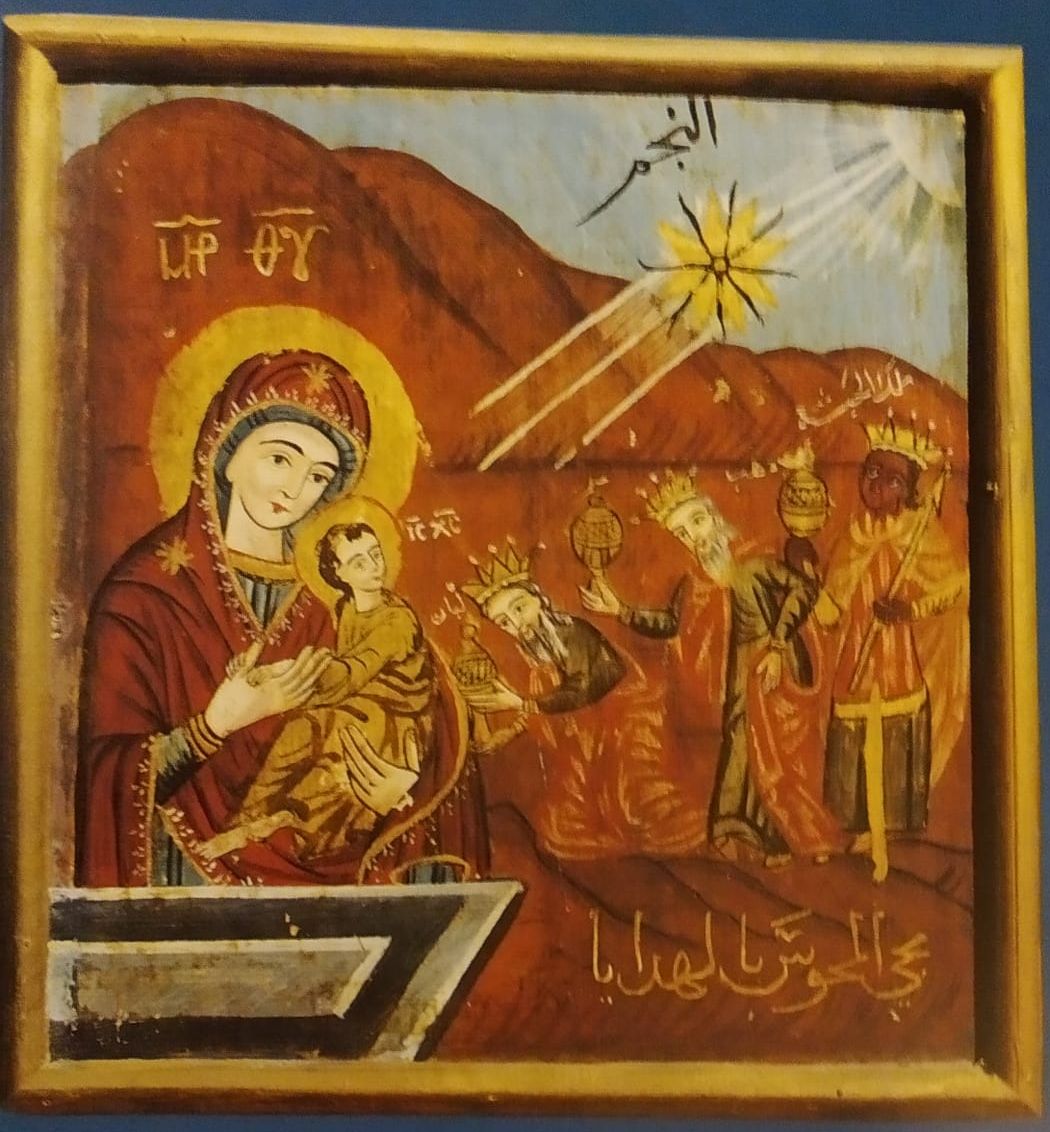
Die verschiedenen Kalender lassen viele Festtage entstehen, für die orthodoxe Welt ist erst heute/morgen Christgeburt. Hier ein Ikone aus Alt-Kairo, die Ibrahim el-Nasekh, einem Ägypter und Yuhanna, einem Armenier, zugeschrieben werden
Die verschiedenen Kalender lassen viele Festtage entstehen, für die orthodoxe Welt ist erst heute/morgen Christgeburt. Hier ein Ikone aus Alt-Kairo, die Ibrahim el-Nasekh, einem Ägypter und Yuhanna, einem Armenier, zugeschrieben werden
Middle Class Feelings, Urban Identity and Politics, 1880s-1920s
Öffentlich-online zugänglicher Vortrag des Leibniz-Zentrum Moderner Orient (ZMO) Berlin
Lecture by Dario Miccoli (Ca’ Foscari University of Venice)
as part of The Historicity of Democracy Seminar.
Based on a ‘close reading’ of documents from the archives of the Alliance Israélite Universelle (Paris), the Central Archives for the History of the Jewish People (Jerusalem) and from articles found in newspapers published in Egypt in the colonial and early monarchic years, this lecture will look at the consolidation of a middle class Alexandrian Jewish identity and its relation to urban politics and sociability in the period that goes from the early 1880s to the mid-1920s. The lecture will discuss the multiple connections that Alexandrian Jews had with the city in which they lived and its socio-political environment, as well as the ways in which its burgeoning Jewish middle class tried to find a place of its own for example by founding schools, hospitals and cultural associations
The online seminar is free and open to the public upon registration:
https://forms.gle/A8AJDvdaQyUiG5qD8
Das Institut für Sicherheitsstudien Israels (INSS – The Institute for National Security Studies) in Tel Aviv hat eine Studie veröffentlicht zu Sicherheitsfragen in der Bevölkerung Israels. Bei einer Umfrage (800 Befragte) sollten Sicherheitsgefühle und Perzeptionen bewertet werden, mit teils überraschenden Ergebnissen.
“The National Security Index: The Cognitive Campaign in the Digital Age” von Zipi Israeli und Ruth Pines, Dezember 2021
„The specific issue of the cognitive campaign in the digital age arose in connection with the events of May 2020, especially during Operation Guardian of the Walls, but it is a larger issue of increasing importance, given the nature of Israel’s military conflicts today. This issue combines various elements, including the perception of victory in a military conflict, the changing theaters in military conflicts, and the increasing relative importance of the cognitive, media, and social media arenas. Has the perception of victory become solely cognitive? Does victory belong to those who have declared it? Is it possible to talk about victory without relating to the cognitive element? Feelings and perceptions regarding these aspects play a central role in shaping the Israeli reality. This article discusses these perceptions from the perspective of the Israeli public, based on findings from a public opinion study conducted by the Institute for National Security Studies (INSS) in October 2021. The study was carried out among a representative sample of the adult population of Israel (age 18 and up) and included some 800 participants. Its main findings are presented here.“
Mitten in der Omikron-Welle lockert Israel seine Einreisebeschränkungen. Ab 9. Januar dürfen gegen das Coronavirus geimpfte Touristen wieder einreisen. Allerdings gilt eine Einschränkung.
Deutschland |
Israel |
Palästina |
zusammen denken
und zusammendenken
diAk e.V.
Licht aus Licht
Ein Begleiter durch das Jahr 2022 – Photos von Andreas Schröder
Mit einem Text von Hafis:
I have come into this world so see this:
the sword drop from men’s hand even at the height of their arc of anger

israel & palästina – Zeitschrift für Dialog | Ausgabe 4-2021


Am Jahresende doch noch einmal einen Blick auf die Arbeit von Standing Together, eine Arbeit, die ermutigt und Perspektiven zeigt … und die so ein guter Ausklang dieses Jahres sein soll!

Hallo,
My name is Suleiman al-Tihi. I am a student at Sapir College and live in Rahat in the Negev. I am also a newly elected member of the leadership of Standing Together. For the past two weeks, the far-right organization Im Tirtzu has waged a racist campaign against me while I was running for my college’s student union because they did not like the fact that I am an Arab and a national leader in the largest Jewish-Arab grassroots movement in Israel. So I suddenly woke up to an „investigation“ about me on TV, initiated by Im Tirtzu and aided by the far-right Channel 14 News. They dug into my Facebook profile and took posts I wrote at age 13(!) out of context in order to portray me as a „terrorist supporter,“ demanding that I be disqualified from the election and even that the college administration expel me from my studies. But it didn’t work. In the election, I came in 2nd place overall and was elected to the union! The student body at Sapir College proved that Jewish-Arab partnership can overcome racism and incitement.
The students at Sapir College — Jews and Arabs — rejected the attempt to create a divide on campus. The tremendous support I received, and still receive, moved me greatly. Im Tirtzu’s campaign failed because they are not really present on campus, which teaches us how important it is to invest in people and to be connected on the ground across the country.
I invite you to support our movement so that we can be strong on different campuses and in different cities, in the periphery and in the center, and invest in change that grows from the ground up. Each donation will support the movement’s ability to train and accompany activists like myself.
With Appreciation,
Suleiman Al-Tihi | National Leader

****
Standing Together P.S. Sapir College, where Suleiman attends, is one of the tens of campuses and places where we are yet to have siginificant organizing efforts. We cannot overstate the frustration we feel when our activist groups in Lod, in Umm al-Fahm, in Sapir and Oranim college, and in Bnei Brak reach out to us for support, and we don’t have the resources to give them the attention they deserve. Standing Together is growing, and providing a political home for thousands of Palestinians and Jews. But with that growth, we need to develop our organizing capacity.
Our ability to mobilize during polarizing times and make an impact is exactly because we organize, all year round, around our shared interests. At the peak of the violence this past May, we were able to mobilize and make an impact because of your support. And now we need you to help us organize, by funding two additional community organizers to our team that will be able to connect with our base, in the Triangle area and on campuses, to recruit, train, engage, and build new leadership.
You can help us build hope
Mailing address: info@standing-together.org
Widerstand gegen Rechtsextremismus
Die Friedrich Ebert Stiftung hat Empfehlungen zusammengestellt für die besten Graphic Novels zum Thema Rechtsextremismus und Radikalisierung. Der Autor Dr. Thomas Greven ist ein Kenner des Genres und hat – ganz subjektiv und nicht abschließend – seine TOP 5 ausgewählt und weitere 10 Empfehlungen gegeben.
Hier geht es zum direkten Download: http://library.fes.de/pdf-files/pbud/18709.pdf
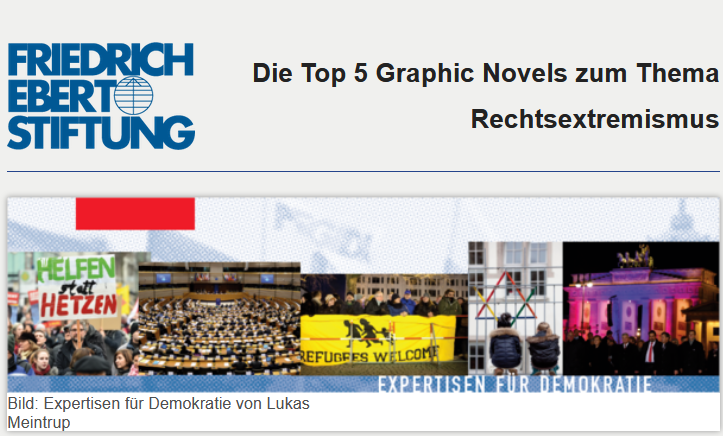
Und hier finden sich alle weiteren Expertisen für Demokratie und Impulse gegen Rechtsextremismus der FES aus den vergangenen Jahren.
Libanon: Maronitische Liga legt Einspruch gegen Zugang von palästinensischen Flüchtlingen zum Arbeitsmarkt ein
Aus einer Meldung der Agentur Fides, die hier einen Mosaikstein der komplexen Lage im Libanon beleuchtet:
Die maronitische Liga hat beim libanesischen Staatsrat Einspruch gegen das jüngste Dekret des libanesischen Arbeitsministers Mustafa Byram eingelegt, das palästinensischen Flüchtlingen im Libanon den Zugang zum Arbeitsmarkt in Sektoren eröffnet, die bisher libanesischen Bürger:innen vorbehalten waren.
Wie Nehmetallah Abi Nasr, der derzeitige Vorsitzende der Liga, berichtete, wurde eine entsprechende Beschwerde am Dienstag, den 28. Dezember 2021, beim Staatsrat eingereicht. Der Ministerialerlaß stehe im Widerspruch „zu den institutionellen und politischen Grundlagen der libanesischen Nation“. Die maronitische Lige, fügte Abi Nasr hinzu, „sah sich desahlb veranlaßt, gegen den Ministerialerlaß vorzugehen, weil sie aus ihren eigenen Gründungsgründen dazu aufgerufen ist, sich allen Operationen und Manipulationen zu widersetzen, die darauf abzielen, das moderne und historische Profil des Libanon zu verändern und zu versuchen, einen neuen demographischen Status quo zu erzwingen“.
Das von der Liga angefochtene Dekret wurde am vergangenen 25. November vom schiitischen Minister Mustafa Bayram erlassen. Mit dem Ministerialerlaß wurden die Beschränkungen für den Zugang palästinensischer Flüchtlinge zu bestimmten Berufen aufgehoben, insbesondere zu Berufen, die eine Pflichtmitgliedschaft in einer Gewerkschaft oder einem Berufsverband voraussetzen (u.a. Ärzte und Rechtsanwälte) und die bisher libanesischen Bürgern vorbehalten waren.
Im Libanon leben rund 190.000 palästinensische Flüchtlinge, von denen die meisten immer noch in den Flüchtlingslagern leben, die nach der Gründung des Staates Israel eingerichtet wurden, um die palästinensisch-arabische Bevölkerung dort unterzubringen, die aus den Städten und Dörfern floh, die von der israelischen Armee während der verschiedenen Konflikte in den ersten Jahrzehnten des jüdischen Staates erobert wurden.
Die maronitische Liga wurde in den 1970er Jahren als Organisation zur Förderung der maronitischen Identität und Präsenz im Libanon und in der Welt gegründete. Ziel der Organisation ist es, die Verbindungen zwischen den in der ganzen Welt verstreuten maronitischen Christ:innen zu unterstützen und wiederzubeleben und die Souveränität und Unabhängigkeit des Libanon in einem demokratischen und pluralistischen Kontext zu schützen.
Der Erlaß von Minister Byram zur Ausweitung des Arbeitsmarktes für palästinensische Flüchtlinge hatte auch unter libanesischen Politikern heftige Reaktionen hervorgerufen, die in einigen Fällen von fremdenfeindlichen Argumenten und Tönen geprägt waren.
Libanesische Analysten warnen unterdessen im Gespräch mit Fides vor Interpretationen, die dazu neigen, selbst dar rechtliche Vorgehen der maronitischen Liga als Ausdruck einer Reaktion zu betrachten, die von Ressentiments gegenüber Flüchtlingen geprägt ist. Alles, was sich in dem verzerrten Szenario der gegenwärtigen Situation im Libanon abspiele – so die lokale Analysten vor -, müsse objektiv und realistisch betrachtet werden, wobei die Prozesse und Konflikte zu berücksichtigen seien, die seit Jahrzehnten die Ängste der Völker des Nahen Ostens schüren.
Hinter der Debatte um die neuen Regeln für den Zugang der Palästinenser zum libanesischen Arbeitsmarkt steht die ungelöste Frage nach dem endgültigen Status der Flüchtlinge, die im Libanon Zuflucht gefunden haben, nachdem sie ihre Heimat in Palästina verlassen mußten. Der Libanon ist in den letzten Jahren im Zuge des Syrienkonflikts erneut zu einem Zufluchtsort für große Flüchtlingsströme geworden. Vor dem Hintergrund einer verschärften Wirtschaftskrise erhitzt das ungelöste Flüchtlingsproblem die Gemüter, was das fragile demographische Gleichgewicht zwischen den verschiedenen ethnischen und religiösen Zugehörigkeiten, auf dem die Identität des Libanon beruht, zusätzlich gefährdet.
Die Aufnahme von Flüchtlingen und Vertriebenen, die aus Kriegsgebieten fliehen, sollte nach Ansicht der Analysten deshalb unter Wahrung des nationalen Gefüges erfolgen.
Unterdessen haben die im Libanon tätigen internationalen Hilfsorganisationen die für die Unterstützung der palästinensischen Flüchtlinge bereitgestellten Mittel fast vollständig gestrichen, während sie für die syrischen Flüchtlinge Pro-Kopf-Hilfen vorsehen, die inzwischen höher sind als das monatliche Einkommen des größten Teils der libanesischen Bevölkerung. Vor dem Hintergrund dieser problematischen Ungleichgewichte und latenter Konflikte, wird die Aussicht auf die „Nationalisierung“ der vielen syrischen und palästinensischen Flüchtlinge und die Stabilisierung ihrer Präsenz im Libanon von vielen als eine objektive Störung der Identität des Libanon betrachtet.
Aus dem heutigen Mailing von standing together – was sonst bleibt: Zusammen stehen!

Mailing address is: info@standing-together.org
While this past year has proved just how vital our movement is, it also showed us how critical the support of people like you is. As a grassroots movement, nearly half of our funding comes from membership fees and private donations. Standing Together was a pillar of hope through some of the darkest moments we’ve experienced as a society for decades. And you have been our pillar of support. So, before the year ends, I wanted to thank you, and ask for your support. Will you help us build hope as we enter 2022 by contributing to our end-of-year fundraiser?
In May, a dramatic escalation of violence engulfed Israel-Palestine. Triggered by the government and settlers’ attempts to displace Palestinians in Sheikh Jarrah, the resulting flare-up between Israel and Hamas sent Israelis running to bomb shelters while their neighbors in Gaza had nowhere to run. But in these darkest of moments, Standing Together mobilized thousands upon thousands of Jews and Palestinians across the streets of Israel to stand against the violence, against the occupation, and for a just peace in which everyone can live free of discrimination and free of fear.
Meanwhile, coronavirus has continued to exacerbate the gaps within society, hitting the most vulnerable populations the hardest. Many of us can barely pay our bills at the end of the month, let alone have any savings left over at the end of the year. We know that things don’t have to be this way, so we launched a campaign to raise the minimum wage to 40 NIS/hour. Slowly but surely, we’re gaining the support of more Members of Knesset and a wide cross-section of the Israeli public.
All the while, our government continues to ignore the potentially catastrophic consequences of the climate crisis — some of which are already with us. Instead of divesting from the fossil fuel companies responsible for the vast majority of global warming and pollution, the government continues to pretend that this is a crisis we can deal with later. The climate crisis demands immediate action, so we’re leading the call for our government to adopt a Green New Deal that would fundamentally restructure our economy so that it serves the people and not just profit.
Our ability to mobilize during polarizing times is exactly because we organize, all-year-round, around our shared interests, building a political home where we can all imagine a society where every one of us is equal and free.
We know that we can live in a society that is good for all of us. An equal and just society that treats every person with dignity, and has a place for everyone. A society that chooses a life of peace, justice, and independence for Israelis and Palestinians, Jews and Arabs. A society in which we can all enjoy real security: with adequate housing, quality education, good healthcare, a decent salary, and the ability to age with dignity.
To see out the year, Standing Together is launching a crowdfunding campaign that will enable us to continue and expand our work into 2022. As grassroots, democratic movement, it is vital that 50% of our annual budget comes from membership fees and private donations — and this is where you come in.
This fundraiser is an opportunity for you to have a real impact on our work in 2022, and to be our partner in bringing about the radical change to Israeli society that we seek. So, will you help us build hope?
Help Us Build Hope – With gratitude and solidarity,
Sally Abed סאלי עבד سالي عبد National Leader – Resource Development Coordinator Standing Together
Israel ■ Palästina ■ Deutschland — zusammen denken
