

Aus dem Mailing von Standing Together zum 7. Oktober …
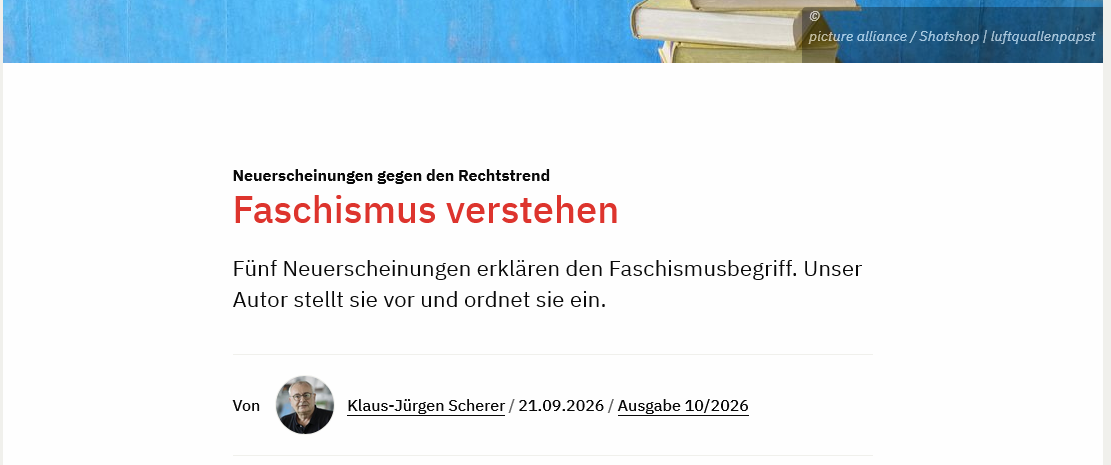
Fünf Neuerscheinungen erklären den Faschismusbegriff. Klaus-Jürgen Scherer stellt sie in der neuen Ausgabe 10/26 der Neue Gesellschaft/Frankfurter Hefte (NG/FH) vor und ordnet sie ein.
Israelis für Frieden: Sukkot ist ein Fest der Gastfreundschaft und offenen Türen.
***Montag, 28. September · Mariannenplatz · 16:00–20:00 Uhr***
Nach einem Wahlkampf, der Antisemitismus zynisch als politisches Instrument eingesetzt hat, bauen wir eine Sukka, um dagegen zu protestieren.
Wir sagen deutlich: Jüdische Sicherheit entsteht durch Solidarität, nicht durch Spaltung.
Wir laden euch herzlich ein, mit uns in unserer Sukka Platz zu nehmen! Wir werden gemeinsam dekorieren, essen, trinken und über das Berlin sprechen, in dem wir gemeinsam leben möchten.

Eine wichtige Ergänzung zum gestrigen Beitrag der Jüdinnen und Juden, die sich der Kampagne gegen die Partei Die Linke widersetzen: Dinah Riese, Ressortleiterin Inland der taz, die in ihrem Beitrag in der taz ein solidarisches und wichtiges „aber“ formuliert, das uns nicht unberührt bleiben lassen darf.
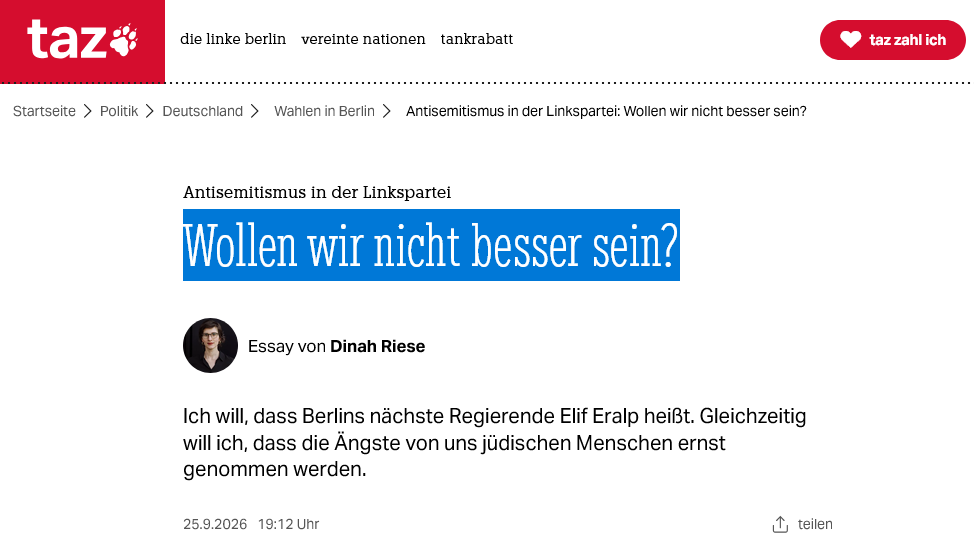
»Wir sind Berliner Jüdinnen und Juden und kommen aus unterschiedlichen Milieus; wir beten in unterschiedlichen Synagogen oder gar nicht; wir wählen unterschiedliche Parteien – und wir schreiben diesen Brief, weil wir in den vergangenen Wochen immer wieder dieselbe Behauptung gehört haben: Die Linke sei gefährlich für Juden, eine Koalition unter ihrer Beteiligung ein Sicherheitsrisiko für unsere Gemeinden. Wir widersprechen dieser Darstellung – nicht, weil wir die Sorgen kleinreden, sondern weil wir sie ernster nehmen, als es plakative Warnungen tun.«
…
»In einer Zeit, in der eine teilweise offen faschistische Partei quer durch Deutschland auf dem Weg zur Macht ist, entziehen sich die großen Publikumsmedien und (wichtige) Teile unserer eigenen jüdischen Gemeinschaft ihrer Verantwortung, wenn sie weiterhin so tun, als würde die Linke die größte Gefahr für jüdische Sicherheit darstellen«
Aus dem DLF Podcast Lesart
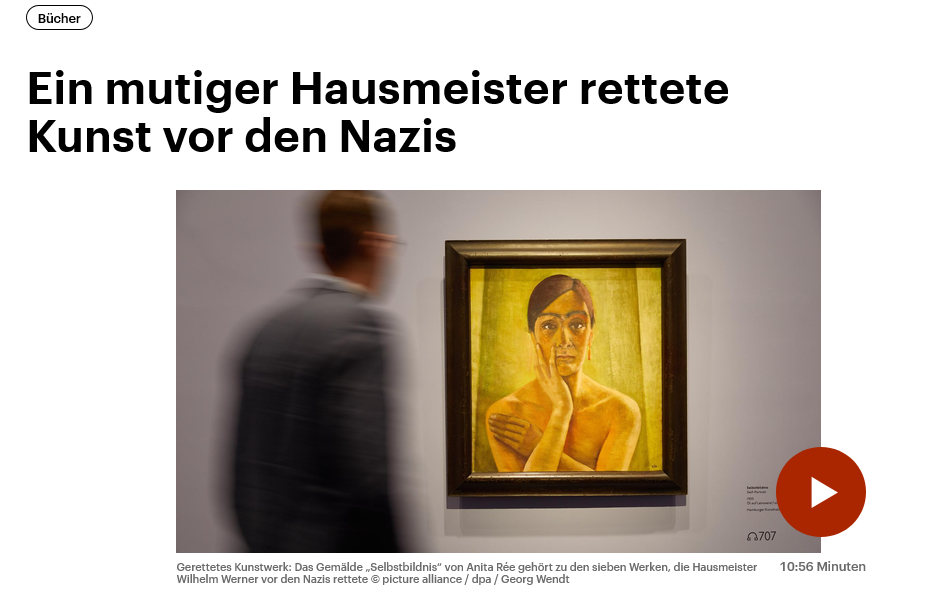
Als die Nazis Bilder aus der Hamburger Kunsthalle entfernen, trifft Hausmeister Wilhelm Werner eine Entscheidung. Er versteckt Bilder der jüdischen Malerin Anita Rée. Ein Comic erzählt die Geschichte und stellt dabei eine noch heute aktuelle Frage.
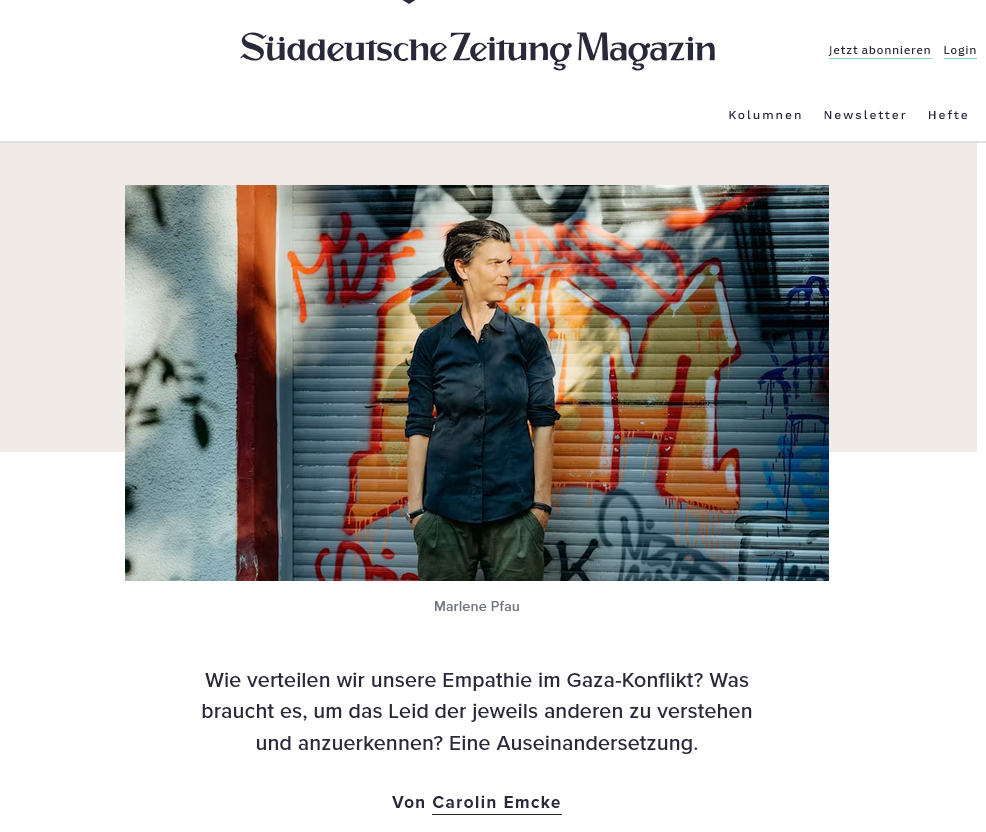
(Leider hinter der Bezahlschranke) … aber sehr lesenswert: Carolin Emcke fragt danach, wie wir unsere Empathie im Gaza-Konflikt? Was braucht es, um das Leid des jeweils anderen zu verstehen und anzuerkennen.
Am 23. September erscheint bei S. Fischer ihr Buch: Was zählt ein Mensch? (978-3-10-397698-4 / 24,00 €), der SZ-Magazin-Beitrag ist Collage und VOrabdruck daraus.
(Für private Kopien Mail an den diAk)
**
Antisemitismus entgegentreten: Transformation statt Repression // Deutsche Fassung hier
ONLINE-Informationsveranstaltung, Donnerstag, 27. August 2026 – 18:00 Uhr (Online)
Teilnahme kostenlos – Anmeldung über Link: https://lnkd.in/eyibqgim

ELSC Senior Legal Officer, Rechtsanwältin Nadija Samour, sowie die ELSC Partner-Rechtsanwältinnen Leonora Arslani und Yolanda Scheytt, führen seit Jahren erfolgreich Verfahren gegen die Kriminalisierung der Äußerung von „Palestine will be free, from the river to the sea“ – in dieser Informationsveranstaltung werden sie Einblicke in ihre Prozeßführung geben und dabei insbesondere auch auf wissenschaftliche Gutachten und deren richterliche Behandlung und Bewertung eingehen.
Die Informationsveranstaltung richtet sich nicht nur an ein juristisches Fachpublikum, sondern wird juristische Vorgänge für ein breites Publikum veranschaulichen. Die Veranstaltung findet in deutscher Sprache statt.

Am 10. Mai 1934, dem ersten Jahrestag der NS-Bücherverbrennungen, wurde im Haus Nr. 65 am Boulevard Arago im 13. Pariser Arrondissement die Deutsche Freiheitsbibliothek eingeweiht. Sie sammelte Bücher, die in Deutschland verboten und vernichtet worden waren. Gegründet wurde sie von Exilierten aus Deutschland mit Unterstützung französischer Intellektueller.
Mittels deutscher und französischer Quellen erzählt die Germanistin Ute Lemke die Geschichte dieser besonderen Bibliothek: Von wem wurde sie initiiert und finanziert? Wann und warum musste sie schließen? Und was geschah mit den Büchern während des Zweiten Weltkrieges und danach?
