Kategorie: Vereinte Nationen
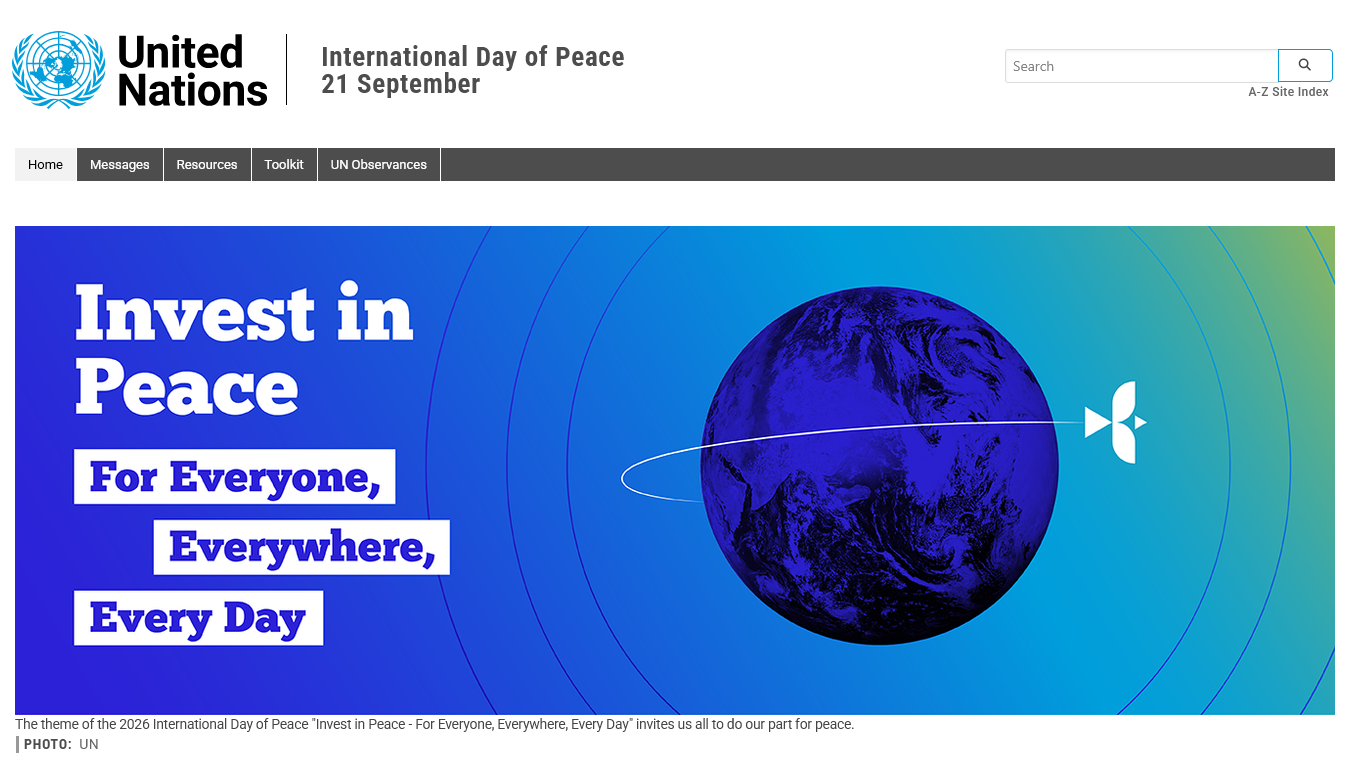
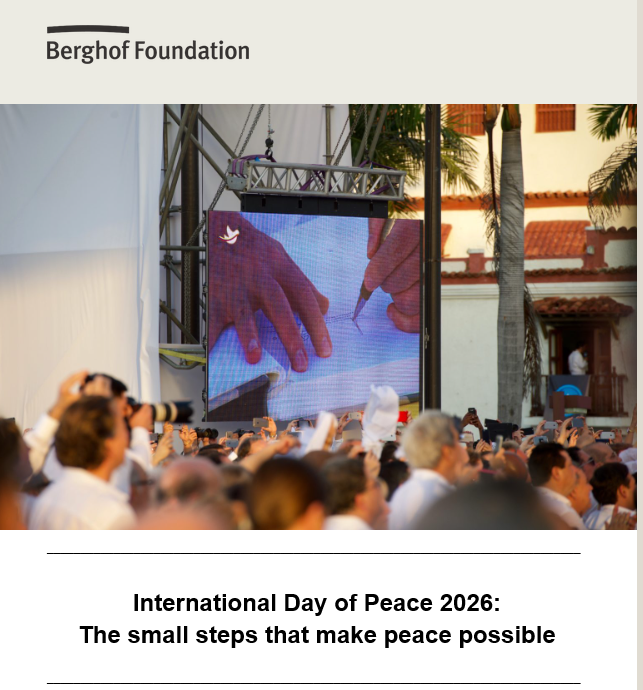
International Day of Peace 2026
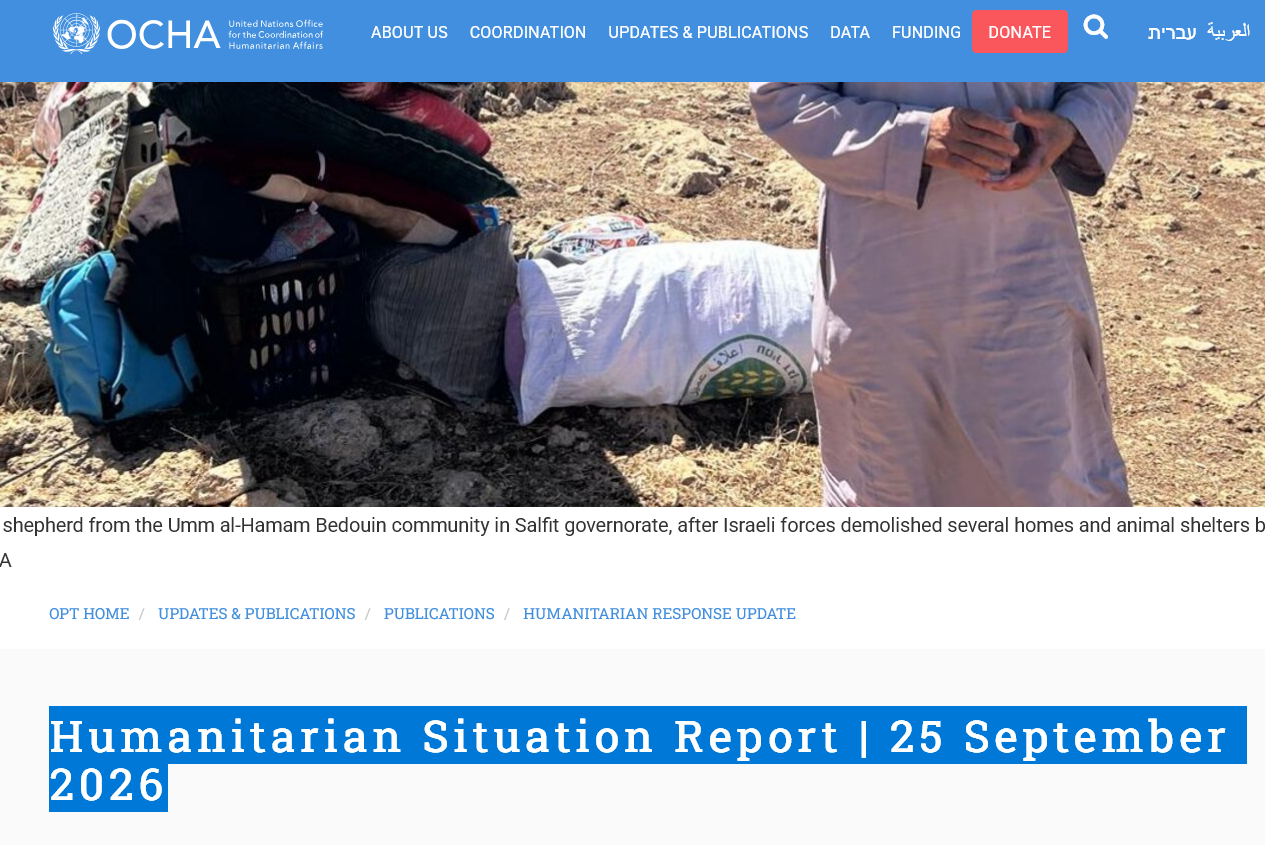
OCHA – Monatsbericht für August 2026
West Bank Monthly Snapshot – Casualties, Property Damage and Displacement | August 2026
Ruf nach Einhaltung von Völkerrecht in Palästinensergebieten
Dutzende frühere französische und britische Diplomat:innen haben ihre Regierungen dazu aufgerufen, in den Palästinensergebieten das Völkerrecht zu verteidigen. Das Engagement Frankreichs und Großbritanniens sei angesichts der historischen Rolle der beiden Länder im Nahen Osten und ihres Status als ständige Mitglieder im VN-Sicherheitsrat unverzichtbar, erklärten die 102 Unterzeichner.
Hier der englische Text, die französische Fassung erschien in der Zeitung Le Monde (Bericht in Haaretz und ORF)
Rt Hon Andy Burnham MP
Prime Minister of the United Kingdom,
10 Downing Street
Saturday 22 August 2026
Dear Prime Minister,
Upholding international law: France and the UK should act together on Palestine. The United Kingdom and France share values and an international outlook. As permanent members of the Security Council of the United Nations, with a commitment to uphold international law, our two nations believe that those responsible for war crimes and crimes against humanity must be held to account. Only then can our governments rebut the accusation of double standards.
Our countries played a decisive role in the shaping of the Middle East. They should make common cause over the region’s fundamental faultline: equal rights for Israelis and Palestinians. Peace stems from equality.
In 2025, France and the UK recognised the State of Palestine. This overdue step needs to be made real by urgent action to safeguard the Palestinian right to self-determination, as the Israeli Government seeks to destroy any prospect of an independent Palestinian state, showing contempt for the law, the rulings of the International Court of Justice and countless UNSCResolutions.
Our governments care about the security of the Israeli people, just as they are appalled by the suffering of the Palestinian people under occupation. Hamas committed heinous crimes on 7 October 2023, but nothing justifies Israel’s systematic policy of destruction of Gaza and its population. Mr Netanyahu’s assertion that Israel must live by the sword is morally wrong and counterproductive. It imperils Israel’s security and leaves no room for negotiation. As a result, the world no longer sees Israel as a genuine democracy – there is nothing democratic about depriving others of their rights and land.
In Gaza, two million Palestinians are kettled into 30% of their devastated land, hungry, lacking medicine and housing. Over 1,200 Palestinians have been killed since the so-called ‚ceasefire‘. In East Jerusalem and the rest of the West Bank, Palestinian house demolitions and rampant settler violence – with the connivance of the Israeli army and police – amount to ethnic cleansing. Palestine is being erased before our eyes. This policy of occupation and destruction extends to Lebanon – where many villages have been razed – and Syria. It is a stain on the conscience of humanity, requiring the UK and France to act.
Palestinians have to ensure that the state recognised by over two thirds of the world is democratic and law-abiding, despite the occupation. Gaza and the West Bank need to be reunited politically, administratively and economically. Palestine’s political leadership is unrepresentative and dysfunctional. The elections in November must lead to democratic renewal.
While our two Governments can do much to help Palestine to be a fully functioning democratic nation, our focus needs to be on Israel’s determination to prevent that outcome.
We make these policy recommendations for joint action:Uphold the decisions of the International Court of Justice and the International Criminal Court
Suspend the EU Israel Association Agreement and the UK/Israel Trade and Partnership Agreement for breach of human rights provisions
Suspend arms transfers to and from Israel and all bilateral military cooperation
Insist on unrestricted aid access to Gaza, led by UNRWA, other UN agencies and international NGOs, with consequences for non-compliance; access too for journalists, diplomats and Parliamentarians
Ban all trade with settlements, including goods, investment, insurance and other financial services
Warn potential bidders for the ‚red line‘ E1 settlement (east of Jerusalem) or other settlement financing/construction that their interests in and with our countries will suffer
Make it an offence for our citizens to buy property on stolen Palestinian land and remove charitable status from ‚charities‘ funding settlements.
These actions, imposing penalties for law-breaking, safeguard the rule of law and show that there is an alternative to violence: equal rights, justice and mutual security with international guarantees. Whatever comes of elections in Israel and Palestine, the asymmetry of power between them imposes a duty on us to uphold the rule of law.
France and the UK should give a lead to the like-minded in Europe, the Middle East, the Global South, la Francophonie and the Commonwealth. These proposals reflect our shared values – international law and equal rights – which are in our interest. Where there is no law, none of us is safe.
A copy of this letter goes to Ed Miliband, Foreign, Commonwealth and Development Secretary.
British signatories
Sir Vincent Fean, former Consul-General, Jerusalem
Sir Jeremy Greenstock, former Ambassador to the UN
Sir William Patey, former Ambassador to Afghanistan
Ann Grant, former High Commissioner to South Africa
Sir Emyr Jones Parry, former Ambassador to the UN
Sir Tony Brenton, former Ambassador to Russia
Sir David Blatherwick, former Ambassador to Egypt
John Buck, former Ambassador to Portugal
Sir Colin Budd, former Ambassador to the Netherlands
Anthony Cary, former High Commissioner to Canada
John Casson, former Ambassador to Egypt
Edward Chaplin, former Ambassador to Italy
Alan Charlton, former Ambassador to Brazil
Sir Dominick Chilcott, former Ambassador to Turkey
Sir Edward Clay, former High Commissioner to Kenya
Peter Collecott, former Ambassador to Brazil
Sir Richard Dalton, former Ambassador to Iran
Alan Goulty, former Ambassador to Tunisia
Sir Richard Gozney, former Ambassador to Indonesia
Frances Guy, former Ambassador to Lebanon
Sir James Hodge, former Ambassador to Thailand
Henry Hogger, former Ambassador to Syria
Michael Hone, former Ambassador to Iceland
Nicholas Hopton, former Ambassador to Iran
Rupert Joy, former EU Ambassador to Morocco
Peter Jenkins, former Ambassador to the UN (Vienna)
Robin Kealy, former Ambassador to Tunisia
Stuart Laing, former Ambassador to Kuwait
Robin Lamb, former Ambassador to Bahrain
Anthony Layden, former Ambassador to Libya
Richard Lyne, former High Commissioner to the Solomon Islands
Sir David Madden, former Ambassador to Greece
Richard Makepeace, former Ambassador to the UAE
Mark Matthews, former Ambassador to Chad
Boyd McCleary, former High Commissioner to Malaysia
Peter Millett, former Ambassador to Jordan
Colin Munro, former Ambassador to Croatia
Patrick Nixon, former Ambassador to the UAE
Richard Northern, former Ambassador to Libya
Sir Kieran Prendergast, former Ambassador to Turkey
Thom Reilly, former Ambassador to Morocco
Sir David Richmond, former Director General, FCO
Christopher Segar, former Ambassador to Iraq
Sir John Shepherd, former Ambassador to Italy
Adrian Sindall, former Ambassador to Syria
Duncan Taylor, former Ambassador to Mexico
Richard Thomas, former Ambassador to Bulgaria
Sir Harold Walker, former Ambassador to Iraq
David Warren, former Ambassador to Japan
James Watt, former Ambassador to Egypt
French signatories
Charles-Henri d’Aragon, former Ambassador to Saudi Arabia
Bruno Aubert, former Ambassador to Iraq
Yves Aubin de la Messuzière, former Ambassador and Director, Middle East and North Africa
Bernard Bajolet, former Ambassador to Jordan
Frederic Balcine du Laurens, former Ambassador to Argentina
Richard Barbeyron, former Ambassador to Surinam
Marc Barety, former Ambassador to Egypt
Denis Bauchard, former Ambassador and Director, Middle East and North Africa
Malika Berak, former Ambassador to Oman
Patrice Bergamini, former European Union Ambassador
Alain du Boispean, former Ambassador to Malaysia
Gilles Bonnaud, former Ambassador to Qatar
Christian Connan, former Ambassador to Mali
Gerard Cros, former Ambassador to Mozambique
Brigitte Curmi, former Ambassador to Syria
Serge Degallaix, former Ambassador to Tunisia
Frederic Desagneaux, former Consul-General, Jerusalem
Jean Michel Despax, former Ambassador to Jamaica
Martine Dorance, former Ambassador to Malaysia
Yves Doutriaux, former Ambassador to the OSCE
Pierre Duquesne, former Ambassador to the OECD
Jean Felix-Paganon, former Ambassador and Director, Middle East and North Africa
Michel Foucher, former Ambassador to Lithuania
Jean-Michel Gaussot, former Ambassador to the Netherlands
François Gauthier, former Ambassador to Uzbekistan
Gilles Gauthier, former Ambassador to Yemen
Stephane Gompertz, former Ambassador to Austria
Henri Jacolin, former Ambassador to Bosnia
Daniel Jouanneau, former Ambassador to Lebanon
Christian Jouret, former European Union Ambassador
Gabriel Keller, former Ambassador to Yugoslavia
Regis Koetschet, former Consul-General, Jerusalem
Jean-Loup Kuhn-Delforge, former Ambassador to Greece
Stanislas de Laboulaye, former Consul-General, Jerusalem
François Laumonier, former Ambassador to Lithuania
Eric Lavertu, former Ambassador to Sri Lanka
Patrick Leclercq, former Ambassador and Director, Middle East and North Africa
Daniel Lequertier, former Ambassador to Portugal
Jean Mendelson, former Ambassador to Cuba
Jean Musitelli, former Ambassador to UNESCO
Patrick Nicoloso, former Ambassador to Mauritania
Nicolas Normand, former Ambassador to Senegal
Patrice Paoli, former Ambassador and Director, Middle East and North Africa
Andre Parant, former Ambassador to Lebanon
Michel Prom, former Ambassador to Surinam
Alain Remy, former Consul-General, Jerusalem
Dominique Renaux, former Ambassador to Gabon
Christine Robichon, former Ambassador to Sudan
François Senemaud, former Ambassador to Iran
Christian Testot, former Ambassador to Bahrain
Jean-Paul Veziant, former Ambassador to Ukraine
Thierry Viteau, former Ambassador to Thailand
Zum Thema UNRWA
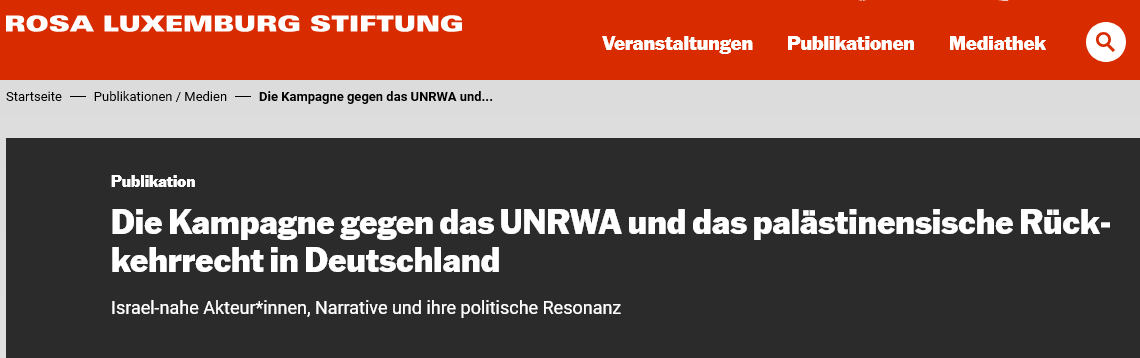
Die vorliegende, von der Rosa-Luxemburg-Stiftung beauftragte Studie liefert erstmals einen systematischen Einblick in die Advocacy-Arbeit Israel-naher politischer Akteur*innen in den USA, Deutschland und Israel. Im Mittelpunkt steht die politische Kampagne gegen das seit 1949 bestehende Hilfswerk der Vereinten Nationen für Palästina-Flüchtlinge im Nahen Osten (United Nations Reliefs and Works Agency for Palestine Refugees in the Near East, UNRWA).
Mehr Informationen zum Bestellen oder / und zum Download
117 Millionen
20. Juni ist Weltflüchtlingstag
Für Solidarität mit Geflüchteten weltweit
Am 20. Juni ist Weltflüchtlingstag – es ist der Tag, der daran erinnert, dass Millionen von Menschen gezwungen sind, ihre Heimat zu verlassen. Das Flüchtlingshilfswerk der Vereinten Nationen veröffentlicht dazu den jährlichen Bericht „Global Trends“, der die weltweit dramatische Situation in nüchterne Zahlen fasst. Gleichzeitig würdigt der UNHCR die Stärke, den Mut und die Widerstandsfähigkeit, die Flüchtlinge, Binnenvertriebene und Staatenlose täglich aufbringen.
Aktuell sind über 117 Millionen Menschen auf der Flucht – Damit bleibt die Zahl der Vertriebenen weltweit erschütternd hoch.
Hinter diesen unfaßbaren Zahlen stehen Millionen von individuellen Schicksalen und schreckliche Geschichten: Unter den Vertriebenen befinden sich Millionen Kinder – Zehntausende von ihnen unbegleitet. Ganze Generationen müssen als unter schwierigsten Bedingungen aufwachsen müssen und bekommen nicht die Chancen, die sie verdienen.
Ihre Spende wird verdoppelt
Zum Weltflüchtlingstag zählt Ihre Hilfe doppelt: Dank der Unterstützung der TARGOBANK, Huber & Ranner und weiterer anonymer Unterstützer wird aktuell jede Spende verdoppelt! 250.000 Euro sind das Ziel: jetzt doppelt helfen
Anschrift:
UNO-Flüchtlingshilfe – Graurheindorfer Str. 149 a – 53117 Bonn
Spendenkonto
IBAN: DE78 3705 0198 0020 0088 50
BIC: COLSDE33
Sparkasse KölnBonn
Kontonummer: 2000 88 50
BLZ: 370 501 98
Epic Fury and Roaring Lion

Security Council Briefing

REPORT OF THE SECRETARY-GENERAL ON THE IMPLEMENTATION OF UN SECURITY COUNCIL RESOLUTION 2334 (2016)


delivered by

RAMIZ ALAKBAROV

DEPUTY SPECIAL COORDINATOR FOR THE MIDDLE EAST PEACE PROCESS


24 March 2026 [As Delivered]


Mister President,

Excellencies,

Today’s briefing is devoted to the thirty-seventh report of the Secretary-General on the implementation of Security Council resolution 2334 (2016). It covers the period from 3 December 2025 to 13 March 2026.

Security Council resolution 2334 (2016) calls on Israel to “immediately and completely cease all settlement activity in the occupied Palestinian territory, including East Jerusalem” and to “fully respect all of its legal obligations in this regard.” Settlement activity has, nevertheless, continued at high levels.
During the reporting period, Israeli planning authorities advanced or approved over 6,000 housing units in the occupied West Bank, including approximately 3,160 housing units in Area C, and 2,850 housing units inEast Jerusalem.
The Israeli Housing Ministry published tenders for 5,375 housing units in Area C, out of which 3,401 are located in the area of E1.
On 8 February, the Israeli cabinet approved a series of measures that would expand Israeli civil authority in the occupied West Bank and further consolidate Israeli planning, enforcement and administrative control, including in parts of Areas A and B. These measures include transfer of Hebron municipal authorities, such as construction permits in the Ibrahimi Mosque/Tomb of the Patriarchs, to Israeli authorities. The measures, which mostly require implementation via military orders, would also remove regulatory barriers on land acquisition and construction by Israelis and purport to shift certain authorities from the Palestinian Authority to the Israeli Civil Administration.

On 15 February, the Israeli Government approved a plan to resume land registration processes in Area C of the occupied West Bank and allocated some 244 million shekels [approximately 78 million USD] for this purpose. Demolitions and seizures of Palestinian-owned structures also accelerated. Citing the lack of Israeli-issued building permits, which are almost impossible for Palestinians to obtain, Israeli authorities demolished, seized or forced people to demolish 429 structures in the occupied West Bank, including East Jerusalem, displacing 575 persons, including 290 children and 150 women. 28 of these structures were donor funded.
Evictions of Palestinians from their homes in occupied East Jerusalem also continued.  On 4 January, the Israeli police forcibly evicted two Palestinian families from their apartments in the Batn Al Hawa area of Silwan, in occupied East Jerusalem, displacing eight people. Settlers took over the building shortly thereafter. This is the sixth eviction
Incident in Batn al Hawa since February 2024. On 10 February 2026, Israeli authorities issued eviction notices against 11 Palestinian families in the same neighbourhood, affecting approximately 80 individuals, including children.
Mister President,

Security Council resolution 2334 (2016) calls for “immediate steps to prevent all acts of violence against civilians, including acts of terror, as well as all acts of provocation and destruction.” Acts of violence against civilians continued, with the high number of fatal incidents, precluding me from detailing all. The ceasefire in Gaza remained highly fragile as Israel Défense Forces (IDF) military operations continued with airstrikes, shelling and gunfire across the Strip, including in the vicinity of the so-called Yellow Line, while Hamas and other Palestinian armed groups engaged in armed exchanges with IDF personnel. During the reporting period, according to the Gaza Ministry of Health, 292
Palestinians were killed in IDF airstrikes, shelling and gunfire in Gaza, and 1,741 were injured. A total of 651 Palestinians have been killed since the ceasefire went into effect.
On 30-31 January, the IDF carried out a series of airstrikes across Gaza, killing 33 Palestinians, including 7 women and 7 children. The IDF said it targeted Hamas and Islamic Jihad commanders and sites throughout Gaza after eight militants emerged from a tunnel in Rafah on 30 January, three  of whom were killed and one captured.

On 26 January, the body of the final Israeli hostage held in Gaza was found and identified by the IDF following a search in Gaza City and returned to his family. Israeli forces reportedly exhumed and removed Palestinian bodies from burial sites in Gaza.
Meanwhile, the high levels of violence in the occupied West Bank, including East Jerusalem, continued at an alarming rate.

Overall, in the occupied West Bank, 32 Palestinians, including seven children, were killed during large scale Israeli Security Forces operations, armed exchanges, settler attacks, and other incidents. 833 Palestinians, including 138 children, were injured, including 172 by Israel Security Forces due to tear gas inhalation and 141 by live ammunition, and 322 by Israeli settlers and other civilians.
According to Israeli sources, two Israeli civilians, including one woman, were killed by armed Palestinians and another 49 Israelis, including five children and five women, and four Israeli security forces personnel were injured by Palestinians in shooting, stabbing and ramming attacks and other incidents.
The Israeli Security Forces arrested more than 1,600 Palestinians during raids and operations in the occupied West Bank. Israel currently holds at least 9,245 Palestinians, 3,358 of whom in administrative detention.
On 1 February, Israeli forces extended a military order designating Jenin, Tulkarm and Nur Shams refugee camps and surrounding areas “closed military zones” until 31 March, prohibiting access without military-issued permits, extending the ongoing displacement of some 33,000 of their residents, while continuing with the extensive destruction of homes an infrastructure in the camps. Daily settler-related attacks escalated, often in the presence of Israeli forces, resulting in casualties, property damage and displacement in Palestinian communities across the occupied West Bank.
On 16 December, an Israeli settler reportedly shot and killed an 18-year-old Palestinian near Tuqu’, Bethlehem during the funeral procession for a 16-year-old Palestinian boy shot and killed by Israeli forces on 15 December.
On 26 January, following repeated attacks and threats by Israeli settlers from four surrounding settlement outposts, the remaining 100 residents of Ras Ein al ‘Auja Bedouin community were forced to leave their community. This follows the forced displacement of 98 Palestinian households comprising 485 people on 8 and 19 January.
On 27 January, around 100 Israeli settlers raided four communities in Masafer Yatta, south of Hebron, injuring six Palestinians, including two women and one child. Subsequently, on 7 March an Israeli settler shot and killed a 27‑year‑old Palestinian man in Masafer Yatta, reportedly during an altercation after settlers trespassed near Palestinian homes in Area B. Including this incident, between 2 and 8 March, six Palestinians were killed in settler violence.
Palestinian attacks against Israelis continued both in the occupied West Bank and Israel. On 26 December, a Palestinian man killed two Israelis, including a woman, and injured another two, including one boy, in ramming and stabbing attacks near the Israeli cities of Bet She’an and Afula.
During the Holy month of Ramadan, as in previous years, the Israeli authorities-imposed restrictions on Palestinians from the West Bank visiting the Al Aqsa compound, limiting the number of additional permits issued for worshippers entering Jerusalem for Friday prayers and allowing access only for certain age and gender categories. From 28 February, as part of broader security measures and limits on gatherings imposed due to military escalation in the Middle East, Israeli authorities severely restricted access to Jerusalem’s Old City, including to the Holy Sites.

Mister President,
The Security Council, in its resolution 2334 (2016), called upon both parties to refrain from provocative actions, incitement and inflammatory rhetoric. Unfortunately, such acts continued. Hamas and Palestinian Islamic Jihad continued to praise terror attacks and to call for additional violence against Israelis. A senior Fatah Official called Israel “neo-Nazis,” while another said “Israel is doomed to perish.”
Israeli ministers and Members of the Knesset continued to call for the re-establishment of settlements in Gaza, the annexation of the West Bank, the “emigration” of Palestinians from the OPT and for continuing to “kill the idea of a Palestinian state”. On 20 February, an Israeli Knesset member alongside dozens of activists crossed into the Gaza Strip, stating "Gaza will always be ours". On 20 January, a Jerusalem municipal official expressed hope that Israel would “throw out and annihilate” all UNRWA personnel shortly after the UNRWA Sheikh Jarrah compound was seized and almost completely demolished by Israeli authorities in complete disregard for the legal framework applicable to these inviolable premises of the United Nations. On 25 January, the compound was set alight by unknown assailants. The Secretary-General brought this issue to the attention of the President of the General Assembly and of the President of the Security Council on 28 January 2026.

Mister President,
Resolution 2334 (2016) reiterated calls by the Middle East Quartet for “affirmative steps to be taken immediately to reverse negative trends on the ground that are imperilling the two-State solution.”
On 24 January, President Abbas issued a decree amending the Local Elections Law to require candidates to commit to the PLO as the sole legitimate representative of the Palestinian people and to its program.
On 2 February, he issued a decree authorizing direct elections to the Palestinian National Council on 1 November 2026. On 13 February, the Palestinian Authority published the draft interim constitution of the State of Palestine for a 60-day public review period. Following a request from the Central Elections Commission, the United Nations deployed an electoral needs assessment mission from 16 to 24 February.
Israel continued its unilateral withholding of Palestinian clearance revenues. The PA estimates that Israel is currently withholding more than 8 billion NIS, deepening the PA’s fiscal crisis. Correspondent banking agreements, essential for the Palestinian economy, continue to be renewed on a short-term basis, with the most recent extension set to expire on 28 March.
In Gaza, about 1.4 million people remain displaced across 1,200 sites, many in overcrowded and unsafe conditions. Since the start of the military escalation in the Middle East and as of mid-March, only limited fuel and humanitarian aid have entered Gaza through Kerem Shalom. On 30 December, Israel announced that it plans to suspend the operations of some international NGOs. The Government also notified 37 INGOs that their registrations would expire at the end of 2025. On 27 February, Israel’s High Court of Justice issued a temporary injunction blocking the deregistration.


Mister President,
In resolution 2334 (2016), the Security Council also called upon all States “to distinguish, in their relevant dealings, between the territory of the State of Israel and the territories occupied since 1967.” Resolution 2334 also called upon “all parties to continue, inter alia, to exert collective efforts to launch credible negotiations on all final status issues in the Middle East peace process.”
On 14 January, the United States announced the start of Phase II of the Comprehensive Plan to End the Gaza Conflict, endorsed in Security Council Resolution 2803 (2025). On 16 January, the United States announced the formation of a transitional Palestinian government for Gaza, the National Committee for the Administration of Gaza (NCAG), as well as the appointment of the High Representative for Gaza.
The Committee convened in Cairo on 16 January and continues its preparations to assume transitional governance responsibilities. The Board of Peace held meetings on 22 January and 19 February, during which member states pledged some USD 17 billion towards the reconstruction of Gaza.
On 20 February, a Liaison Office was established between the Office of the High Representative and the PA.
On 1 February, Israel reopened the Rafah crossing between Gaza and Egypt, allowing limited pedestrian movement in and out of the Strip. To date, 848 people have left Gaza through Rafah, while 844 have returned. Following the military escalation in the Middle East on 28 February, the crossing was closed, reopening on 19 March.

Mister President,
In closing, allow me to share the Secretary-General’s observations on the implementation of Security Council Resolution 2334 (2016) in the Occupied Palestinian Territory – the West Bank, including East Jerusalem, and the Gaza Strip.
1.     Israeli settlement expansion continues at a rapid pace, alongside the proliferation of outposts and steps promoting the annexation of the West Bank. I condemn the relentless Israeli settlement expansion in the West Bank, which continues to fuel tensions, impede access by Palestinians to their land, and threaten the viability of a fully independent and contiguous Palestinian State. The rapidly expanding settlement footprint, including the expansion of settlement outposts, is taking place in conjunction with a rise in settler-related attacks. These developments are in breach of international law, further entrenching the unlawful Israeli occupation and undermining the right of the Palestinian people to self-determination. I reiterate that all Israeli settlements and related infrastructure have no legal validity and are in flagrant violation of international law, including applicable UN resolutions, recalling in this regard the findings by the International Court of Justice in its Advisory Opinion of 19 July 2024 which affirmed, inter alia, that the State of Israel is under an obligation to bring to an end its unlawful presence in the Occupied Palestinian Territory as rapidly as possible. The Government of Israel must abide by its obligations under international law.

2.     These unilateral Israeli steps steadily transform the landscape. I am deeply concerned by the Government’s decisions to deepen Israeli administrative and territorial control of the West Bank. These measures are likely to increase Israeli control over the land and contribute to settlement expansion and could lead to the dispossession of Palestinians of their property. They would also further undermine the Palestinian Authority, contravene existing agreements, breach relevant obligations under international law, and risk further destabilizing the situation on the ground, as well as seriously eroding the prospects for a negotiated two-State solution.

3.     In addition to settlement activities, Palestinians face displacement, demolitions, evictions and crippling movement and access restrictions that stifle the economy and severely limit access to employment, hospitals, schools, and agricultural land. Residents continue to be denied the right to return home. The demolition and seizure of Palestinian structures entail numerous human rights violations and raise concerns about the risk of forcible transfer. I call on Israel to cease the demolition of Palestinian-owned structures in accordance with its international obligations. I also note with deep concern the recent report of the Office of the High Commissioner for Human Rights detailing Israel’s discriminatory administration of the West Bank, including East Jerusalem – with evidence-based findings on entrenched racial discrimination.

4.     The heightened level of violence in the West Bank is deeply alarming. I condemn all acts of violence against civilians. I am deeply concerned that persistent and intensifying settler attacks, sometimes in the proximity and with the support of Israeli security forces, are further displacing Palestinian communities.  I call on Israel, as the occupying power, to protect the Palestinian population against attacks and intimidation. Palestinian attacks against Israelis must also cease. All perpetrators of violent attacks must be held accountable.

5.     I remain concerned about large numbers of Palestinians, including children, held by Israel, including in administrative detention without charge or trial. Reports of torture, ill-treatment, including sexual violence, and deaths in custody are deeply disturbing. Israel must use detention as a last resort, prevent ill-treatment, and end administrative detention of children. All detainees must be treated humanely and those arbitrarily detained must be released.

6.     I am disturbed by the multiple instances in which officials on all sides have glorified violence and engaged in dangerous provocations, incitement, and inflammatory language, which must be rejected by all.

7.     Israel’s implementation of punitive economic and fiscal measures is destabilizing Palestinian institutions and threatening the viability of the Palestinian Authority. I urge Israel to immediately cease all such unilateral steps.

8.     I encourage continued reforms by the Palestinian Authority and urge international partners to provide the necessary support to these efforts. I welcome ongoing electoral preparations, which are key to the reform process.

9.     I reiterate my call to the parties to respect and uphold the status quo at the Holy Sites in Jerusalem, taking into account the special and historic role of Jordan.

10.  The launch of Phase Two of the Comprehensive Plan to End the Gaza Conflict, including the establishment of the National Committee for the Administration of Gaza, is an important step.  It is crucial that all parties fully abide by their commitments so that recovery can proceed in Gaza while advancing a credible political horizon towards a two-State solution. In coordination with the Palestinian Authority, the UN stands ready to support the Committee’s efforts to provide critical public services, facilitate humanitarian aid, and lay the groundwork for reconstruction.

11.  I welcome the recovery of the body of the last hostage in Gaza. I am deeply relieved that all hostages have been reunited with their families or brought home for burial. As released hostages continue to publicly share chilling details of their captivity, including accounts of sexual violence, I again strongly condemn the abhorrent terror attacks by Hamas and other Palestinian armed groups on 7 October 2023, and their prolonged holding of hostages in inhumane conditions.

12.  I condemn the continued killing and injury of civilians in Gaza, including women and children. Despite the ceasefire, Israeli airstrikes, exchanges of gunfire between both sides and shelling particularly near the so-called Yellow Line, and attacks on civilians attempting to return home or access land have resulted in further loss of life. I condemn the continued destruction by the Israeli Security Forces of large areas in the Gaza Strip.  Such incidents must immediately cease.  The protection of civilians is paramount in any armed conflict. Parties to a conflict have an obligation to respect international humanitarian law.

13.  I am deeply concerned by the dire humanitarian situation in Gaza. While food security has improved due to increased aid and commercial deliveries, infrastructure damage is catastrophic, and there are severe shortages of clean water, medical care, and shelter. Humanitarian access remains restricted, with aid convoys facing logistical and security obstacles. I call on all parties to comply with their obligations under international humanitarian law, including to facilitate the full, rapid, and unimpeded passage of humanitarian assistance.

14.  I strongly condemn the Israeli authorities' continued steps against UNRWA. These actions are inconsistent with Israel’s clear obligations under international law. I again urge the Government of Israel to immediately return and restore the UNRWA Sheikh Jarrah compound and other UNRWA premises to the United Nations without delay, along with any assets seized from them. I welcome the Advisory Opinion issued by the International Court of Justice on 22 October, which reaffirmed several fundamental obligations of Israel under international law, such as the obligation to cooperate with the United Nations, including UNRWA. I urge Member States to continue to politically support and financially sustain UNRWA.

15.  I remain committed to supporting Palestinians and Israelis in ending the unlawful occupation and resolving the conflict in line with international law, UN resolutions, and bilateral agreements, pursuing a two-State vision: Israel and a fully independent, democratic, contiguous, viable, sovereign Palestinian State, including both Gaza and the West Bank, living side by side in peace and security, based on pre-1967 lines, with Jerusalem as the capital of both States.

Thank you.
https://unsco.unmissions.org
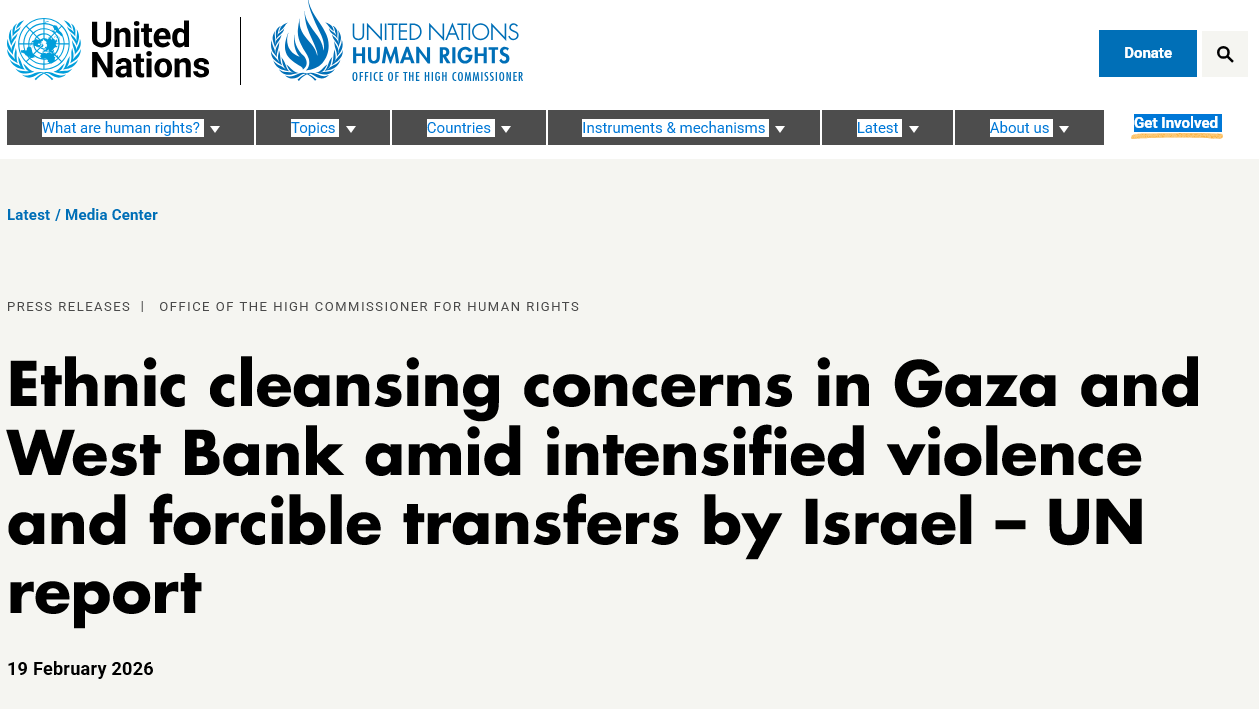
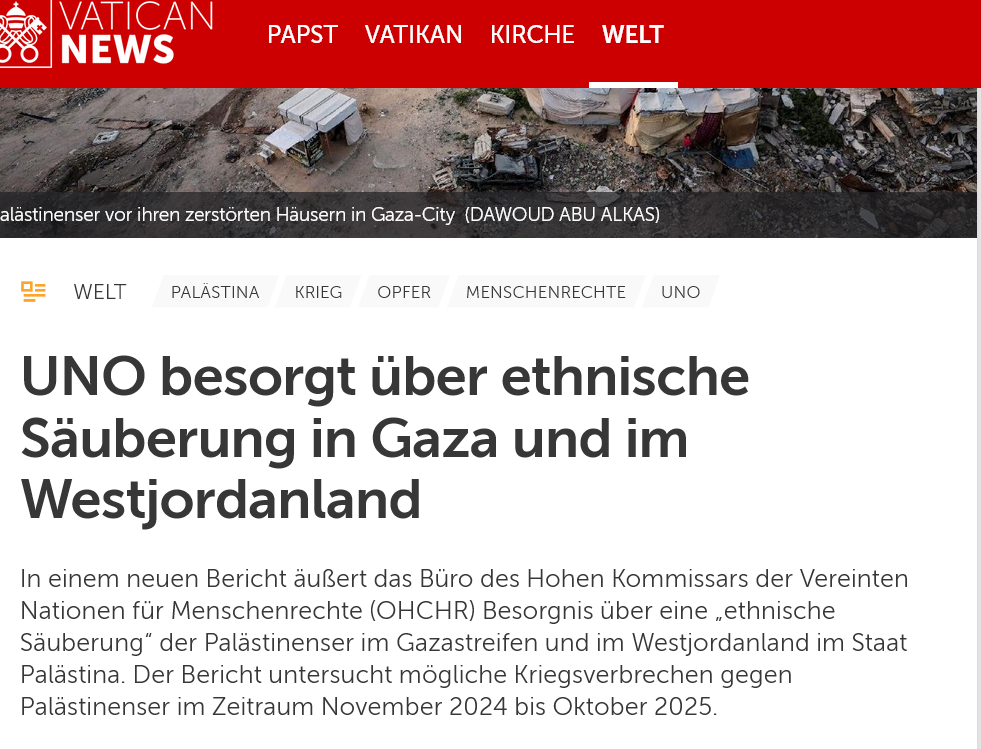
Ethnische Säuberung?
Wenige Begriffe spalten so sehr in der Debatte um Isarel / Palästina – Palästina/Israel:
Hier drei aktuelle Berichte zu Situation:
Gazas Zukunft?
European Council on Foreign Relations – Ein Beitrag von Muhammad Shehada (Visiting Fellow)