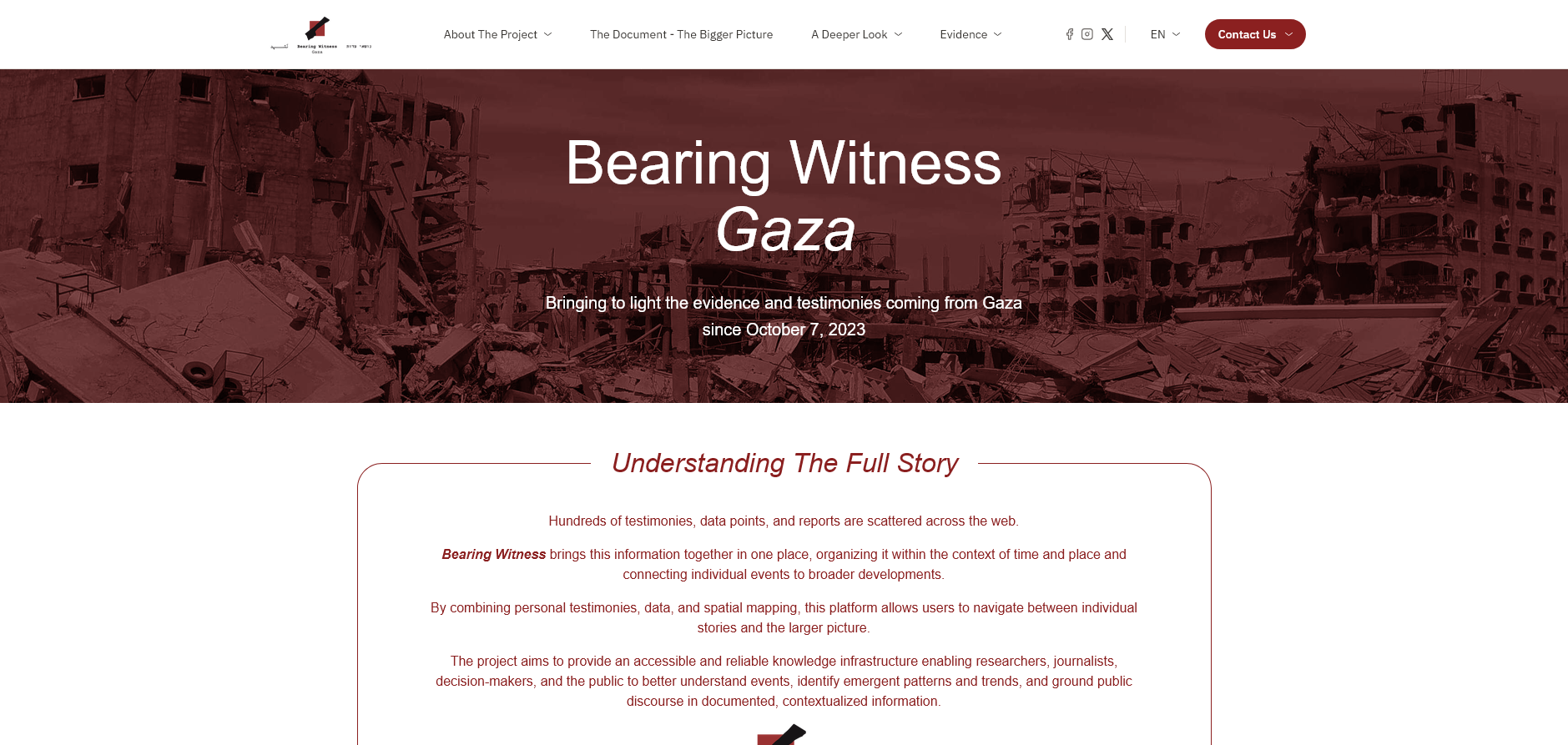
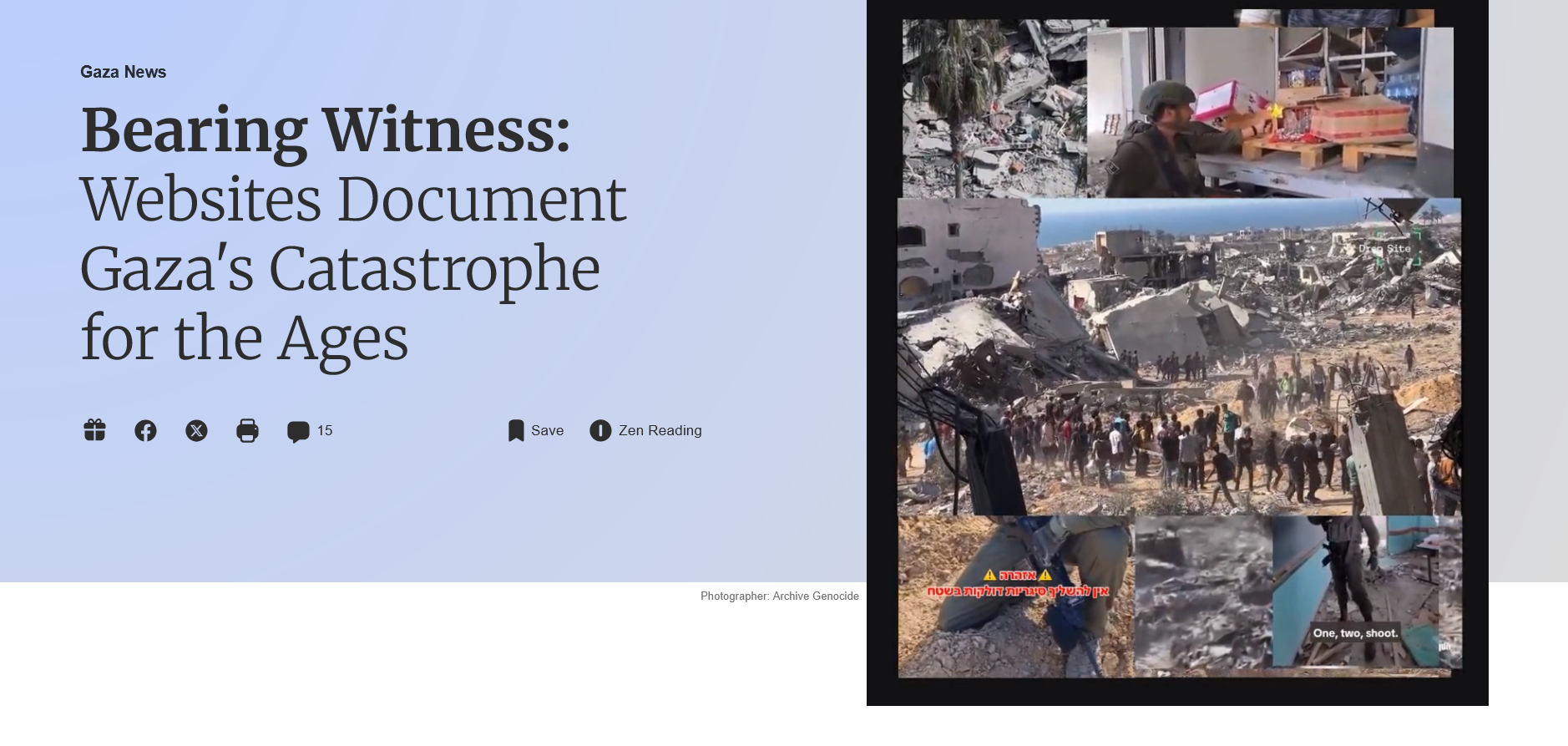
Eyal Weizman, director of Forensic Architecture and professor of Spatial and Visual Cultures at Goldsmiths, University of London, reflektiert für die London Review of Books über seine Seh-Erfahrungen und Einschätzungen: Necro-Economics lautet der Titel seines Beitrages anläßlich des Films „NAZA, directed by Yuval Abraham and Rachel Szor“ – daran sei an diesem Tag erinnert, der vielleicht eine bedeutende Weichenstellung für die, für eine, für eine andere? Zukunft zwischen Mittelmeer und Jordan bedeuten kann… Und zu den Traumata dieser Tage gehört unzweifelhaft Gaza….
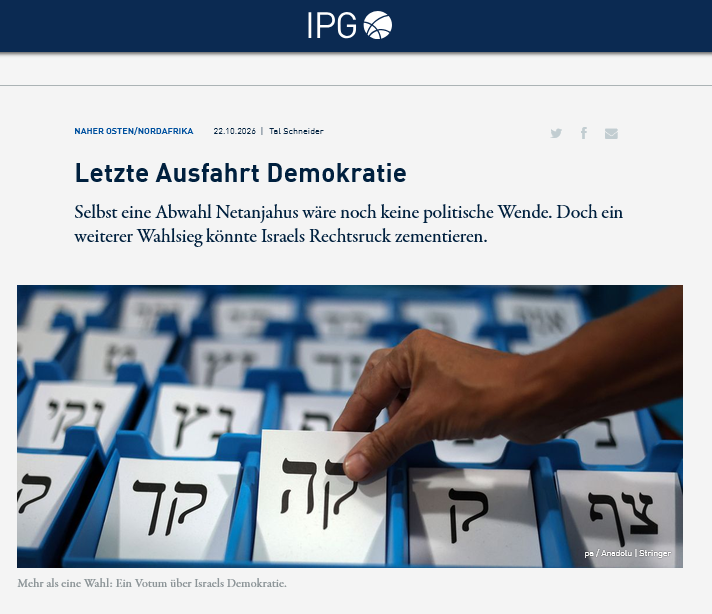
Beitrag auf jpg von Tal Schneider: Selbst eine Abwahl Netanjahus wäre noch keine politische Wende. Doch ein weiterer Wahlsieg könnte Israels Rechtsruck zementieren.
SWP-Podcast 2026/P 22, 22.10.2026 – Muriel Asseburg und Peter Lintl: Auf der Kippe: Wer gewinnt die Parlamentswahl in Israel?
Beim Ökumenischen Friedensdialog am 23. Oktober 2026 in Osnabrück stand die Frage im Mittelpunkt, wie angesichts der anhaltenden Gewalt im Nahen Osten Wege zu einem gerechten Frieden gefunden werden können.
„Kleine Schritte sind mühselig, aber doch so bedeutend“, erklärte der Paderborner Erzbischof Udo Markus Bentz, Vorsitzender der Deutschen Kommission Justitia et Pax. Auch unter schwierigen Bedingungen müsse versucht werden, den Dialog zwischen den Konfliktparteien wieder aufzunehmen. Selbst mitten im Krieg seien Friedensbemühungen möglich, die langfristig Wirkung entfalten könnten.
Der Friedensbeauftragte der Evangelischen Kirche in Deutschland (EKD), Landesbischof Friedrich Kramer, betonte, dass einzelne Friedensschritte eine übergeordnete Perspektive benötigten. Ein gerechter Frieden müsse Gewalt verringern, Freiheit gewährleisten und gesellschaftliche Teilhabe ermöglichen. „Wir müssen wegkommen von einem rein militärischen Denken“, forderte Kramer.
Auch die Politikwissenschaftlerin Muriel Asseburg von der Stiftung Wissenschaft und Politik unterstrich die Bedeutung diplomatischer Bemühungen. Zwar hätten bisherige Waffenstillstände keinen dauerhaften Frieden gebracht, dennoch seien die Verringerung der Gewalt und die Freilassung von Geiseln wichtige Fortschritte. Kirchen könnten dabei Orientierung geben, indem sie Menschenrechtsverletzungen und Kriegsverbrechen klar benannten.
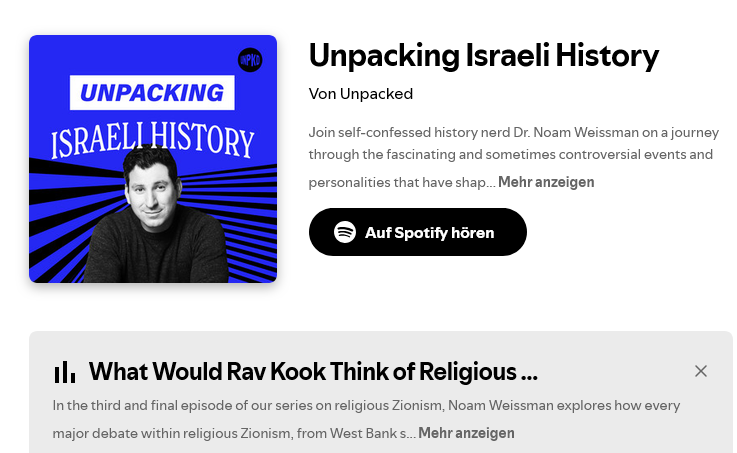
Ohne die Person und das Denken von Rav Kook ist nicht zu verstehen, was heute in Israel geschieht, zur kritischen Auseinandersetzung hilft dieser Podcast (… neben weiteren Stimmen …)
„In the third and final episode of our series on religious Zionism, Noam Weissman explores how every major debate within religious Zionism, from West Bank settlements and the Haredi draft to the relationship between faith, ethics, and nationalism, leads back to Rav Abraham Isaac Kook. Noam is joined by scholar Yehudah Mirsky, author of Rav Kook: Mystic in a Time of Revolution, to discuss the mystic, chief rabbi, and foundational thinker whose complex legacy continues to shape Israeli religious and political life. This episode is sponsored by Jewish Lives, a prize-winning series of biographies from Yale University Press. To learn more about Rav Kook’s life, identity, and legacy, you should check out Rav Kook: Mystic in a Time of Revolution by Yehudah Mirsky at www.jewishlives.org and you can use the special promo code KOOKPOD to get 30% off. If you want to sponsor an episode of Unpacking Israeli History email noam@unpacked.media. Connect with Noam on Istragram at Noamlweissman_. And check out our episodes on Youtube. This podcast is brought to you by Unpacked, an OpenDor Media brand.“
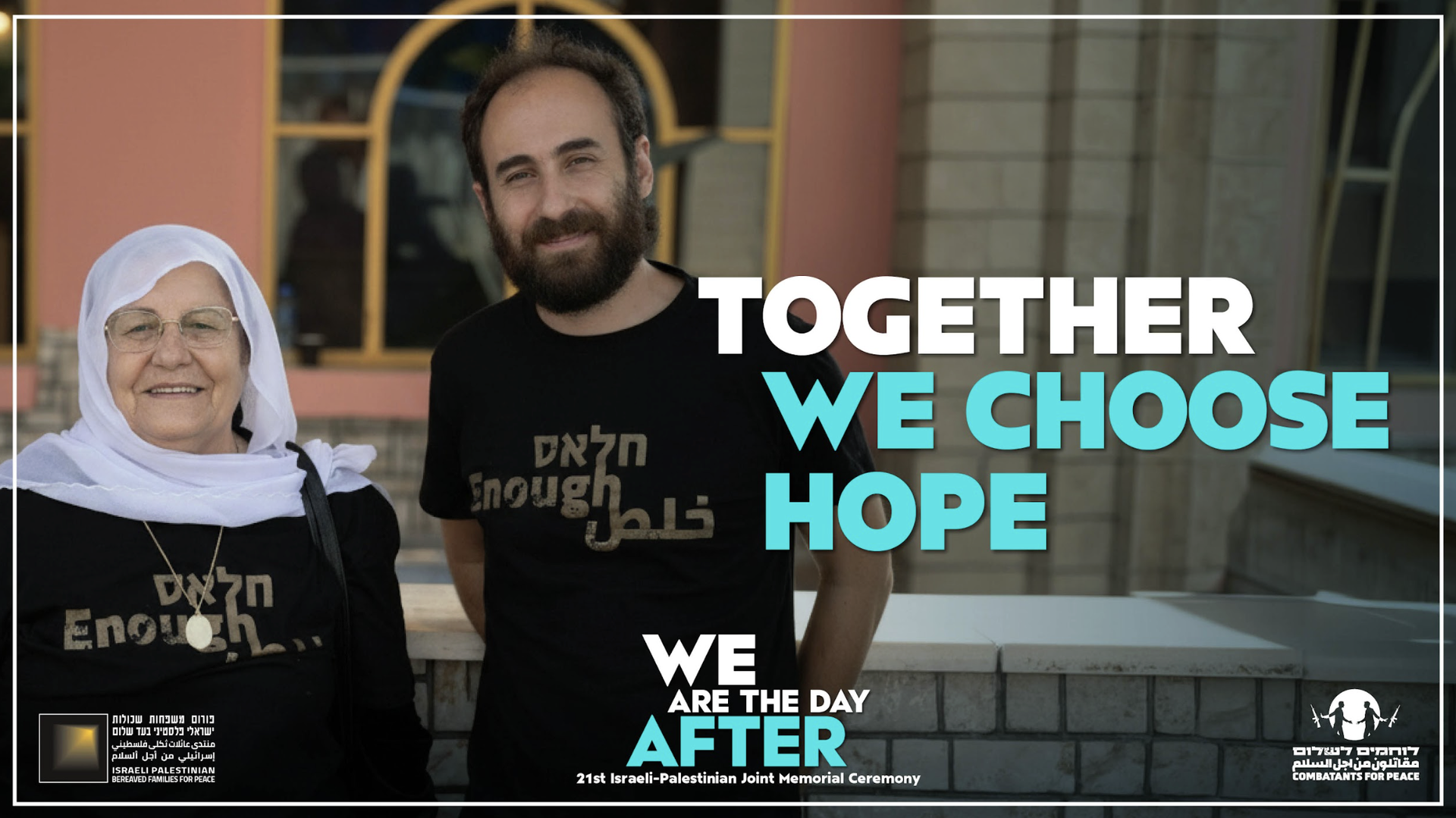
On April 20, 2026, the Joint Israeli–Palestinian Memorial Day Ceremony, hosted by Combatants for Peace and the Parents Circle Families Forum, will bring forward a message that challenges entrenched violence and calls upon humanity.
Bereaved families, Palestinian and Israeli, will stand together and refuse to let their profound losses be used to justify more harm. Side by side, they will call for a future grounded in dignity, equality, an end to the occupation, and collective liberation.
This message is not only needed – sharing it is a public act of courage, co-resistance, and vital hope. But it will not spread on its own.
To reach beyond those already listening, it must be lifted up collectively. Here are 3 ways to use your voice:
SPONSOR
We’re deeply grateful to the sponsors who have already stepped forward. It’s not too late to join them.
Do you know a place of worship, campus group, or organization that would stand behind this call? Your connection can make the difference. Sponsoring organizations do more than lend their name. They extend the reach of the ceremony into new communities. Become a Sponsor
GATHER
Around the world, people are organizing satellite gatherings, bringing the ceremony into their cities, campuses, and homes. In doing so, they transform a single event into a shared, global act of participation. Find a Local Satellite Ceremony to Attend
If there isn’t one near you, consider hosting. Even a small group can advance this message into new spaces. Sign up to host here.
RAISE SUPPORT
Join our global network of Ambassadors and play a vital role in advancing the ceremony’s message while raising the funds needed to bring it to life. As an Ambassador, you’ll receive your own personalized page on our Drove campaign site, along with simple tools and support to help you get started and amplify your voice. Get Started – Download the Ambassador’s Guide
At a time when dehumanization and division are accelerating around us, this ceremony offers a clear refusal. A refusal of more violence. A refusal of separation as the only path forward. And a different choice. To choose one another. To choose peace. To begin carving out a path that moves beyond what we have been told is inevitable. Thank you for making that choice and spreading the message.
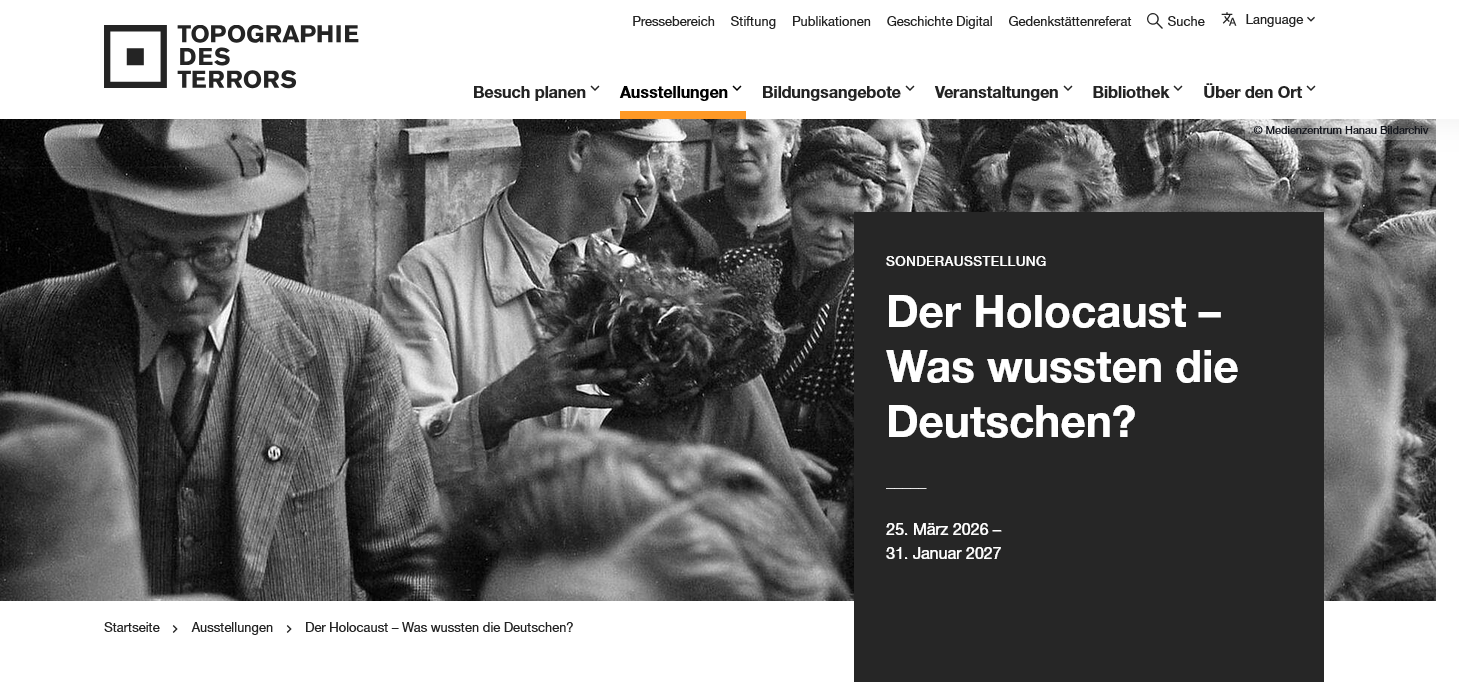
Eine Ausstellung der Stiftung Topographie des Terrors
Noch lange nach dem Ende des Zweiten Weltkriegs behaupteten viele Deutsche, nichts von den Massenmorden während der NS-Zeit gewusst zu haben. So wollten sie sich dem Vorwurf entziehen, für die Verbrechen mitverantwortlich zu sein. Bis heute beschäftigt viele Menschen die Frage, was die Deutschen tatsächlich wussten.
Welche Informationen über den Holocaust waren im Deutschen Reich zugänglich? Was nahmen die Deutschen wahr, die nicht direkt an den Taten beteiligt waren und nicht selbst verfolgt wurden? Wie verbreiteten sich damals entsprechende Informationen und Gerüchte? Und was machten einzelne Menschen mit ihrem Wissen? Diesen Fragen geht die Ausstellung nach.
Die Ausstellung besteht aus drei Teilen: „Propaganda“ beleuchtet, was das NS-Regime über die Verfolgung und Ermordung der Jüdinnen und Juden öffentlich bekannt gab. „Hinweise im Alltag“ rückt Gerüchte und inoffizielle Nachrichten über die Massenmorde in den Blick. „Vom Puzzleteil zum Bild“ zeigt, wie einzelne Personen Informationen zusammenfügten, um sich ein Gesamtbild zu verschaffen.
Im Gespräch mit Ahmad Shihabi: Journalismus nach dem 7. Oktober
Ahmad Shihabi wuchs in einem palästinensischen Flüchtlingslager südlich von Damaskus auf. Er absolvierte eine Ausbildung im Bereich Informatik, wurde dann Journalist. Während des syrischen Bürgerkriegs floh er nach Deutschland und arbeitet heute als Redakteur für die Neue Ruhr Zeitung (NRZ), vor allem zur politischen Situation im Nahen Osten, deren Auswirkungen auf Deutschland sowie zu Flucht und Migration.
In unserem diAk-Gespräch wollen wir mit ihm über seine Wahrnehmung der letzten zweieinhalb Jahre sprechen: Wie war es für ihn, als palästinensischer Journalist nach dem 7. Oktober in Deutschland zu berichten? Was ist seine Perspektive auf die deutsche Berichterstattung zu Israel/Palästina, Syrien oder Iran? Gemeinsam wollen wir über deutschen Journalismus, Debattenkultur und den Nahostkonflikt nachdenken.
Das Gespräch findet am 7. April 2026 von 19 bis 20 Uhr auf Zoom statt.
Das Gespräch findet in deutscher Sprache statt. Eine vorherige Anmeldung ist nicht notwendig, der Link für den R ZW lädt Sie zu einem geplanten Zoom-Meeting ein.