Ein Offener Brief in der Washington Post gibt einen interessanten Einblick, in die kontroversen Debatten, die innerhalb der jüdischen politischen Welt der USA zur Zeit geführt werden.
Zum Hintergrund:
„Abdul El-Sayed, the Democratic nominee in the Michigan Senate race, has faced a backlash from some Jewish Democrats for his intense criticism of Israel.
Former senator Al Franken (D-Minnesota) and more than two dozen other Jewish Americans are endorsing Abdul El-Sayed, the Democratic nominee for Senate in Michigan whose strong criticism of Israel has concerned some Jewish voters and leaders.
In an open letter first shared with The Washington Post, Franken and the other signatories acknowledged that El-Sayed’s positions on Israel “have been a concern for many” but argued that his views “are much less outside the mainstream” than the discourse around his campaign might suggest.
… Eric Schwartz, a former State Department official during the Obama administration … organized the letter “based on the conviction that the conventional wisdom that most Jews are uneasy about the candidate is wrong, or at least not the whole story,” he wrote in an email to The Post.“
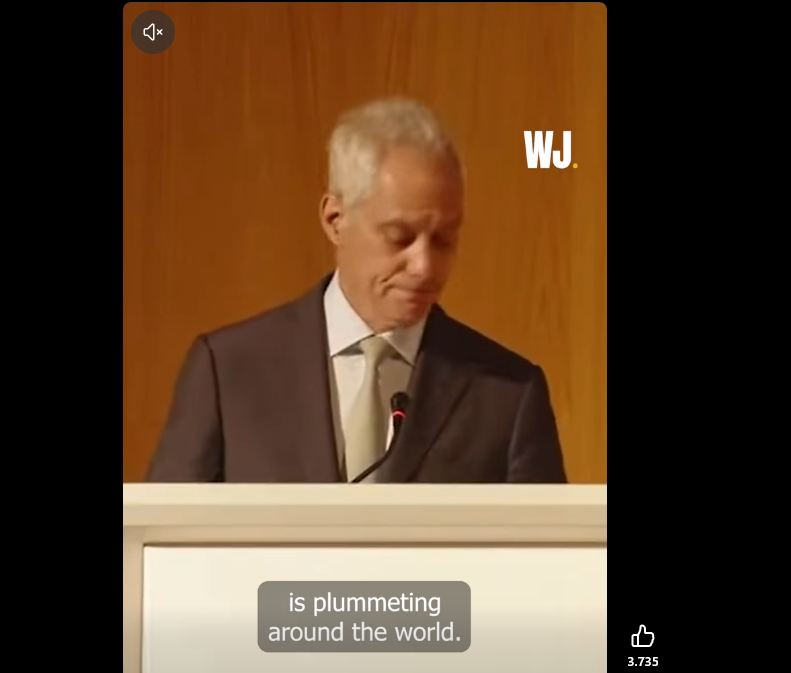
Rahm Emanuel, ehemaliger Stabschef des Weißen Hauses unter Barack Obama und von 2011-209 Bürgermeister von Chicago – Ausschnitte aus einer bemerkenswerten Rede des US-Demokraten in Tel Aviv.
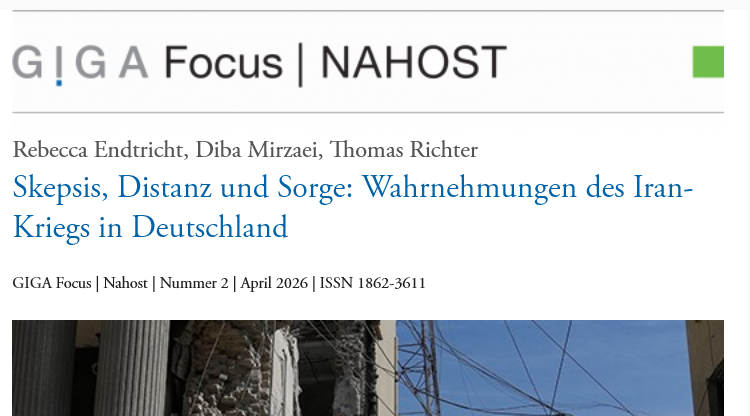
Bislang ist wenig darüber bekannt, wie die Bevölkerung in Deutschland den Krieg wahrnimmt, den die USA und Israel am 28. Februar 2026 gegen den Iran begonnen haben. Eine Online-Befragung unter 2.492 Personen von Ende März liefert hierzu erste Einblicke. Die Ergebnisse helfen dabei, aktuelle öffentliche und politische Debatten besser zu kontextualisieren.
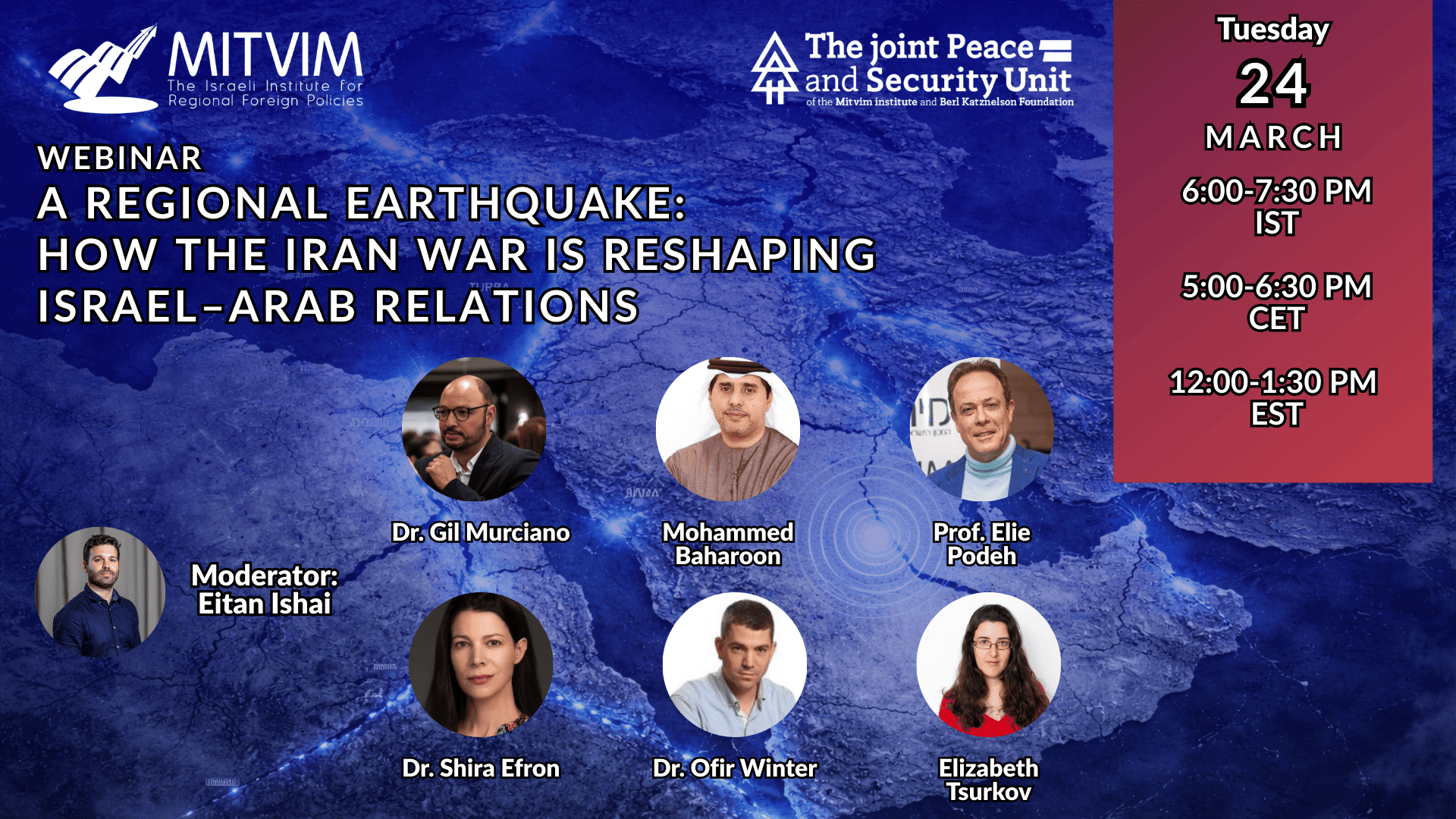
In recent years, a strategic approach has gained prominence in Israel’s regional policy: the idea that military strength and security superiority can serve as a foundation for normalization and cooperation with countries in the Middle East. According to this approach, often described as “normalization through power”, military deterrence, shared security interests, and advanced technological capabilities can position Israel as a central regional partner even without broader political progress vis-à-vis the Palestinians.
The war that began on October 7, and particularly the campaign against Iran, puts this paradigm to the test. While Israeli public attention is largely focused on the military aspects of the confrontation with Iran, a broader strategic question arises: what will the regional order look like on the day after the war, and can military achievements alone translate into a stable regional reality and sustainable cooperation?
This webinar will examine the future of relations between Israel and regional actors in light of the latest developments in the Middle East. The discussion will explore the opportunities and limitations of an approach based primarily on power and deterrence, alongside the role of political processes, regional diplomacy, and multilateral cooperation in shaping a more stable regional order.
The panel will bring together leading experts, who will offer diverse regional perspectives on the strategic implications of the war and on the possibilities for shaping a new regional reality in its aftermath.
When: Tuesday, March 24, 6 PM (Israel time) ; 5 PM (CET); 11:00 AM (EST).
A Zoom link will be sent closer to the time of the webinar after the registration.
Moderator:
Eitan Ishai – Director of the MENA program, Mitvim
Speakers:
Dr. Gil Murciano – CEO, Mitvim
Mohammed Baharoon – Director General, B’huth Institute, United Arab Emirates
Prof. Eli Podeh – Lecturer, Department of Islamic and Middle Eastern Studies, Hebrew University of Jerusalem; Board Member, Mitvim; Member of the Regional Security Coalition
Dr. Shira Efron – RAND Corporation’s Distinguished Israel Policy Chair
Dr. Ofir Winter – Senior Researcher, Institute for National Security Studies; Lecturer, Department of Arabic and Islamic Studies, Tel Aviv University
Elizabeth Tsurkov – Fellow, Newlines Institute for Strategy and Policy; Research Fellow, Forum for Regional Thinking
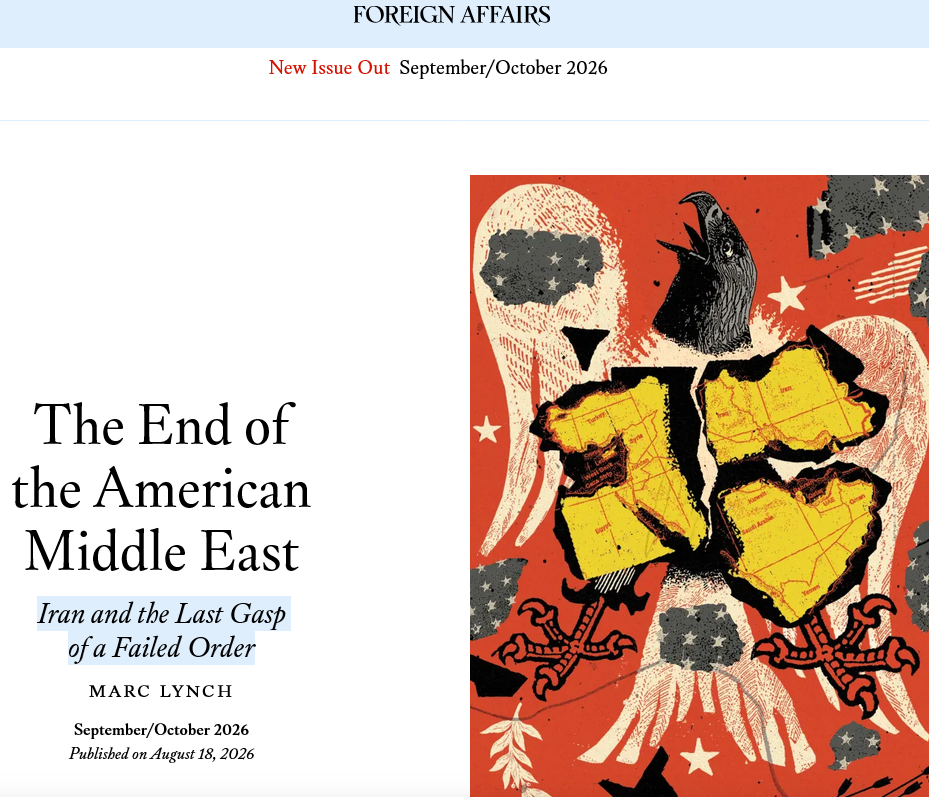
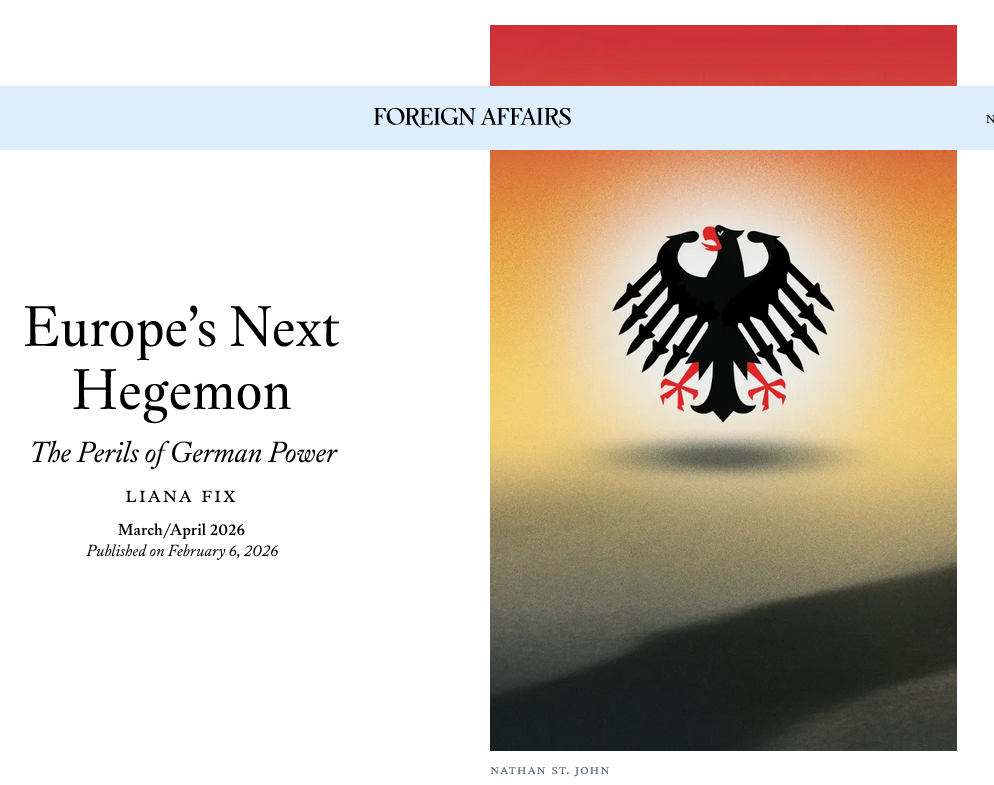
Foreign Affairs (hg. vom Council on Foreign Relations New York), seit 1922 eine der wichtigsten Publikationen zu Fragen der Internationalen Politik aus den USA. hat die Ausgabe März&April 2026 deutscher Politik gewidmet, lesenswert und vielleicht doch geeoignet, die ein oder ander Debatte hierzulande noch einmal zu überdenken…
NEW EPISODE Hold the Fire FROM THE INTERNATIONAL CRISIS GROUP
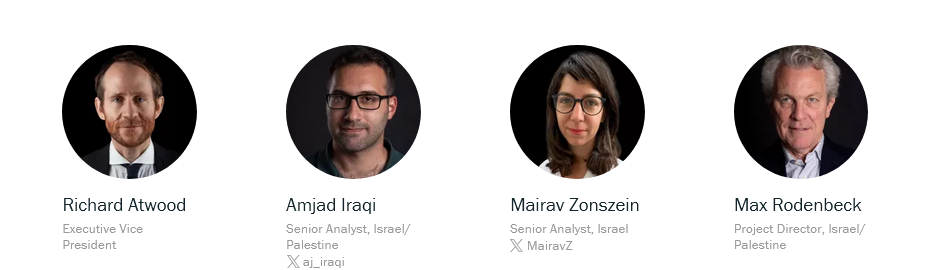
In this episode of Hold Your Fire!, Richard Atwood speaks with Crisis Group experts Amjad Iraqi, Mairav Zonszein and Max Rodenbeck about President Donald Trump’s Board of Peace and its implications for Gaza. They unpack the structure of the board’s different layers, how Palestinians are reacting to the new Palestinian technocratic Gaza committee and what that committee will do. They look at conditions on the ground in Gaza amid frequent ceasefire violations and Hamas’s continued hold of parts of the strip. They also assess the obstacles to moving the peace plan forward, including working out agreement on the sequencing of Hamas decommissioning weapons, on one hand, and Israeli withdrawing troops and letting in reconstruction aid on the other, as well as the still-uncertain prospects for an international stabilisation force in the strip.
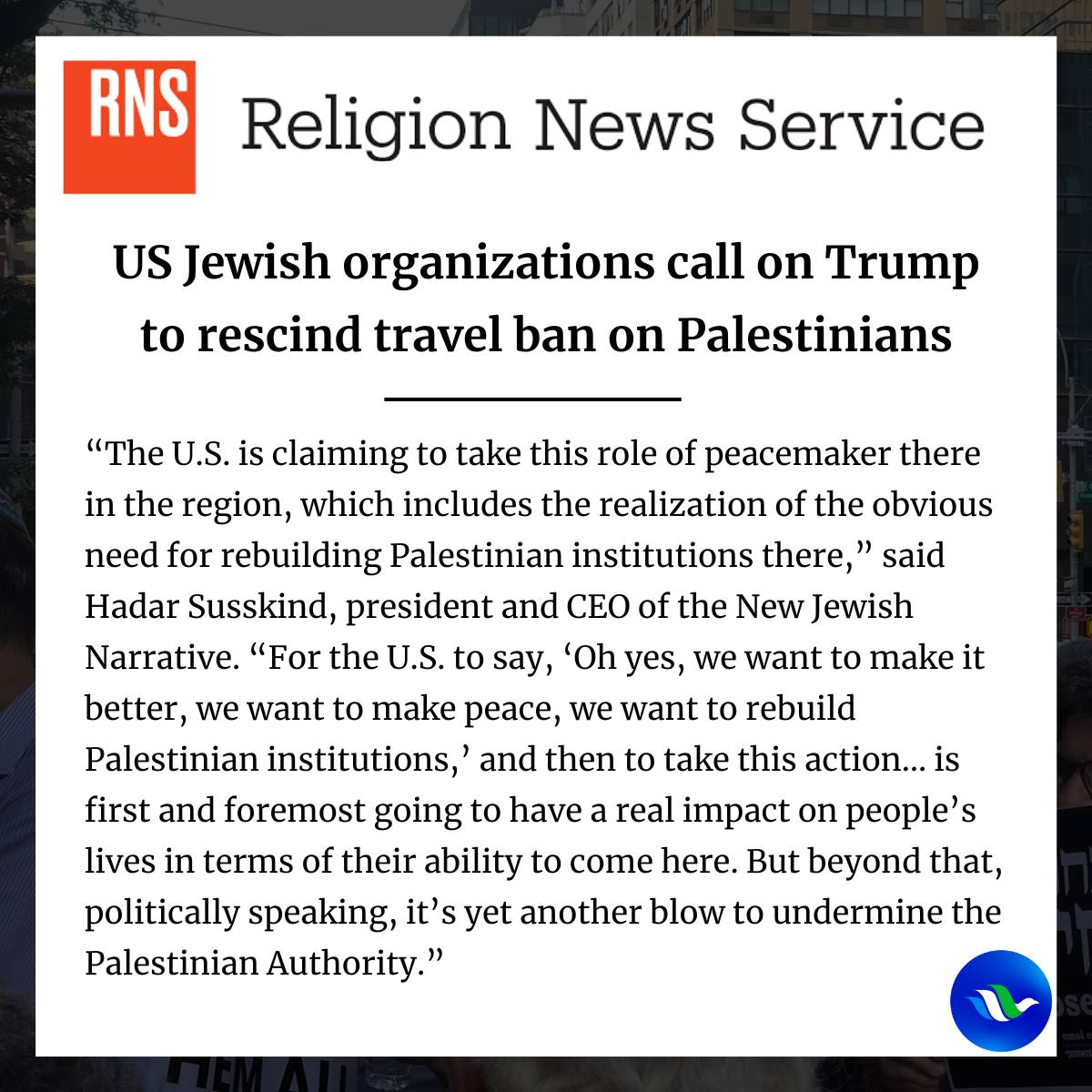
A coalition of eight Jewish organizations sent a letter this morning to President Donald Trump and Secretary of State Marco Rubio expressing alarm over the Trump administration’s expanded Travel Ban.
The letter sharply criticizes the decision to target Palestinians, noting that the Travel Ban further weakens the Palestinian Authority in a manner that will make stabilizing Gaza more difficult. Here the full text of the letter, signed by
New Jewish Narrative Bend the Arc: Jewish Action J Street National Council of Jewish Women New York Jewish Agenda (NYJA) Partners for Progressive Israel T’ruah: The Rabbinic Call for Human Rights The Workers Circle
Kann eine präsidiale Begnadigung für eine nicht eingestandene Schuld ein Land befrieden / einen … (Nixon im Hintergrund?)
In Israel läuft dazu die Debatte. Die Position von New Jewish Narrative ist klar:
„Prime Minister Netanyahu refuses to let a Commission of Inquiry look into the failures of his government that led to October 7th. His government has tried to eliminate the power of the Israeli judiciary to check the power of politicians. This pardon request is only the most recent of his efforts to avoid accountability. President Herzog should turn him down. Without accountability there is no democracy. (Photo by Kobi Gideon / Government Press Office of Israel, CC BY-SA 3.0.)“