
Zwar haben „an keinem Ort der Welt Friedensorganisationen von allein eine historische Veränderung und Transformation herbeigeführt“, wie Tamar Herman vom Israeli Democracy Institute in [West-Jerusalem mit Blick auf die Geschichte bemerkt, doch sie sind wichtiger denn je. Zochrot, Schalom Achschav, das Israelische Komitee gegen Hauszerstörung, Yesh Gvul und weitere israelische Organisationen sind seit Jahrzehnten aktiv. Sie setzen sich für eine „gemeinsame Zukunft von Palästinensern und Israelis ein“. Johannes Zang war vor Ort und berichtet von der Situation der Organisationen und deren schwierigen Tätigkeit im Alltag.
Kategorie: Innenpoltik Palästina;
Welche Haltung nehmen Palästinenser:innen zum Krieg in der Ukraine ein?
Der in Gaza ansässige, 2007 gegründete Think Tank Palthink hat zu dieser Frage ein Policy Paper veröffentlicht, eine erste Stimme aus dem palästinensischen Diskurs:
Traditionell hatten und haben die Palästinenser gute Beziehungen zur Sowjetunion und zu Russland unterhalten. Momentan erscheint es ihnen angebracht, sich mit Stellungnahmen eher zurückzuhalten. Falls sie dennoch diplomatische Position beziehen müssen, wollen sie ausbalanciert und abgewogen argumentieren und sich nicht in Allianzen einbinden lassen. Dazu zitiert das Papier eine Verlautbarung des (palästinensischen) Premierministers: „We look forward to the war being put there to ensure international security and peace, to preserve the safety of civilians who are victims of war, and we also look forward to the international community applying international law to Israel and implementing United Nations resolutions related to Palestine.“
Das Policy Paper “Considerations of condemnation and balance of Palestine’s position on the war in Ukraine” ist online unter diesem Link abrufbar:
Über eine aktuelle Debatte
Geht es um Inhalt oder um das Etikett?
In der Debatte um den aktuellen Bericht von amnesty international zur Situation in Israel-Palästina schlagen (gerade in Deutschland) die Wellen wieder einmal hoch. Signalworte stoßen bekannte Reaktionen an, der Inhalt des Berichts gerät dabei fast aus dem Blick.
Hanno Hauenstein in der Berliner Zeitung versucht eine sachlich-differenzierende Einordung.
Der Bericht (englisches Original) selbst kann hier heruntergeladen werden, hier die Einordung von ai Deutschland (geänderte Fassung).
Das Modell von zwei Staaten …
Als Modell ist die zwei-Staaten-Lösung weiterhin „einzige Lösung“, sagt Mona Juul, eine der „Oslo-architects“ und VN-Botschafterin Norwegens im Interview.
“We think from the Norwegian side, absolutely that the situation on the ground between the Israelis and the Palestinians, 30 years after the Madrid Conference, merits increased focus on the need for the Israelis and the Palestinians to get back into the negotiating table,” she told JNS in a discussion at the Norwegian Mission to the United Nations. Juul was referring to the 1991 bilateral Israeli-Palestinian negotiations in Madrid that eventually led to the exchange of letters and the subsequent, secretive Oslo Accords discussions that Juul facilitated, together with her diplomat husband, Terje Rød-Larsen.
“It’s obvious the two-state solution is the only solution, and there are prescriptions on what that solution could look like. What is lacking, of course, is the necessary political will on both sides to compromise and to find that common solution,” she added.”
Wie geht es weiter?
Die Niederlande stoppen ihre Unterstützung für die palästinensische Union of Agricultural Work Committees (UAWC). Die UAWC ist eine der sechs palästinensischen NGO, die die israelische Regierung als terroristische Organisationen einstufte und im Westjordanland verbot. Dabei ist gerade die Landwirtschaft mit den vielen kleinen Selbständigen eine der Säulen der palästinensischen Wirtschaft im Westjordanland und die Einzelproduzenten brauchen nicht nur finanzielle Unterstützung, sondern auch eine Ansprechstelle.
Bericht in Junge Welt
Kleine Erfolgsgeschichten…
Aus der Mailinglist des HolyLand Trust Bethlehem: Nachhaltigkeit im C-Gebiet
We know here that the natural world speaks of the sacred, that seemingly insignificant people can bring great change and unexpected good news and words of peace transform lives. We sincerely believe the projects we have planned for 2022 can be good news for the people of Bethlehem today bringing peace, caring for creation and working for justice.

This spring, we will start the construction of our Greenhouse which will be located in area C – the area of Palestine that is controlled by Israeli Military law. In this zone, the impact of the occupation is felt every day in a myriad of ways. Water is controlled and is in short supply, the land is wrecked by military installations and home demolitions and farmers are often cut off from their fields unable to tend crops and animals.
Why are we building a greenhouse in this area?
The general objective is to improve the social and economic conditions of people who live in this zone and do not have a reliable source of income. We want to ensure food security for them in this uncertain context – this project aims to increase the productive capacity of 1 dunam of agricultural land through greenhouses and give training and employment to five rural workers in the target location.
This project will sustain itself as workers are supported to grow and sell vegetables. It will create a source of income and high quality products, strengthen the agricultural sector and enhance family participation in generating income in the Palestinian society. It will stimulate the economy and improve the economic situation of the unemployed workers. The project will serve the needs of the local Palestinian community. This project is fulfilling the Palestinian people needs in having income generating projects.
Your kind support has provided 60% of the money needed to launch this new initiative, but to be able to accomplish the project we need to raise more funds. Your donation will change lives, protect the sacred land and speak to people of hope, justice and a more secure future. Help us today to be good news to the people of Palestine.
Read the success story of our 2017 green house project around Bethlehem area
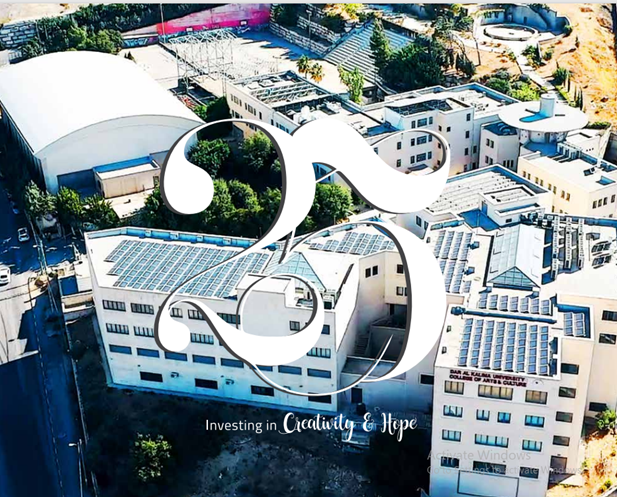
25 Jahre Dar al-Kalima
Wie eine Universität entsteht …. Eine Investition in Hoffnung und Creativität!
Dar al-Kalima University is a Palestinian success story per excellence. It started 25 years ago as a vision. With perseverance, it grew to become a full-fledged university. We were planning to celebrate this important occasion in person, but regrettably, the Covid-19 Pandemic did not allow for it. Yet, It is with great pleasure that we share with you this booklet that tells our story with its major milestones.
Eine kurzer Film … und mehr in der Zunkunft!
VN-Truppen in Palästina?
Könnte ein derartiges internationales Engagement (mit robustem Mandat) die Situation verändern, hätte es überhaupt eine Chance auf eine entsprechende Beschlußfassung im Sicherheitsrat der Vereinten Nationen. Hier jedenfalls eine entsprechende Position von Daoud Kuttab, einem palästinensischen Journalisten und Aktivisten, der genau dafür plädiert.
Opinion: With absence of a desire for peace by Israeli side and its rejection of globally accepted two-state solution, UN-sponsored blue helmets are needed more than ever in West Bank
Krippenplatz, sozusagen live…
Mit Dank an den Lutherischen Pfarrer von Bethlehem, Rev. Dr. Munther Isaac, auch ein Teil der palästinensische[n] Erzählung von Klage und Hoffnung, so der Untertitel seines neues Buches.
https://www.facebook.com/munther.isaac/videos/651285079567995
Die palästinensische Jugend in einer widersprüchlichen Realität
Geteilt und doch geeint.
Ist die Jugend in Palästina „Mehr als nur Zuschauer?“ für die Politik?, fragen Steven Höfner und Alena Jabar in der aktuellen Ausgabe der KAS-Auslandsinformationen.
„Die palästinensische Jugend ist zerrissen. Fragmentiert in unterschiedlichen Teilen der Palästinensischen Gebiete, leben junge Menschen unter verschiedenen Herrschaftsformen und können nur im Ausnahmefall aufeinandertreffen. Sie tragen die Traumata der vorangegangenen Generationen in sich und müssen sich selbst tagtäglich sowohl den Herausforderungen einer israelischen Militärbesatzung als auch den Repressionen der teilweise korrupten und autoritären palästinensischen Regimes stellen.“
Gesamtausgabe des Heftes (Auslandsinformationen der Konrad Adenauer Stiftung, KAS) vom Dezember 2021.
