„Seit Frühjahr 2019 war Israel politisch gelähmt, weil keine stabile Regierung zustande kam. Vier Wahlen waren nötig, bis am 13. Juni 2021 eine neue Regierung die Geschäfte übernahm. Nicht nur wurde Benjamin Netanjahu nach zwölf Jahren als Premier abgelöst. Es wurde eine Koalition gebildet, die fast das ganze politische Spektrum abdeckt. Mittlerweile hat sie sich stabilisiert, und die Ausrichtung wird klarer. National und international hat die Koalition mit der populistischen Rhetorik der Netanjahu-Regierung gebrochen. Zugleich sucht sie nach anderen Politiken: Innenpolitisch integriert sie erstmals eine unabhängige arabische Partei und hat die Angriffe auf Prinzipien liberaler Demokratie gestoppt. Außenpolitisch wirbt sie für Annäherung an die EU und an die Biden-Regierung, aber auch um mehr Integration in die Region. Zudem bemüht sie sich, den Konflikt mit den Palästinensern durch soziale und wirtschaftliche Maßnahmen einzudämmen. Doch eine politische Annäherung ist nicht in Sicht. Es droht ein »point of no return«, der eine Zweistaatenlösung unmöglich macht.“
Mit dem Autor Dr. Peter Lintl werden im Rahmen von diAk-Online am 18. Januar 2022 (18-19:00 Uhr) ins Gespräch kommen.
Manch einer/eine kennt ihn noch von Zeiten, als Besuche in Jerusalem einfacher waren, den ehemaligen Ev. Propst in Jerusalem, Wolfgang Schmidt. 2021 wurde er zum neuen Vorsitzenden des Jerusalemsverein gewählt und trat damit die Nachfolge des em. Bischofs H. J. Abromeit an.
Quelle: JV/BMW
Hier ein Interview mit dem neuen Vorsitzenden, der heute bei der Badischen (ev.) Landeskirche Bildungsverantwortung trägt, und dessen Arbeit im und für den JV an einer herausfordernden Schnittstelle zwischen einer verantwortlichen Solidarität und Freundschaft zu den christlichen (evangelischen) Geschwistern in Palästina / dem Heiligen Land steht und zugleich inter-religiöse und deutsch-israelische Horizionte im Blick haben muß.
„Die Jüdische mit der Allgemeinen Proletarischen Bewegung zu vereinen“
In der Rosa-Luxemburg-Stiftung ist ein neuer Band mit höchst interessanten Beiträgen zu „Jüdinnen und Juden in der Internationalen Linken“ erschienen. Das Themenspektrum ist vielfältig und beinhaltet unter anderen Fragen der osteuropäischen Linken Ende des 19. Jahrhunderts, Persönlichkeiten in ihrem historischen Umfeld, so Rosa Luxemburg, Jürgen Kuczynski und Theodor Bergmann, aber auch Erfahrungen und Fragen von Linken in Großbritannien und Südafrika.
Beim Lesen fielen, neben der Thematik an sich und der akademischen Gründlichkeit, zwei Zugaben des kleinen Bandes besonders auf: Zum einen die zahlreichen Fußnoten mit interessanten Informationen sowie reichhaltigen und bemerkenswerten Quellen. Zum zweiten ist der abschließende Teil „Zum Weiterlesen“ mit Hinweisen zum Thema auf verschiedenen Gebieten sehr zu empfehlen. Möge die gesamte Broschüre an sich viele Leserinnen und Leser finden!
Aus der Einführung:
DIE LINKE, JÜDINNEN UND JUDEN UND DIE «JÜDISCHE FRAGE»
Vielleicht war es Isaac Deutscher (1907–1967), der mit seinem Vortrag «The Non-Jewish Jew» im Jahr 1958 das passende Stichwort für die Mehrheit der jüdischen Linken geliefert hat, um die jeweils eigene religiös-ethnisch-kulturelle Identität kurz und treffend umschreiben zu können: Denn ungeachtet des Umstands, dass sie oftmals mit der Tradition ihrer Vorfahr*innen gebrochen und einen säkularen Weg gewählt hatten, wurden sie durch Fremdzuweisung infolge religiöser Intoleranz und übersteigerter Nationalismen weltweit immer wieder auf ihre jüdische Herkunft reduziert und somit eben zu «nichtjüdischen Juden». Michael Löwy sieht in der «Wahlverwandtschaft» (Max Weber) zwischen revolutionärer Weltanschauung und der jüdischen Hoffnung auf Erlösung ein Spannungsverhältnis, das die Positionen und das Denken von Persönlichkeiten wie Hannah Arendt (1906–1975), Walter Benjamin (1892–1940), Ernst Bloch (1885–1977), Erich Fromm (1900–1980) oder Leo Löwenthal (1900–1993) massiv beeinflusst habe. Dabei ist eine Tradition dessen, was unter dem Begriff der «Linken» subsumiert werden kann, mit Jack Jacobs in den Idealen der Französischen Revolution (Freiheit, Gleichheit, Brüderlichkeit bzw. Solidarität in heutiger Sicht) zu suchen, das heißt aufseiten derjenigen, die die Revolution damals unterstützten. Jüdische Jakobiner*innen gab es zwar, sie waren allerdings eher eine Randerscheinung….“
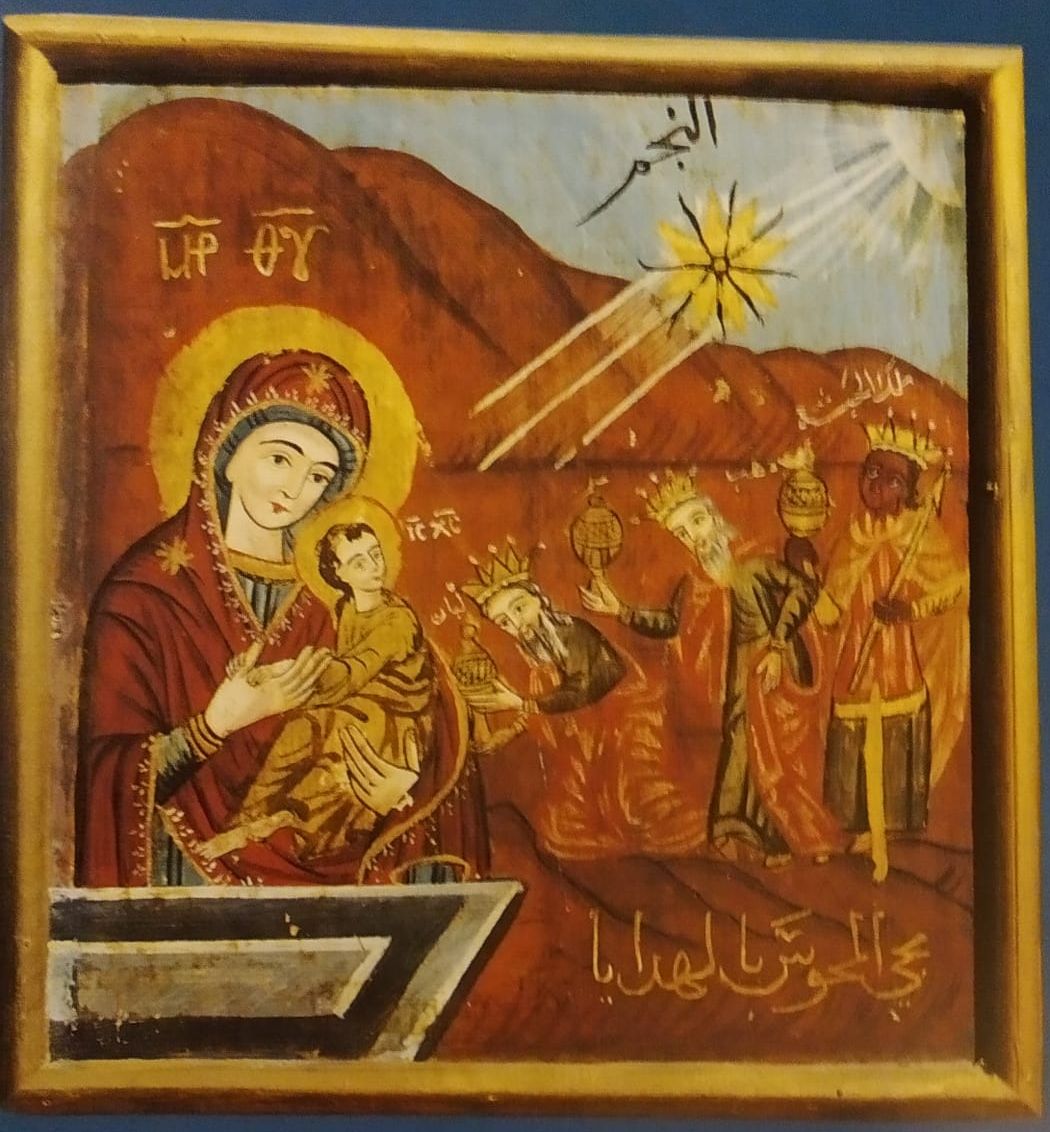
Die verschiedenen Kalender lassen viele Festtage entstehen, für die orthodoxe Welt ist erst heute/morgen Christgeburt. Hier ein Ikone aus Alt-Kairo, die Ibrahim el-Nasekh, einem Ägypter und Yuhanna, einem Armenier, zugeschrieben werden
Middle Class Feelings, Urban Identity and Politics, 1880s-1920s
Öffentlich-online zugänglicher Vortrag des Leibniz-Zentrum Moderner Orient (ZMO) Berlin
Lecture by Dario Miccoli (Ca’ Foscari University of Venice) as part of The Historicity of Democracy Seminar.
Based on a ‘close reading’ of documents from the archives of the Alliance Israélite Universelle (Paris), the Central Archives for the History of the Jewish People (Jerusalem) and from articles found in newspapers published in Egypt in the colonial and early monarchic years, this lecture will look at the consolidation of a middle class Alexandrian Jewish identity and its relation to urban politics and sociability in the period that goes from the early 1880s to the mid-1920s. The lecture will discuss the multiple connections that Alexandrian Jews had with the city in which they lived and its socio-political environment, as well as the ways in which its burgeoning Jewish middle class tried to find a place of its own for example by founding schools, hospitals and cultural associations
The online seminar is free and open to the public upon registration:
Das Institut für Sicherheitsstudien Israels (INSS – The Institute for National Security Studies) in Tel Aviv hat eine Studie veröffentlicht zu Sicherheitsfragen in der Bevölkerung Israels. Bei einer Umfrage (800 Befragte) sollten Sicherheitsgefühle und Perzeptionen bewertet werden, mit teils überraschenden Ergebnissen.
“The National Security Index: The Cognitive Campaign in the Digital Age” von Zipi Israeli und Ruth Pines, Dezember 2021
„The specific issue of the cognitive campaign in the digital age arose in connection with the events of May 2020, especially during Operation Guardian of the Walls, but it is a larger issue of increasing importance, given the nature of Israel’s military conflicts today. This issue combines various elements, including the perception of victory in a military conflict, the changing theaters in military conflicts, and the increasing relative importance of the cognitive, media, and social media arenas. Has the perception of victory become solely cognitive? Does victory belong to those who have declared it? Is it possible to talk about victory without relating to the cognitive element? Feelings and perceptions regarding these aspects play a central role in shaping the Israeli reality. This article discusses these perceptions from the perspective of the Israeli public, based on findings from a public opinion study conducted by the Institute for National Security Studies (INSS) in October 2021. The study was carried out among a representative sample of the adult population of Israel (age 18 and up) and included some 800 participants. Its main findings are presented here.“
Mitten in der Omikron-Welle lockert Israel seine Einreisebeschränkungen. Ab 9. Januar dürfen gegen das Coronavirus geimpfte Touristen wieder einreisen. Allerdings gilt eine Einschränkung.
Am Jahresende doch noch einmal einen Blick auf die Arbeit von Standing Together, eine Arbeit, die ermutigt und Perspektiven zeigt … und die so ein guter Ausklang dieses Jahres sein soll!
Hallo,
My name is Suleiman al-Tihi. I am a student at Sapir College and live in Rahat in the Negev. I am also a newly elected member of the leadership of Standing Together. For the past two weeks, the far-right organization Im Tirtzu has waged a racist campaign against me while I was running for my college’s student union because they did not like the fact that I am an Arab and a national leader in the largest Jewish-Arab grassroots movement in Israel. So I suddenly woke up to an „investigation“ about me on TV, initiated by Im Tirtzu and aided by the far-right Channel 14 News. They dug into my Facebook profile and took posts I wrote at age 13(!) out of context in order to portray me as a „terrorist supporter,“ demanding that I be disqualified from the election and even that the college administration expel me from my studies. But it didn’t work. In the election, I came in 2nd place overall and was elected to the union! The student body at Sapir College proved that Jewish-Arab partnership can overcome racism and incitement.
The students at Sapir College — Jews and Arabs — rejected the attempt to create a divide on campus. The tremendous support I received, and still receive, moved me greatly. Im Tirtzu’s campaign failed because they are not really present on campus, which teaches us how important it is to invest in people and to be connected on the ground across the country.
I invite you to support our movement so that we can be strong on different campuses and in different cities, in the periphery and in the center, and invest in change that grows from the ground up. Each donation will support the movement’s ability to train and accompany activists like myself.
Standing Together P.S. Sapir College, where Suleiman attends, is one of the tens of campuses and places where we are yet to have siginificant organizing efforts. We cannot overstate the frustration we feel when our activist groups in Lod, in Umm al-Fahm, in Sapir and Oranim college, and in Bnei Brak reach out to us for support, and we don’t have the resources to give them the attention they deserve. Standing Together is growing, and providing a political home for thousands of Palestinians and Jews. But with that growth, we need to develop our organizing capacity.
Our ability to mobilize during polarizing times and make an impact is exactly because we organize, all year round, around our shared interests. At the peak of the violence this past May, we were able to mobilize and make an impact because of your support. And now we need you to help us organize, by funding two additional community organizers to our team that will be able to connect with our base, in the Triangle area and on campuses, to recruit, train, engage, and build new leadership.