Mitvims Blick nach Osten

Auch wenn der israelische Thinktank Mitvim unter der Überschrift „Crisis“ aufmacht, hier eine lesenswerte Zusammenstellung israelischer Positionen


The Ongoing Ukraine-Russia Crisis
Analysis and Reactions from Israeli Experts


Over the past two weeks, Mitvim has joined the global community in directing our attention and efforts to the ongoing Russian invasion of Ukraine. During this period, our goal has been to inform the Israeli foreign policy community and public, to provide context for Israel’s role within this broader international development, and to design Israel’s steps in accordance with the crisis. The current events have emphasized the importance of Mitvim as a think tank fully committed to strategic, cross-regional analysis of foreign policy and global politics with an emphasis on diplomacy.  The ongoing crisis represents a landmark moment in the status of the current global order. At Mitvim, we believe that a clear stand by Israel against the Russian invasion is crucial to reaffirm Israel’s place among liberal democracies, especially considering the recent erosion of Israel’s own status within the liberal camp. A clear stand does not negate maintaining open channels of communication with Russia or supporting mediation efforts between the parties. However, Israel’s clear alignment with the liberal world is crucial to address the challenges to its liberal identity both at home and abroad. It is both the wise and morally correct policy choice for Israel as the crisis continues to unfold. Our experts have provided a birds-eye view of the situation, as well as context-specific expertise about the influence of the current crisis and the long-term global dynamic it represents on Israel’s foreign policy. This includes insights on the crisis and Israel-Europe relations, expert analysis on Russia’s decision-making, the role of Turkey, and more. Our researchers have had a central role in policy and public discussions: they have been interviewed extensively on TV and radio, and published in various media outlets both in Israel and abroad. A selection of publications and media interviews can be found below.


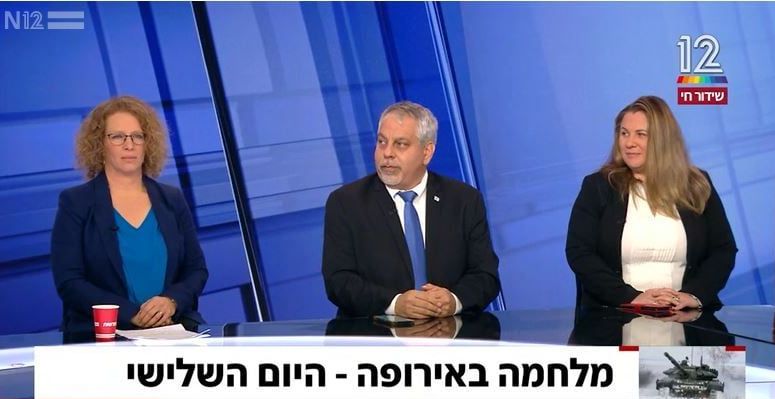
Pictured: Mitvim’s Director of Israel-Europe Relations, Dr. Maya Sion-Tzidkiyahu, and Director of Israel-Middle East Relations Ksenia Svetlova are interviewed on the ongoing crisis in Ukraine on Israel’s Channel 12 World Order Program, along with the Ministry of Foreign Affairs‘ Spokesperson, Lior Hayat.

Russia-Ukraine war may be a defining moment, Israel must make a choice
Dr. Roee Kibrik The singular reason for Israel to avoid completely allying itself with Ukraine is to preserve its ability to respond to Ukraine’s request to serve as a mediator with Russia. Yes, Israel is weighing many tactical considerations, just as every state does when called on to make a decision. Israel’s decision will have long-term implications for its relations with the US and Europe, which are its closest friends and provide it with the vital support it needs for its security, economy and identity. They, too, are asking where Israel stands.
Read More


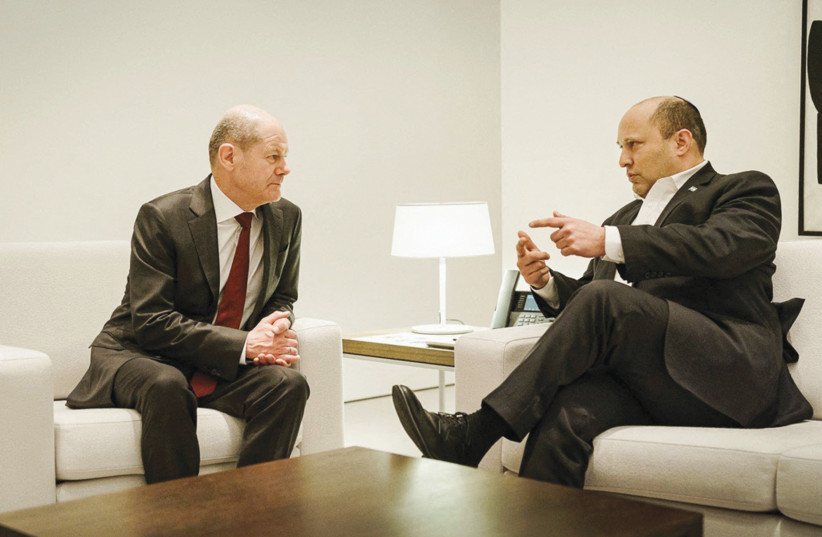
„Prime Minister Naftali Bennett meets with German Chancellor Olaf Scholz in Berlin on Saturday night.“
(photo credit: BPA/Reuters, Jerusalem Post)

„Poland’s Prime Minister Mateusz Morawiecki (left) and European Council President Charles Michel visit the Polish-Ukrainian border crossing Korczowa-Krakovets on Wednesday and meet with people fleeing Ukraine.“(photo credit: Agencja Wyborcza.pl/Reuters, Jerusalem Post)

The Russia-Ukraine war is Europe’s hour to act
Dr. Maya Sion-Tzidkiyahu
The EU – which seemed to be limping from crisis to crisis over the past 15 years, with its foreign policy in disarray – is shaping up in front of our eyes over the past two weeks as a significant proactive body, capable of adopting tough diplomatic decisions despite the harm they cause to its member states. Foreign ministers and heads of member states have consolidated an array of increasingly harsh sanctions as the war in Ukraine has escalated. This is the hour of coordinated multilateral action by peace-loving democracies. This is the hour of Europe.
Read More

A new world order is taking shape in Ukraine
Former MK Ksenia Svetlova
My friends in Moscow could not believe what was happening when I spoke to them in the weeks leading up to the war. They had become so desensitized to the violent propaganda pouring out of state TV media outlets that they no longer noticed. Like so many in Ukraine, they did not believe Putin would actually cross the Rubicon. What can be said for certain is that for far too long, the West ignored Putin’s Russia and the internal processes taking place there. The future will not look like the past.
Read More


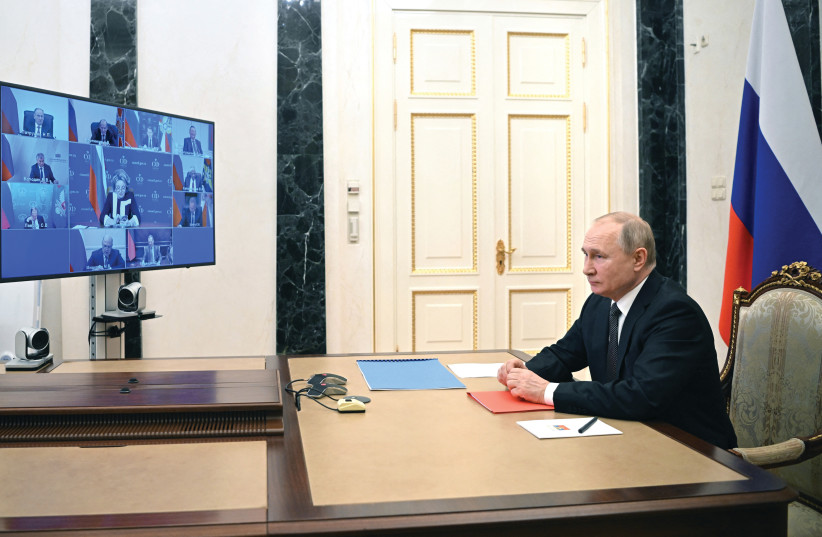
„President Vladimir Putin meets with members of the Russian Security Council via a video link on Friday.“
(photo credit: Sputnik/Kremlin/Reuters, Jerusalem Post)

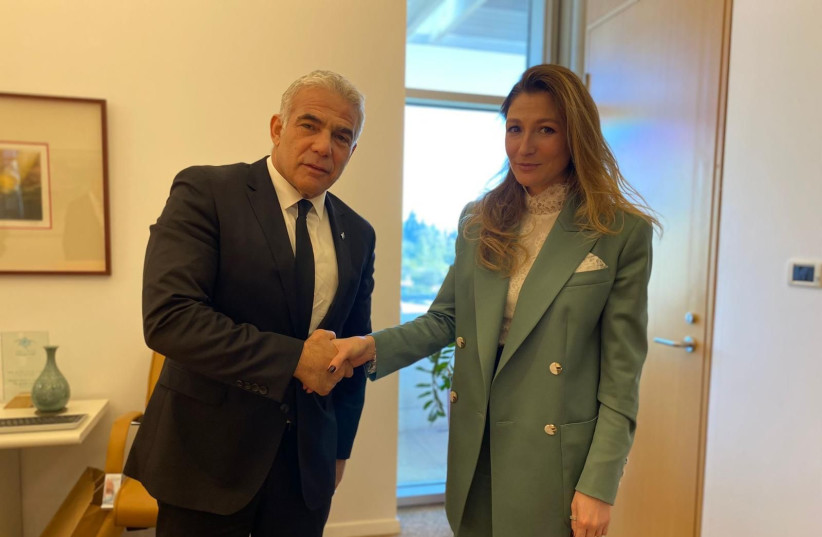
„Israeli Foreign Minister Yair Lapid meets with Ukraine’s Deputy Foreign Minister Emine Dzhaparov“ (credit: Ministry of Foreign Affairs, Jerusalem Post)

What does it mean for Israel to undermine the liberal global order?Dr. Ehud Eiran Israel has had ambivalent relations with the liberal world order. On the one hand, Israel was legitimized by a UN resolution, a key liberal institution. Israelis also broadly identify as members of the Western liberal-democratic camp. However, tensions between Israel and the standard-bearers of western liberalism have been heightened in recent decades. It is important to follow developments closely. They are highly troubling and could constitute an initial indication of the type of challenges facing the international order and Israel in the years to come.
Read More

The bells of the liberal world toll for Israel:
Why taking a stance against the invasion is both the smart and just move

Dr. Gil Murciano
Israel’s position on the Russia-Ukraine conflict thus far is focused on the delicate balance between two seemingly contradictory considerations – its values-based affiliation with the Western camp and its realpolitik need for Russian goodwill. However, adopting a clear stance by joining the global liberal camp in condemning Russia’s invasion of Ukraine serves both of Israel’s considerations. It is simply the just and wise move to make. (Originally published in Hebrew in Haaretz)
Read More


„Demonstration in Tel Aviv at the end of the week in favor of Ukraine and against the Russian invasion“(credit: Hadas Porush, Haaretz)

Mitvim’s Media Mentions
Media Mentions in English and Others Israel Weighs Its Neutrality on Russia-Ukraine Conflict (Former MK Ksenia Svetlova in MediaLine) Putin’s invasion of Ukraine: A wake-up call also for the MENA region? (Dr. Nimrod Goren in ISPI) On the Russian invasion in Ukraine, Israel is at the forefront (Dr. Gil Murciano in Libération)
Media Mentions in Hebrew WATCH: Dr. Maya Sion-Tzidkiyahu and Ksenia Svetlova on Channel 12’s World Order program with Arad Nir on the war in Ukraine (February 26, 2022) WATCH: Former MK Ksenia Svetlova on Channel 13 explaining Putin’s perception of the meeting with Bennett (March 5, 2022) LISTEN: Dr. Nimrod Goren on Galgalatz regarding Turkey’s role in the war in Ukraine LISTEN: Dr. Gil Murciano on Kan’s podcast „Between Biden and Putin: Israel’s Dilemma“ Times have changed, in this war Israel has a moral choice (Dr. Gil Murciano, Haaretz) Towing the line, Turkey balances its position more assertively than Israel (Amb. (ret.) Michael Harari, Haaretz)

Mitvim’s research and analysis provide an opportunity to help shape Israel’s future well-being. Philanthropic support enables Mitvim to lead in innovative research and the development of new policy knowledge. It maintains our efforts to promote Israel’s regional belonging and advance Israeli-Palestinian peace. We invite you to support our work challenging paradigms in Israeli foreign policy.
Email info@mitvim.org.il

Über eine aktuelle Debatte

Geht es um Inhalt oder um das Etikett?

In der Debatte um den aktuellen Bericht von amnesty international zur Situation in Israel-Palästina schlagen (gerade in Deutschland) die Wellen wieder einmal hoch. Signalworte stoßen bekannte Reaktionen an, der Inhalt des Berichts gerät dabei fast aus dem Blick.

Hanno Hauenstein in der Berliner Zeitung versucht eine sachlich-differenzierende Einordung.

Der Bericht (englisches Original) selbst kann hier heruntergeladen werden, hier die Einordung von ai Deutschland (geänderte Fassung).

Das Modell von zwei Staaten …

Als Modell ist die zwei-Staaten-Lösung weiterhin „einzige Lösung“, sagt Mona Juul, eine der „Oslo-architects“ und VN-Botschafterin Norwegens im Interview.

“We think from the Norwegian side, absolutely that the situation on the ground between the Israelis and the Palestinians, 30 years after the Madrid Conference, merits increased focus on the need for the Israelis and the Palestinians to get back into the negotiating table,” she told JNS in a discussion at the Norwegian Mission to the United Nations. Juul was referring to the 1991 bilateral Israeli-Palestinian negotiations in Madrid that eventually led to the exchange of letters and the subsequent, secretive Oslo Accords discussions that Juul facilitated, together with her diplomat husband, Terje Rød-Larsen.

“It’s obvious the two-state solution is the only solution, and there are prescriptions on what that solution could look like. What is lacking, of course, is the necessary political will on both sides to compromise and to find that common solution,” she added.”

OCHA Update

Alle zwei Wochen bietet OCHA, das United Nations Office for the Coordination of Humanitarian Affairs (hier das für Palästina zuständige Büro), ein Update über die von ihnen gesammelten Informationen.

Hier der Link zum Berichtszeitraum bis 10. Januar 2022

Home
Home

Kleine Erfolgsgeschichten…

Aus der Mailinglist des HolyLand Trust Bethlehem: Nachhaltigkeit im C-Gebiet

We know here that the natural world speaks of the sacred, that seemingly insignificant people can bring great change and unexpected good news and words of peace transform lives. We sincerely believe the projects we have planned for 2022 can be good news for the people of Bethlehem today bringing peace, caring for creation and working for justice.


This spring, we will start the construction of our Greenhouse which will be located in area C – the area of Palestine that is controlled by Israeli Military law. In this zone, the impact of the occupation is felt every day in a myriad of ways. Water is controlled and is in short supply, the land is wrecked by military installations and home demolitions and farmers are often cut off from their fields unable to tend crops and animals.

Why are we building a greenhouse in this area?

The general objective is to improve the social and economic conditions of people who live in this zone and do not have a reliable source of income. We want to ensure food security for them in this uncertain context – this project aims to increase the productive capacity of 1 dunam of agricultural land through greenhouses and give training and employment to five rural workers in the target location.

This project will sustain itself as workers are supported to grow and sell vegetables. It will create a source of income and high quality products, strengthen the agricultural sector and enhance family participation in generating income in the Palestinian society. It will stimulate the economy and improve the economic situation of the unemployed workers. The project will serve the needs of the local Palestinian community. This project is fulfilling the Palestinian people needs in having income generating projects.

Your kind support has provided 60% of the money needed to launch this new initiative, but to be able to accomplish the project we need to raise more funds. Your donation will change lives, protect the sacred land and speak to people of hope, justice and a more secure future. Help us today to be good news to the people of Palestine.  

Read the success story of our 2017 green house project around Bethlehem area

Völkerfamilie der Moderne

Online-Portal zu Fragen der Finanzierung der Weltorganisation

Ein Service der Deutschen Gesellschaft für die Vereinten Nationen (DGVN)

Spätestens mit der Gründung der Vereinten Nationen im Jahr 1945 stellte sich die Frage, wie die Arbeit der Welt­organisation finanziert werden sollte. Welche Aus­gaben gehörten in den zentralen VN-Haus­halt und welche nicht? In welcher Höhe würden die verschiedenen Mitglied­staaten Beiträge zahlen? Wie sollte der Haus­halts­prozeß gestaltet werden, in dem über Ein­nahmen und Aus­gaben ent­schieden wird?

Derartige Finanz­fragen sind seit jeher hoch­politisch, wie sich an den Unterorganisationen wie der UNRWA oder an der UNESCO sehen läßt. Neben einem Ein­mal­eins zur VN-Finanzierung finden sich hier der umfang­reiche und einzig­artige DGVN-Daten­satz zur Finanzierung des VN-Systems mit aktuellen Finanz­daten, die bis zur Gründung der Vereinten Nationen im Jahr 1945 zurück­reichen.auch

Zoom Konferenz: Art and Citizenship

Dar al-Kalima University cordially invites you to attend our 23rd International Conference entitled „Art and Citizenship“ Conference on Wednesday and Thursday, December 15th and 16th, 2021 from 10:00AM to 19:30PM via this zoom link; where you can choose between Arabic and English languages.

Simultaneously with the Conference – held in Bethlehem – and as part of the Conference, three sessions shall be held in Lebanon, Gaza, and Amman, according to the following schedule:
15.12.2021 In Amman in cooperation with the Royal Institute of Religious Studies
16.12.2021 In Gaza, at the headquarters of Dar Al-Kalima University.
16.12.2021 In Beirut: in cooperation with the Dar Al-Kalima Association for Arts and Culture.

Please note that all the times are based on Jerusalem time (GMT+2). 

To Check the Program, please click the link below:

https://www.daralkalima.edu.ps/uploads/files/Program%20in%20english.pdf


For more information or inquiries please contact: conference23@daralkalima.edu.ps

Der Truman Institut Atlas des jüdisch-arabischen Konflikts

Verfasser: Dr. Shaul Arieli

Wenn auch unter einem sehr diskussionswürdigen Titel ist am Harry S. Truman Forschungsinstitut für Frieden an der Hebräischen Universität in Jerusalem ein gelungener illustrierter Atlas erschienen, der – mit Unterstützung der Böll Stiftung (Tel Aviv) – auch frei herunterladbar ist (Englisch und Deutsch).

The Truman Institute Atlas of the Jewish–Arab Conflict

The Israeli-Palestinian conflict has already raged for a century, and will probably continue to be the chief concern of the two peoples that live in Israel/Palestine for many years to come. This atlas offers a clear and concise explanation of the development of the conflict in its various aspects, focusing particularly on territorial, demographic, and diplomatic aspects. It begins with the start of modern Jewish immigration to the country and ends at the present day.

Dozens of colored maps present a wealth of information in an accessible form, providing a clear graphic illustration of the historical course of the confl­ict. Concise accompanying texts enhance the maps and create a credible and informative historical narrative.

Iber der Grenets / Über die Grenze

20. Nov. 2021, 18:30 – 20:00 Uhr MEZ – Live Digital Event – Kostenfreie und unverbindliche Anmeldung

Einladung zum Podiumsgespräch  „Iber der grenets / Über die Grenze. Jiddische Literatur und Kultur heute“ ein, um dieses spannende und relevante Thema näher zu beleuchten.

Mit „Iber der grenets / Über die Grenze“ erscheint erstmals in einem deutschen Verlag eine umfangreiche Sammlung jiddischer Kurzgeschichten in standardisierter Orthographie. Die Anthologie vermittelt Einblicke in die Lebenswelten einer weltweit zerstreuten Kulturgemeinschaft.

Das Jüdische Museum Berlin und düsseldorf university press | De Gruyter präsentieren diesen Meilenstein im Rahmen eines Podiumsgesprächs zum Thema „Jiddische Literatur und Kultur heute“ und einer jiddisch-deutschen Lesung.

Vortragende: Prof‘in. Drin. Efrat Gal-Ed, Heinrich-Heine-Universität Düsseldorf, Institut für Jüdische Studien; Tal Hever-Chybowski, Maison de la culture yiddish – Bibliothèque Medem Paris, Directeur, Prof. Dr. Andreas Kilcher, ETH Zürich, Professor für Literatur- und Kulturwissenschaft, Drin. Ane Kleine-Engel, Jüdisches Museum Berlin, Leiterin ANOHA, Prof‘in. Drin. Sabine Koller, Universität Regensburg, Institut für Slavistik, Professur für Slavisch-Jüdische Studien

Zum Buch: Iber der grenets / Über die Grenze – Herausgegeben von Efrat Gal-Ed, Simon Neuberg und Daria Vakhrushova.

Die Anthologie „Iber der grenets / Über die Grenze“ umfaßt Werke von dreißig Autorinnen und Autoren und vermittelt Einblicke in die jiddischen Lebenswelten im Europa der Zwischenkriegszeit, in Nord- und Südamerika, der Sowjetunion und Israel vor bzw. nach der Schoah. Einige der zuvor nur in Periodika publizierten Kurzgeschichten werden hier erstmalig in Buchform zugänglich gemacht. „Iber der grenets“ ist der vierte Band der Reihe „Jiddistik: Edition und Forschung“. Sie ist bislang weltweit die einzige, die moderne jiddische Literatur in wissenschaftlichen Editionen veröffentlicht.

Kommentierte Bibliographie online

Hilfreicher Service der Rosa Luxemburg Stiftung

Linke und Antisemitismus, Nationalsozialismus, Shoah, (links-)jüdische Geschichte, Nahostkonflikt“

Das Projekt, das von Lisa Albrecht, Christoph Gollasch, Peter Ullrich und Florian Weis betreut wird und auf der kommentierten Bibliographie «Linke, Nahostkonflikt und Antisemitismus», erstmals erschienen im Jahr 2012, aufbaut, soll zu einer Versachlichung der Diskussion beizutragen. Im Zentrum steht das Anliegen, Zugänge zu Hintergrundwissen, insbesondere wichtigen Forschungsergebnissen aufzuschließen. Damit soll eine Grundlage zur (selbst-)kritischen Reflexion des schwierigen Themas geschaffen werden. Zugleich soll das Unterfangen anregen, den einseitigen Positionen, schablonenhaften Schuldzuschreibungen und ritualisierten Phrasen komplexere Perspektiven entgegensetzen. Schließlich befinden sich die Gesellschaft und somit auch die miteinander verschränkten Themen in einem steten Wandel. Umso wichtiger, aber auch schwieriger ist es, einen Überblick über die Vielzahl relevanter Publikationen und Debattenbeiträge zu behalten.

Es werden (ohne Vollständigkeit garantieren zu können) einige der aus der Sicht der Betreuenden wichtigen Beiträge zum Themenfeld «Linke, Antisemitismus, Nationalsozialismus, Shoah, jüdisch-linke Geschichte und Nahostkonflikt» in Form von Rezensionen vorgestellt.

Als Darstellung der – aus politisch linker wie wissenschaftlicher Perspektive – elementaren Beiträge ist diese kollektive Bibliographie vor allem für die Nutzung in der politischen Bildungsarbeit gedacht. Doch auch Studierende, Wissenschaftler:innen und alle anderen Interessierte werden sich schnell einen Überblick zum Stand der Forschung verschaffen können. Neben der thematischen Gliederung bietet eine Suche nach Schlagwörtern und Autor:innen weitere Zugänge. Schriften, die in der Bibliothek der RLS oder online verfügbar sind, sind auch direkt verlinkt.

Wie die Debatte selbst ist diese Bibliografie work in progress – Gerade die Übersichtlichkeit der Website scheint noch ausbaufähig.

Literaturhinweise und eigene Beitragsvorschläge werden per Mail erbeten an florian.weis@rosalux.org