
Aus dem aktuellen Newsletter von Torat Tzedek

Aus dem aktuellen Newsletter von Torat Tzedek
(Bild: FAU/VDem)
Friedrich-Alexander-Universität Erlangen-Nürnberg, 13. März 2025 / Weitere Informationen
Der zunehmende Einfluß antipluralistischer Parteien geht oft mit einer geringeren Wissenschaftsfreiheit im jeweiligen Land einher. Dies ist eines der Ergebnisse des aktuellen Academic Freedom Index (AFI), der am 13. März 2025 veröffentlicht wird. Forschende der Friedrich-Alexander-Universität Erlangen-Nürnberg (FAU) veröffentlichen den Index jährlich in Zusammenarbeit mit Kolleginnen und Kollegen des V-Dem-Instituts an der Universität Göteborg. Er umfaßt 179 Länder weltweit.
Der diesjährige Academic Freedom Index zeigt, daß acht der im Index erfaßten Länder im Jahr 2024 deutlich höhere Wissenschaftsfreiheit aufweisen als vor zehn Jahren, während die Werte in 34 Ländern oder Territorien gesunken sind. Zu den Ländern, in denen der Rückgang der Wissenschaftsfreiheit statistisch und substanziell signifikant war, gehören mehrere Demokratien, wie beispielsweise Argentinien, Finnland, Griechenland, Israel, Portugal und die Vereinigten Staaten, um nur einige Beispiele zu nennen. Auch in Österreich und Deutschland war der Rückgang der akademischen Freiheit meßbar, in beiden Fällen aber bleibt der Rückgang gering und ist noch nicht substanziell signifikant, so die Autorinnen und Autoren des Berichts. Obwohl die Wissenschaftsfreiheit in Demokratien nach wie vor deutlich besser geschützt ist als in Autokratien, verdeutlichen diese Beispiele, daß die Wissenschaftsfreiheit auch in Demokratien unter Druck geraten kann. Daher konzentriert sich der diesjährige Bericht zum Academic Freedom Index auf Länder, in denen mehrere Parteien zur Wahl zugelassen sind.
Wahlerfolg antipluralistischer Parteien als Faktor
Das AFI 2025 Update untersucht den Wahlerfolg antipluralistischer Parteien als plausiblen Faktor für den Rückgang der akademischen Freiheit. Die Daten des Berichts decken einen Zeitraum von 50 Jahren ab und zeigen folgende Korrelation: Länder, in denen antipluralistische Parteien wenig bis gar keinen politischen Einfluß haben, weisen tendenziell ein hohes Maß an Wissenschaftsfreiheit auf, während die Wissenschaftsfreiheit dort, wo Antipluralisten einflußreich sind, typischerweise schwindet. Dabei spielt die Präsenz antipluralistischer Parteien in der Opposition für einen Rückgang der Wissenschaftsfreiheit kaum eine Rolle; die Wissenschaftsfreiheit ist vielmehr dort gefährdet, wo antipluralistische Parteien Teil der Regierung werden oder sind.
Spotlight: Argentinien, Polen und die Vereinigten Staaten
Anhand von drei Länderbeispielen – Argentinien, Polen und den Vereinigten Staaten – zeigt das AFI-Update, wie antipluralistische Parteien die Wissenschaftsfreiheit untergraben, sobald sie an der Macht sind. In allen drei Fällen nutzten antipluralistische Politiker mit Regierungsverantwortung auf nationaler oder bundesstaatlicher Ebene ganz ähnliche Methoden, um mehr Kontrolle über die Wissenschaft zu erlangen, insbesondere durch die Einschränkung der institutionellen Autonomie oder der Freiheit der Lehre sowie durch das Streichen von Finanzierung für Forschung, die der jeweiligen politischen Vision widerspricht. Einen besonders bemerkenswerten Rückgang verzeichnet Argentinien, wo der AFI-Wert innerhalb eines Jahres von einem sehr hohen Wert von 0,97 auf nur noch 0,69 sank (auf einer Skala von 0 bis 1, niedrig bis hoch). Der Fall Polen hingegen zeigt, daß der Rückgang der Wissenschaftsfreiheit auch gestoppt werden kann, wenn antipluralistische Parteien die Macht verlieren. Polen erreichte 2014, also vor den Parlaments- und Präsidentschaftswahlen 2015, einen sehr hohen AFI-Wert von 0,98. Im Jahr 2022 war das Land dann mit einem AFI-Wert von 0,73 auf einem Tiefpunkt angekommen. Nach den Parlamentswahlen 2023 erholte sich die Wissenschaftsfreiheit im Land jedoch wieder und erreichte nun einen Wert von 0,87 auf der AFI-Skala.
Jack Omer-Jackaman, Editor des US-amerikanischen Blogs Fathon – nach eigenem Verständnis „For a deeper understanding of Israel, the region, and global antisemitism“, reflektiert über Tranp und alles was damit zusammenhängt …: Opinion | An Elementary Truth: Gaza is Palestinian

Jack Omer-Jackaman is the author of Caught Somewhere Between Zion and Galut: Israel, Zionism and Anglo-Jewish identity 1948-1982 (2017). In his lengthy and passionate Zionist critique (on Fathon) he argues that Trump’s peace plan is duplicitous and self-interested in intent, irrational in execution, and will be dangerous and cruel in consequence for Palestinians and Israelis alike.
Hanno Hauenstein ordnet auf dem Blog Jacobin.de die Logik hinter den Aussagen des ‚Antisemitismusbeauftragten der Bundesregierung, Felix Klein‘ ein, der Trumps Gazaplänen etwas Positives abgewinnen konnte ….: Bedingungslose Unterstützung für Israels Krieg gegen Gaza – allgemein geltendes Völkerrecht spielt dabei keine Rolle mehr …

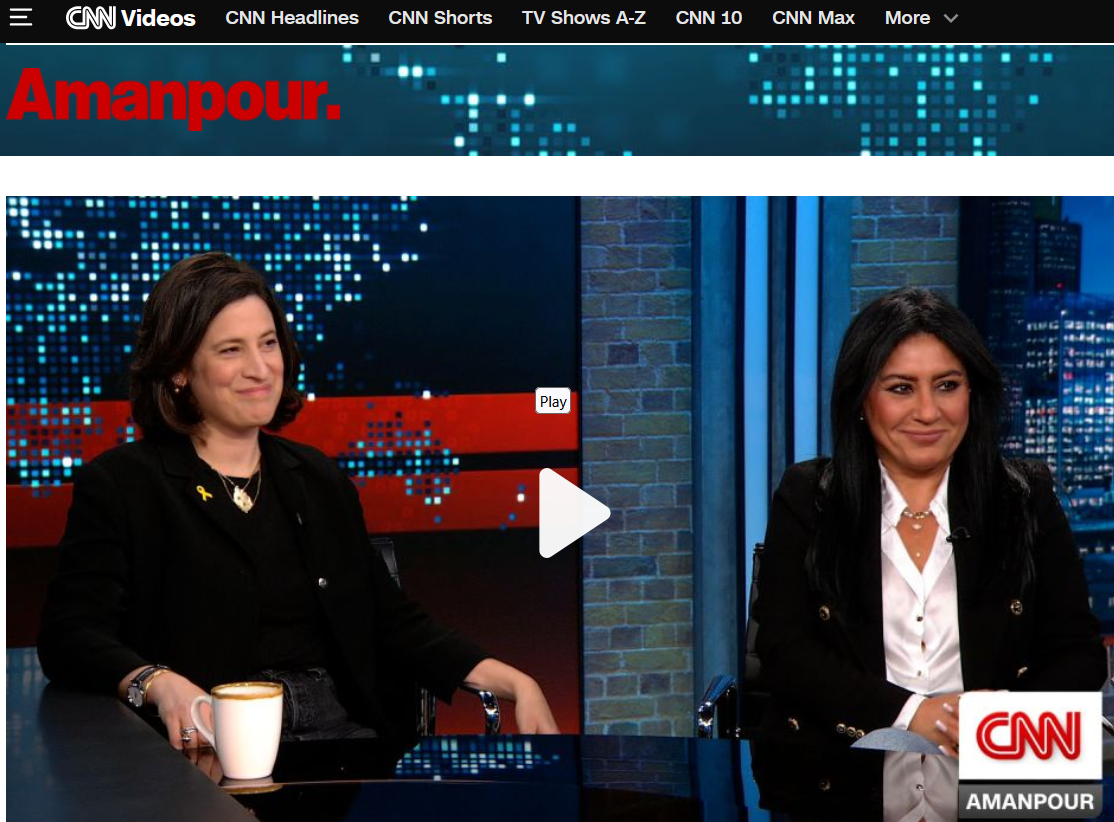
CNN: Christiane Amanpour speaks with Rula Hardal and May Pundak, the co-directors of ‚A Land for All‘
Two-state solution ‚with a twist‘: Israeli and Palestinian activists share their practical vision for the future
Gegen das Schwarz-Weiß-Denken: Buber-Rosenzweig-Medaille 2025 an Saba-Nur Cheema und Meron Mendel
Mitschnitt der Verleihungszeremonie und Artikel auf ndr.de

Givat Haviva Survey on Attitudes Between Jews and Arabs in Israel 2025
„‘The level of fear is very, very high. Our job is to tell them that this is not the time to duck down and wait for the tsunami to end. This is the time to show up,’ said Mohammad Darawshe, director of strategy for Givat Haviva, which organized the survey.“
Bericht von Michele Chain auf RNS
Aus dem Bericht von Givat Haiva:

„Make Freedom Ring“ is organizing an international classical concert series that draws attention to the current humanitarian catastrophe in Gaza and collects donations for various aid organizations.
These concerts has been produced by a loose collective of musicians and culture workers across London, Berlin, Lisbon, and Barcelona. You can find us on Instagram @makefreedomring2024 and at makefreedomring.co.uk.

Tickets: 18. März 2025 Berlin | 7. April 2025 München – [Oxfam]
© Studiocanal – Trailer
„Wie läßt sich heute einer jungen Generation von der Shoa erzählen? Der Franzose Michel Hazanavicius versucht es in seinem neuen Film »Das kostbarste aller Güter« mit einer mehrfachen Verfremdung: Er nutzt Animation, um keine realen Gräuel darstellen zu müssen, und er erzählt es in Form eines Märchens. Es war einmal … „
Filmkritik von Thomas Abeltshauser auf dem Portal: epd-film.de
Israel ■ Palästina ■ Deutschland — zusammen denken
