
Ein Beitrag zur Debatte um den Amnesty-Bericht von Saba-Nur Cheema (Frankfurt/M.):
„Alle Welt redet über Antisemitismus und Apartheid. Nur die palästinensische Seite nicht. Warum?“
Frankfurter Rundschau (10. Februar 2022)
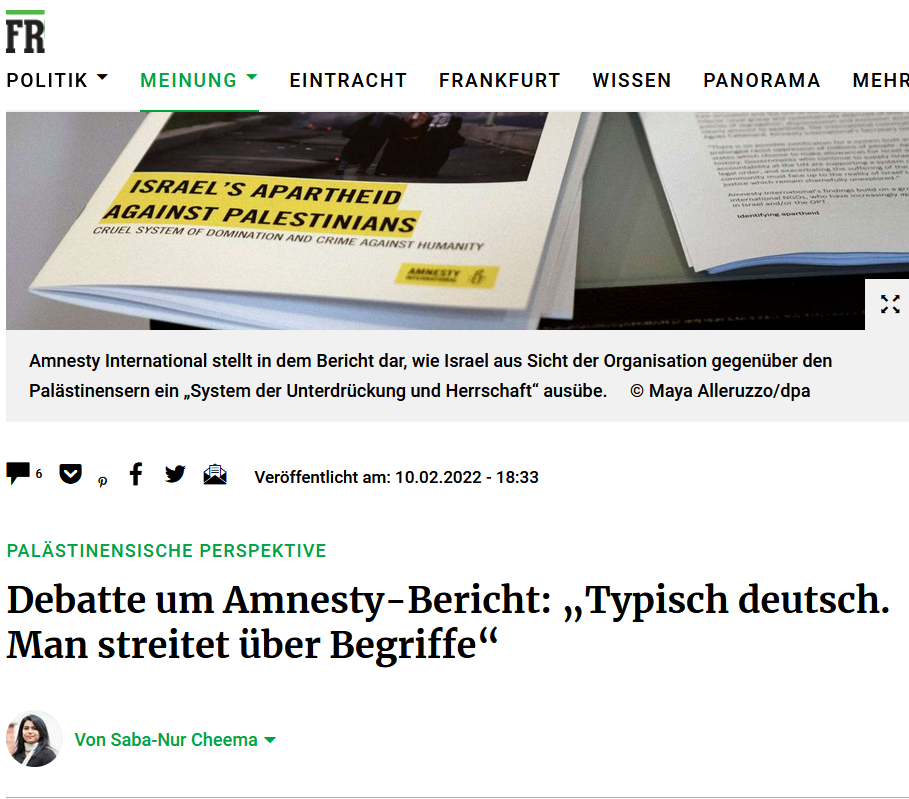
Ein Beitrag zur Debatte um den Amnesty-Bericht von Saba-Nur Cheema (Frankfurt/M.):
„Alle Welt redet über Antisemitismus und Apartheid. Nur die palästinensische Seite nicht. Warum?“
Frankfurter Rundschau (10. Februar 2022)
Die Tötung von Anführern ist kein wirksames Mittel der Terrorbekämpfung. Der IS, al-Qaida und ihre Ableger nähren sich aus den Krisen weltweit.
Ein Beitrag von Mohammad Abu Rumman, Politikwissenschaftler und Direktor des Politics and Society Institute in Amman. Von 2018 bis 2019 war er Minister für Kultur und Jugend in Jordanien
Hier der Link zu IPG (IPG-Journal Newsletter / FES)
| Film Programm LONELINESS / UNITY | الوحدة | |
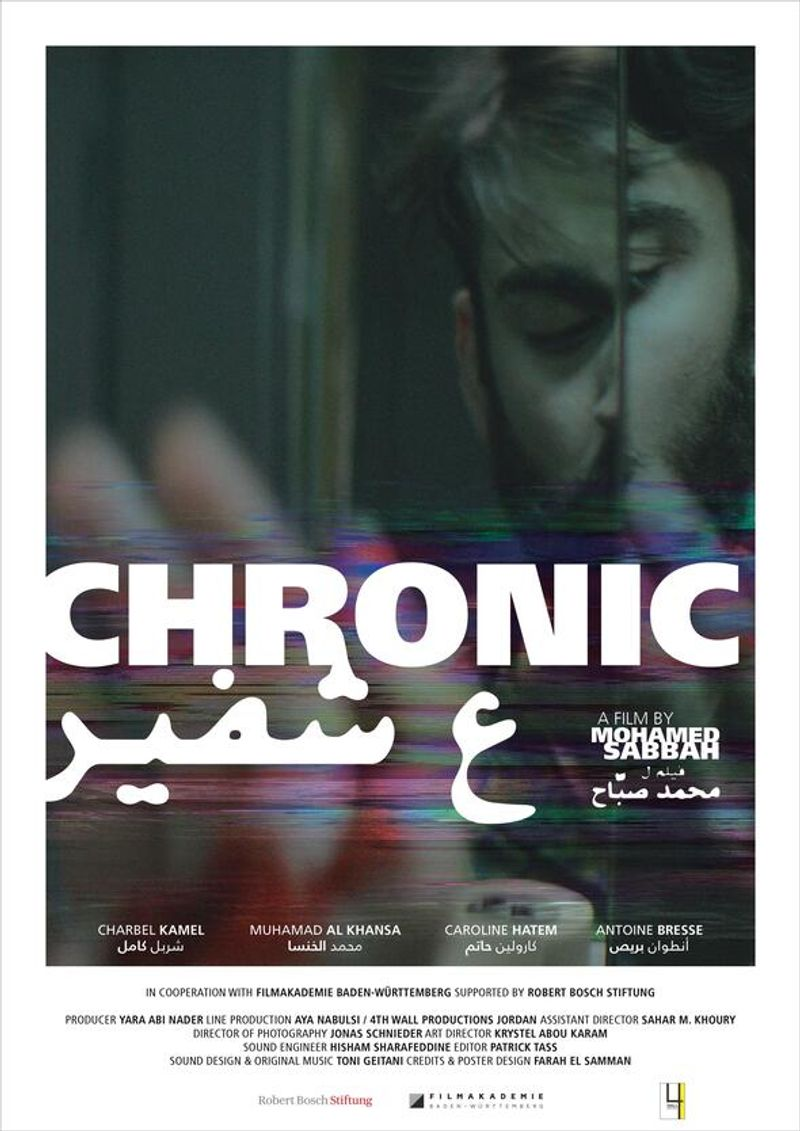
| Kuratiert von Irit Neidhardt (mec film) ab 3.2. 2022 für vier Wochen bei AFLAMUNA online Ohne Geoblocking, ohne Gebühren, mit Registrierung LONELINESS/UNITY | الوحدة (das arabische Wort für Einsamkeit und Einheit ist im Arabischen identisch | in Arabic the word for loneliness and unity is the same) Curatorial text by Irit Neidhardt Many posters of Arab arthouse films of the past ten years show someone from behind or leaving, sometimes looking away. In rare cases where a character is looking at the camera there is still a distance, be it created by a curtain or by the person standing far afield. When the films show in Europe, the programmers usually do not use these posters. They look for a film still with the protagonist making eye contact with the viewer as is custom for the promotion of Western movies. As a distributor of several of these films, I first found this disturbing. Don’t programmers see that the person needs protection? At the same time, didn’t the director make the film to connect with the world? Looking at older Arab film-posters, it appears that protagonists of films dealing with loneliness are less hidden. What role does loneliness play in Arab cinema, and how did it change over time? Loneliness, the mental pain of being isolated, always relates to the social. It seems to be specific to the Arabic language, though, that the word for loneliness, wehda, also means unity. For example, in English, French, or German, loneliness and unity are antipodes. Painful isolation has been integral to Arab cinema since its inception. continue in English | in Arabic |
| Die Filme | The Films (all Filme in arabischer Sprache mit englischen Untertiteln | all films in Arabic with English subtitles) 3.-10.2.2022 Fertile Memory (Michel Khleifi, Palestine 1980, 99 min) Quneitra 74 (Mohamad Malas, Syria 1974, 20 min) kein Dialog | no dialogue 11.-16.2.2022 Man of Ashes (Nouri Bouzid, Tunisia 1986, 109 min) The Memory (Mohamad Malas, Syria 1975, 13 min) 17.-23.2.2022 The Mice Room (Rufy’s Collective, Egypt 2014, 85 min) Dry Hot Summers (Sherif Elbendary, Egypt 2015, 30 min) 24.2.-2.3.2022 Chronic (Mohamed Sabbah, Lebanon 2017, 99 min) |
Teacher management in refugee settings
Global sind 70,8 Millionen Menschen Vertriebene und ohne Bleibe („displaced people“); dies ist die höchste Anzahl seit dem zweiten Weltkrieg. Etwa 25,9 Millionen davon sind auf der Flucht und die Hälfte davon sind Kinder. Damit entstehen völlig neue Anforderungen an Bildung und eine Form von Bildungssystem, sowohl organisatorisch als auch inhaltlich und in der konkreten Praxis. Wie kann das Recht auf Bildung und eines der VN-Nachhaltigkeitsziele (Sustainable Development Goals, SDG) für Menschen auf der Flucht gerade in den Refugee Camps einigermaßen umgesetzt werden? Welche Erfordernisse ergeben sich daraus an die dort tätigen Lehrer und Lehrerinnen und wie kann dabei überhaupt strukturiert und geplant gearbeitet werden?
Das International Institute for Educational Plannung in der UNESCO und der Education Development Trust, finanziert von der Open Society Foundation, haben eine Studie zur Situation von Lehrplanung und Schuldbildung in den UNRWA-Schulen in Jordanien veröffentlicht.
“In fact, Goal 4 of the United Nations (UN) Sustainable Development Goals (SDGs), which seeks to ‘ensure inclusive and equitable quality education and promote lifelong learning opportunities for all’, remains far out of reach for many of the world’s refugees. According to a recent report from the International Rescue Committee (IRC), refugees are largely excluded from SDG-related data collection, monitoring frameworks, and national reporting and development plans. As of 2018, only 63% and 24% of refugees had access to primary and secondary schooling respectively. There is therefore an urgent need to improve the equitable provision of quality education that is inclusive of refugees.
Effective teacher management is a key policy lever for ensuring inclusive, equitable and quality education systems. Research has shown that the quality of the teaching workforce is the most important factor affecting student learning among those that are open to policy influence. In crisis and displacement situations, the role of teachers is particularly significant; they are the ‘key to successful inclusion’ and are sometimes the only educational resource available to students. Teachers are a source of continuity in students’ disrupted lives; they play a key role in developing their social and emotional skills and in protecting and supporting their scholastic success. However, teachers working in refugee contexts are unable to play this crucial role without appropriate support and training to be able to handle the often overcrowded, mixed-age and multilingual classrooms. Although teachers and teaching practices have received increasing attention in education in emergencies research in the last few years, most of the data available about teachers of refugees are limited to numbers of teachers, qualifications and certification, and compensation. Indeed, it is understandable that these data are cited most often in the discourse, considering that mass shortages, particularly of qualified teachers, are a significant problem ‘across displacement settings, both at the onset of crisis and in cases of protracted displacement’.
More research is needed – particularly from the perspectives of teachers in refugee settings – to identify the many challenges they face and to support the development of strategies to overcome them. Challenges include a lack of appropriate preparation to provide psychosocial support and practise self-care, uncertain career opportunities, financial and social insecurity, language barriers, gender inequality, and a lack of coordination between the many non-governmental and governmental actors involved. As more emergencies become protracted crises and refugee populations continue to grow, there is an urgent need for evidence to guide the development and implementation of policies for the effective management of teachers working with the populations affected. Such research should pay attention to the dynamics and context of the displacement crisis, focusing on teachers in refugee settings rather than teachers of refugees, as not only can the global refugee crisis change from day to day with the outbreak of new crises, including climate-related emergencies, but sometimes host communities are just as vulnerable, if not more so, than their refugee peers. In other words, research is needed that will align with the ‘whole society approach’ advocated by the international community and support planning for the society as a whole instead of planning in parallel for the host community and the refugee community” S. 11-12.
Zum Dokument
Als Modell ist die zwei-Staaten-Lösung weiterhin „einzige Lösung“, sagt Mona Juul, eine der „Oslo-architects“ und VN-Botschafterin Norwegens im Interview.
“We think from the Norwegian side, absolutely that the situation on the ground between the Israelis and the Palestinians, 30 years after the Madrid Conference, merits increased focus on the need for the Israelis and the Palestinians to get back into the negotiating table,” she told JNS in a discussion at the Norwegian Mission to the United Nations. Juul was referring to the 1991 bilateral Israeli-Palestinian negotiations in Madrid that eventually led to the exchange of letters and the subsequent, secretive Oslo Accords discussions that Juul facilitated, together with her diplomat husband, Terje Rød-Larsen.
“It’s obvious the two-state solution is the only solution, and there are prescriptions on what that solution could look like. What is lacking, of course, is the necessary political will on both sides to compromise and to find that common solution,” she added.”

18. Januar 2022 – 18.00-19.00 Uhr
Deutschland – Neue(?) Innen-Außenpolitik
Einladungslink für Zoom: Anmelden unter: online@diAk.org
Seit am 13. Juni 2021 eine neue Regierung die Geschäfte in Israel übernommen hat, ist die Nahostpolitik in Bewegung geraten. Innenpolitisch ist zum ersten Mal eine arabisch-palästinensische Partei in der Koalition vertreten. Auch gesellschaftlich bilden sich neue Dynamiken in dem Verhältnis der einzelnen Gruppen zueinander aus. Zugleich versucht man eine Konfliktregulierung durch soziale und wirtschaftliche Maßnahmen gegenüber den Palästinensern auf eine neue Basis zu stellen.
Auch die neue deutsche Regierung sieht das Verhältnis zu Israel als ein Grundpfeiler der Außenpolitik an. In ihrer Regierungserklärung schreibt sie die bisherige Politik fort. Die besondere Verpflichtung Deutschlands gegenüber Israel wird betont, das Bekenntnis zur Zwei-Staaten-Lösung beschreibt die menschenrechtliche Grundlage deutscher Außenpolitik und bleibt in der Praxis folgenlos. Diese Diskrepanz der deutschen Politik gegenüber Israel hat in den letzten Jahren zu einer Lähmung der Handlungsfähigkeit geführt.
Was ist von der neuen Regierung zu erwarten?

Hansjörg Dilger und Cilja Harders im Gespräch
Gesprächsreihe mit dem Deutschen Theater:
20. Januar, 19:00 Uhr – Deutsches Theater, Schumannstraße 13a 10117 Berlin

Moderne Städte sind religiös vielfältig. Tempel, Gebetshäuser, Kirchen, Moscheen und andere Orte des Glaubens stehen nebeneinander. Wann tritt eine Religion in Erscheinung? Wessen Religion bleibt unsichtbar? Wann bekommen die Götter ein Haus? Welche Rolle spielt das koloniale Erbe der Städte?
Hansjörg Dilger ist Professor für Sozial- und Kulturanthropologie an der Freien Universität Berlin und er leitet ein Forschungsprojekt zum Thema „religiöse Vielfalt“ im Sonderforschungsbereich „Affektive Societies“ an der Freien Universität Berlin. Im Gespräch mit Cilja Harders erkundet er das spannungsreiche Wechselspiel von Sichtbarkeit und Unsichtbarkeit in Weltstädten wie Berlin oder Tanzania.
Cilja Harders ist Professorin und Leiterin der Arbeitsstelle für Politik im Maghreb, Mashreq und Golf am Otto-Suhr-Institut für Politikwissenschaft an der Freien Universität Berlin.
Die Veranstaltung findet in Kooperation mit dem Sonderforschungsbereich „Affective Societies“ statt und wird gefördert von der DFG – Deutsche Forschungsgemeinschaft.
Für den Einlaß gilt die 2G-Plus Regel. Das Tragen einer FFP2 Maske ist für den gesamten Besuch erforderlich. Bitte informieren Sie sich vor der Veranstaltung über die aktuellen Hygiene-Regelungen des Deutschen Theaters:https://www.deutschestheater.de/service/theater-und-corona/
Der Eintritt ist frei. Eine vorherige Anmeldung beim Deutschen Theater ist nicht notwendig. Weitere Informationen finden Sie unter: https://www.deutschestheater.de/programm/spielplan/mit-wundern-rechnen_dilger/5745/
18. Januar 2022 – 18.00-19.00 Uhr
Deutschland – Neue(?) Innen-Außenpolitik
Einladungslink für Zoom: Anmelden unter: online@diAk.org
Seit am 13. Juni 2021 eine neue Regierung die Geschäfte in Israel übernommen hat, ist die Nahostpolitik in Bewegung geraten. Innenpolitisch ist zum ersten Mal eine arabisch-palästinensische Partei in der Koalition vertreten. Auch gesellschaftlich bilden sich neue Dynamiken in dem Verhältnis der einzelnen Gruppen zueinander aus. Zugleich versucht man eine Konfliktregulierung durch soziale und wirtschaftliche Maßnahmen gegenüber den Palästinensern auf eine neue Basis zu stellen.
Auch die neue deutsche Regierung sieht das Verhältnis zu Israel als ein Grundpfeiler der Außenpolitik an. In ihrer Regierungserklärung schreibt sie die bisherige Politik fort. Die besondere Verpflichtung Deutschlands gegenüber Israel wird betont, das Bekenntnis zur Zwei-Staaten-Lösung beschreibt die menschenrechtliche Grundlage deutscher Außenpolitik und bleibt in der Praxis folgenlos. Diese Diskrepanz der deutschen Politik gegenüber Israel hat in den letzten Jahren zu einer Lähmung der Handlungsfähigkeit geführt.
Was ist von der neuen Regierung zu erwarten?
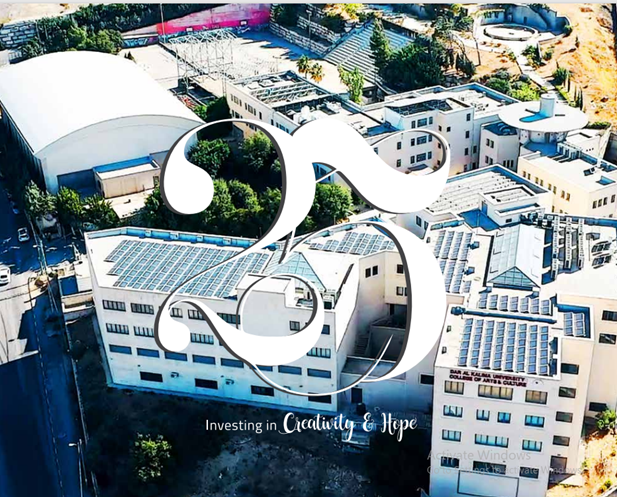
Wie eine Universität entsteht …. Eine Investition in Hoffnung und Creativität!
Dar al-Kalima University is a Palestinian success story per excellence. It started 25 years ago as a vision. With perseverance, it grew to become a full-fledged university. We were planning to celebrate this important occasion in person, but regrettably, the Covid-19 Pandemic did not allow for it. Yet, It is with great pleasure that we share with you this booklet that tells our story with its major milestones.
Eine kurzer Film … und mehr in der Zunkunft!
Könnte ein derartiges internationales Engagement (mit robustem Mandat) die Situation verändern, hätte es überhaupt eine Chance auf eine entsprechende Beschlußfassung im Sicherheitsrat der Vereinten Nationen. Hier jedenfalls eine entsprechende Position von Daoud Kuttab, einem palästinensischen Journalisten und Aktivisten, der genau dafür plädiert.
