2021 – zurück nach vorne schauen…

Am Jahresende doch noch einmal einen Blick auf die Arbeit von Standing Together, eine Arbeit, die ermutigt und Perspektiven zeigt … und die so ein guter Ausklang dieses Jahres sein soll!


Hallo, 

My name is Suleiman al-Tihi. I am a student at Sapir College and live in Rahat in the Negev. I am also a newly elected member of the leadership of Standing Together. For the past two weeks, the far-right organization Im Tirtzu has waged a racist campaign against me while I was running for my college’s student union because they did not like the fact that I am an Arab and a national leader in the largest Jewish-Arab grassroots movement in Israel. So I suddenly woke up to an „investigation“ about me on TV, initiated by Im Tirtzu and aided by the far-right Channel 14 News. They dug into my Facebook profile and took posts I wrote at age 13(!) out of context in order to portray me as a „terrorist supporter,“ demanding that I be disqualified from the election and even that the college administration expel me from my studies. But it didn’t work. In the election, I came in 2nd place overall and was elected to the union! The student body at Sapir College proved that Jewish-Arab partnership can overcome racism and incitement.

The students at Sapir College — Jews and Arabs — rejected the attempt to create a divide on campus. The tremendous support I received, and still receive, moved me greatly. Im Tirtzu’s campaign failed because they are not really present on campus, which teaches us how important it is to invest in people and to be connected on the ground across the country. 

I invite you to support our movement so that we can be strong on different campuses and in different cities, in the periphery and in the center, and invest in change that grows from the ground up. Each donation will support the movement’s ability to train and accompany activists like myself. 

Donate Here

With Appreciation, 

Suleiman Al-Tihi | National Leader


****

Standing Together P.S. Sapir College, where Suleiman attends, is one of the tens of campuses and places where we are yet to have siginificant organizing efforts. We cannot overstate the frustration we feel when our activist groups in Lod, in Umm al-Fahm, in Sapir and Oranim college, and in Bnei Brak reach out to us for support, and we don’t have the resources to give them the attention they deserve. Standing Together is growing, and providing a political home for thousands of Palestinians and Jews. But with that growth, we need to develop our organizing capacity. 

Our ability to mobilize during polarizing times and make an impact is exactly because we organize, all year round, around our shared interests. At the peak of the violence this past May, we were able to mobilize and make an impact because of your support. And now we need you to help us organize, by funding two additional community organizers to our team that will be able to connect with our base, in the Triangle area and on campuses, to recruit, train, engage, and build new leadership. 

You can help us build hope

Mailing address: info@standing-together.org

Standing together …

Aus dem heutigen Mailing von standing together – was sonst bleibt: Zusammen stehen!

Mailing address is: info@standing-together.org

While this past year has proved just how vital our movement is, it also showed us how critical the support of people like you is. As a grassroots movement, nearly half of our funding comes from membership fees and private donations. Standing Together was a pillar of hope through some of the darkest moments we’ve experienced as a society for decades. And you have been our pillar of support. So, before the year ends, I wanted to thank you, and ask for your support. Will you help us build hope as we enter 2022 by contributing to our end-of-year fundraiser?

In May, a dramatic escalation of violence engulfed Israel-Palestine. Triggered by the government and settlers’ attempts to displace Palestinians in Sheikh Jarrah, the resulting flare-up between Israel and Hamas sent Israelis running to bomb shelters while their neighbors in Gaza had nowhere to run. But in these darkest of moments, Standing Together mobilized thousands upon thousands of Jews and Palestinians across the streets of Israel to stand against the violence, against the occupation, and for a just peace in which everyone can live free of discrimination and free of fear.

Meanwhile, coronavirus has continued to exacerbate the gaps within society, hitting the most vulnerable populations the hardest. Many of us can barely pay our bills at the end of the month, let alone have any savings left over at the end of the year. We know that things don’t have to be this way, so we launched a campaign to raise the minimum wage to 40 NIS/hour. Slowly but surely, we’re gaining the support of more Members of Knesset and a wide cross-section of the Israeli public.

All the while, our government continues to ignore the potentially catastrophic consequences of the climate crisis — some of which are already with us. Instead of divesting from the fossil fuel companies responsible for the vast majority of global warming and pollution, the government continues to pretend that this is a crisis we can deal with later. The climate crisis demands immediate action, so we’re leading the call for our government to adopt a Green New Deal that would fundamentally restructure our economy so that it serves the people and not just profit.

Our ability to mobilize during polarizing times is exactly because we organize, all-year-round, around our shared interests, building a political home where we can all imagine a society where every one of us is equal and free.

We know that we can live in a society that is good for all of us. An equal and just society that treats every person with dignity, and has a place for everyone. A society that chooses a life of peace, justice, and independence for Israelis and Palestinians, Jews and Arabs. A society in which we can all enjoy real security: with adequate housing, quality education, good healthcare, a decent salary, and the ability to age with dignity.

To see out the year, Standing Together is launching a crowdfunding campaign that will enable us to continue and expand our work into 2022. As grassroots, democratic movement, it is vital that 50% of our annual budget comes from membership fees and private donations — and this is where you come in.

This fundraiser is an opportunity for you to have a real impact on our work in 2022, and to be our partner in bringing about the radical change to Israeli society that we seek. So, will you help us build hope?

Help Us Build Hope – With gratitude and solidarity,

Sally Abed סאלי עבד سالي عبد  National Leader – Resource Development Coordinator Standing Together

Und die Tore öffnen sich… (?!)

Nicht zu euphorisch sein, aber nach den heutigen neuesten Nachrichten steht ab Donnerstag, 30. Dezember 2021, Deutschland nicht länger auf der „roten Liste“ der Länder, aus denen die Einreise nach Israel nur mit Sondererlaubnis möglich ist …. Besuche und Reisen rücken also wieder in den Bereich des Möglichen…

Israelisch und doch Palästinenser

Die israelische Gesellschaft befindet sich in einem rasanten Wandel. Eine junge Generation arabischer Israelis fordert aktiv ihre Rechte ein. Fragen an Thabet Abu-Rass von der Nichtregierungsorganisation Abraham Initiatives, die für volle Gleichberechtigung von arabischen und jüdischen Israelis eintritt.

Das Interview von Noam Yatsiv mit Thabet Abu-Rass auf Qantara

Macht und Messias

The Dawn of Redemption: Ethics and Redemption in a Time of Power

So lautet der Titel eines neuen Buches, das bislang nur auf Hebräisch erschienen ist, sein Verfasser ist Mikhael Manekin, seines Zeichens Alliance Fellowship program director der ROI Community.

Joshua Leifer schreibt in der Tel Aviv Review of Books:

The Dawn of Redemption is not an anti-Zionist book. Instead, it is closer to something like religious post-Zionism. “I am an Israeli and want to remain Israeli, and I am a traditional Jew and want to remain so,” Manekin writes. “I am not willing to give up on either one of these commitments.”“

Shaul Maggid schreibt auf +972:

„For Manekin, the key question facing religious Zionists today is no longer the individual moral question of “How should I behave?” but rather the national question of “How should a Jewish state behave?” The problem, Manekin suggests, is that the national question has easily effaced, even erased, the moral one.“

Die beiden Zitate aus den hier verlinkten Besprechungen mögen einladen, diese beiden sehr spannenden Texte zu lesen und sich den Gedanken des Buches anzunähern, wer es nicht auf Hebräisch lesen kann, wird hoffentlich nicht allzu lange auf eine Übersetzung warten müssen.

Hier die beiden Links: +972 | TARB

Es bleibt ein kontroverses Thema: BDS

Anregungen für eine kritische Auseinandersetzung

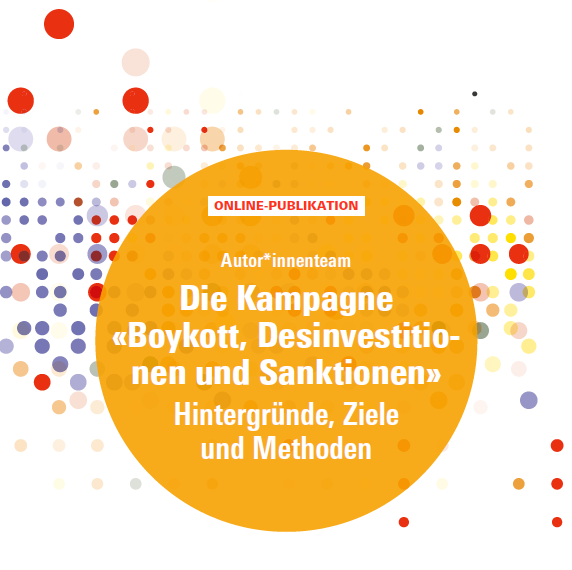
Offen, verständlich und fundiert, praktisch auf die Kernthemen konzentriert und mit reichlich Verweisen zu den wichtigsten Bezugsmaterialien auf eine lebhafte Debatte zu diesem Thema vorbereitet: In einer RLS-Publikation analysiert das Autorenteam Katja Hermann, Tsafrir Cohen und Florian Weis eines der wichtigsten Themen der Nahostdebatte: 
„Die Kampagne «Boykott, Desinvestitionen und Sanktionen». Hintergründe, Ziele und Methoden“.

Titleblatt der RLS-Veröffentlichung

„In Deutschland löst der Umgang mit der BDS-Kampagne (Boykott, Desinvestitionen, Sanktionen) heftige Reaktionen und Kontroversen aus, die auch die politische Linke betreffen. Während der Deutsche Bundestag den Beschluß «Der BDS-Bewegung entschlossen entgegentreten – Antisemitismus bekämpfen» im Mai 2019 mit großer Mehrheit verabschiedet hat, erfährt die Kampagne breite Unterstützung in der palästinensischen Zivilgesellschaft, in diversen politischen Diskursen im globalen Süden, an US-amerikanischen Universitäten sowie in vielen anderen Ländern und findet Anklang bei Teilen der israelischen Friedensbewegung. Allerdings ist auch in progressiven Kreisen eine zunehmend kritische Haltung zu BDS vernehmbar, etwa im Vereinigten Königreich.

Das Westasien-Referat der Rosa-Luxemburg-Stiftung (RLS) hat dieses Thema aufgegriffen und ein Papier erstellt, in dem es sich mit den Hintergründen, Zielen und Methoden der BDS-Kampagne auseinandersetzt. In dem Text geht es um die Frage, was diese Kampagne für die politische Linke, und insbesondere für die deutsche Linke, bedeutet und wie ein Umgang mit BDS in Deutschland aussehen kann.

Das Papier, das im September 2019 entstanden ist, wurde zunächst in einem internen Fachgespräch reflektiert und kontrovers diskutiert. Ziel war es, mit diesem Text zu einer Versachlichung und Differenzierung der allzu häufig aufgeheizten Diskussion beizutragen. Während die Verfasser*innen und andere an der Diskussion beteiligte Kolleg*innen durchaus unterschiedliche Haltungen zur BDS-Kampagne einnehmen und nicht alle jede einzelne Aussage im Papier teilen, sind sie sich darin einig, daß eine – auch streitbare – Debatte über den Hintergrund und die Motivation der BDS-Kampagne und über gewaltfreie Formen von Widerstand gegen die israelische Besatzungspolitik möglich sein muß. Bewußt muß aber dabei auch sein, daß diese Debatte ohne eine kritische Reflexion über das Fortbestehen von antisemitischen Erklärungsmustern, leider auch in Diskursen zum israelisch-palästinensischen Konflikt, unvollständig bleibt.

Die Debatte um BDS ist seitdem weitergegangen, in Teilen wird sie mittlerweile kenntnisreicher und differenzierter geführt, was sicherlich auch daran liegt, daß sich deutlich mehr und sehr unterschiedliche Akteure aus verschiedenen gesellschaftlichen Bereichen daran beteiligen. Angesichts vielfach schrumpfender demokratischer Debattenräume ist das eine begrüßenswerte Entwicklung – Räume für die demokratische politische Debatte müssen erhalten und gestärkt werden, auch in Deutschland.

Vor diesem Hintergrund soll der Hinweis auf die Veröffentlichung des BDS-Papiers, erschienen im November 2021 an dieser Stelle als ein Debattenbeitrag verstanden werden, der einer kritischen Auseinandersetzung förderlich sein soll.

Rosa Luxenburg Stiftung: Die Kampagne

Ein etwas älteres Papier zu dieser Debatte: Königsweg der Befreiung oder Sackgasse der Geschichte?

Die palästinensische Jugend in einer widersprüchlichen Realität

Geteilt und doch geeint.

Ist die Jugend in Palästina „Mehr als nur Zuschauer?“ für die Politik?, fragen Steven Höfner und Alena Jabar in der aktuellen Ausgabe der KAS-Auslandsinformationen.

„Die palästinensische Jugend ist zerrissen. Fragmentiert in unterschiedlichen Teilen der Palästinensischen Gebiete, leben junge Menschen unter verschiedenen Herrschaftsformen und können nur im Ausnahmefall aufeinandertreffen. Sie tragen die Traumata der vorangegangenen Generationen in sich und müssen sich selbst tagtäglich sowohl den Herausforderungen einer israelischen Militärbesatzung als auch den Repressionen der teilweise korrupten und autoritären palästinensischen Regimes stellen.“

Gesamtausgabe des Heftes (Auslandsinformationen der Konrad Adenauer Stiftung, KAS) vom Dezember 2021.

Trump und Netanyahu

Hinter der Fassade doch nicht so einig?

Ein Beitrag von Ofer Zalzberg auf Fathom.com

Mit Blick auf die aktuellen Entwicklungen und die Reisebegegnungen des israelischen Ministerpräsidenten in der arabischen Welt, lohnt sich noch einmal ein Blick (zurück) auf die Umstände der sog. Abraham-Accords im Rahmen der US-amerikanisch-israelischen Beziehungen.

The Disagreements Beneath The Surface

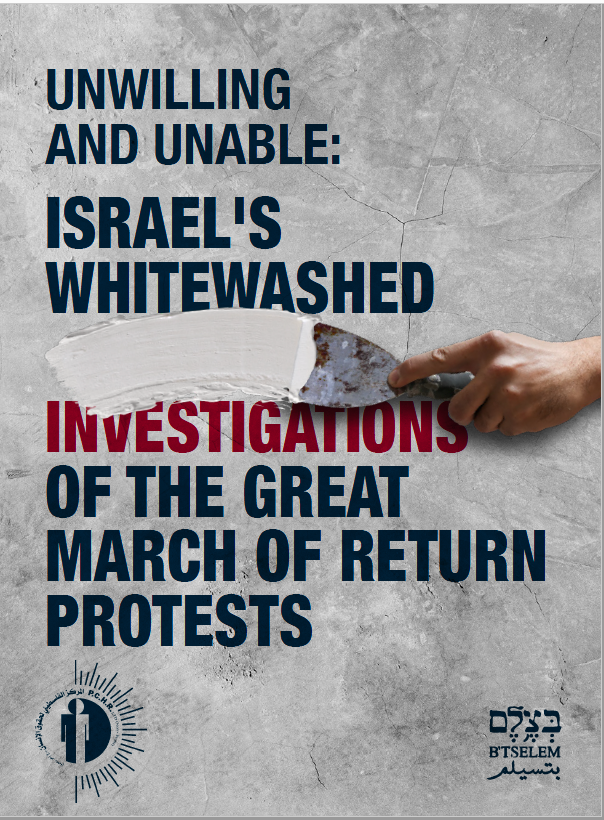
Gemeinsamer Bericht: B’Tselem und Palestinian Centre for Human Rights

Unwilling and Unable:
Israel’s Whitewashed Investigations of the Great March of Return Protests

Mit zusätzlichem Material kann der Bericht hier heruntergeladen werden:

B’Tselem | PCHR

Zoom Konferenz: Art and Citizenship

Dar al-Kalima University cordially invites you to attend our 23rd International Conference entitled „Art and Citizenship“ Conference on Wednesday and Thursday, December 15th and 16th, 2021 from 10:00AM to 19:30PM via this zoom link; where you can choose between Arabic and English languages.

Simultaneously with the Conference – held in Bethlehem – and as part of the Conference, three sessions shall be held in Lebanon, Gaza, and Amman, according to the following schedule:
15.12.2021 In Amman in cooperation with the Royal Institute of Religious Studies
16.12.2021 In Gaza, at the headquarters of Dar Al-Kalima University.
16.12.2021 In Beirut: in cooperation with the Dar Al-Kalima Association for Arts and Culture.

Please note that all the times are based on Jerusalem time (GMT+2). 

To Check the Program, please click the link below:

https://www.daralkalima.edu.ps/uploads/files/Program%20in%20english.pdf


For more information or inquiries please contact: conference23@daralkalima.edu.ps