Im Podcast Weltzeit von Deutschlandfunk Kultur widmet sich Judith Poppe einem ungewöhnlichen, unbeliebten und sehr widerstänigen Thema, das nichtsdestotrotz oder gerade deswegen viel mehr Beachtung erfahren muß, auch wenn in Zeiten wie diesen es wenig aussichtsreich erscheint, die Regierungen dafür zu gewinnen:
Bücher über die Shoa gibt in Palästina kaum. Wer über ihn informieren möchte, gilt schnell als einer, der die israelische Besatzung normalisiert, und muß sich auf Todesdrohungen einstellen. Einige Intellektuelle versuchen es trotzdem.
Unter anderem geht es um die Arbeit von Mohammed Dajani, der nicht zuletzt durch seine Reise mit palästinensischen Studierenden nach Auschiwtz bekannt wurde und um seine Arbeit mit und in der Nichtregierungsorganisation Wasatia.
(c) Photo: R.Zimmer-Winkel 2022
oder um den Filmemacher Mohammed Alatar, der 2022 auch mit seinen Arbeiten und Ideen auf Deutschlandreise war; von ihm stammen die Filme The Iron Wall, Jerusalem – the East Side Story, Broken und über Michel Sabbah, eh. Lat. Patriarch von Jerusalem.
Hier kann das das Audio von DLF Kulturheruntergeladen werd en.
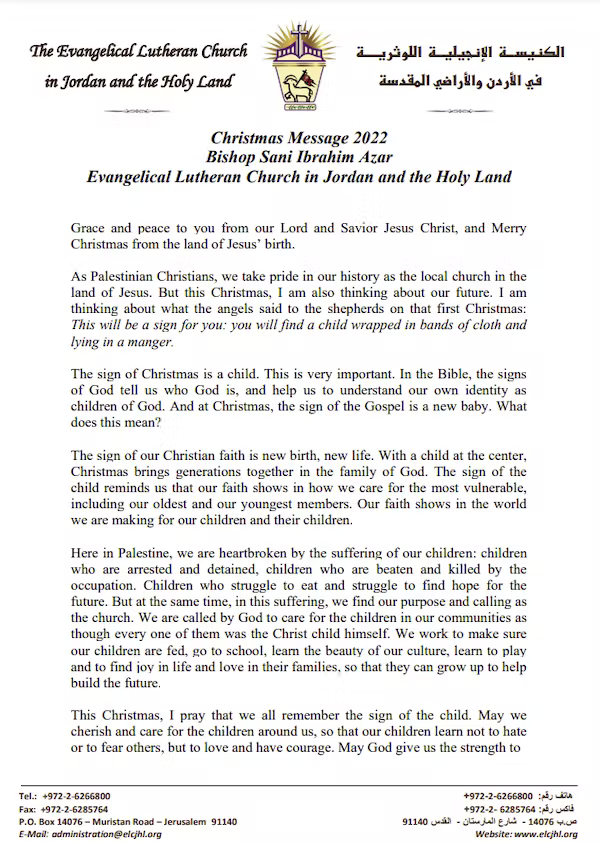
Heute gibt es den Text des lutherischen Bischofs in Jerusalem, Sani-Ibrahim Azar, den in Deutschland ja einige kennen, weil er unterem anderem im Jerusalemsverein aktiv ist und auch in Deutschland studiert hat.
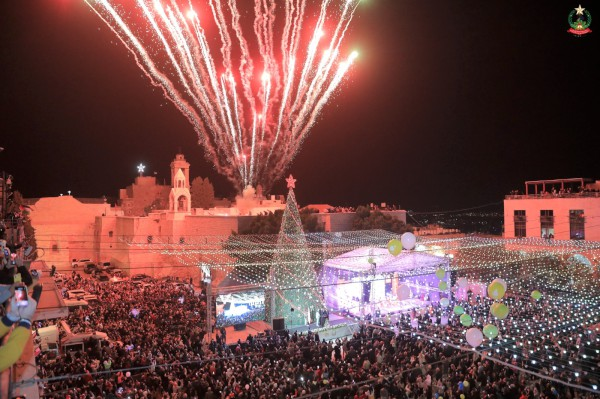
Trotz aller Nachrichten, trotz allem, in zehn Tagen ist Christtag… blicken wir nach Bethlehem
Und schon ein Grußwort der guten Wünsche, nicht von den geistlichen Hierarchen, kommt auch noch, sondern vom Bürgermeister von Bethlehem, der dazu auffordert zu kommen … und andere mitzubringen…
… und es gibt viel leicht Entzündliches in der ‚Heiligen‘ Stadt‘ …
Alarming developments in coalition agreements and promised ministerial appointments following the Israeli elections in November have left many of us rightfully worried about the future of Israeli democracy and human rights in the region.
The incoming government, comprised of far-right extremist and Jewish supremacist politicians, is shaping up to give their parties profound power and control over a wide range of politically sensitive and explosive issues in East Jerusalem, the West Bank, and within the Green Line.
What does this mean for Jerusalem and the prospects for peace?
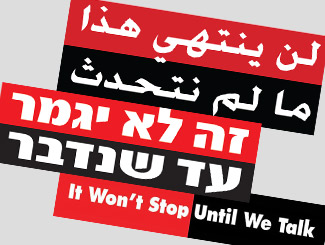
Ir Amim invites you to join us for a virtual event exploring the implications of the incoming government on Jerusalem and what it means for civil society organizations active in pursuing justice, equality, and the end of the occupation.
The event will take place on Zoom on Sunday, December 18th @ 12:30 Eastern US | 17:30 London | 19:30 Jerusalem Register Here for Our Upcoming Virtual Event on Dec 18
** Zoom link will be sent upon registration **
Featuring the expert analyses of:
Professor Naomi Chazan, Professor Emerita of Political Science – Hebrew University of Jerusalem & former MK
Nivine Sandouka, Regional Chief of Staff – ALLMEP & Board Director – Hoqoqna
Zwischen den Fronten und an der Seite – um des Friedens willen …
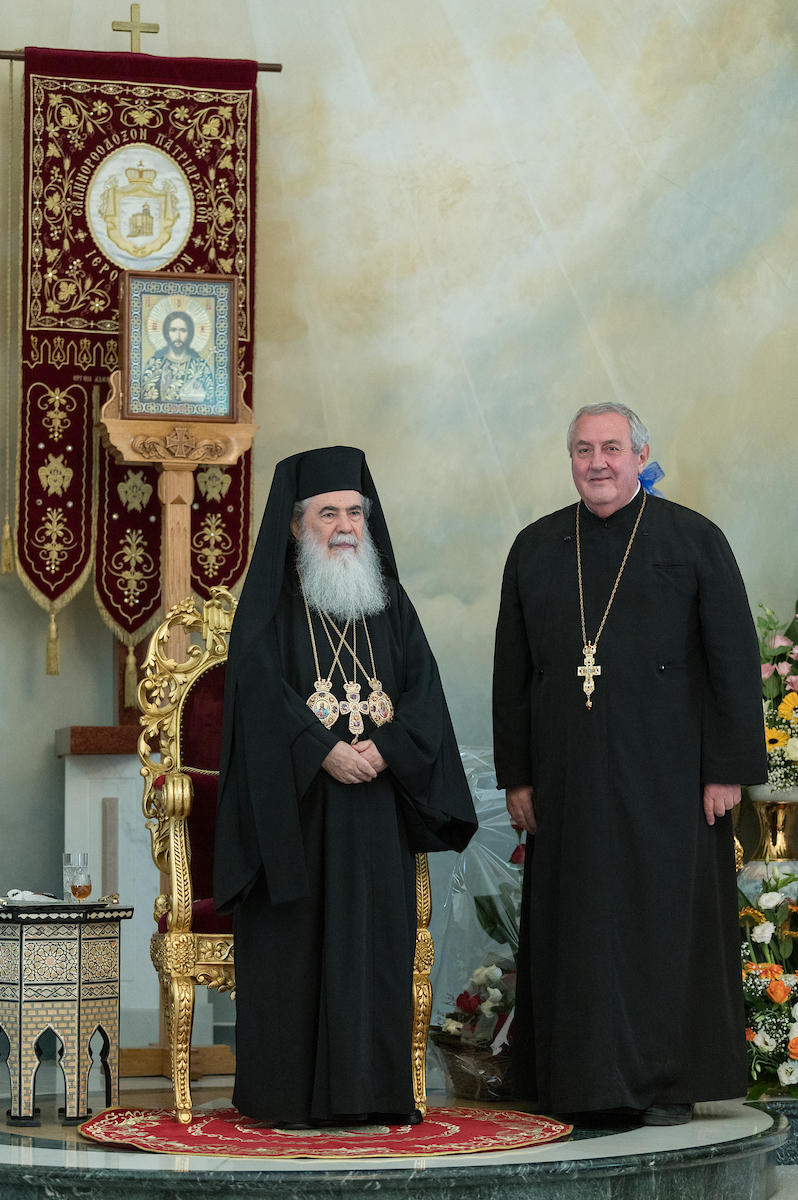
Neben einer Begegnung mit dem Griech.-orth. Patriarchen Theoplilos III. traf die Deleggation unter Leitung des amtierenden Generalsekretärs des World Council of Churches (WCC), Rev. Prof. Dr Ioan Sauca, unter anderem mit dem israelischen Staatspräsidenten Herzog und dem palästinsensischen Präsidenten Abbas zusammen
22 November 2022, Jerusalem, Palestine: World Council of Churches acting general secretary Rev. Prof. Dr Ioan Sauca (right) congratulates Patriarch Theophilos III of Jerusalem (Greek Orthodox Church of Jerusalem) during a celebration of the 17th anniversary of the patriarch’s enthronement. Photo: Albin Hillert/WCC (c)
Auf der 11. Vollversammlung des Weltkircherates in Karlsruhe im September 2022 waren auch die Fragen von Israel & Palästina und die Position zur Verwendung der Begrifflichkeit „Apartheid“ auf der Tagesordnung.
Hier das Heft 2/2002 des PRO ÖKUMENE-Informationsdienstes, das einen Rückblick auf die Tagung und die unterschiedlichen Debatten wirft, auch zu zahlreichen anderen Fragen natürlich.
Deutsch-Israelisch-Palästinensisches Promotionskolleg in Flensburg wird gefördert
Wissenschaftler*innen präsentieren Arbeit zu internationaler Verständigung im Deutschen Bundestag
Mit insgesamt 2,1 Millionen Euro fördert der Bund die European Wasatia Graduate School for Peace and Conflict Resolution an der Europa-Universität Flensburg. Das hat der Haushaltsausschuß des Bundestages entschieden. Damit ist die Graduiertenschule, in der Promovierende aus Israel, Palästina und Deutschland gemeinsam religionsübergreifend und interdisziplinär zu Lösungen des Konflikts im Nahen Osten forschen, bis zum Jahr 2029 gesichert. Zudem kann mit dem Geld ein Programm für Gastwissenschaftler*innen (scholar-in-residence) aufgelegt und eigene Stipendien vergeben werden.
„Ich freue mich sehr darüber, daß es gelungen ist, dieses in Deutschland bisher einmalige Programm für Promovierende aus Israel, Palästina und Deutschland weiter zu fördern. Die European Wasatia Graduate School for Peace & Conflict Resolution wird zukünftig bis zu 359.000 € jährlich im Rahmen ihrer Arbeit für Frieden, Verständigung und Versöhnung vom Bund erhalten“, so Dr. Wiebke Esdar, zuständige Haushaltspolitikerin der SPD-Bundestagsfraktion für den Etat des Bundesministeriums für Bildung und Forschung.
Prof. Dr. Ralf Wüstenberg, Professor für evangelische Theologie und Direktor des Graduiertenkollegs bewertet diese Anschlußfinanzierung als wichtiges friedensethisches Signal. „Dieses Zeichen strahlt über den Nahost-Konflikt hinaus und berührt wesentlich auch europäische Fragen. Es ist nun sichergestellt, daß über die gegenwärtig eingeschriebenen Promovierenden zwei weitere Kohorten in 2023 und in 2026 aufgenommen werden können. Neben Israelis, Palästinensern und Deutschen sollen Stipendien auch an junge Promovierende aus andere Transformationsgesellschaften gehen, wie u.a. Südafrika, Irland, Albanien. Gemeinsames Lernen, eigenständiges Forschen und das wechselseitige Entdecken von Konfliktlösungsstrategien im Horizont von Wasatia und Versöhnung sind die Eckpfeiler des Programms.“
Auch Prof. Dr. Udo Steinbach, Leiter des MENA Study Centre der Maecenata Stiftung, das eng mit der Wasatia Graduate School zusammenarbeitet, schätzt die Entscheidung des Deutschen Bundestags als nachhaltigen Beitrag Deutschlands für die Lösung des palästinensisch-israelischen Konflikts ein.
Projektkoordinatorin Dr. Zeina Barakat freut sich über das breite Interesse an der European Wasatia Graduate School for Peace and Conflict Resolution unter den Parlamentariern des Deutschen Bundestages und erklärte: „Als in Jerusalem geborene Palästinenserin, die sich über ein Jahrzehnt auch wissenschaftlich mit Friedensethik befaßt, sind die Ziele der Graduiertenschule auch eine Herzenzangelegenheit.“
Die „European Wasatia Graduate School for Peace and Conflict Resolution“
Das interdisziplinäre, transnationale und multireligiöse Promotionskolleg wurde im November 2021 gegründet. Derzeit sind zwölf Doktorand*innen Teil der „European Wasatia Graduate School for Peace and Conflict Resolution“.
Das Kolleg identifiziert Wahrheit wie Recht als Bedingung für Frieden und Konfliktlösung im israelisch-palästinensischen Verhältnis. Vor dem Hintergrund, dass rechtliche, politische und religiöse Dimensionen der Versöhnung ihrerseits mentale Komponenten beinhalten, wie etwa die Anerkennung von Leid, die Befähigung zur inter-religiösen Toleranz und zur Dekonstruktion festgefahrener Narrative, soll die Wasatia Graduate School als ein interdisziplinäres Forum fungieren, das Versöhnung als zentrales Element zur gesellschaftlichen Konfliktlösung herausstellt.
Studienfahrt Israel | Palästina. Perspektiven auf den Nahost-Konflikt (Deutsche Vereinigung für Politische Bildung, Landesverband Rheinland-Pfalz, DVPB) vom 18.-26. Februar 2023
Introduction Here are this year’s versions of the “small” and “large” Yom Kippur viduim (Confessions of our sins) combining the traditional texts and our modern Israeli sins. Reciting these words may not feel like prayer because, like the traditional vidui, it is concrete and asks us to take individual responsibility for the collective sins of our society and our people. The traditional confessions were never meant to be just a collection of words that we thoughtlessly recite on Yom Kippur. They are burning words, intended to make us feel uncomfortable because they speak painful truths about our lives and our society and our people that we must confront if we are to truly engage in the kheshbon nefesh (soul searching) that is a primary task during this season. We can then engage in “teshuvah.” Often translated as “repentance,” it means to hear and answer the call of God and conscience, make an effort to turn and change, and return to our truest and highest selves individually and collectively. Just as the High Priest in ancient times had to recite his own vidui before saying a vidui for others, we need to look at our own sins before we recount the sins of others. One misses the point if one reads these modern versions in order to criticize those we don’t agree or identify with. The vidui is in the plural, because we say that, even if I have not personally committed these sins, my society has committed the sins recited in the traditional or the modern vidui, and I therefore share responsibility. This vidui is written for those who in some way identify with Israel, and include themselves in the Israeli “we” when you recite “For the sins we have committed…” If you are not a part of the Israeli “we,” you might want to construct a similar vidui looking at the societies and communities of which you are a part, and share responsibility for. For some the sin they must confess is always assuming the worst about Israel, while others must confess defending Israel, no matter what. If some of the lines do not feel to you like they apply to Israeli society, please try to drop your defenses, and think again. If you still don’t think something applies, we again hope that the Torat Tzedekvidui will challenge you to create your own. Please feel free to download our vidui, then cut and paste and add and subtract to create your own personal/societal vidui. The point is to challenge you to engage in khesbon nefesh (soul searching), not to silence or intimidate. It is also possible to only recite a limited number of these texts, and concentrate on them. In many cases the first line is from the traditional viduis, and there are notes after the vidui explaining which traditional sources many of the concepts are taken from. Most of us simply can’t be so self critical for most of the year. But, sometimes the power of the High Holy days allows us to do what we don’t manage to do at other times of the year. These viduis are not intended to be a delegitimization of ourselves, of our people, or our country. They are actually an expression of our deep faith in ourselves, our ability to return to the good that is our true selves, and our ability to improve our society. When we engage in kheshbon nefesh about ourselves and Israel on Yom Kippur, we can then celebrate our personal and Israeli assif rukhani (spiritual harvest) on Sukkot-our attributes and accomplishments that we are proud of as individuals and as a nation. The vidui and the assif go together.