An Impossible Promise?

Sociology of Religion in Arab Countries

Donnerstag, den 28. April, 17.00 – 18.30 Uhr

Vortrag von Florian Zemmin (Freie Universität Berlin)

Many Arab sociologists have been criticising the rather weak establishment of sociology in their countries. This concerns structural issues, especially political constraints for research and the underfunding of universities, but also theoretical issues, not least the Eurocentric formation and workings of sociology. Both structural and theoretical issues are especially pronounced when it comes to sociology of religion: to position religion as an object of sociological study faces political constraints and societal scepticism, also due to its representing a secular, supposedly particularly European perspective on religion. That being said, sociological approaches to religion in Arabic do have a longer history and feature more widely than is often assumed. This talk will provide glimpses into the history and presence of these approaches and their characteristics, addressing both structural and theoretical questions. One larger set of current debates that this talk will speak to are attempts at “decolonizing sociology” or establishing a “post-colonial sociology”. Such attempts often remain on a theoretical level and, ironically, hardly consider research in languages other than English. In turn, this talk engages sociologies of religion in Arabic also in order to arrive at more nuanced answers to the question of which aspects of sociology are more widely shared and which are specific to certain societies and academic contexts.

The event will be held via Zoom. Please register here: https://tinyurl.com/mr29m9mp

Kettenreaktion

Ruslan Suleymanov, bis vor kurzem noch leitender Nahost-Korrespondent der Nachrichtenagentur TASS in Kairo, bevor er aus Protest über die russische Politik zurücktrat, hat auf dem Online-Portal ipg-journal der Friedrich Ebert-Stiftung (FES) die Reaktionen in der arabischen Welt zusammengefaßt.

„Die arabische Welt begegnet dem Ukraine-Krieg zurückhaltend. Während man am Golf von neuen Energiepartnerschaften profitiert, droht andernorts Hunger.“

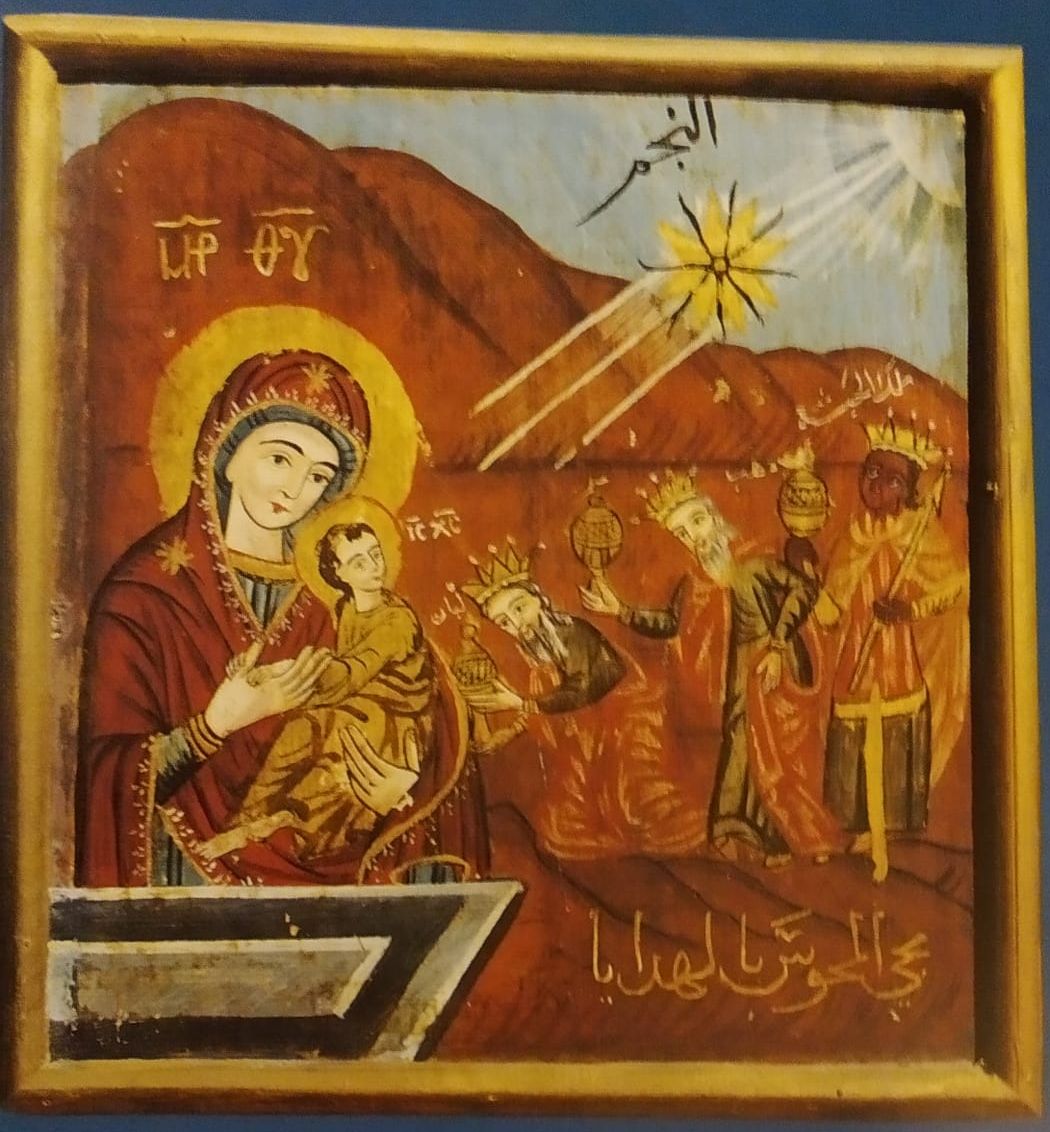
6. Januar – Epiphanie

Die verschiedenen Kalender lassen viele Festtage entstehen, für die orthodoxe Welt ist erst heute/morgen Christgeburt. Hier ein Ikone aus Alt-Kairo, die Ibrahim el-Nasekh, einem Ägypter und Yuhanna, einem Armenier, zugeschrieben werden

The Jews of Alexandria

Middle Class Feelings, Urban Identity and Politics, 1880s-1920s

Öffentlich-online zugänglicher Vortrag des Leibniz-Zentrum Moderner Orient (ZMO) Berlin

Lecture by Dario Miccoli (Ca’ Foscari University of Venice) 
as part of The Historicity of Democracy Seminar.

Based on a ‘close reading’ of documents from the archives of the Alliance Israélite Universelle (Paris), the Central Archives for the History of the Jewish People (Jerusalem) and from articles found in newspapers published in Egypt in the colonial and early monarchic years, this lecture will look at the consolidation of a middle class Alexandrian Jewish identity and its relation to urban politics and sociability in the period that goes from the early 1880s to the mid-1920s. The lecture will discuss the multiple connections that Alexandrian Jews had with the city in which they lived and its socio-political environment, as well as the ways in which its burgeoning Jewish middle class tried to find a place of its own for example by founding schools, hospitals and cultural associations

The online seminar is free and open to the public upon registration:

https://forms.gle/A8AJDvdaQyUiG5qD8

Die Weihrauchstraße in Dhofar

Das Stöbern ‚lohnt‘ immer mal wieder in der ARD-Mediathek

Das aromatische Harz des boswellia sacra Baumes zählte zu den begehrtesten Handelsgütern der antiken Welt. In Ägypten wurde Weihrauch ebenso verbrannt wie an den Höfen indischer Maharadschas. Von der Blütezeit des Weihrauchhandels künden indes nur noch Ruinenstädte: Häfen wie Samharam und al-Balid verdienten am Seehandel, Oasen wie Wubar wurden als Karawanenstationen reich und mächtig – Stationen an der omanischen Weihrauchstraße, die nun zum Weltkulturerbe erklärt wurden.

Glaubensinsel auf dem Sinai

Aus der ARD-Mediathek zum 2. Advent

„Die Begebenheit, die im Alten Testament erzählt wird, gehört zu den Grundlagen des christlichen Glaubens und Welt-Philosophie. Moses erhielt, so die Legende, die zehn Gebote. Seitdem gehört der Berg Sinai, der Berg Moses, Djebel Mosa, zu den heiligsten Stätten der christlichen Glaubenswelt. An seinem Fuß liegt das Kloster St Katherina, ein griechisch-orthodoxes Zentrum, das seit dem 6. Jahrhundert besteht. Mohammed, arabische Kalifen, türkische Sultane und Napoleon, die ägyptischen Könige und die heutigen Staatspräsidenten, alle stellen das Kloster unter ihren Schutz und bewahren es so vor Plünderung und Zerstörung.“

Nebenan schauen: Ein Blick nach Alexandria

Buchvorstellung: „Shared Margins. An Ethnography with Writers in Alexandria after the Revolution“

Ein neues Buch von Samuli Schielke und Mukhtar Saad Shehata, „Shared Margins. An Ethnography with Writers in Alexandria after the Revolution“ (De Gruyter 2021), erforscht die literarischen Räume und Karrieren von Schriftsteller*innen in Ägyptens zweitgrößter Stadt.

Es dezentriert kosmopolitische Avantgarden und säkular-revolutionäre Ästhetiken, die seit 2011 in Ägypten intensiv dokumentiert und untersucht wurden und bietet es eine feldforschungsbasierte Darstellung verschiedener Milieus und Stile.

Eine öffentliche Buchpräsentation findet am

8. November 2021 um 17.00 Uhr am Leibniz-Zentrum Moderner Orient in Berlin und online statt.

Originalpublikation:

Schielke, Samuli and Shehata, Mukhtar Saad: Shared Margins.
An Ethnography with Writers in Alexandria after the Revolution. ZMO-Studien 41.
Berlin / Boston (De Gruyter) 2021 – https://doi.org/10.1515/9783110726305

„Shared Margins“ ist in der Reihe ZMO-Studien bei De Gruyter erschienen.
Die Publikation wurde durch den Leibniz-Publikationsfonds für Open-Access-Monographien gefördert und kann kostenlos heruntergeladen und gelesen werden.

Weitere Informationen zur Veranstaltung: