From empire to federation?

The view from the Middle East – hier zum Einleitungstext des Autors.
Modern Arab Kingship: Remaking the Ottoman Political Order in the Interwar Middle East

How the “recycling” of the Ottoman Empire’s uses of genealogy and religion created new political orders in the Middle East

Über Hasan al-Bannā, Gründer der Muslimbrüder

Gudrun Krämer legt in C.H.Beck Verlag eine umfangreiche Monographie vor

Und Sabine Kebir bespricht den Band ausführlich im ND (Neues Deutschland)

Die Lektüre lohnt nicht nur online, könnte auch eine gute Gelegenheit sein, die Genossenschaft, die das ND („Journalismus von links“) trägt, zu unterstützen, der Zeitung geht es nämlich wirtschaftlich schlecht…

Syrien und die arabische Welt

Ein Kommentar zur Situation aus der International Crisis Group

The League of Arab States welcomed President Bashar al-Assad to its May summit, reinstating Syria’s membership, which it had suspended in 2011. The regime may look to have shrugged off the international opprobrium it earned for its brutality in repressing its opponents. But has it?

Weiterlesen

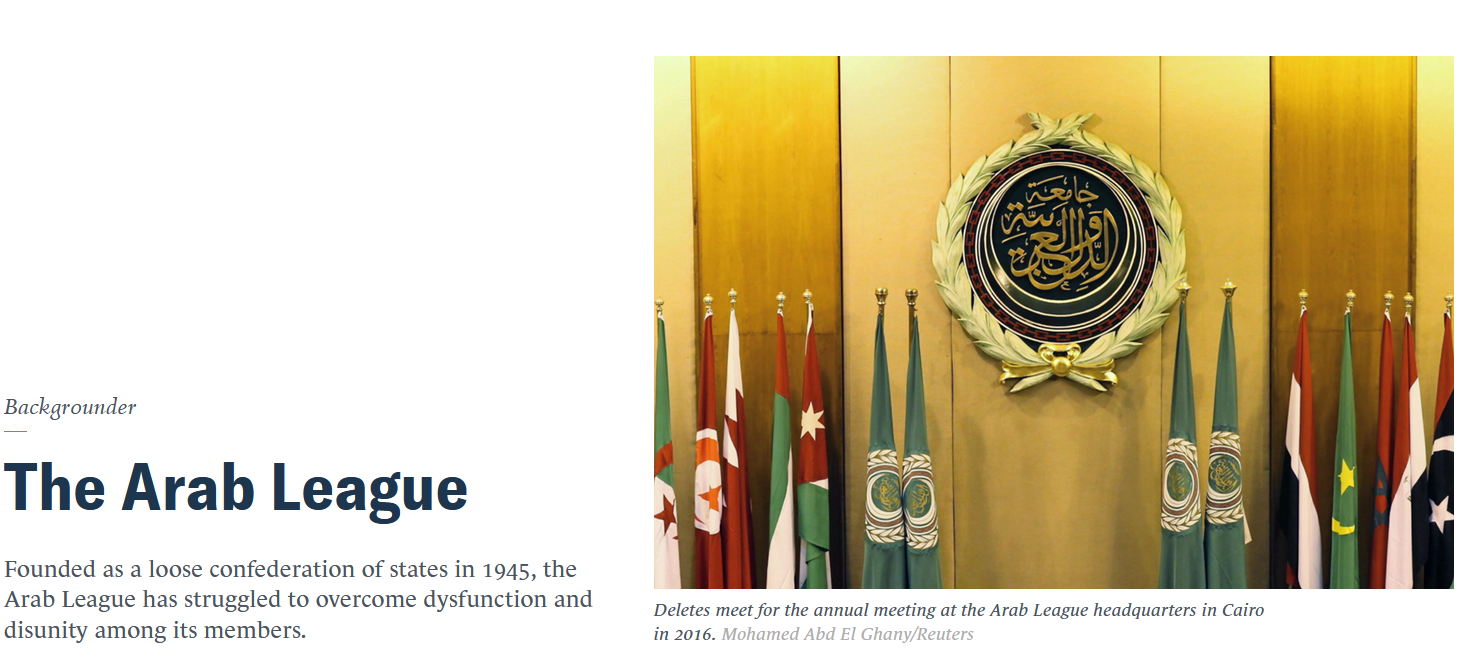
Hintergrund zur ‚Arabischen Liga‘

Der in New York beheimatete, einflußreiche US-amerikanische „think-tank“ Council on Foreign Relations CFR) hat aus aktuellem Anlaß ein lesenswertes Dossier („Backgrounder“) zur Arabischen Liga online.

6. Januar – Epiphanie/Epiphanias

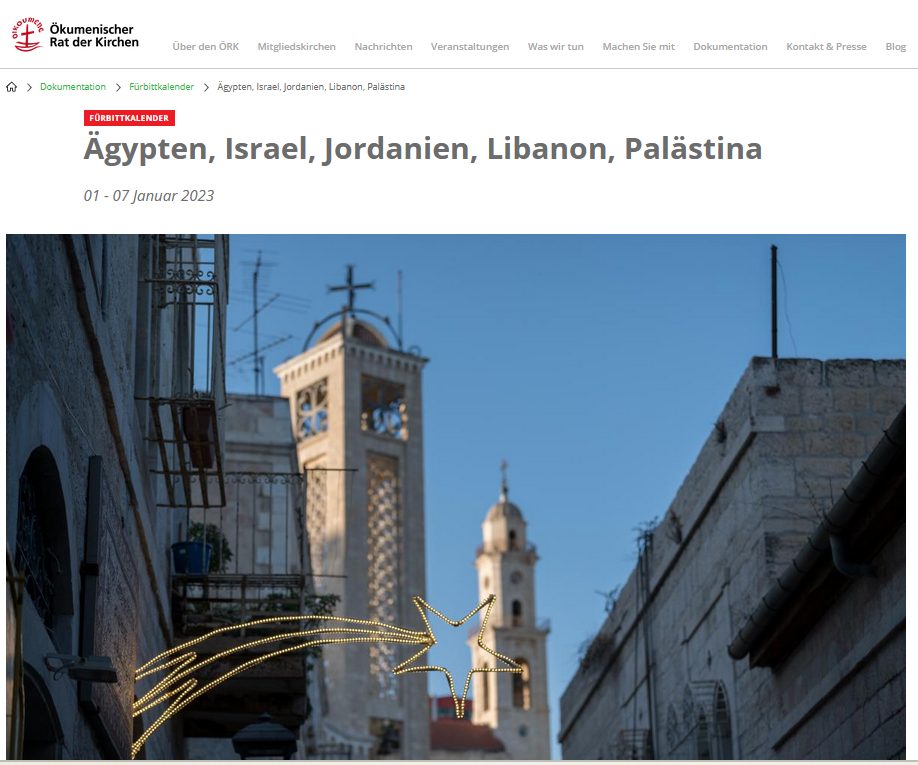
Mit dem Blick auf die orthodoxe Welt, für die heute das Christfest beginnt, sei auf eine Initiative des Weltkircherates verwiesen, der seit vielen Jahre die Menschen durch das Jahr begleitet und einlädt, jede Woche eine neue Region der Welt virtuell zu besuchen und die auf die Probleme und Herausforderungen der Menschen dort zu schauen.

Die Woche vom 01. – 07. Januar 2023 nimmt Ägypten, Israel, Jordanien, Libanon und Palästina in den Blick.

The Second Wave of Arab Uprisings: Moving Beyond Narratives of Defeat and Despair

You are kindly invited to the first EUME Berliner Seminar in the Winter Term 2022/23.

Where: Forum Transregionale Studien (Wallotstr. 14, 14193 Berlin) 

When: Wednesday, 12 October 2022 at 5 pm (CEST)

Zahra Ali (Rutgers University-Newark) – Leyla Dakhli (CNRS / Centre Marc Bloch) – Magdi El Gizouli (StillSudan.blogspot.com) – Cilja Harders (Freie Universität Berlin / EUME) – Jeffrey G. Karam (Lebanese American University / EUME Fellow 2020-23)

The roundtable discussion provides an alternative reading of the second wave of Arab revolutionary uprisings that erupted in 2018, especially in Sudan and later in Lebanon, Iraq, and other Arab states in 2019. By moving beyond narratives and analyses that primarily focus on moments of defeat and despair, the panelists will discuss if and how the uprisings that unfolded in Iraq, Lebanon, and elsewhere ushered a new and important phase in social activism and political subjectivities that deserves attention. By addressing the role of new alternative organizations, including professional associations, syndicates, political movements, and other entities, the roundtable highlights some vital social, economic, and political trends common across various Arab societies.

If you want to attend the seminar, we kindly ask you to register in advance via eume@trafo-berlin.de

For more information, please check our website:

https://www.polsoz.fu-berlin.de/polwiss/forschung/international/vorderer-orient/Termine/12_10_2022_EUME.html

Das Versagen der arabischen Eliten

Krise der arabischen Staaten

In seinem Essay fragt der renommierte libanesische Journalist und Autor Hazem Saghieh, wie die Zukunft der arabischen Welt aussieht. Gibt es Auswege aus einer existentiell bedrohlichen Krisenhaftigkeit? 

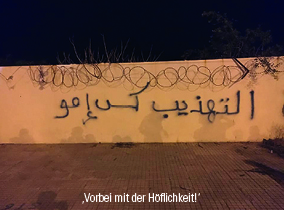
„Vorbei mit der Höflichkeit“ – Aus: Kattan: … mit zur Sonne blickenden Augen – 978-3-86575-091-4

Ein Beitrag auf quantara.de

Den Horizont weiten…

The Markaz Review (TMR)

is a literary arts publication and cultural institution that curates content and programs on the greater Middle East and our communities in diaspora. The Markaz signifies “the center” in Arabic, as well as Persian, Turkish, Hebrew and Urdu.

Coming soon, TMR’s special issue on Berlin, from guest editor Viola Shafik. Essays, fiction, interviews, art, film and music

Kairoer Treffen

Vollversammlung des Mittelöstlichen Kircherates tagte vom 16.-20. Mai 2022 zum ersten Mail in Ägypten

Im Gegensatz zum Weltkircherat in Genf sind im MECC alle Zweige der christlichen Familie Vollmitglieder, also auch die Kirchen in Einheit mit Rom. Der koptische Papst Tawadros II., der das Treffen als Gastgeber leitete, begrüßte so Vetretungen von 21 Kirchen des Nahen und Mittleren Ostens, unter ihnen 17 Patriarchen, darunter etwa den Chaldäischen Primas, Louis Raphael Card. Sako, den Lateinischen Patriarchen von Jerusalem, Pierbattista Pizzaballa, Mor Ignatius Aphrem II., Syrisch-orthodoxer Patriarch von Antiochien, Johannes X., Griechisch-orthodoxer Patriarch von Antiochia und dem Ganzen und Ibrahim Azar, den evangelischen Bischof von Jerusalem.

Die Schlußerklärung der 12. Generalversammlung findet sich hier, (der Beitrag bietet eine Reihe interessanter Photos), darin heißt es unter anderem:

“The General Assembly called for:
A- Renouncing violence and fanaticism in all kinds and forms, rejecting extremism, terrorism, exclusion and discrimination based on religion, race, color, gender, and others.
B- Solidarity with the marginalised and vulnerable, refugees and displaced persons, and an appeal to officials and the international community to work for their return to their land.
C- Respecting freedom of belief, consolidating the values of citizenship and a common life with our Muslim brothers with whom we share mutual respect.
D- Supporting churches and believers in Jerusalem, the duty to preserve the holy places, and reminding the international community and the peoples of the world of the importance of strengthening Christian presence in the City of Peace.
E- Urging officials and decision-makers to work hard to address the crises rampant in various countries of our Middle East region, especially the deteriorating economic situation, in order to put an end to the suffering that burdens peoples, which requires a pause of conscience to uphold common interest above all considerations.

Bericht auf PIME – Asia News, Vatican News und der Weltkirchenrates.