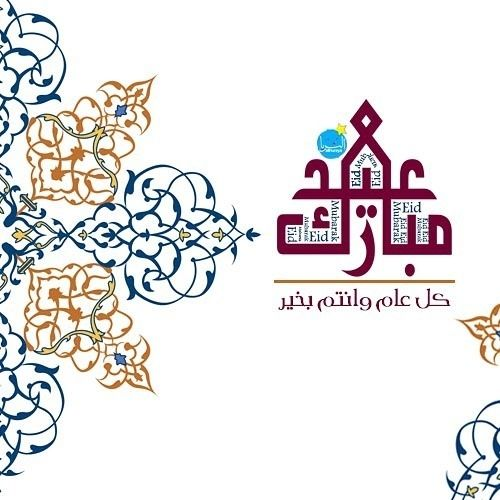
Auch wenn es nichts zu feiern gibt, möge doch der Geist dieses Festes zum Ende des Ramadans Kraft geben und Wege zu Gerechtigjeit und Frieden öffnen …
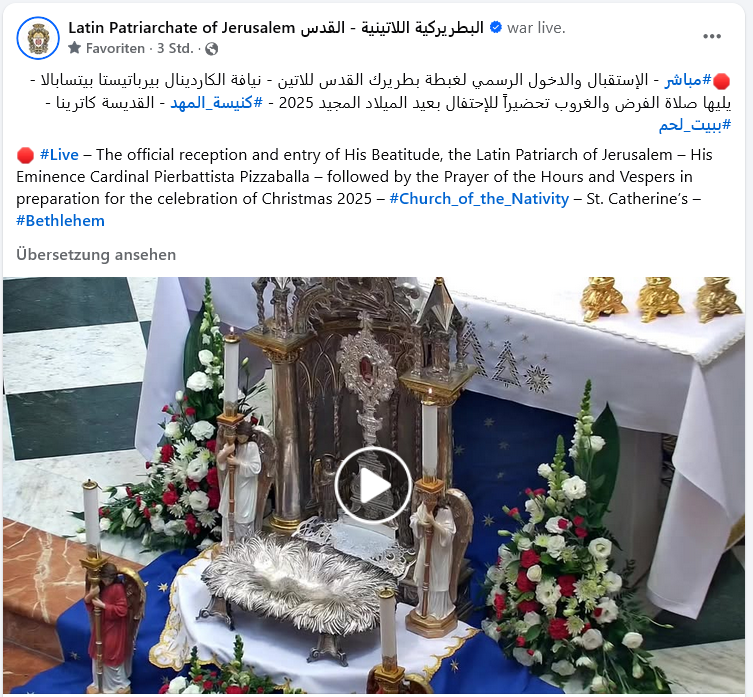
Und zur Realiät „on the ground“
Auch wenn es nichts zu feiern gibt, möge doch der Geist dieses Festes zum Ende des Ramadans Kraft geben und Wege zu Gerechtigjeit und Frieden öffnen …
Und zur Realiät „on the ground“
Auf Instgram zu finden:
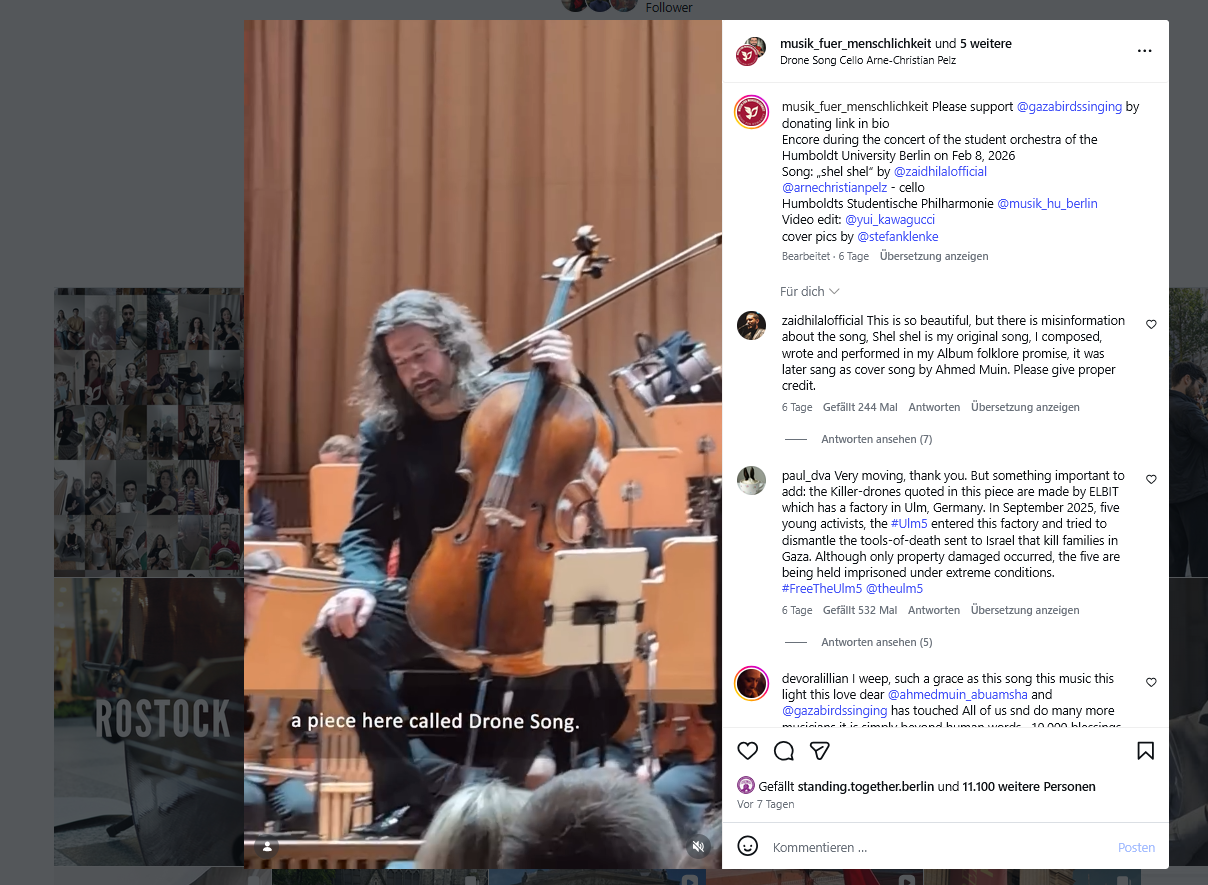
„Even as the world anxiously awaits peace in Gaza, a powerful artistic response to the relentless suffering is echoing across social media. Palestinian composer and writer Nahed Elrayes’s remix of Gaza-based music teacher Ahmed Muin Abu Amsha’s haunting ‘Drone Song,’ released on October 2, has struck a deep chord much like the original. His remix intensifies the portrayal of the drone sounds that have become a grim part of daily life for children in Gaza. In a region scarred by violence, this song is more than a sonic experience — it’s a testament to how art can stand witness, evoke empathy and help heal.“
***
Und die „Weitergabe“ bei Studieendenkonzert an der Humboldt Universität Berlin (8. Febr. 2026) …
***
Nachtrag 8. März 2026: Text zum Lied (mit Übersetzung)
Flimtip – Gerade in der verschiedenen Kinos zu erleben …
Noam Shuster-Eliassi hat sich als Gesicht des israelisch-palästinensischen Friedensprozesses einen Namen gemacht. Mittlerweile hat sie beschlossen, daß es Zeit für einen Neubeginn ist. Mit ihrer Stand-up-Comedy und politischen Satire strebt sie auf die großen Bühnen. Der Dokumentarfilm hat Noam, die selbst in dem israelisch-palästinensischen Dorf Neve Shalom-Wahat-as-Salam aufgewachsen ist, über fünf Jahre bei der Entwicklung ihres Bühnenprogramms begleitet.
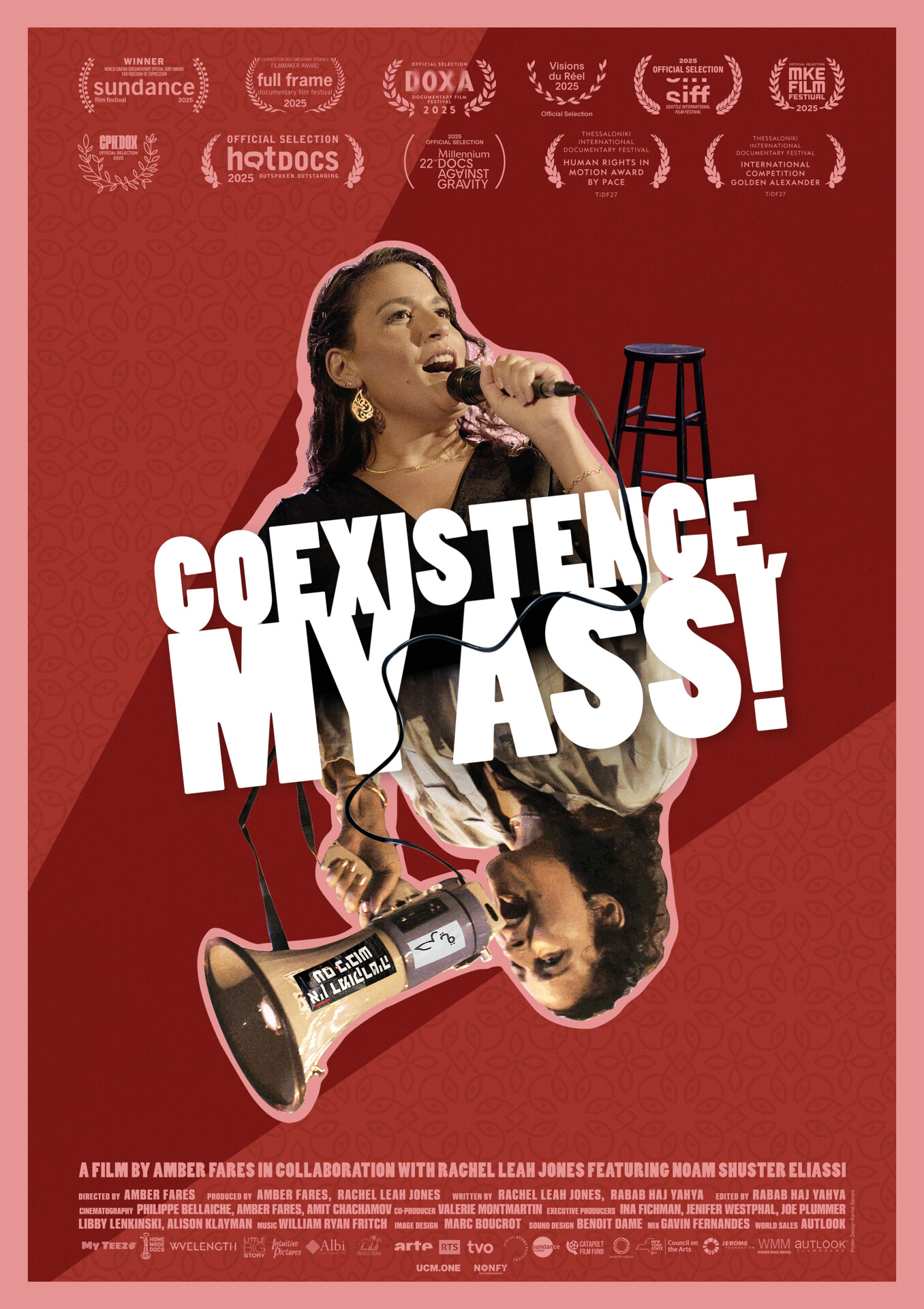
Noam Shuster Eliassi wuchs als Aushängeschild des israelisch-palästinensischen Friedensprozesses auf, bevor sie sich entschlossen der Stand-up-Comedy und politischen Satire zuwandte. Doch während die Region immer tiefer in verheerende Gewalt versinkt, muss sie sich der Situation stellen und ihr Publikum mit harten Wahrheiten konfrontieren, die kein Grund zum Lachen sind.
„Coexistence, My Ass!“ begleitet die israelische Aktivistin und Komikerin Noam Shuster Eliassi bei der Entstehung ihrer gleichnamigen Comedy-Show. Der Dokumentarfilm, der über einen Zeitraum von fünf turbulenten Jahren gedreht wurde, zeichnet Noams persönlichen, beruflichen und politischen Werdegang vor dem Hintergrund der stetigen Verschlechterung der Lage in der Region nach. Aufgewachsen im zweisprachigen israelisch-palästinensischen Dorf Wahat al-Salam – Neve Shalom (Oase des Friedens), einer bewusst integrierten Gemeinde, verliert Noam zunehmend den Glauben an den traditionellen Friedensaktivismus. Sie wendet sich der Stand-up-Comedy zu und erregt schnell Aufmerksamkeit im gesamten Nahen Osten. Doch während ihr Stern steigt, bricht alles um sie herum zusammen. Mit beißender Satire konfrontiert Noam ihr Publikum mit schwierigen Wahrheiten, die nicht immer lustig sind, uns aber daran erinnern, dass eine andere Realität möglich ist.
Noam Shuster Eliassi grew up as a poster child for the Israeli-Palestinian peace process before consciously turning to stand-up comedy and political satire. But as the region sinks ever deeper into devastating violence, she is forced to confront reality and challenge her audiences with hard truths that offer little cause for laughter.
“Coexistence, My Ass!” follows the Israeli activist and comedian Noam Shuster Eliassi during the creation of her comedy show of the same name. Filmed over five turbulent years, the documentary traces Noam’s personal, professional, and political journey against the backdrop of the steadily deteriorating situation in the region. Raised in the bilingual Israeli-Palestinian village of Wahat al-Salam – Neve Shalom (Oasis of Peace), a deliberately integrated community, Noam gradually loses faith in traditional peace activism. She turns to stand-up comedy and quickly attracts attention across the Middle East. Yet as her star rises, everything around her begins to fall apart. With biting satire, Noam confronts her audiences with difficult truths that are not always funny, but remind us that another reality is possible
Informationsplattform fachinfo-verschwörungsideologie.de ist jetzt online und bietet praxisorientierte Fachinformationen zu Verschwörungsideologien für Berater:innen in der Sozialen Arbeit und Fachkräfte aus dem Feld der nonformalen politischen Bildung
Völkisch-autoritäre Verschwörungsideologien beeinflussen Familien, Freundschaften oder Arbeitsbeziehungen und sind damit auch eine Herausforderung für Beratungs- und Bildungsprozesse. In einem interdisziplinären Forschungsprojekt haben die TH Köln und die Universität zu Köln daher eine Webseite mit praxisorientierten Fachinformationen für die Soziale Arbeit und die politische Bildung ins Leben gerufen. Auf www.fachinfo-verschwörungsideologie.de finden Fachkräfte aus Beratung und politischer Bildung unter anderem fachlich valide Erklärungen zu Verschwörungsideologien sowie Übersichten zu aktuell relevanten Verschwörungserzählungen und Gruppierungen. Praxisnahe Materialien für Bildungs- und Beratungssituationen, Handlungshilfen zur direkten Anwendung in Beratungsgesprächen und Hinweise zu relevanten Praxispartner*innen und unterstützenden Institutionen sollen die tägliche Arbeit erleichtern. Die Informationsplattform wird sukzessive um Fallbeispiele oder weitere empirische Ergebnisse zu den Auswirkungen von Verschwörungsideologien erweitert.
„Zahlreiche Materialien, die auf der neuen Informationsplattform zur Verfügung gestellt werden, basieren auf den quantitativen und qualitativen Erhebungen, die im Rahmen des RaisoN-Projekts durchgeführt worden sind. Insofern bietet die Informationsplattform den Nutzer*innen neben Tipps für Handlungsstrategien auch einen kompakten Einblick in den Stand der Forschung in diesem Feld“, sagt Professorin Dr’in. Gudrun Hentges, Mitglied der Projektleitung.
Die Webseite richtet sich in erster Linie an Fachkräfte aus Beratung und politischer Bildung, die im Rahmen ihrer Arbeit im Kontakt mit Personen stehen, die wiederum mit Menschen mit einer Affinität zu Verschwörungserzählungen in ihrem sozialen Umfeld konfrontiert sind. Darüber hinaus sind die Inhalte der Informationsplattform für Wissenschaftler:innen und die interessierte Öffentlichkeit relevant.
„Über die Fachinformationsplattform möchten wir Forschungsergebnisse direkt mit denjenigen teilen, die tagtäglich in Beratung und Bildung tätig sind – damit wissenschaftliche Erkenntnisse in die Praxis einfließen und handlungsorientierte Strategien im Umgang mit Verschwörungsideologien gefördert werden können“, sagt Prof‘in Dr‘in Birgit Jagusch von der TH Köln und Mitglied der Projektleitung.
Das Verbundprojekt „RaisoN – Radikalisierungsprozesse durch Verschwörungsideologien: Auswirkungen auf den sozialen Nahraum als Herausforderung für die Bildungs- und Beratungsarbeit“ wird von der TH Köln und der Universität zu Köln durchgeführt. Das interdisziplinäre Projektteam erforscht, wie völkisch-autoritäre Verschwörungsideologien den sozialen Nahraum beeinflussen und welche Herausforderungen sich daraus für Beratungs- und Bildungsprozesse ergeben. Ein weiterer Fokus liegt darauf, wie die wissenschaftlichen Erkenntnisse praxisgerecht in Beratung und Bildung transferiert werden können.
RaisoN wird im Rahmen der Förderlinie „Aktuelle und historische Dynamiken von Rechtsextremismus und Rassismus“ vom Bundesministerium für Forschung, Technologie und Raumfahrt (BMFTR) gefördert. Das Projekt läuft noch bis zum 30. Juni 2026.

Moshe Sharett – Leadership, Diplomacy, Legacy: A Reevaluation
[Konferenz Ankündigung für September 2026]
The Jacob Robinson Institute for the History of Individual and Collective Rights (The Hebrew University of Jerusalem) and the Azrieli Center for Israel Studies (Ben-Gurion University of the Negev) invite proposals for an international conference on “Moshe Sharett – Leadership, Diplomacy, Legacy: A Reevaluation”. The event will be held at the Mount Scopus campus in (West-)Jerusalem, from Monday, 7 September to Wednesday, 9 September 2026.
Moshe Sharett (1894-1965) was among the foremost leaders of the Yishuv and the early State of Israel. A complex and thought-provoking figure, Sharett served as the country’s first Foreign Minister (1948-1956) and its second Prime Minister (1954-1955). Yet, the founder of Israel’s diplomatic service still remains to be fully leaned and studied. Marking sixty years since his death, this conference aims to bring together an interdisciplinary group of scholars for a renewed critical examination of Sharett’s leadership, diplomacy and legacy. Special attention will be given to the moral realism that characterized the statesmanship he shaped and embodied.
Weitere Informationen / Further information on H/Soz/Kult
Moshe Sharett – Leadership, Diplomacy, Legacy: A Reevaluation (05.01.2026)
https://www.hsozkult.de/event/id/event-159576.
Nach zahlreichen Regierungen und Organisationen hat auch VN-Generalsekretär António Guterres das von Israel verhängte Arbeitsverbot für internationale Hilfsorganisationen kritisiert. In einer Erklärung am Freitagabend verlangte Guterres die Rücknahme der Maßnahme. Nichtregierungsorganisationen seien für lebensrettende Arbeit in den Palästinensergebieten unverzichtbar. Er verwies auf Israels völkerrechtliche Verpflichtung, humanitäre Hilfe zu ermöglichen. (Bericht Radio Vatikan)
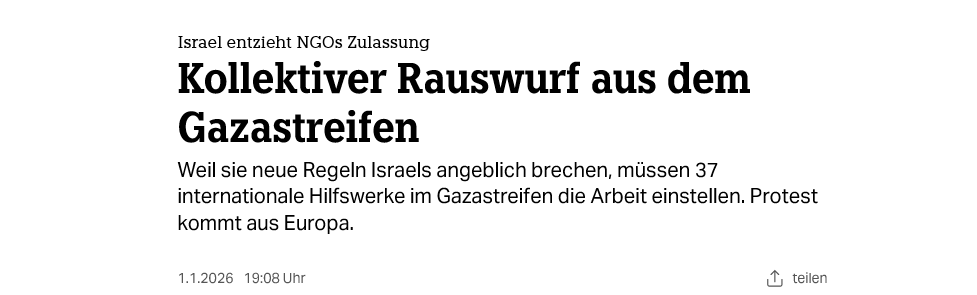
37 humanitäre Organisationen dürfen künftig nicht mehr im Gazastreifen und im Westjordanland tätig sein, falls sie sich weigern, die neuen israelischen Registrierungsauflagen zu erfüllen. Diese von Israel am Donnerstag bestätigte Maßnahme traf weltweit auf Kritik, auch das Lateinische Patriarchat von Jerusalem hat reagiert. Caritas Italien zeigte sich solidarisch mit der Schwestergesellschaft im Heiligen Land. (Bericht Radio Vatikan) – Zu den von Israel ausgeschlossenen Organisationen gehören unter anderem Ärzte ohne Grenzen, der Norwegische Flüchtlingsrat, Care International, Oxfam und ActionAid, aber auch Caritas Jerusalem.
taz, 1. Januar 2026
_______
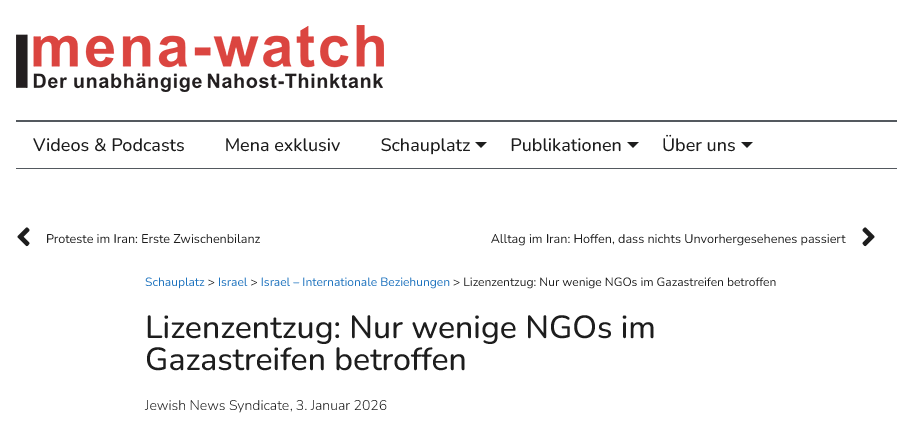
Anders sieht es „Mena:Watch“
Eine Reflexion zum Jahresende 2025
I would like to wish you first of all, health as in our age it is extremely important to feel well and also happiness and of course change of the present era of authoritarianism that plagues the world.
For many years I made it a habit to send New Year wishes to people I met along my path. During the last two years, however, I lacked the energy to continue this tradition, feeling helpless and hopeless. This year, as I approached my 80th birthday, I felt that I must overcome myself. Perhaps this will be the last time I follow this ritual, but I feel a strong need to write.
The truth is that the world has fallen upon me. The genocide carried out by Israeli Jews in Gaza bears, for me, the mark of Cain—one that cannot be erased and will haunt us for centuries. I am part of this and bear responsibility, both as a citizen of Israel and as a Jew whose family was almost entirely annihilated in Treblinka. My grandmother, aunts, uncles, and their children were murdered. Only my mother and her sister survived—two out of nine siblings.
Growing up without a family is incomprehensible, and this absence became a central reason I devoted my academic career to studying how evil evolves within the framework of intractable conflicts. I found a moral model in my aunt, who was sixteen years old and a member of a leftist youth movement. She was on the “safe” side of Warsaw and could have survived, but on April 19, 1943, she returned to the ghetto when her comrades called her to join the uprising. My life’s mission was not only to honor her courage and values, but also to uncover her fate. Three years ago, I finally did. Sent out on April 25, 1943; to seek Polish assistance, she was killed by a German Nazi policeman.
The genocide carried out in Gaza by victims of the Holocaust is appalling and violates all my values—especially as it is largely denied by its perpetrators, who have killed approximately 70,000 Palestinians, wounded about 170,000, and flattened the Gaza Strip. These acts have not ceased; they continue in both the West Bank and Gaza.
The murderous attack on 7th of October 2023 by Hamas in which were murdered about 850 civilians and about 350 soldiers and abducted 251 civilians with women and children cannot justify the genocide. The extreme rightist, religious, racist, and messianic government led to these acts and now denies its responsibility directing the anger solely to 7th of October. At the same time the government under the leadership of Netanyahu turns Israel into dictatorial and anti-democratic country.
Israel has been governed by the right since 2000, following the failure of the Camp David summit and the outbreak of the Second Palestinian Intifada. In the aftermath of the atrocities of October 7, many Israelis shifted further to the right, opposing the establishment of a Palestinian state and increasingly delegitimizing Palestinians as a people. I moved in the opposite direction. I came to understand more deeply the brutality of 58 years of occupation and the consistent trajectory of Israeli governments since 1967: the expansion of Jewish settlements in the occupied territories, the refusal to withdraw fully from them, and—already during the Mandate period—the aspiration to incorporate the West Bank into the future State of Israel.
It is well documented that the majority of Israeli Jews, as well as a large portion of Jews in the diaspora, are indoctrinated from an early age by successive Israeli governments with a sense of collective victimhood, feelings of superiority, the perception of non-Jews as an existential threat, chronic insecurity and fear, heightened patriotism, the delegitimization of Palestinians, and the belief in the moral justness of retaining control over the West Bank.
My state of mind is also deeply affected by developments in the United States under the leadership of Trump, who is undermining the foundations of a democratic state. The world as a whole appears to be moving in an authoritarian direction, painfully reminiscent of the 1930s. We, the older generation, are no longer able to reverse this trajectory. It is the younger generation that must bring about profound change if the world is to be saved.
It is deeply painful. Since 2022, approximately 200,000 Israelis have left the country—mostly young, progressive, and highly professional individuals. My beloved daughter, Galiya, is planning to relocate to the United Kingdom to study social work, driven by a desire to contribute to repairing the world.
I will not leave Israel. There are many reasons, one of them being that I have invested too much of my life in this state. Instead, I am fully committed to documenting what is happening here for future generations. Fortunately, I am invited to write chapters for handbooks and edited volumes, which gives me the intellectual freedom to choose the themes I address.
Thus, with the arrival of Christmas and the New Year—moments that invite at least a pause for reflection—I hope that a light will come to this world. Yet such a light will not emerge on its own. We must help illuminate the path for the younger generation.
Very cordially, Danny

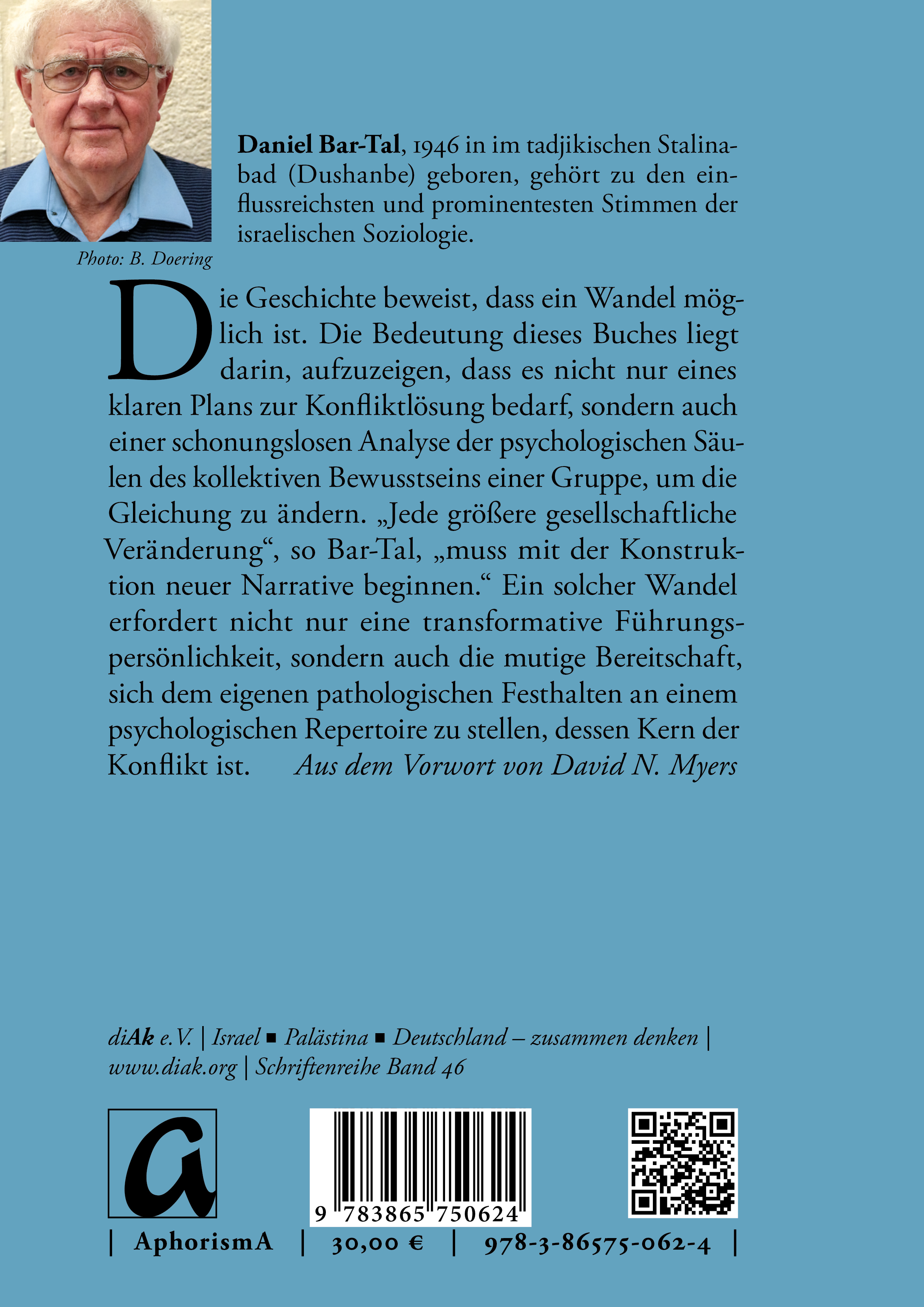
Und weiterhin lesenswert – im Shop bestellbar


Anläßlich von Chanukka und der Adventszeit bittet der NIF Deutschland um Unterstützung für das NIF Peace and Security Programm. Aus diesem Programm fördert der NIF Organisationen, die sich für eine friedliche und gleichberechtigte Zukunft für Israelis und Palästinenser:innen einsetzen. Auf den Social-Media-Kanälen Instagram, Facebook und LinkedIn findet sich die Kampagne „8 Tage Chanukka. 8 Initiativen für Frieden“ bereits gestartet. Jeden Tag wurde /wird dort eine Initiative vor, die 2025 mit Unterstützung des NIF Hoffnung geschenkt und Licht in dunkle Zeiten gebracht hat.