Sheikh Jarrah

Statement of the Humanitarian Country Team
on the imminent eviction of the Salem Family in Sheikh Jarrah in East Jerusalem

Joint Statement

United Nations Office for the Coordination of Humanitarian Affairs
occupied Palestinian territory

Jerusalem, 18 February 2022

Today, representatives of the Humanitarian Country Team in Palestine, comprising United Nations Agencies and international and Palestinian NGOs, met with the Salem family in the occupied East Jerusalem neighbourhood of Sheikh Jarrah. The family of 12, including six children and the elderly mother, Fatima Salem – all of whom are Palestine refugees – faces eviction during March from their family home of 70 years.

The announcement of the scheduled eviction has recently raised tension in the Jerusalem neighbourhood, with clashes involving Palestinian residents, Israeli settlers, and Israeli Security Forces resulting in property damage, multiple injuries and arrests, including the arrest of eight children since Friday 11 February. The Salem family itself and their neighbours have been subject to attacks with pepper spray and stones resulting in injury and property damage.

The Salem family is one of 218 Palestinian families, comprising 970 individuals, including 424 children, living in East Jerusalem, mainly in the neighbourhoods of Sheikh Jarrah and Silwan, that are currently facing the threat of forced eviction by the Israeli authorities.

The United Nations has repeatedly called for a halt to forced evictions and demolitions in the occupied West Bank, including East Jerusalem: under international humanitarian law, forcible transfers of protected persons by the occupying power are forbidden regardless of their motive.

Active steps must be taken to de-escalate the situation before another crisis erupts; we urge all political and community leaders to refrain from provocative action and rhetoric. Israeli authorities must take steps to ensure the protection of civilians, including Palestine refugees.

For more information, please contact Ofir Feuerstein at feuerstein@un.org

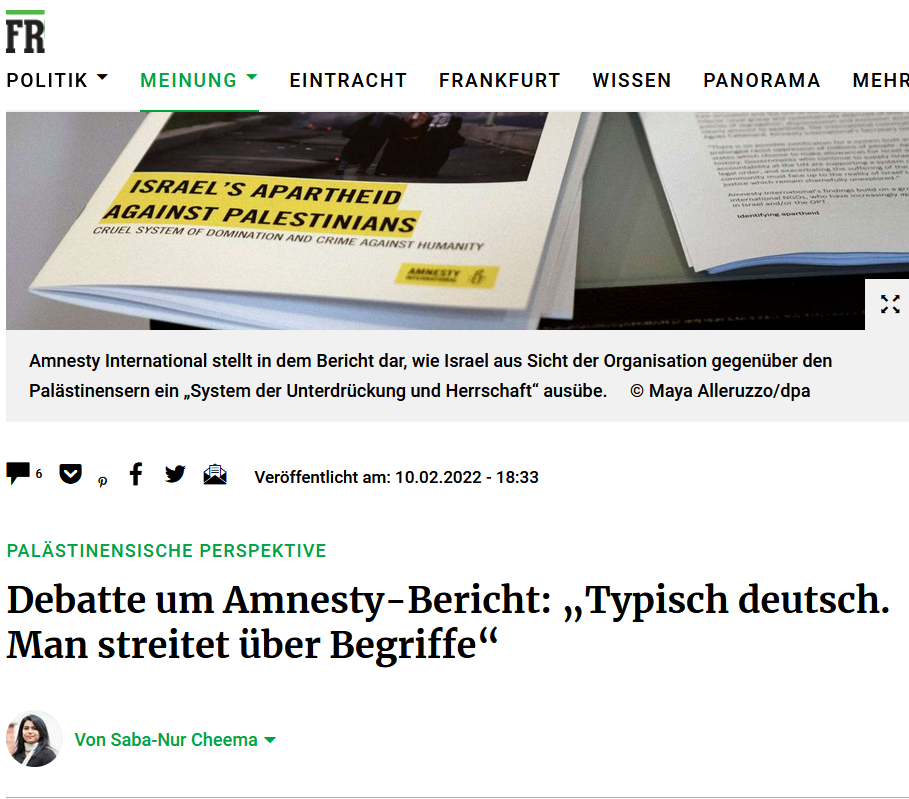
Typisch deutsch?

Ein Beitrag zur Debatte um den Amnesty-Bericht von Saba-Nur Cheema (Frankfurt/M.):

„Alle Welt redet über Antisemitismus und Apartheid. Nur die palästinensische Seite nicht. Warum?“

Frankfurter Rundschau (10. Februar 2022)

AFTERWARD 

Zoom-Podiumsdiskussion mit der Filmemacherin Ofra Bloch | (Mit Entgelt)

Jerusalem-born trauma expert Ofra Bloch forces herself to confront her personal demons in a journey that takes her to Germany, Israel and Palestine. Set against the current wave of fascism and anti-Semitism sweeping the globe, AFTERWARD delves into the secret wounds carried by victims as well as victimizers, through testimonies ranging from the horrifying to the hopeful. Seen as a victim in Germany and a perpetrator in Palestine, Bloch faces those she was raised to hate as she searches to understand the identity-making narratives of the Holocaust and the Nakba, violent and non-violent resistance, and the possibility of reconciliation. The film points towards a future – an “afterward” – that attempts to live with the truths of history in order to make sense of the present.

Es kostet ca 12 EUR entsprechend einer Kino-Karte, dafür gibts den Film drei Tage vorher zum Anschauen, um dann die Podiumsdiskussion zu verfolgen.


Hier ist der Link zum Anmelden:
https://stillpoint.org/event/afterward-international-film-screening-and-panel-tickets-254764285837

An der Podiumsdiskussion nehmen teil:

Bassam Aramin
 lives in Jericho in the West Bank. At the age of 17, he was incarcerated and spent 7 years in an Israeli jail. He is the former Palestinian Co-director of the Parents Circle – Families Forum.

Thomas Casagrande, Dr. phil., teacher and political scientist. He published books on the history of “Volksdeutsche” in the Waffen-SS.

>>  https://de.wikipedia.org/wiki/Thomas_Casagrande

Pamela Cohn is a film curator, nonfiction story consultant, and writer. Learn more about Pamela: 
>> http://www.pamelacohn.com/

Aleksandar Dimitrijevic, PhD, is a clinical psychologist and psychoanalyst. He works as a lecturer at the International Psychoanalytic University – IPU, Berlin and in private practice. 
>> http://berlinpsychoanalyst.com/about/

Atmen können – Rap für Verständigung

In all dem, was vielen nicht möglich zu sein scheint, ist doch manches möglich…

Ein Bericht von Sarah J. Hoffmann auf Qantara über Sameh Zakout und Uriya Rosenman

Ungerechtigkeit, und …?

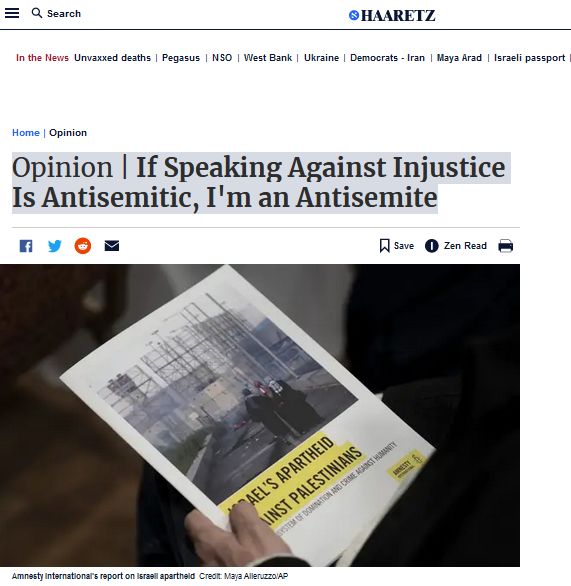
Ein lesens- und bedenkswerter Kommentar von Akiva Eldar bei Haaretz (9. Februar 2022)

Opinion:

If Speaking Against Injustice Is Antisemitic, I’m an Antisemite

Totgesagte leben länger?

Oder totgeglaubte? Holy Land Confederation …
Yossi Beilin und Hiba Husseini stellen in Washington (sic) ihre Überlegungen für eine Friedensperspektive der Öffentlichkeit vor

Haaretz | Andere Berichte

A new plan for resolving the Israeli-Palestinian conflict that proposes the creation of a confederation instead of relying exclusively on a two-state solution, and would allow West Bank settlers to remain in their homes, is being presented to Biden administration officials and the United Nations this week.  

The proposal for a “Holy Land Confederation” is a 100-page document that was been crafted over the past two years by Yossi Beilin, one of the architects of the Oslo Accords in the early 1990s, together with Palestinian attorney and veteran peace negotiator Hiba Husseini. Along with a small team of Israeli and Palestinian advisers, they met regularly over Zoom during the pandemic to craft their plan.

The effort was underwritten by the Friedrich Ebert Foundation, a German organization associated with the Social Democratic party.

Wasser – für wen, für wen nicht?

Thirsty for Life: Water Rights for Palestinians in Area C | Dienstag, 8. Februar 22
1:00 PM to 2:00 PM ET – Register – Berlin Time: 7:00 PM – 19:00-20.00 Uhr

As Combatants for Peace continues to campaign for water rights across Occupied Palestine, we’re excited to bring you an update from the activists doing the difficult work on the ground. Moderated by Combatants for Peace leader Avner Wishnitzer, this discussion will focus on ongoing policies aimed at depriving Palestinian communities across Area C of water, with the goal of driving them off their land – and will highlight how we are working to protect these communities.

We’ll be joined by Nada Majdalani, the Palestine Director of EcoPeace Middle East, as well as Dror Etkes, Founder of Kerem Navot, CfP Activist Adam Al-Herani, and local resident Fatma Noajaa

Über eine aktuelle Debatte

Geht es um Inhalt oder um das Etikett?

In der Debatte um den aktuellen Bericht von amnesty international zur Situation in Israel-Palästina schlagen (gerade in Deutschland) die Wellen wieder einmal hoch. Signalworte stoßen bekannte Reaktionen an, der Inhalt des Berichts gerät dabei fast aus dem Blick.

Hanno Hauenstein in der Berliner Zeitung versucht eine sachlich-differenzierende Einordung.

Der Bericht (englisches Original) selbst kann hier heruntergeladen werden, hier die Einordung von ai Deutschland (geänderte Fassung).

Bewegte Bilder, bewegende Bilder

The Israel Film Archive – Neues Sammelgut online!

Ein einführender Bericht in der Times of Israel und der Link zum Archiv

UNRWA schools in Jordan

Teacher management in refugee settings

Global sind 70,8 Millionen Menschen Vertriebene und ohne Bleibe („displaced people“); dies ist die höchste Anzahl seit dem zweiten Weltkrieg. Etwa 25,9 Millionen davon sind auf der Flucht und die Hälfte davon sind Kinder. Damit entstehen völlig neue Anforderungen an Bildung und eine Form von Bildungssystem, sowohl organisatorisch als auch inhaltlich und in der konkreten Praxis. Wie kann das Recht auf Bildung und eines der VN-Nachhaltigkeitsziele (Sustainable Development Goals, SDG) für Menschen auf der Flucht gerade in den Refugee Camps einigermaßen umgesetzt werden? Welche Erfordernisse ergeben sich daraus an die dort tätigen Lehrer und Lehrerinnen und wie kann dabei überhaupt strukturiert und geplant gearbeitet werden?

Das International Institute for Educational Plannung in der UNESCO und der Education Development Trust, finanziert von der Open Society Foundation, haben eine Studie zur Situation von Lehrplanung und Schuldbildung in den UNRWA-Schulen in Jordanien veröffentlicht.

“In fact, Goal 4 of the United Nations (UN) Sustainable Development Goals (SDGs), which seeks to ‘ensure inclusive and equitable quality education and promote lifelong learning opportunities for all’, remains far out of reach for many of the world’s refugees. According to a recent report from the International Rescue Committee (IRC), refugees are largely excluded from SDG-related data collection, monitoring frameworks, and national reporting and development plans. As of 2018, only 63% and 24% of refugees had access to primary and secondary schooling respectively. There is therefore an urgent need to improve the equitable provision of quality education that is inclusive of refugees.

Effective teacher management is a key policy lever for ensuring inclusive, equitable and quality education systems. Research has shown that the quality of the teaching workforce is the most important factor affecting student learning among those that are open to policy influence. In crisis and displacement situations, the role of teachers is particularly significant; they are the ‘key to successful inclusion’ and are sometimes the only educational resource available to students. Teachers are a source of continuity in students’ disrupted lives; they play a key role in developing their social and emotional skills and in protecting and supporting their scholastic success. However, teachers working in refugee contexts are unable to play this crucial role without appropriate support and training to be able to handle the often overcrowded, mixed-age and multilingual classrooms. Although teachers and teaching practices have received increasing attention in education in emergencies research in the last few years, most of the data available about teachers of refugees are limited to numbers of teachers, qualifications and certification, and compensation. Indeed, it is understandable that these data are cited most often in the discourse, considering that mass shortages, particularly of qualified teachers, are a significant problem ‘across displacement settings, both at the onset of crisis and in cases of protracted displacement’.

More research is needed – particularly from the perspectives of teachers in refugee settings – to identify the many challenges they face and to support the development of strategies to overcome them. Challenges include a lack of appropriate preparation to provide psychosocial support and practise self-care, uncertain career opportunities, financial and social insecurity, language barriers, gender inequality, and a lack of coordination between the many non-governmental and governmental actors involved. As more emergencies become protracted crises and refugee populations continue to grow, there is an urgent need for evidence to guide the development and implementation of policies for the effective management of teachers working with the populations affected. Such research should pay attention to the dynamics and context of the displacement crisis, focusing on teachers in refugee settings rather than teachers of refugees, as not only can the global refugee crisis change from day to day with the outbreak of new crises, including climate-related emergencies, but sometimes host communities are just as vulnerable, if not more so, than their refugee peers. In other words, research is needed that will align with the ‘whole society approach’ advocated by the international community and support planning for the society as a whole instead of planning in parallel for the host community and the refugee community” S. 11-12.

Zum Dokument