Das Institut für Sicherheitsstudien Israels (INSS – The Institute for National Security Studies) in Tel Aviv hat eine Studie veröffentlicht zu Sicherheitsfragen in der Bevölkerung Israels. Bei einer Umfrage (800 Befragte) sollten Sicherheitsgefühle und Perzeptionen bewertet werden, mit teils überraschenden Ergebnissen.
“The National Security Index: The Cognitive Campaign in the Digital Age” von Zipi Israeli und Ruth Pines, Dezember 2021
„The specific issue of the cognitive campaign in the digital age arose in connection with the events of May 2020, especially during Operation Guardian of the Walls, but it is a larger issue of increasing importance, given the nature of Israel’s military conflicts today. This issue combines various elements, including the perception of victory in a military conflict, the changing theaters in military conflicts, and the increasing relative importance of the cognitive, media, and social media arenas. Has the perception of victory become solely cognitive? Does victory belong to those who have declared it? Is it possible to talk about victory without relating to the cognitive element? Feelings and perceptions regarding these aspects play a central role in shaping the Israeli reality. This article discusses these perceptions from the perspective of the Israeli public, based on findings from a public opinion study conducted by the Institute for National Security Studies (INSS) in October 2021. The study was carried out among a representative sample of the adult population of Israel (age 18 and up) and included some 800 participants. Its main findings are presented here.“
Mitten in der Omikron-Welle lockert Israel seine Einreisebeschränkungen. Ab 9. Januar dürfen gegen das Coronavirus geimpfte Touristen wieder einreisen. Allerdings gilt eine Einschränkung.
Am Jahresende doch noch einmal einen Blick auf die Arbeit von Standing Together, eine Arbeit, die ermutigt und Perspektiven zeigt … und die so ein guter Ausklang dieses Jahres sein soll!
Hallo,
My name is Suleiman al-Tihi. I am a student at Sapir College and live in Rahat in the Negev. I am also a newly elected member of the leadership of Standing Together. For the past two weeks, the far-right organization Im Tirtzu has waged a racist campaign against me while I was running for my college’s student union because they did not like the fact that I am an Arab and a national leader in the largest Jewish-Arab grassroots movement in Israel. So I suddenly woke up to an „investigation“ about me on TV, initiated by Im Tirtzu and aided by the far-right Channel 14 News. They dug into my Facebook profile and took posts I wrote at age 13(!) out of context in order to portray me as a „terrorist supporter,“ demanding that I be disqualified from the election and even that the college administration expel me from my studies. But it didn’t work. In the election, I came in 2nd place overall and was elected to the union! The student body at Sapir College proved that Jewish-Arab partnership can overcome racism and incitement.
The students at Sapir College — Jews and Arabs — rejected the attempt to create a divide on campus. The tremendous support I received, and still receive, moved me greatly. Im Tirtzu’s campaign failed because they are not really present on campus, which teaches us how important it is to invest in people and to be connected on the ground across the country.
I invite you to support our movement so that we can be strong on different campuses and in different cities, in the periphery and in the center, and invest in change that grows from the ground up. Each donation will support the movement’s ability to train and accompany activists like myself.
Standing Together P.S. Sapir College, where Suleiman attends, is one of the tens of campuses and places where we are yet to have siginificant organizing efforts. We cannot overstate the frustration we feel when our activist groups in Lod, in Umm al-Fahm, in Sapir and Oranim college, and in Bnei Brak reach out to us for support, and we don’t have the resources to give them the attention they deserve. Standing Together is growing, and providing a political home for thousands of Palestinians and Jews. But with that growth, we need to develop our organizing capacity.
Our ability to mobilize during polarizing times and make an impact is exactly because we organize, all year round, around our shared interests. At the peak of the violence this past May, we were able to mobilize and make an impact because of your support. And now we need you to help us organize, by funding two additional community organizers to our team that will be able to connect with our base, in the Triangle area and on campuses, to recruit, train, engage, and build new leadership.
Aus dem heutigen Mailing von standing together – was sonst bleibt: Zusammen stehen!
Mailing address is: info@standing-together.org
While this past year has proved just how vital our movement is, it also showed us how critical the support of people like you is. As a grassroots movement, nearly half of our funding comes from membership fees and private donations. Standing Together was a pillar of hope through some of the darkest moments we’ve experienced as a society for decades. And you have been our pillar of support. So, before the year ends, I wanted to thank you, and ask for your support. Will you help us build hope as we enter 2022 by contributing to our end-of-year fundraiser?
In May, a dramatic escalation of violence engulfed Israel-Palestine. Triggered by the government and settlers’ attempts to displace Palestinians in Sheikh Jarrah, the resulting flare-up between Israel and Hamas sent Israelis running to bomb shelters while their neighbors in Gaza had nowhere to run. But in these darkest of moments, Standing Together mobilized thousands upon thousands of Jews and Palestinians across the streets of Israel to stand against the violence, against the occupation, and for a just peace in which everyone can live free of discrimination and free of fear.
Meanwhile, coronavirus has continued to exacerbate the gaps within society, hitting the most vulnerable populations the hardest. Many of us can barely pay our bills at the end of the month, let alone have any savings left over at the end of the year. We know that things don’t have to be this way, so we launched a campaign to raise the minimum wage to 40 NIS/hour. Slowly but surely, we’re gaining the support of more Members of Knesset and a wide cross-section of the Israeli public.
All the while, our government continues to ignore the potentially catastrophic consequences of the climate crisis — some of which are already with us. Instead of divesting from the fossil fuel companies responsible for the vast majority of global warming and pollution, the government continues to pretend that this is a crisis we can deal with later. The climate crisis demands immediate action, so we’re leading the call for our government to adopt a Green New Deal that would fundamentally restructure our economy so that it serves the people and not just profit.
Our ability to mobilize during polarizing times is exactly because we organize, all-year-round, around our shared interests, building a political home where we can all imagine a society where every one of us is equal and free.
We know that we can live in a society that is good for all of us. An equal and just society that treats every person with dignity, and has a place for everyone. A society that chooses a life of peace, justice, and independence for Israelis and Palestinians, Jews and Arabs. A society in which we can all enjoy real security: with adequate housing, quality education, good healthcare, a decent salary, and the ability to age with dignity.
To see out the year, Standing Together is launching a crowdfunding campaign that will enable us to continue and expand our work into 2022. As grassroots, democratic movement, it is vital that 50% of our annual budget comes from membership fees and private donations — and this is where you come in.
This fundraiser is an opportunity for you to have a real impact on our work in 2022, and to be our partner in bringing about the radical change to Israeli society that we seek. So, will you help us build hope?
Help Us Build Hope – With gratitude and solidarity,
Sally Abed סאלי עבד سالي عبد National Leader – Resource Development Coordinator Standing Together
Nicht zu euphorisch sein, aber nach den heutigen neuesten Nachrichten steht ab Donnerstag, 30. Dezember 2021, Deutschland nicht länger auf der „roten Liste“ der Länder, aus denen die Einreise nach Israel nur mit Sondererlaubnis möglich ist …. Besuche und Reisen rücken also wieder in den Bereich des Möglichen…
Die israelische Gesellschaft befindet sich in einem rasanten Wandel. Eine junge Generation arabischer Israelis fordert aktiv ihre Rechte ein. Fragen an Thabet Abu-Rass von der Nichtregierungsorganisation Abraham Initiatives, die für volle Gleichberechtigung von arabischen und jüdischen Israelis eintritt.
Das Interview von Noam Yatsiv mit Thabet Abu-Rass auf Qantara
So lautet der Titel eines neuen Buches, das bislang nur auf Hebräisch erschienen ist, sein Verfasser ist Mikhael Manekin, seines Zeichens Alliance Fellowship program director der ROI Community.
Joshua Leifer schreibt in der Tel Aviv Review of Books:
„The Dawn of Redemption is not an anti-Zionist book. Instead, it is closer to something like religious post-Zionism. “I am an Israeli and want to remain Israeli, and I am a traditional Jew and want to remain so,” Manekin writes. “I am not willing to give up on either one of these commitments.”“
Shaul Maggid schreibt auf +972:
„For Manekin, the key question facing religious Zionists today is no longer the individual moral question of “How should I behave?” but rather the national question of “How should a Jewish state behave?” The problem, Manekin suggests, is that the national question has easily effaced, even erased, the moral one.“
Die beiden Zitate aus den hier verlinkten Besprechungen mögen einladen, diese beiden sehr spannenden Texte zu lesen und sich den Gedanken des Buches anzunähern, wer es nicht auf Hebräisch lesen kann, wird hoffentlich nicht allzu lange auf eine Übersetzung warten müssen.
Nach den Unruhen im Mai hat ein Mitglied der israelischen Regierungskoalition eine neue Strategie in die Debatte gebracht: ausgerechnet der Vorsitzende der islamischen United Arab List, Mansour Abbas, zeigt einen neuen Weg auf, auf dem es der arabischen Minderheit in Israel möglich sein soll, sich als gleichberechtigte Bürger:innen in den jüdischen Staat zu integrieren.
Aus der Analyse von Dr. Michael Milshtein, Leiter des Palestinian Studies Forum am Moshe Dayan Center for Middle Eastern and African Studies an der Tel Aviver Universität.
„The message of change that many in both Jewish and Arab society longed for has arrived, but the identity of its bearer is different from what many had expected. The experiment the UAL is carrying out comes at a critical point in relations between Jews and Arabs, and constitutes one of the last opportunities to forge a stable coexistence. Initial success could restore the lost trust between the two societies, and down the line they would do well to articulate their respective status and their relationship, in the form of a civil charter. Conversely, failure will channel the two peoples into depths of enmity and confrontation that would serve as proof that 1948 is still an “open book,” in a disastrous sense.“
Der ganze Beitrag(„This Is the Most Radical Experiment Israeli-Arab Society Has Undergone“) findet sich in der Wochenendausgabe von Haaretz (18. Dezember 2021) hinter der Bezahlschranke. (Registrieung erforderlich, sechs Beiträge im Monat frei)
Wofür steht die Ampelkoalition in der Außenpolitik und speziell in den Beziehungen zu Israel?
Nach 16 Jahren Regentschaft Angela Merkel und enger deutsch-israelischer Partnerschaft werden der hiesige Regierungswechsel und die Einführung des neuen Bundeskanzlers Olaf Scholz auch in Israel kontinuierlich verfolgt und bewertet.
Shimon Stein war 2001 bis 2007 Botschafter Israels in der BRD und kennt die deutsche Politiklandschaft. Als Senior Research Fellow am israelischen Think Tank INSS, dem Institut für Nationale Sicherheitsstudien, hat er die Parteien der Ampelkoalition und den neuen Koalitionsvertrag betrachtet und die Schwerpunkte der Ampelkoalition in den internationalen Beziehungen für das Institut zusammengefaßt.
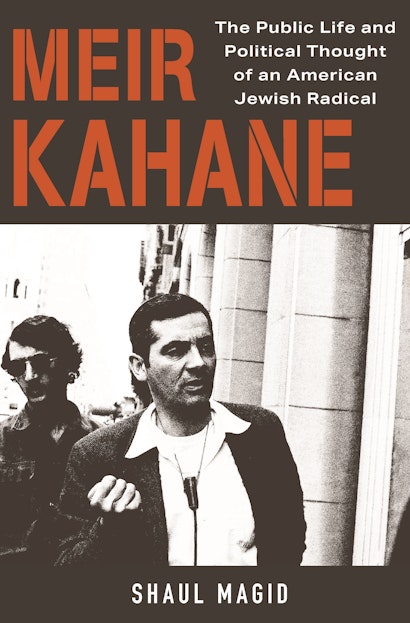
Shaul Magid: Meir Kahane: The Public Life and Political Thought of an American Jewish Radical
The life and politics of an American Jewish activist who preached radical and violent means to Jewish survival
Erschienen in der Princeton University Press – 978-0-691-17933-9 – Oktober 2021
(Wir bemühen uns um eine Besprechung)
Aus der Verlagsankündigung:
Meir Kahane came of age amid the radical politics of the counterculture, becoming a militant voice of protest against Jewish liberalism. Kahane founded the Jewish Defense League in 1968, declaring that Jews must protect themselves by any means necessary. He immigrated to Israel in 1971, where he founded KACH, an ultranationalist and racist political party. He would die by assassination in 1990. Shaul Magid provides an in-depth look at this controversial figure, showing how the postwar American experience shaped his life and political thought.
Magid sheds new light on Kahane’s radical political views, his critique of liberalism, and his use of the “grammar of race” as a tool to promote Jewish pride. He discusses Kahane’s theory of violence as a mechanism to assure Jewish safety, and traces how his Zionism evolved from a fervent support of Israel to a belief that the Zionist project had failed. Magid examines how tradition and classical Jewish texts profoundly influenced Kahane’s thought later in life, and argues that Kahane’s enduring legacy lies not in his Israeli career but in the challenge he posed to the liberalism and assimilatory project of the postwar American Jewish establishment.
This incisive book shows how Kahane was a quintessentially American figure, one who adopted the radicalism of the militant Left as a tenet of Jewish survival.