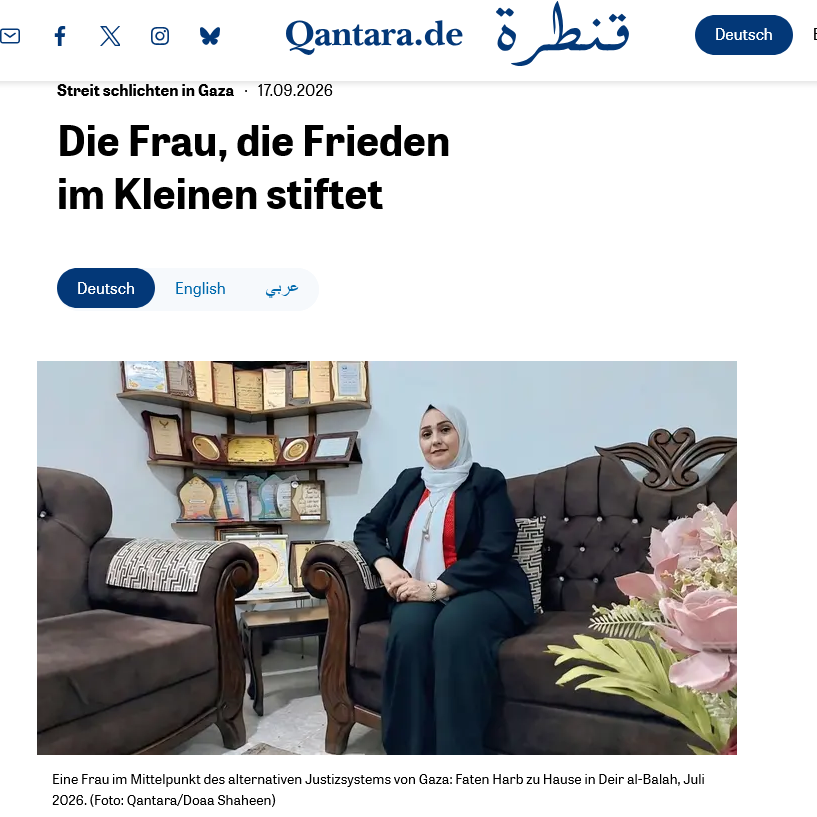
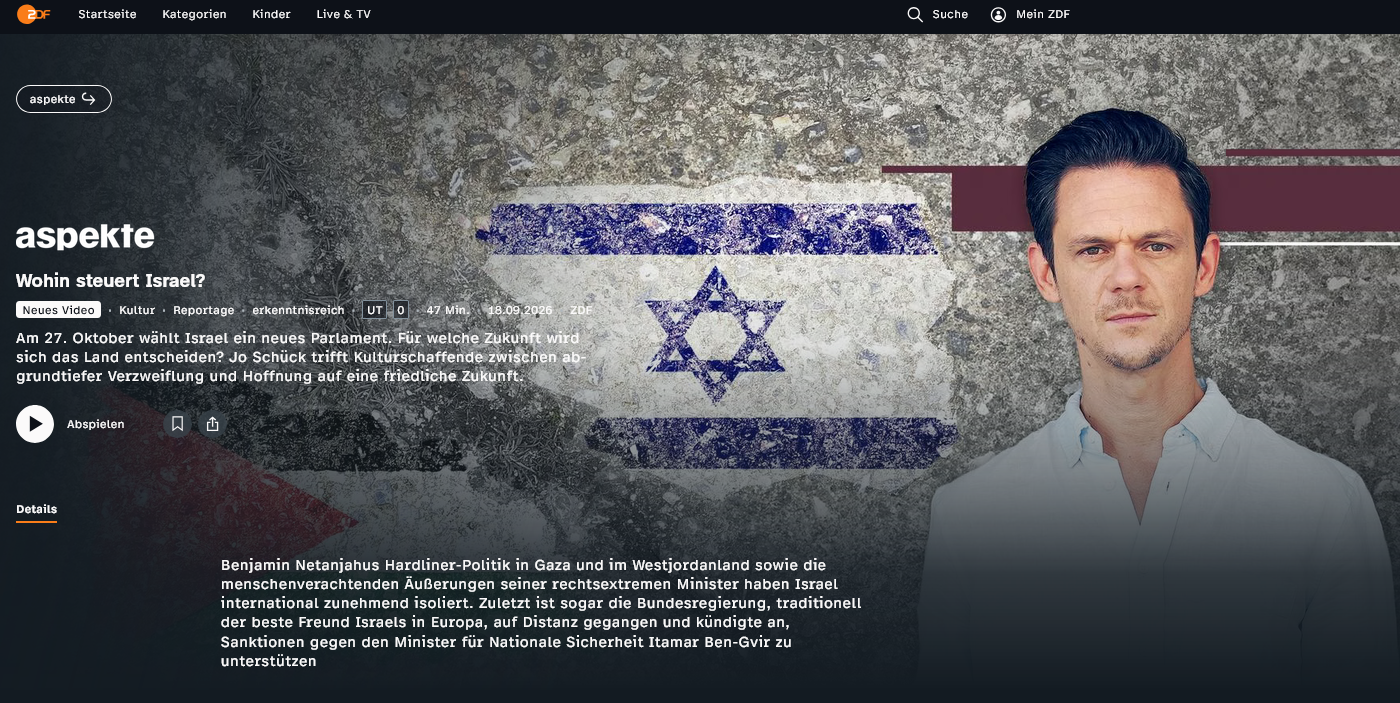
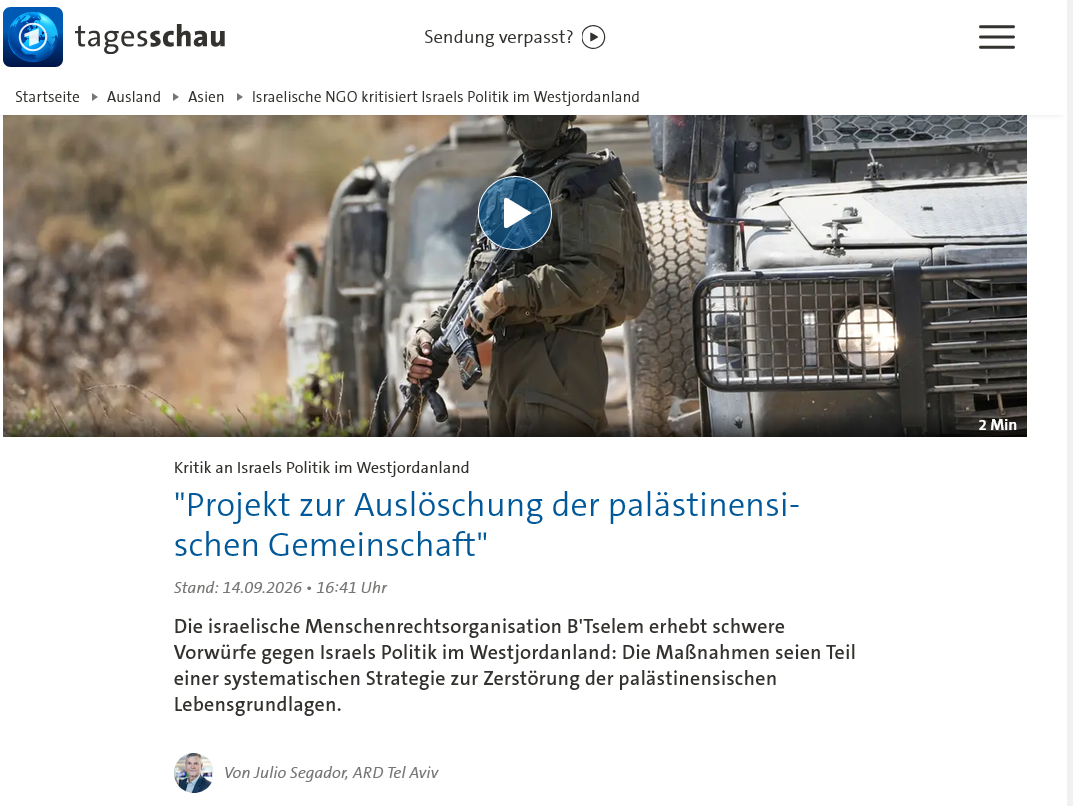
Ehekrach, Streit mit den Nachbarn, familiäre Probleme: Faten Harb ist eine der ersten weiblichen „Mukhtaras“ in Gaza. In dieser traditionellen Männerrolle vermittelt sie, wo es Konflikte gibt. Doch seit Kriegsbeginn dreht sich vieles um Vertreibung, Armut und Tod. …
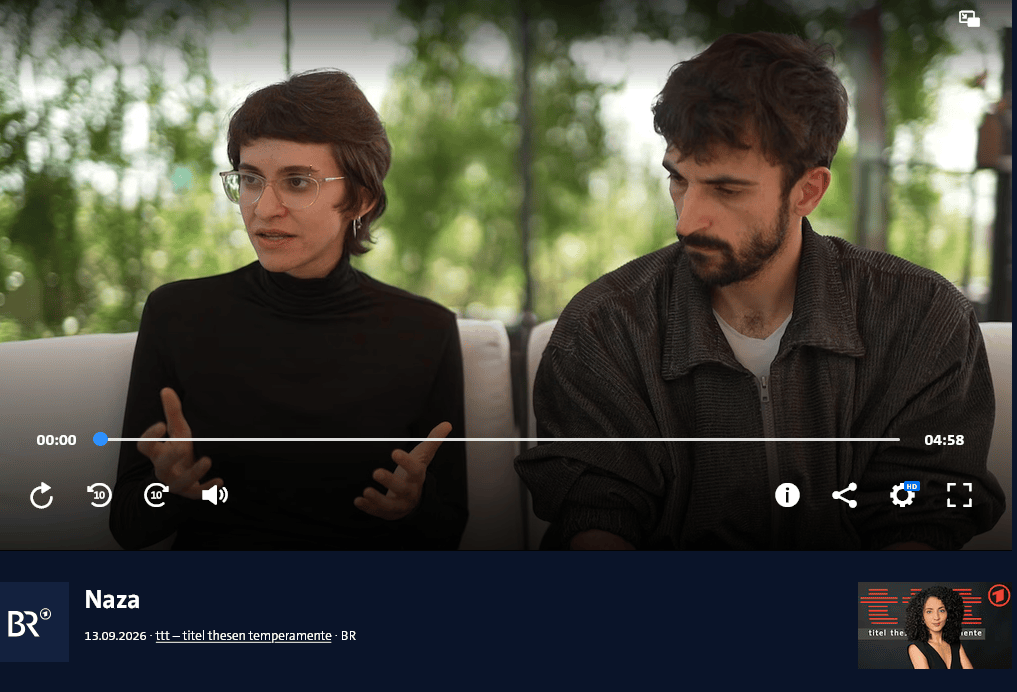
Ein Beitrag auf ttt über den provokativen und gerade in Venedig ausgezeichneten Film, der in der inner-jüdisch-israelischen Auseinandersetzung zu heftigsten Debatten geführt hat – und von dem sich die Filmemacher Yuval Abraham und Rachel Szor insbesondere wünschen, daß er in Deutschland gesehen werden soll…
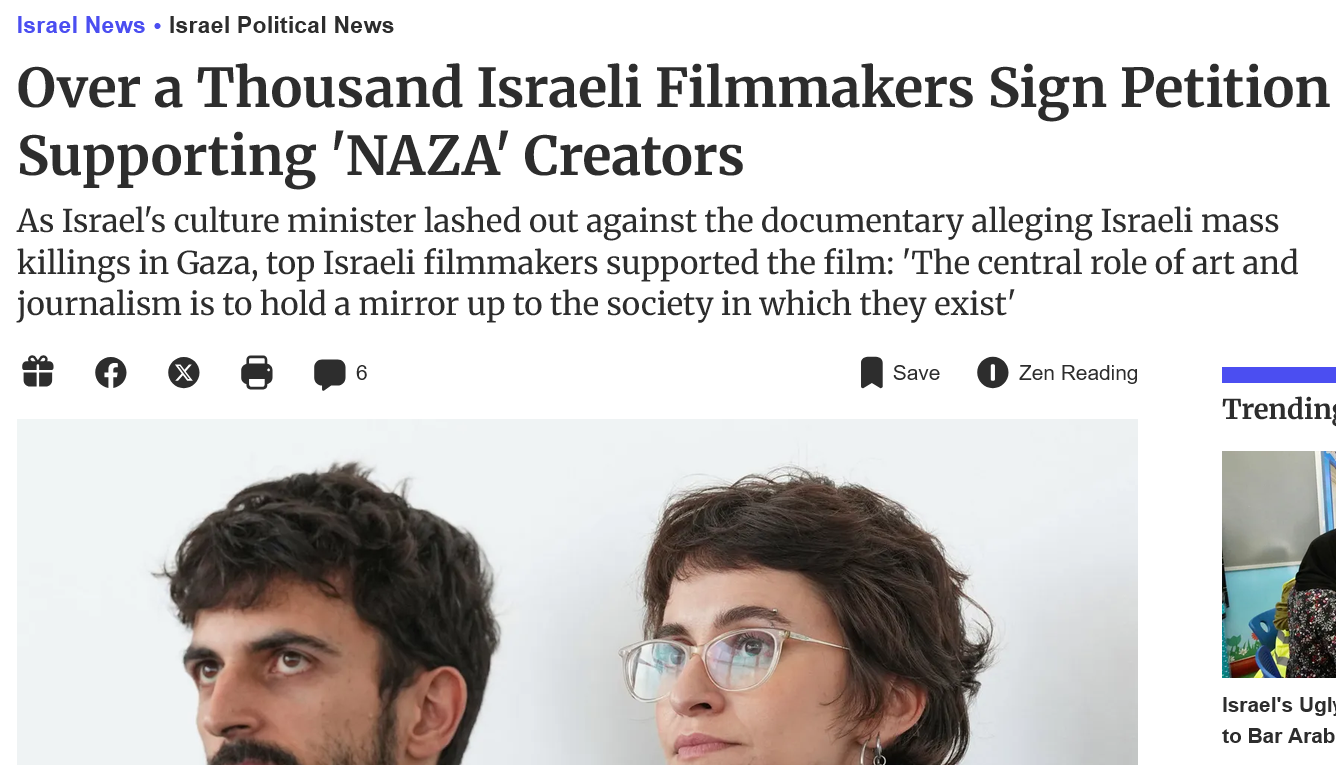
Zu den Angriffen auf die Filmschaffenden eine Petition der Kolleg:innen – Was ist eine Staatsbürgerschaft wert, wenn der Kulturminister wie gefordert, den beiden Künstlern die ihre entziehen lassen will …
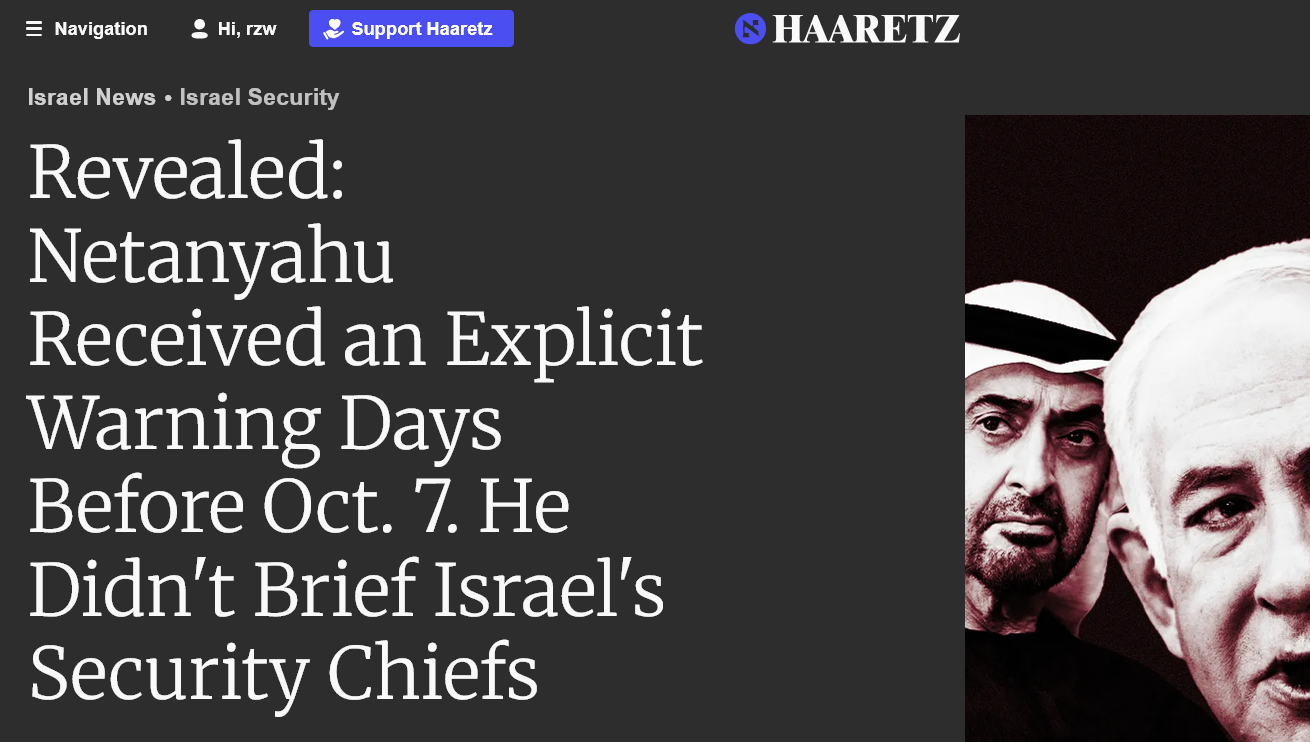
Noch gibt es keine unabhängige Untersuchungskommission in Israel zum 7. Oktober. Die Frage nach Verantwortung und Verantwortlichkeiten ist mitten in den Wahlkampf geraten.
Die Tageszeitung Haaretz hat am 8. September 2026 einen großen Beitrag von Shlomi Eldar und Ruth Yuval zu dieser Frage veröffentlicht.
Hier die Zusammenfassung, die Haartetz selbst anbietet:
A week and a half before the October 7 massacre, Mohammed bin Zayed, the president of the United Arab Emirates, called Netanyahu and spoke with him for 45 minutes. He gave him an explicit warning that Hamas‘ leader in Gaza, Yahya Sinwar, was planning a major operation against Israel. Bin Zayed expressed concern that the event in question would not only lead to bloodshed but also destabilize the entire region and undermine the Abraham Accords. He urged Netanyahu to take the matter seriously. But to his surprise, the prime minister reacted with relative calm. He said that, in his assessment, Hamas intended to operate in the West Bank area, and reassured bin Zayed that Israel was prepared for any scenario.
The Emirati ruler did not imagine that the prime minister would hear the message but wouldn’t brief the heads of the defense establishment about the warning.
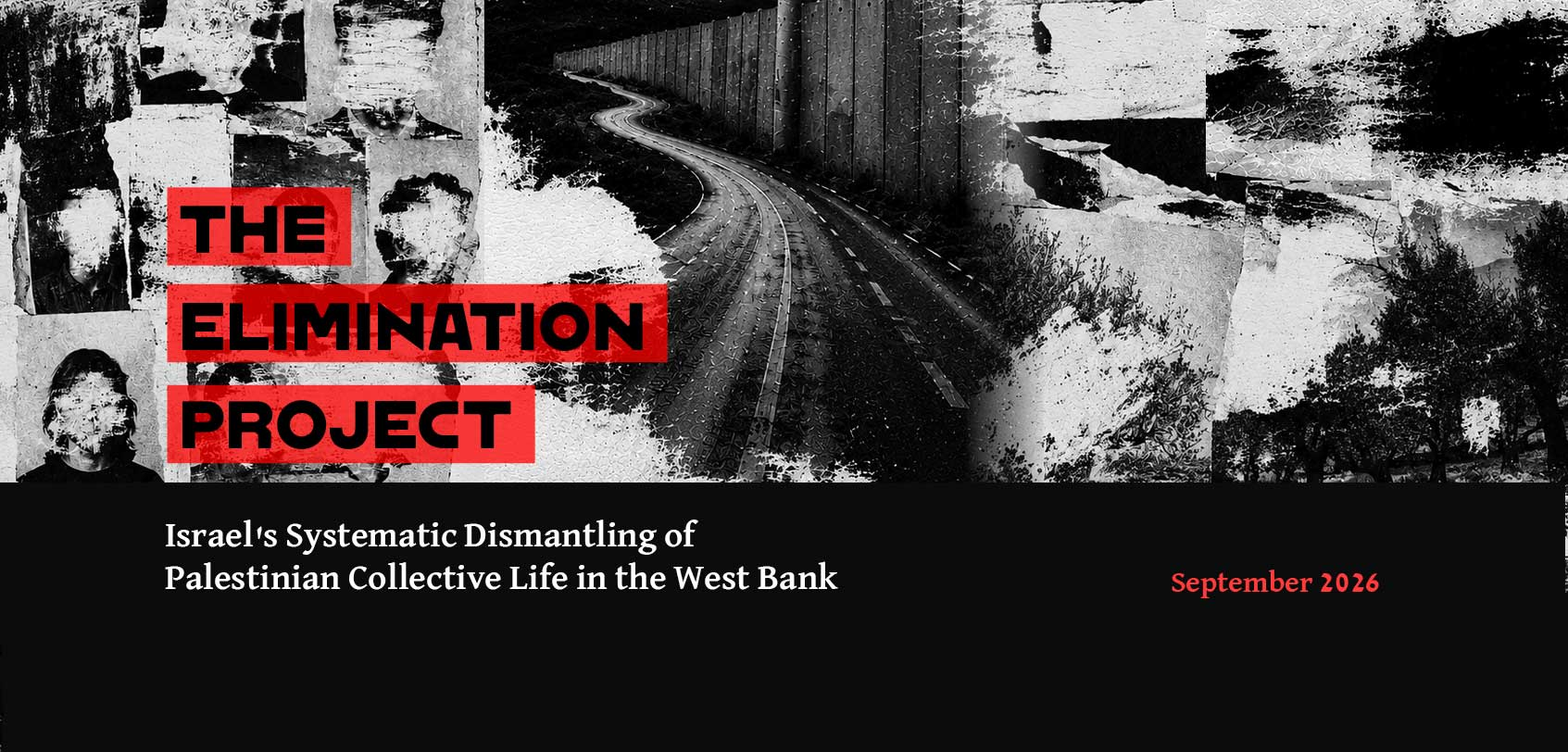
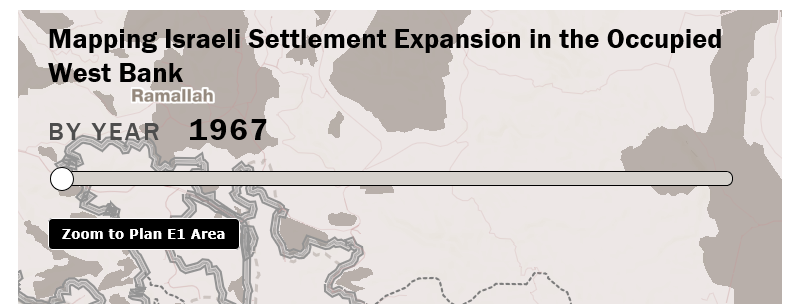
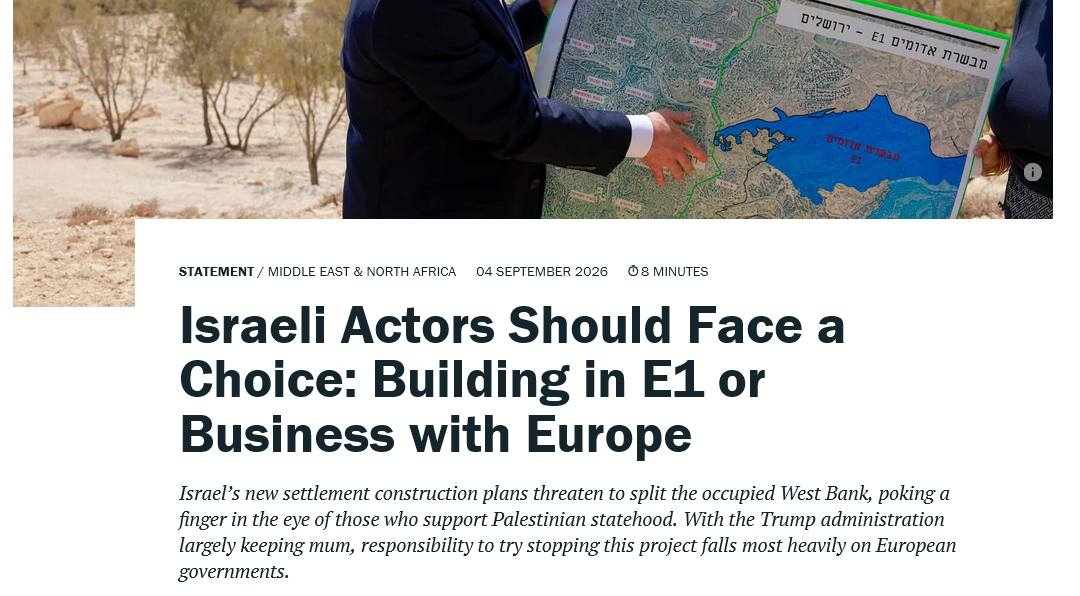
International Crisis Group Statement: Israeli Actors Should Face a Choice Mit einer anschaulichen interaktiven Karte zu E1
Israel’s new settlement construction plans threaten to split the occupied West Bank, poking a finger in the eye of those who support Palestinian statehood. With the Trump administration largely keeping mum, responsibility to try stopping this project falls most heavily on European governments.
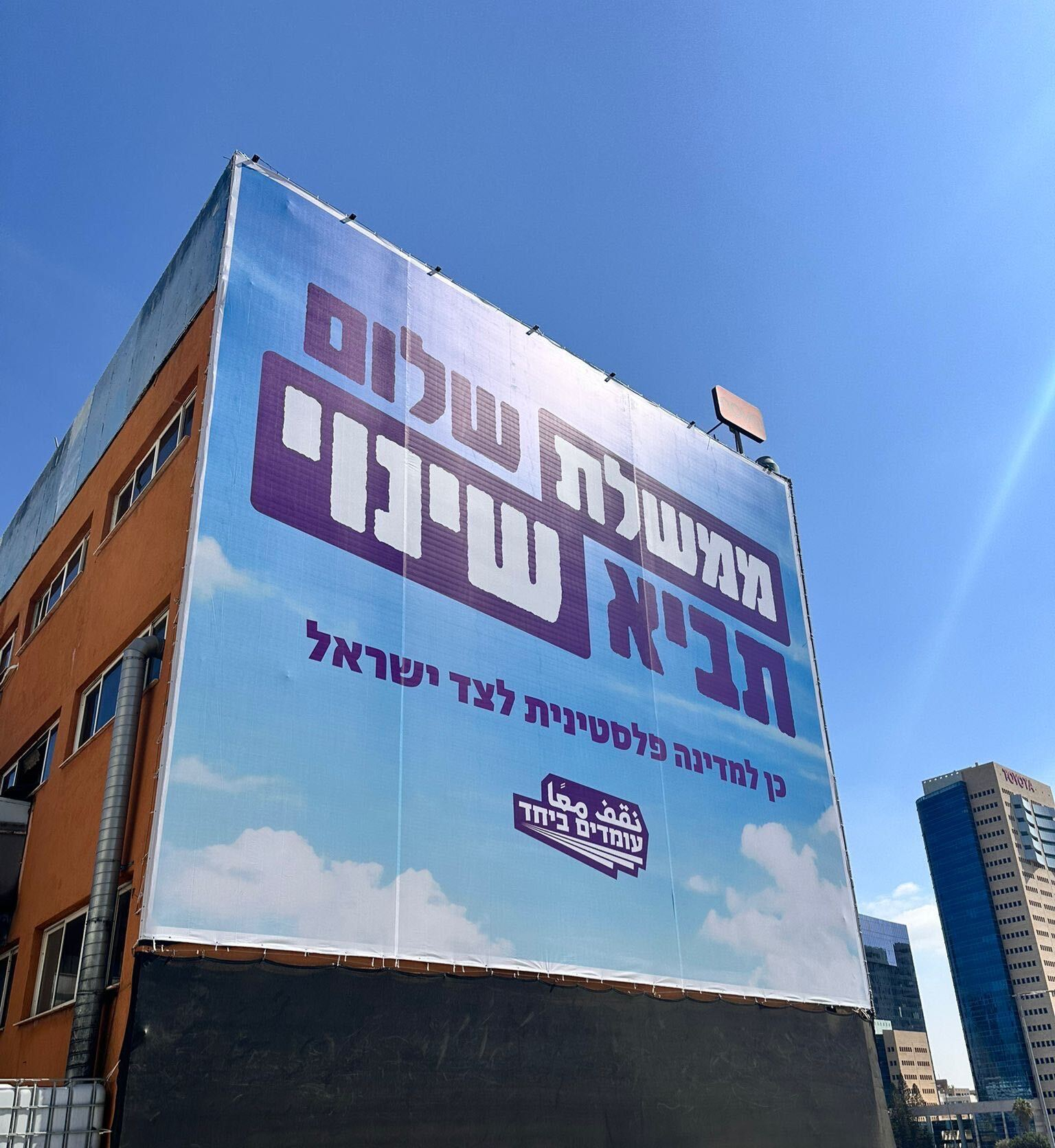
This morning (3.9.26) Standing Together put up a massive billboard along Tel Aviv’s busiest highway reading “A peace government will bring change. Yes to a Palestinian state alongside Israel,” as part of a campaign calling on the next government to enter into negotiations with Palestinian leaders on a real, just peace agreement.