Seit einigen Monaten macht eine neue bewaffnete Gruppe in Palästina von sich reden. Sie gibt sich unabhängig, moralisch integer, aber zu allem bereit. Gegründet in Nablus, gehen bereits einige Schießereien mit Siedlern sowie palästinensischen und israelischen Sicherheitskräften auf das Konto der Areen al-Usood (arab. Höhle des Löwen).
Noch ist unklar, wer diese Gruppe finanziert, wer dahinter steht und wie groß sie ist. Aber eines ist offensichtlich: die Gewalt hat einen neuen, zunehmend populärer werdenden Akteur hinzugewonnen.
Haaretz beschreibt das Phänomen als „Nablus‘ ‚Lion’s Den‘ Has Become a Major Headache for Israel and the Palestinian Authority“
Eurosport: Champions League: Juventus blamiert sich gegen Maccabi Haifa
Juventus hat sich am 4. Spieltag der Gruppenphase der UEFA Champions League mit einem schwachen Auftritt bei Maccabi Haifa blamiert. Der italienische Rekordmeister unterlag dem Außenseiter aus Israel völlig verdient 0:2. Omer Atzily stieg am Dienstagabend zu Maccabis Helden auf. Der israelische Mittelfeldspieler sorgte mit seinem Doppelpack (7./42.) für die ersten Punkte seines Vereins.
Mit einem Paukenschlag hat die israelische Fußballmannschaft Maccabi Haifa am späten Dienstagabend den italienischen Club Juventus Turin mit 2:0 besiegt. Damit brachten die Grün-Weißen nicht nur irgendeinen Gewinn nach Hause, sondern den ersten für ein israelisches Team in der Champions League seit zwei Jahrzehnten.
Der Buchautor Dr. Alexander Konrad (Assoziierter Wissenschaftler am Leibniz-Zentrum für Zeithistorische Forschung Potsdam) im Gespräch mit Prof. Dr. Udo Steinbach (Leiter des MENA Study Centre der Maecenata Stiftung)
Moderation: Prof. Dr. Frank Bösch, Direktor des Leibniz-Zentrums für Zeithistorische Forschung Potsdam
Analog in der DAFG-Geschäftsstelle – Friedrichstraße 185, 10117 Berlin
Die Wahrnehmung des Islams in Deutschland hat Auswirkungen sowohl auf die außenpolitischen Beziehungen zur islamisch geprägten Welt als auch auf die innen- und gesellschaftspolitische Stellung der Musliminnen. Vor diesem Hintergrund stellt Autor Alexander Konrad sein Buch vor, das den Wandel der bundesdeutschen Wahrnehmungen von Musliminnen von den Siebzigerjahren bis zur Jahrtausendwende untersucht. In der anschließenden Diskussion sollen die Fäden seiner zentralen Aussagen in die Gegenwart fortgesponnen werden.
Aus organisatorischen Gründen ist eine Anmeldung (dafg@dafg.eu; Telephon: 030-2064 9413; Fax: 030-2064 8889 oder online) notwendig. Die analoge Teilnehmer:innenzahl ist begrenzt. Eine Anmeldebestätigung wird nicht versandt.
Auf der immer lesenswerten Online-Plattform Perlentaucher findet sich aktuell ein Essay, der an den Untergang des alten Smyrna (das heute Izmir heißt) vor hundert Jahren, im September 1922 erinnert.
Peter Matthews nutzt eine Besprechung von Giles Milton: Das Inferno von Smyrna – Wie der Traum einer Vielvölkerstadt in Flammen aufging. Aus dem Englischen von Tobias Gabel. Darmstadt (Wbg Theiss) 2022, 464 Seiten, 38,00 Euro (978-3-8062-4493-9) zu einer kleinen Einführung in die zerstörte Welt der Levante …
You are kindly invited to the first EUME Berliner Seminar in the Winter Term 2022/23.
Where: Forum Transregionale Studien (Wallotstr. 14, 14193 Berlin)
When: Wednesday, 12 October 2022 at 5 pm (CEST)
Zahra Ali (Rutgers University-Newark) – Leyla Dakhli (CNRS / Centre Marc Bloch) – Magdi El Gizouli (StillSudan.blogspot.com) – Cilja Harders (Freie Universität Berlin / EUME) – Jeffrey G. Karam (Lebanese American University / EUME Fellow 2020-23)
The roundtable discussion provides an alternative reading of the second wave of Arab revolutionary uprisings that erupted in 2018, especially in Sudan and later in Lebanon, Iraq, and other Arab states in 2019. By moving beyond narratives and analyses that primarily focus on moments of defeat and despair, the panelists will discuss if and how the uprisings that unfolded in Iraq, Lebanon, and elsewhere ushered a new and important phase in social activism and political subjectivities that deserves attention. By addressing the role of new alternative organizations, including professional associations, syndicates, political movements, and other entities, the roundtable highlights some vital social, economic, and political trends common across various Arab societies.
If you want to attend the seminar, we kindly ask you to register in advance via eume@trafo-berlin.de
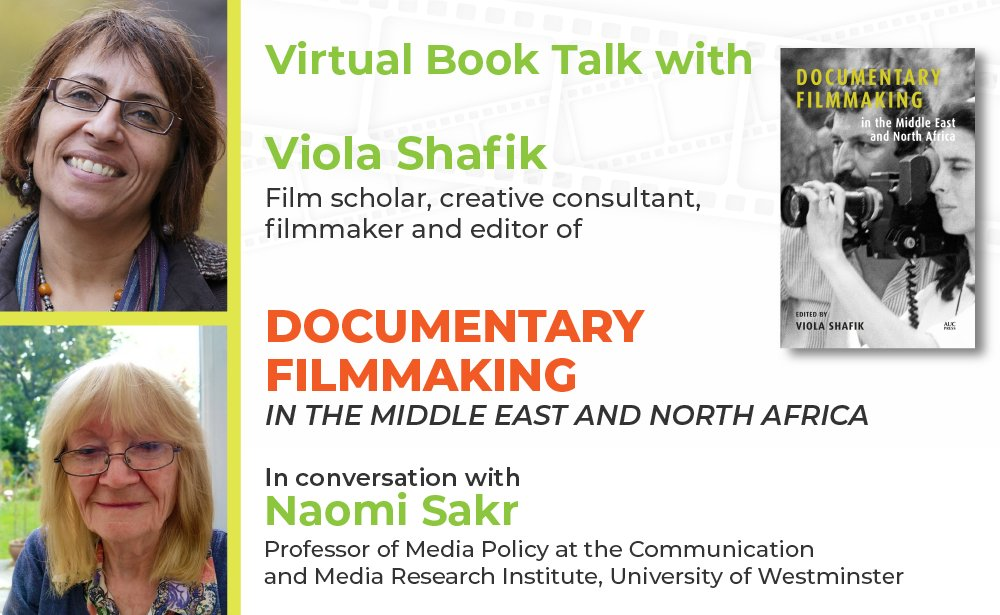
A Virtual Book Talk with Viola Shafik, moderated by Naomi Sakr, Professor of Media Policy at The Communication and Media Research Institute, University of Westminster.
MONTAG, 10. OKTOBER 2022 VON 19:00 BIS 20:00 Register to attend the talk on Zoom Webinar through this link: https://bit.ly/3fLxy5G
Eight artists representing a diversity of Jewish identities and artistic practices, the works on display pull from literature, opera, film, psychoanalysis, mythology, disability studies, and personal experience. They take history, real and imagined, to explore the rocky, recursive, and often disjointed path from breaking to recovery after trauma. Some artists engage with the moment of rupture, some interrogate the promise of reparation and repair, while others explore the shapes of the broken pieces.
Introduction Here are this year’s versions of the “small” and “large” Yom Kippur viduim (Confessions of our sins) combining the traditional texts and our modern Israeli sins. Reciting these words may not feel like prayer because, like the traditional vidui, it is concrete and asks us to take individual responsibility for the collective sins of our society and our people. The traditional confessions were never meant to be just a collection of words that we thoughtlessly recite on Yom Kippur. They are burning words, intended to make us feel uncomfortable because they speak painful truths about our lives and our society and our people that we must confront if we are to truly engage in the kheshbon nefesh (soul searching) that is a primary task during this season. We can then engage in “teshuvah.” Often translated as “repentance,” it means to hear and answer the call of God and conscience, make an effort to turn and change, and return to our truest and highest selves individually and collectively. Just as the High Priest in ancient times had to recite his own vidui before saying a vidui for others, we need to look at our own sins before we recount the sins of others. One misses the point if one reads these modern versions in order to criticize those we don’t agree or identify with. The vidui is in the plural, because we say that, even if I have not personally committed these sins, my society has committed the sins recited in the traditional or the modern vidui, and I therefore share responsibility. This vidui is written for those who in some way identify with Israel, and include themselves in the Israeli “we” when you recite “For the sins we have committed…” If you are not a part of the Israeli “we,” you might want to construct a similar vidui looking at the societies and communities of which you are a part, and share responsibility for. For some the sin they must confess is always assuming the worst about Israel, while others must confess defending Israel, no matter what. If some of the lines do not feel to you like they apply to Israeli society, please try to drop your defenses, and think again. If you still don’t think something applies, we again hope that the Torat Tzedekvidui will challenge you to create your own. Please feel free to download our vidui, then cut and paste and add and subtract to create your own personal/societal vidui. The point is to challenge you to engage in khesbon nefesh (soul searching), not to silence or intimidate. It is also possible to only recite a limited number of these texts, and concentrate on them. In many cases the first line is from the traditional viduis, and there are notes after the vidui explaining which traditional sources many of the concepts are taken from. Most of us simply can’t be so self critical for most of the year. But, sometimes the power of the High Holy days allows us to do what we don’t manage to do at other times of the year. These viduis are not intended to be a delegitimization of ourselves, of our people, or our country. They are actually an expression of our deep faith in ourselves, our ability to return to the good that is our true selves, and our ability to improve our society. When we engage in kheshbon nefesh about ourselves and Israel on Yom Kippur, we can then celebrate our personal and Israeli assif rukhani (spiritual harvest) on Sukkot-our attributes and accomplishments that we are proud of as individuals and as a nation. The vidui and the assif go together.