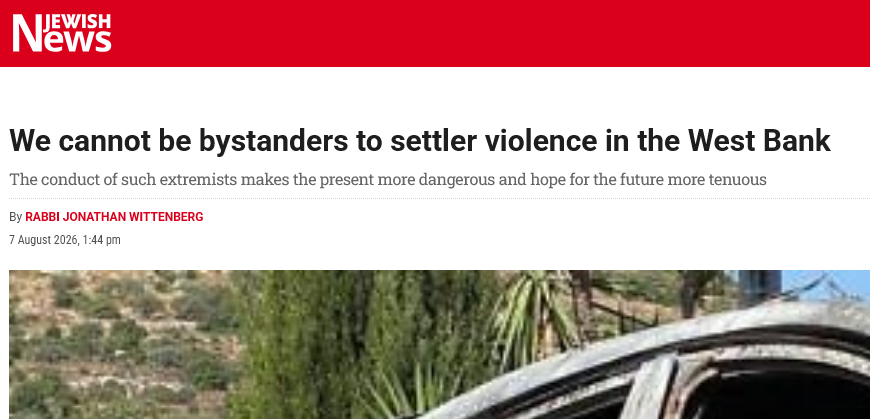
Und dazu eine lesenswerte Erklärung von Rabbi Jonathan Wittenberg, Senior Rabbi of Masorti Judaism UK, und Rabbi Emeritus of the New North London Synagogue
… Thank God for those who have the courage, through their protective presence, to oppose such intimidation, injustice and aggression with body and soul. It is they who truly uphold the commandments of the Torah and the essential values of Judaism. We cannot remain bystanders. We must affirm through our words and deeds what the Torah demands of us in the name of justice, compassion and human dignity, and for the sake, however distant it currently seems, of a better future for all.
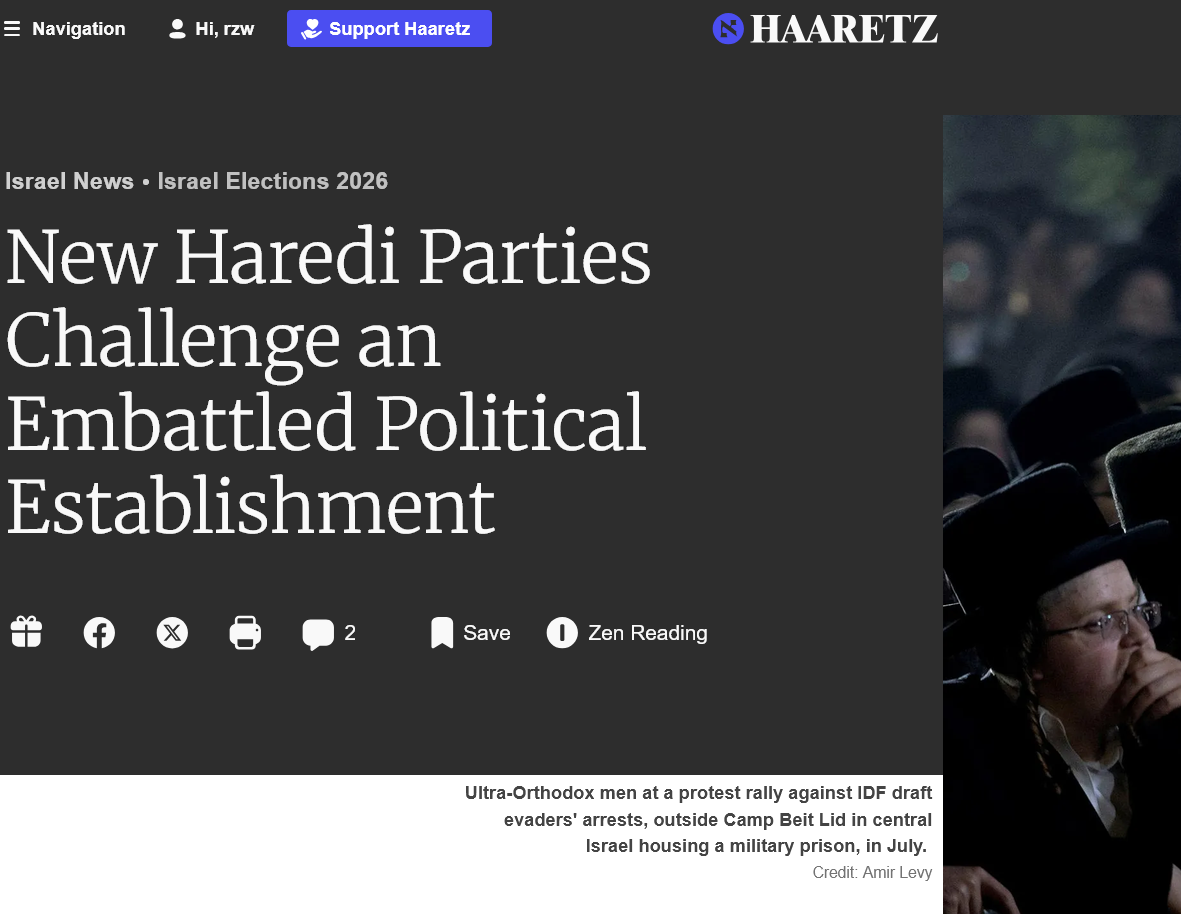
Vielleicht nicht mehr bei dieser Knesset-Wahl (und hoffend, das System ist stabil genug, daß es nicht die letzte sein wird), es tut sich auch einiges in der ultra-orthodoxen Welt der Haremdim: Ein interessanter Beitrag von Aaron Rabinowitz auf Haaretz.com:
„As frustration mounts over the draft crisis and the Haredi parties‘ record in government, new ultra-Orthodox movements are calling for direct voter influence, posing an unprecedented challenge to the establishment“
Steuerpflicht der Kirchen oder historische Rechte? – Beitrag auf Aid to the Church in Need UK
A DISPUTE over taxes has erupted into a fresh standoff between Churches and Jerusalem city authorities – with Christian leaders warning their charitable work could be at risk.
The controversy – which centres on Israel’s Arnona property tax – prompted Palestinian Authority President Mahmoud Abbas to appeal to Pope Leo XIV and other international leaders over fears centuries-old exemptions could be at risk.
Speaking to Catholic charity Aid to the Church in Need (ACN), Bishop William Shomali, Auxiliary Bishop of the Latin Patriarchate of Jerusalem, said President Abbas’s intervention was an important reminder of the Church’s historic rights.
Bishop Shomali said: “It helps to bring the subject back to the forefront of international attention, even if it does not, on its own, possess the necessary force to impose an immediate solution.”
According to the bishop, two factors underlie Mr Abbas’ appeal.
First, the Palestinian Authority regards East Jerusalem as occupied territory, disputing Israel’s right to levy taxes on Church properties there.
Second, Mr Abbas wishes to protect historic privileges granted to Christian institutions under agreements dating back to the Ottoman era.
Bishop Shomali noted the Mytilene Agreements of 1901, which helped establish certain tax exemptions for Churches in the Holy Land.
He said: “They were respected under the British Mandate and even by Israel in the years following independence, in 1948, and have never been officially repealed.”
Bishop Shomali stressed the difference between the Church’s commercial activities and its religious, educational and charitable work.
The Church fears that its worship and outreach to vulnerable members of society could be impacted by the dispute.
He said: “As for schools, hospitals, social centres and purely religious institutions, the Churches hope that they will continue to benefit from traditional exemptions because of their educational, charitable and spiritual mission.”
Noting that the dispute had already stretched over three decades – in 2018 Church leaders closed the doors of the Holy Sepulchre in protest – he added: “If the municipality decided to retroactively apply the Arnona tax to for-profit activities, the amounts claimed could reach a few million euros.”
The bishop suggested a negotiated agreement could avoid retrospective claims against commercial activities, limiting future tax liability.
He said: “We hope that a compromise remains possible. This could consist of having clearly for-profit activities contribute to the municipal charges from which they benefit, while preserving the exemptions granted to places of worship, parish halls, cemeteries, and religious, educational and charitable institutions.”
Bishop Shomali underlined that the central issue was drawing a clear line between the Churches’ business operations and its wider mission.
He said: “The main challenge is to define precisely what constitutes a commercial activity and what belongs to the pastoral, social or religious mission of the Churches.
“It is on this distinction that a balanced and acceptable solution for all parties could rest.”
The dispute comes at a difficult time for Christian communities in the Holy Land, who are grappling with the consequences of regional conflict, economic hardship and declining employment opportunities.
Bishop Shomali concluded by expressing thanks to ACN and the charity’s supporters.
He said: “We are deeply grateful to ACN and to its generous donors…
“Thanks to their help, we can also support the most vulnerable Christian families, who are currently going through a particularly difficult period due to the war, the economic crisis and the lack of jobs…
“Their spiritual and material closeness is a sign of hope for the Christians of the Holy Land and helps them to remain in the land where Christianity was born.”
Ein Essay aus der ja nicht liberal zu nennenden Times of Israel von Rossella Tercatin, der Reporterin der ToI für Archäologie und Religion. (darin auch ein Abschnitt zu Smol Emuni/Faithful Left.
„Despite all the pressure and intense lobbying before the debate, the motion passed with an overwhelming majority in all three houses, with 25 Bishops voting in favour, none against, and five abstaining.“
The final motion read:
That this Synod respond to the call of Palestinian Christians to stand in solidarity with them and their fellow Palestinians in non-violent resistance to the ongoing occupation. We lament the loss of Israeli and Palestinian lives and the violations of human dignity and rights on both sides, as well as the displacement of population. We commit to a better understanding of the situation in Israel and the occupied Palestinian territory, seeking peace and security for all the peoples of those lands and pursuing that which leads to the establishment of a just and lasting peace.
In particular, we:
a) reject antisemitism, anti-Muslim hostility and all forms of prejudice based on religious affiliation and ethnicity;
b) acknowledge with repentance the Church’s historic contribution to antisemitism and to the situation now affecting the Palestinian people, reaffirm our commitment to inter-faith dialogue, including Christian-Jewish dialogue and encourage a deeper understanding of Judaism and other faiths;
c) pray for all victims of the current conflicts in Israel and the occupied Palestinian territory and for a lasting peace;
d) hear the Kairos Palestine Declaration (2009), the Cry for Hope (2020), the Call for Repentance (2023) and Kairos Palestine II (2025) as heartfelt expressions of the lived experience of Palestinian Christians and:
i. encourage the Church of England at all levels to engage with those documents as part of a quest for greater understanding of the situation;
ii. ask the Faith and Public Life Division to commend resources that enable Dioceses and local churches to promote a full understanding of the situation and to respond through prayer, theological study, advocacy and practical support for the work undertaken by the Episcopal Diocese of Jerusalem and other Churches in the service of the people of Israel and the occupied Palestinian territory;
e) encourage the Church of England at all levels to engage with those documents as part of a quest for greater understanding of the situation, alongside continued dialogue with Jewish and Muslim voices in the pursuit of justice, equality, peace and reconciliation;
f) call on Church investors to implement and demonstrate a leading approach to responsible investment relating to the Occupied Palestinian Territory, and:
i. to review their investment policies in the light of the International Court of Justice Advisory Opinion of 19 July 2024 on the illegality of the occupation of Palestinian territory;
ii. to request the Church Commissioners and Church of England Pensions Board to report back, on a triennium basis, on the progress and success of their approaches;
iii. the bodies named above to support the EIAG to develop guidance for wider Church of England investors on how to manage human rights risks relating to occupied territories and conflict.
g) ask His Majesty’s Government to work urgently for a lasting peace in Israel and the occupied Palestinian territory, that will ensure safety and security for all parties and the upholding of the rights and inherent dignity of all people.’
Introducing Shared Sacred Flourishing: Podcast Folge 1
Episode 1 of the Religions for Peace podcast introduces Shared Sacred Flourishing. The podcast is intended for religious leaders around the world committed to interreligious action for peace.
Bishop Kari Mangrud Alvsvåg, Diocese of Borg, Church of Norway and President of the European Council of Religious Leaders, introduces the episode, which is hosted by Adam Phillips.
Featured guests in this episode, in order of appearance, include Dr. Francis Kuria, Secretary General of Religions for Peace; Dr. William Vendley, Vice President, World Religions and Spirituality at The Fetzer Institute and Secretary General Emeritus of Religions for Peace; Dr Judith Simmer-Brown, retired Distinguished Professor of Tibetan Buddhism and Interfaith Dialogue at Colorado’s Naropa University; and Rabbi David Rosen, former Chief Rabbi of Ireland, Religions for Peace International Co-President and Special Interfaith Advisor to Abrahamic Family House in Abu Dhabi.
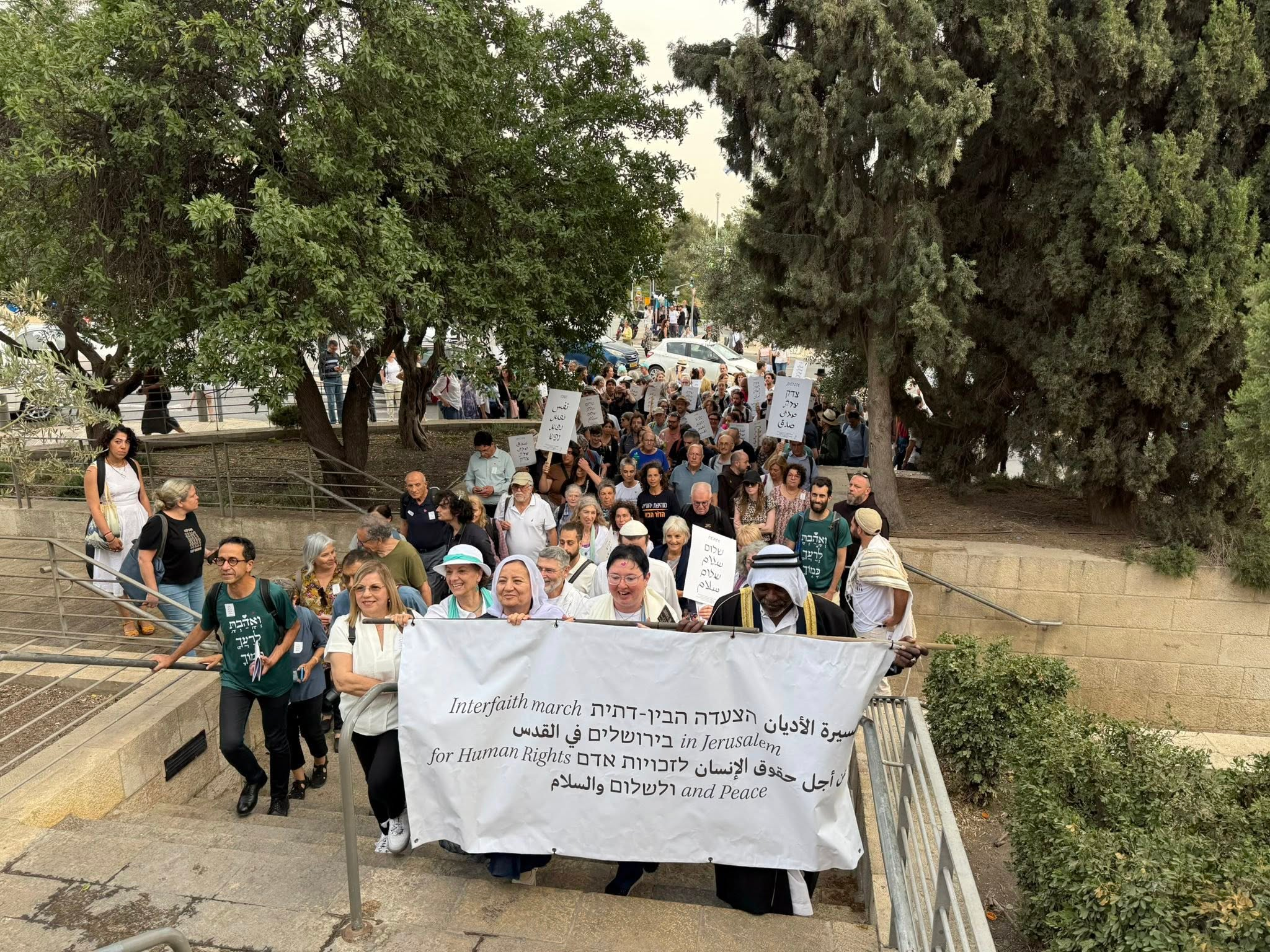
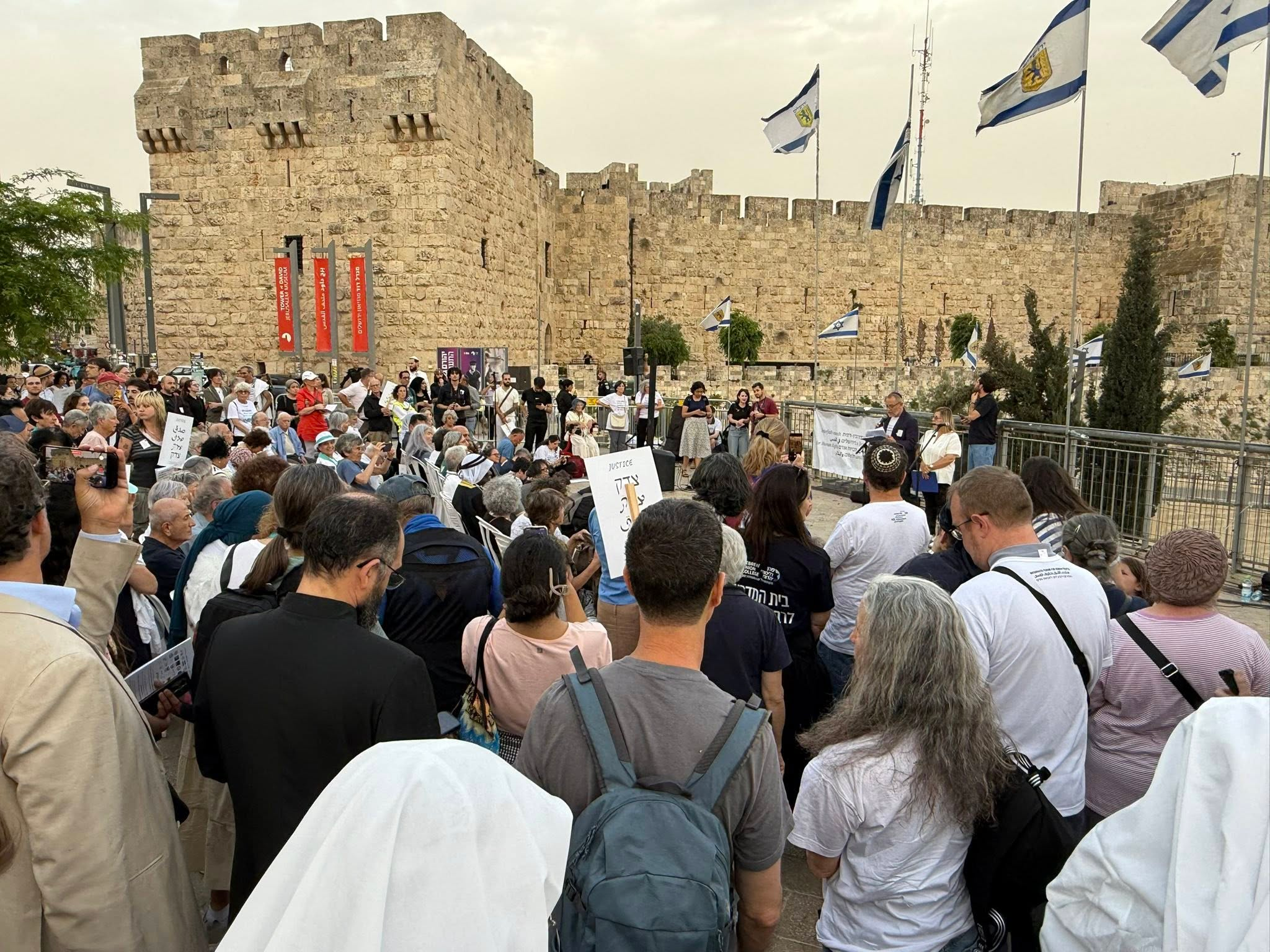
An einem Tag, an dem Bilder eines israelischen Ministers um die Welt gehen, wie er öffentlich (festgenommene) Demonstranten behandelt, von denen sich selbst sein Kabinettskollege und Außenminister distanziert, hier ein Hinweis auf ein paar andere Bilder:
Aus dem FB-Pst des anglikanischen Geistlichen Richard Sewell (Jerusalem)