Tikkun – Spirituell Progressive …

Die US-amerikanische jüdische Stimme um Rabbiner Michael Lerner, die sich selbst als „The Prophetic Jewish, Interfaith & Secular Voice to Heal and Transform the World“ bezeichnet, hat in der aktuellen Situation verschiedene lesenswerte Interventionen veröffentlicht:

A Revised Jewish Understanding of the State of Israel

Mit Blick auf das anstehende Pessach-Fest: Passover Liberation Seder 2023

Und mit Blick auf die Ereignisse in der Westbank unterstützt Tikkun die Stellungnahme der kanadischen Freund:innen von Peace Now:

New Violent Escalations. Tikkun, NSP, and Beyt Tikkun endorse the following statement.

Canadian Friends of Peace Now decries and condemns Sunday’s vicious rampage by a large crowd of settlers on the Palestinian community of Hawara, West Bank, which saw one Palestinian killed, some 100 injured and much property damage inflicted. 

We also condemn and decry the brutal attack that was used as the excuse for this violence: the murder by a lone Palestinian terrorist of two young brothers from the settlement of Har Bracha, gunned down while driving through Hawara.

Calming measures are sorely needed to stem the cycle of violence that is already spiraling out of control and threatens to become a full-scale conflagration. Even more imperative are initiatives that address the root causes of the Israeli-Palestinian conflict. Sadly, the trend is in the opposite direction.

Settler attacks on Palestinian communities in the West Bank are nothing new, but the rampage in Hawara was particularly savage. Peace Now says: “Let’s call it what it is: a pogrom.”

Ha’aretz reports that some 400 settlers entered Hawara on Sunday, throwing stones and torching houses, cars and trees in a frenzy of revenge that lasted hours. The settlers had publicized their intentions on social media in advance, and this was known to Israeli security forces. But they failed to prevent the settler riot or to adequately protect the Palestinian residents once the riot was underway.  

Certain Israeli cabinet ministers have issued feeble warnings that citizens should not “take the law into their own hands,” while inciting exactly that kind of behaviour. 

On Sunday, Itamar Ben Gvir, Israel’s National Security Minister, told a group of settlers that “our enemies need to hear a message of…crushing them one by one.” After the Hawara debacle, Bezalel Smotrich, a finance minister who also holds a position in the defense ministry, appealed to settlers to allow Israeli security forces to “plan the appropriate response and let the ministry win” – hardly a rebuke of settler vigilantism. Before that Smotrich had “liked” a tweet by the deputy head of the Samaria village council which said: “the village of Hawara should be wiped out today.” 

The matrix of the rising tensions in the West Bank is an Israeli government agenda of continuing military occupation, accelerated settlement expansion and thwarting any prospect of a two-state solution.

Says Peace Now: “This was the peak event of a long process that has been going on for years, in which settlers spare no means to implement their dangerous vision. Years of settler violence, land grabs, illegal establishment of outposts, and massive land seizure through settlements had lit a red flag in all of us that such an event would occur. Pogroms like these will happen again because this is the policy that the Israeli government is heading towards.”

We call on all parties, including international players, to take steps that can prevent further escalation of violence while creating a political peace-building horizon.


Radikaler Universalismus

Ein Gespräch mit dem Philosophen Omri Boehm, geführt von Michael Hesse, in der Frankfurter Rundschau über Immauel Kant, Hermann Cohen, über Abraham und Moses und über Religion und Glaube

„Vielmehr kommen wir zum Glauben, weil wir eine absolute Verpflichtung zur Ethik erkennen – und absolute Verpflichtungen kommen nicht von der Natur und können auch nicht von ihr kommen.“

In eigener Sache

Vor zwei Tagen haben wir an dieser Stelle auf eine Initiative aufmerksam gemacht, die in Israel Geld für die Entschädigung der Verluste beim Siedlerüberfall auf den Ort Huwara bei Nablus sammelt. Über die Online-Plattform giveback.co.il haben inzwischen über 11.400 Menschen mehr als 1,7 Millionen NIS gesammelt, etwa 450.000 €.

Was wir zu diesem Zeitpunkt nicht wußten – und auch leider nicht selber überprüft haben -, ist der vorgesehene Verteilschlüssel, auf den Orly Noy, chair of B’Tselem’s executive board, (am 3. März) im Onlinemagazin 972mag.com aufmerksam macht:

„That former Shin Bet personnel are being used to distribute the funds renders Fink’s fundraising project fundamentally immoral. Anyone who is even slightly familiar with the depth of the Shin Bet’s control over every aspect of Palestinian life in the West Bank should be horrified not only by its involvement, but from the fact that the project relies on it “for the benefit of the residents.“

„There are also Palestinians who, by virtue of extortion by the Shin Bet, are granted freedom of movement and access to medical treatment in exchange for their collaboration with the occupation. And this is precisely why Fink’s project poses a real, material danger to Palestinians: it marks them as beneficiaries of donations collected by the Shin Bet and turns them into collaborators. This poses a far greater danger to the lives of any Palestinians who may benefit from these funds.“

Wir bedauern, daß diese wichtige Information zur Einordnung der Aktion im Blogbeitrag vom 2. März gefehlt hat.

Welche Bedeutung hat/bekommt Huwara?

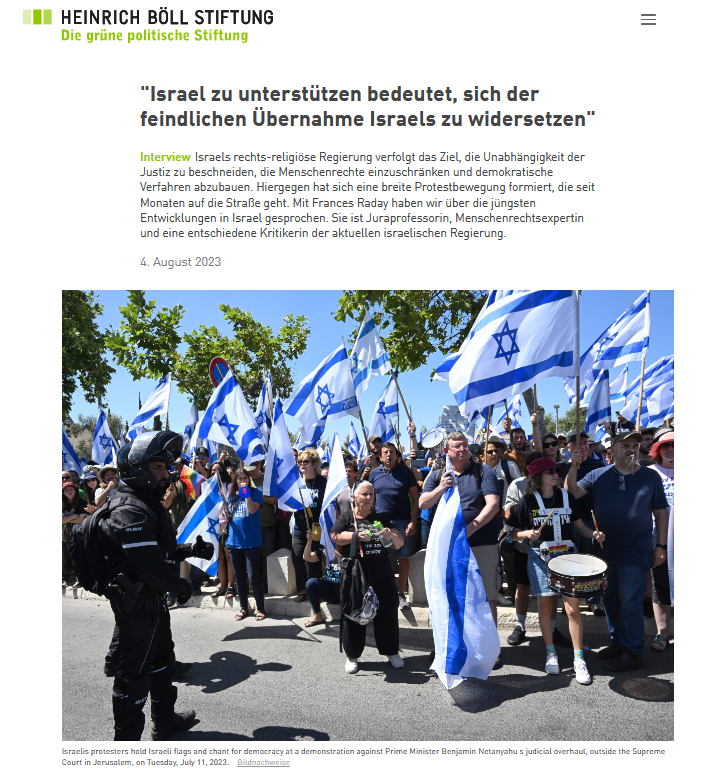
Gewalt ist Alltag geworden im „Heiligen Land“, strukturell, individuell – Leben wird auf unterschiedliche Weise genommen. In der aktuellen Debatte und den politischen Auseinandersetzungen in Israel melden sich (jetzt auch) jüdisch religiöse Stimmen zu Wort, die ein Umdenken fordern.

Zwei Beispiele seien hier genannt, beide englischen Texte wurden auf dem Blog der Times of Israel publiziert:

Rabbi Arik Ashermann, seit Jahrzehnten engagierten Menschenrechtsaktivist lädt die Lesenden ein, mit Blick auf das anstehende Purimfest neu nachzudenken:

„Now is the time we are called to distinguish between good and evil, even as we seethe with anger and pain over the murders of Elan and Hallel and Yagel. I hope we are also mourning Sameh Aqtash and praying for the speedy recovery of all those stabbed and shot and otherwise wounded in the pogrom. We must recognize and speak the truth plainly. The truth is that the deadly logic of Had Gadya makes us act like Amalek. We must not legitimate evil because of our righteous victimhood or by falsely and foolishly thinking that it serves deterrence. The truth is that we are overwhelmingly more powerful than the Palestinian and enjoy the support of the most powerful country in the world (although the current government is weakening that support).“

Aviad Houminer-Rosenblum is deputy director-general of Berl Katznelson Center and a member of The Faithful Left movement, fordert in seiner Reflektion eigentlich Unerhörtes: „After Huwara, we must say kaddish for Judaism itself – A generation of Orthodox Jews has been raised on hate. We must reject this feral, anti-Torah approach, and return to tradition“

„In ordinary times, life is not black and white. The Palestinian side also has a significant part in the story. The violence comes in great force and cruelty from there as well, and its many victims and circles burn the soul and draw many good people into the cycle of vengeance. The solution, too, is complex and hard to see, even far off on the horizon. But there are moments when things are actually very clear, clarifying the gray areas, when the choices are between life and death, and good and evil.

This evil version of Judaism is a lethal drug, which through a historical twist of fate gained ascendance over our ancient tradition. Combined with nationalism and majority hegemony in the land of Israel, it has become a conflagration, one that has long since spread beyond religious Zionism — what Americans might refer to as “Modern Orthodox” — to the Haredi, or ultra-Orthodox sector, and Israeli society in general.“

Geld ersetzt kein Leben, aber …

Donate to Hawara:
Wohin schauen in diesen Tagen? Eine kleine Initiative: 11.113 haben sich bis dato daran beteiligt…

Hier ein Bericht bei al-Monitor dazu.

4. März 2023: Ergänzung: In eigener Sache

Macht Raum Gewalt

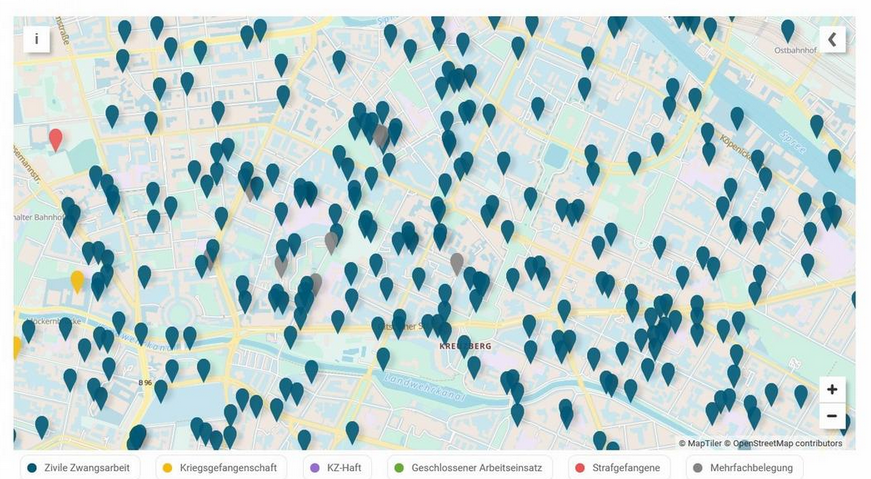
Planen und Bauen im Nationalsozialismus

Ausblick auf die Ausstellung in der Akademie der Künste – Berlin, Pariser Platz – 19.4.-16.7.2023

Die Ausstellung zeigt anhand zahlreicher Modelle, Pläne, Photographien, Filme und anderer Zeitdokumente das Planen und Bauen während der nationalsozialistischen Herrschaft von 1933 bis 1945. Sie untersucht bauliche und biographische Kontinuitäten und Brüche bis in die Gegenwart.

Dabei bezieht sie sich neben dem Deutschen Reich auch auf die besetzten Gebiete in Osteuropa und zieht Vergleiche zu anderen Staaten in dieser Zeit. Die rassistischen Inklusions- und Exklusionspraktiken, ideologisch und propagandistisch hoch aufgeladen, bestimmten, wer wie leben durfte – und wer wie sterben mußte.

Die Schau basiert auf den Ergebnissen eines Forschungsprojektes, beauftragt durch das BMWSB und betreut von der UHK und dem kuratorischen Team.

Ergänzend bietet die Akademie der Künste ein Veranstaltungsprogramm mit einer täglich laufenden Filmreihe (Dokumentar-und Künstler:innenfilme von 1961 bis 2019), Konzerten, Diskussionsrunden und Lesungen an sowie Führungen, szenische Lesungen und Angebote für Kinder, Jugendliche und Erwachsene.

Gewalt schafft Gewalt

Und nicht zu vergessen: Es gibt auch strukturelle Gewalt!

Bilder und Stellungnahme von Torat Tzedek zu den aktuellen Entwicklungen

Buchenwald

Neuerscheinung: Zur europäischen Textgeschichte eines Konzentrationslagers

Herausgegeben von Stephan Pabst / Band 9 der Reihe Medien und kulturelle Erinnerung / ISBN 9783110770117

Über das Buch (Besprechung erfolgt nach Möglichkeit)

Kaum ein nationalsozialistisches Konzentrationslager hat nach 1945 eine derart vielfältige Literatur hervorgebracht wie Buchenwald. Zu ihr gehören ideologisch bis heute umstrittene Bücher wie der antifaschistische Beststeller Nackt unter Wölfen, die hochkanonischen Romane wie Semprúns oder Kertész, weniger bekannte Romane wie Adlers Das Panorama oder Ferdinand Peroutkas Wolke und Walzer, eine Flut vergessener ‚grauer‘ Bericht-Literatur, frühe Versuche einer soziologischen, politischen oder psychologischen Deutung des Lagers.

Ebenso wie das Konzentrationslager Buchenwald selbst ist diese Literatur international. Buchenwald versammelte Menschen aus fast allen Ländern Europas. Viele von ihnen wurden aus politischen oder rassischen Gründen deportiert, die nationale Grenzen überschritten. Die Literatur, die aus dem Lager hervorging, entstand also einerseits in nationalliterarischen Kontexten, bezog sich aber andererseits auf ein transnationales Ereignis, das sich mit transnationalen Fragen verband.

Die Literatur des Lagers Buchenwald läßt sich daher nicht einfach nationalliterarisch einhegen. Trotzdem wies die Forschung in den letzten Jahren einen starken Zug zur nationalliterarischen Segmentierung auf, was auch dazu führte, daß sich die Wahrnehmung darüber hinaus nur auf sehr wenige kanonische Werke beschränkte.

Der vorliegende Band versammelt Beiträge über die Literaturen, die an der europäischen Textgeschichte des Konzentrationslagers Buchenwald mitgeschrieben haben.

Was wird aus dem „Area C Territory“ des Westjordanlandes?

Nach den Vereinbarungen im Rahmen des Verhandlungskomplexes von Oslo unterstehen die ca. 60% C-Gebiete des Westjordanlandes allein den israelischen Militär- und Zivilbehörden; Palästinenser:innen haben keine Zugriffsrechte.

Gerade diese Gebiete aber sind als Landwirtschafts- und Infrastrukturflächen für die Entwicklung Palästinas wichtig. Im Rahmen der Folgevereinbarungen sollten C-Gebiete schrittweise an die palästinensische Seite gehen.

Wie war die konkrete Situation hinsichtlich der Vereinbarungen, wie ist der Stand und welche Szenarien gibt es für die nächste Zukunft? Dazu ist im Mitvim-Institut eine neue Studie erschienen.

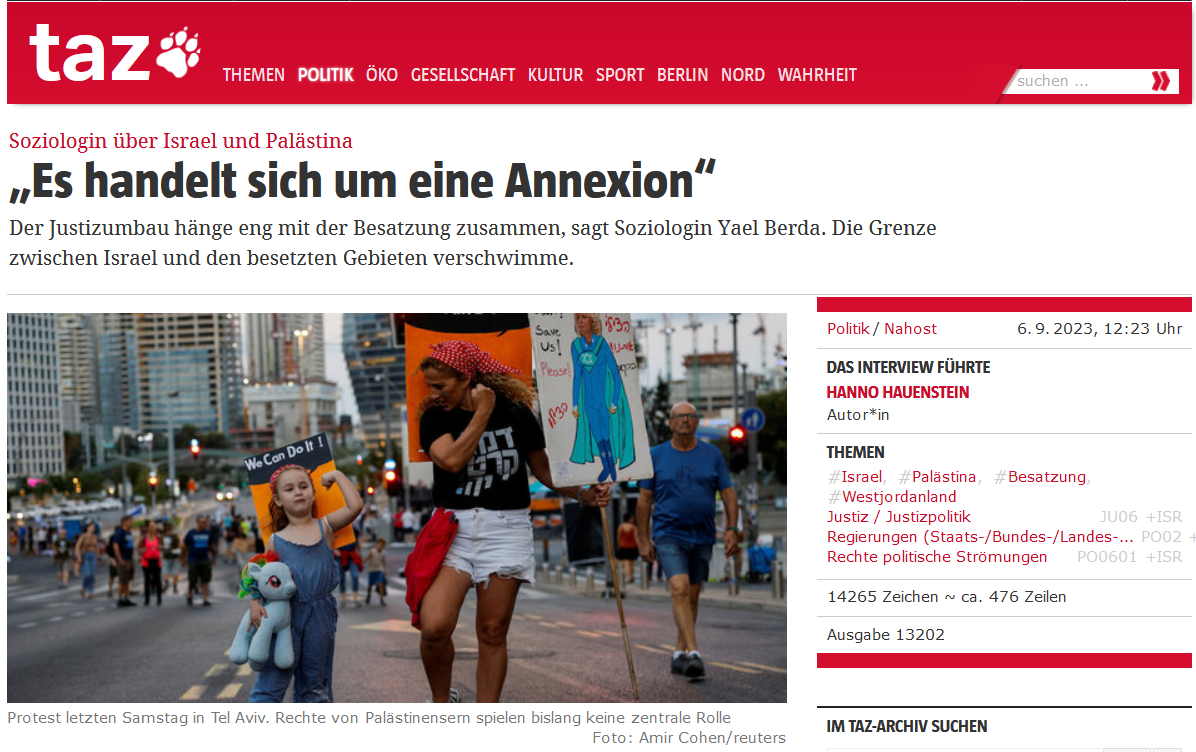
Trotz Protesten – Justizreformvorlage passiert die erste Lesung in der Knesset

Die israelische Tageszeitung Ha’aretz bezeichnete die erste Abstimmung im israelischen Parlament in ihrer Ausgabe am Dienstag (21. Februar) mit klaren Wochen „now that the governmental coup has passed its first hurdle in the parliament“.

Was war erfolgt?

„Die israelische Regierung ist am Dienstag mit ihrer »Justizreform« einen großen Schritt vorangekommen“, schreibt die Zeitung. Das Parlament stimmte nach stundenlanger Debatte am frühen Morgen kurz nach Mitternacht in erster Lesung einem wichtigen Gesetz zu….

Die Abstimmung am frühen Dienstag ergab eine klare Mehrheit von 63 gegen 47 Stimmen ohne Enthaltungen.“

Junge WeltHaaretz