Auf der Internetseite „verbrannte-orte.de“ entsteht im Laufe der Zeit ein Atlas. Aktuelle Photographien rücken dort ausgewählte Perspektiven ins Blickfeld und machen die vergessenen Orte der Bücherverbrennungen sichtbar.

Auf der Internetseite „verbrannte-orte.de“ entsteht im Laufe der Zeit ein Atlas. Aktuelle Photographien rücken dort ausgewählte Perspektiven ins Blickfeld und machen die vergessenen Orte der Bücherverbrennungen sichtbar.
Aufruf zur Mitarbeit an der nächsten Ausgabe des Magazin Brücken

Was an diesem Bericht soll man:frau nicht glauben können/dürfen?
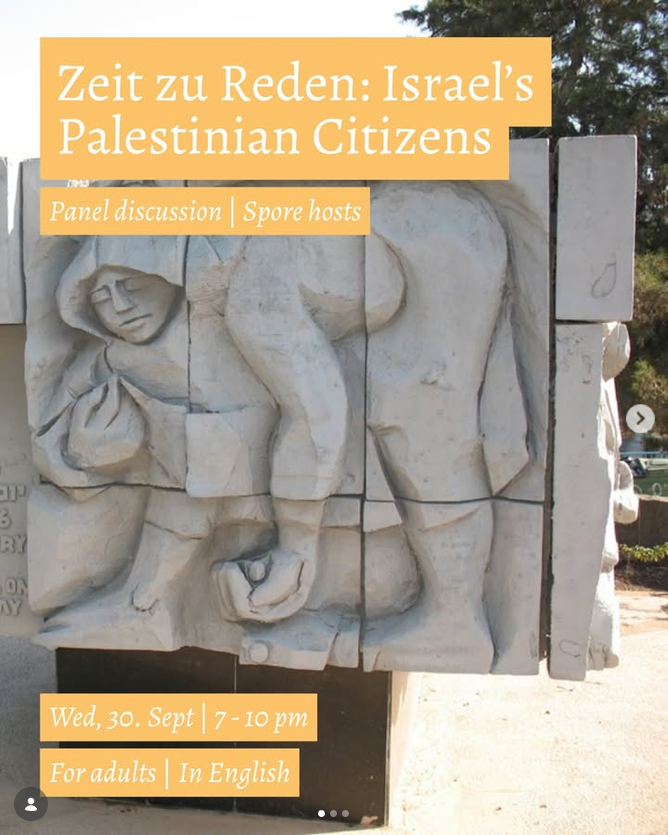
Israel’s Palestinian Citizens – Mittwoch, 30. September 2026 – 19-22.00 Uhr (in Englisch)
(… auch eine Idee für andere Städte im Lande…)
Twenty percent of Israel’s population (around two million people) are Palestinian citizens of Israel.
Their story begins with the Nakba, the catastrophe of 1948: while roughly 750,000 Palestinians were expelled from or fled their homes, about 150,000 remained within the newly established State of Israel & were granted citizenship under the 1952 Nationality Law.
The panel discusses historical continuities from the Nakba to the present, social and spatial realities, and legal strategies. How can Palestinians use Israeli citizenship to protect their existence? Under what conditions does Jewish-Palestinian cooperation in politics and civil society work? And what role does the international community play?
Panelists: Sleman Altehe, Himmat Zoubi and Sawsan Zaher
Moderator: Kristin Helberg
Ob in Halle an der Saale, Lübeck, Ulm, Oldenburg und zuletzt Wuppertal – Angriffe auf Synagogen und jüdische Gemeindezentren finden leider wieder vermehrt in Deutschland statt. Synagogen repräsentieren jüdische Gemeinden und als Symbole jüdischen Lebens werden sie immer wieder Ziel antisemitischer Angriffe. Wie kann man die Gebäude, vor allem aber ihre Besucher*innen und Nutzer*innen schützen? Diese Fragen werden im Verbundforschungsprojekt „Hiding in plain sight – Sichtbare Architektur und unsichere Juden“ unter Koordination der Technischen Universität Braunschweig aus der Sicht von Architektur, jüdischen Gemeinden und Polizei erforscht.
Laut dem kürzlich vom Zentralrat der Juden in Deutschland veröffentlichten „Lagebild der jüdischen Gemeinden in Deutschland 2026“ sind 45 Prozent der befragten jüdischen Gemeinden von antisemitischen Angriffen betroffen. Das interdisziplinäre Forschungsteam wird die relevanten Aspekte für die subjektive und objektive Sicherheit – die Architektur, das Sicherheitsempfinden der Gemeinde sowie den Objektschutz durch die Polizei – analysieren.
Schutz als gesellschaftliche Aufgabe
„Seit Jahrhunderten sind Synagogen Ziel antijüdischer und antisemitischer Gewalt. Ein Angriff auf das Gebäude, in dem sich Jüdinnen und Juden versammeln, trifft die Menschen unmittelbar und entzieht ihnen, nicht nur symbolisch, die Möglichkeit zu einem sicheren Leben und einer freien Religionsausübung,“ erklärt PD Dr.-Ing. Ulrich Knufinke, Verbundkoordinator des Projekts und wissenschaftlicher Leiter der Bet Tfila – Forschungsstelle für jüdische Architektur in Europa an der Technischen Universität Braunschweig. „Diese Orte zu schützen, muss also eine allgemeine gesellschaftliche Aufgabe sein.“ Ziel des Projektes ist es daher, Synagogen unter dem Aspekt der Sicherheit zu betrachten und dabei alle relevanten Akteur*innen zusammenzuführen.
„Polizei hat eine Garantenstellung zur Gewährleistung von Sicherheit und ist maßgeblich für den Schutz von Menschenrechten in der Gesellschaft zuständig“, sagt Sarah Jadwiga Jahn von der Hochschule für Polizei und öffentliche Verwaltung Nordrhein-Westfalen (HSPV). „Polizeilicher Objektschutz vor Synagogen ist deshalb mehr als eine Präventionsmaßnahme. Er ist zentral für das Sicherheitsempfinden von Jüdinnen und Juden und steht für den Schutz unserer Demokratie“, so Jahn weiter.
Antisemitismus in allen Bereichen des Lebens
Nicht zuletzt sind es Jüdinnen und Juden, die sich sicher fühlen sollen, zumal Synagogen und Gemeindezentren zentral für die sozialen Aspekte des Gemeindelebens sind. Die Erfahrung, so Dani Kranz, Forschungskoordinatorin des Tikvah Instituts und Vorsitzende von Präsenzen – Netzwerk jüdische Gegenwartsforschung e. V., hat gezeigt, dass „Jüdinnen und Juden in allen Bereichen ihres Lebens mit Antisemitismus konfrontiert werden. Gerade Synagogen müssen deshalb ein Ort sein, an dem sie sich sicher fühlen können. Hierfür muss man sie verstehen und auch ihre Bedarfe an Gebäude, Personen- und Objektschützer*innen.“
Ziel der Forschung ist die Stärkung der Sicherheit auf mehreren Ebenen durch bessere Abstimmung sowie mehr Wissen und Verständnis, denn viele Aspekte sind bei der Sicherheit von Synagogen relevant: die Architektur des Gebäudes, Abläufe in jüdischen Gemeinden und wenn vorhanden ihrer Sicherheitsdienste, der Objektschutz durch die Polizei und nicht zuletzt die öffentliche Aufmerksamkeit. Die Projektpartner wollen gemeinsame Workshops mit den Zielgruppen durchführen und Handreichungen für Architekt*innen sowie die Polizeipraxis und -bildung entwickeln und jüdische Gemeinden für polizeiliche und architektonische Verständnisse von Sicherheit sensibilisieren, damit Synagogen auch in Zukunft ein Safe Space sein werden.
Projektdaten
Das auf drei Jahre angelegte Projekt „Hiding in plain sight – Sichtbare Architektur und unsichere Juden“ wird vom Bundesministerium für Forschung, Technologie und Raumfahrt (BMFTR) im Rahmen der Förderrichtlinie „Ursachen und Dynamiken des aktuellen Antisemitismus“ gefördert und ist Teil des Forschungsnetzwerks Antisemitismus im 21. Jahrhundert FoNA21. Im Vorhaben arbeiten die Bet Tfila – Forschungsstelle für jüdische Architektur in Europa an der Technischen Universität Braunschweig, die Hochschule für Polizei und öffentliche Verwaltung Nordrhein-Westfalen (HSPV) und das Tikvah Institut gUG in Kooperation mit Präsenzen – Netzwerk jüdische Gegenwartsforschung e.V. zusammen.
Zum Schutz vor Anschlägen stehen Fahrzeugsperren vor dem Eingang der Synagoge in Dessau / Quelle: Katrin Keßler/TU Braunschweig
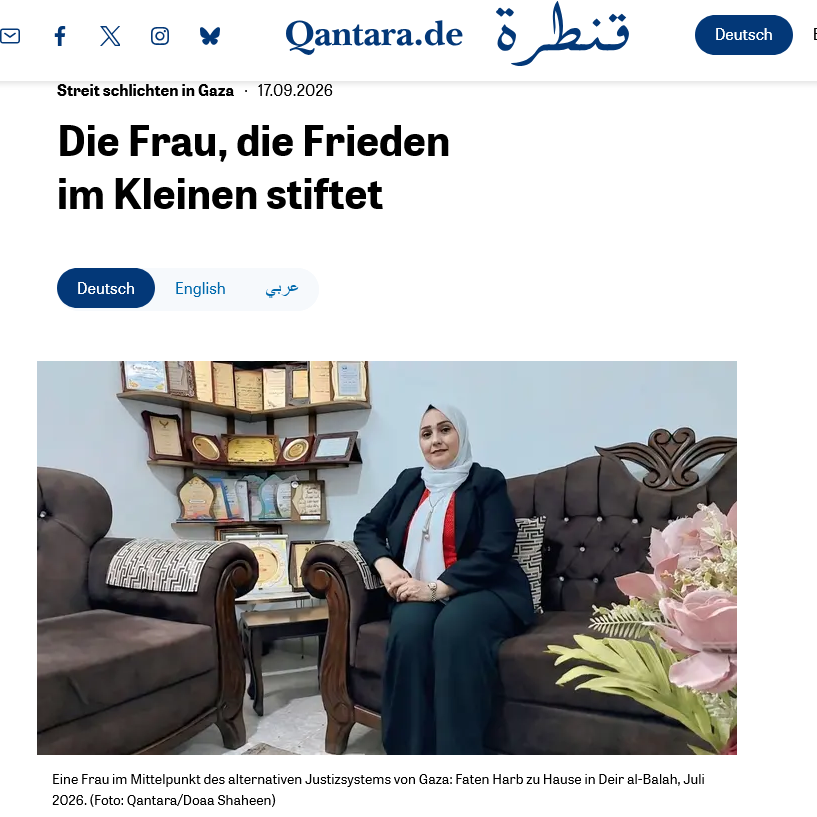
Gaza: Die Frau, die Frieden im Kleinen stiftet
Ein Beitrag von Doaa Shaheen auf Qantara.de
Ehekrach, Streit mit den Nachbarn, familiäre Probleme: Faten Harb ist eine der ersten weiblichen „Mukhtaras“ in Gaza. In dieser traditionellen Männerrolle vermittelt sie, wo es Konflikte gibt. Doch seit Kriegsbeginn dreht sich vieles um Vertreibung, Armut und Tod. …
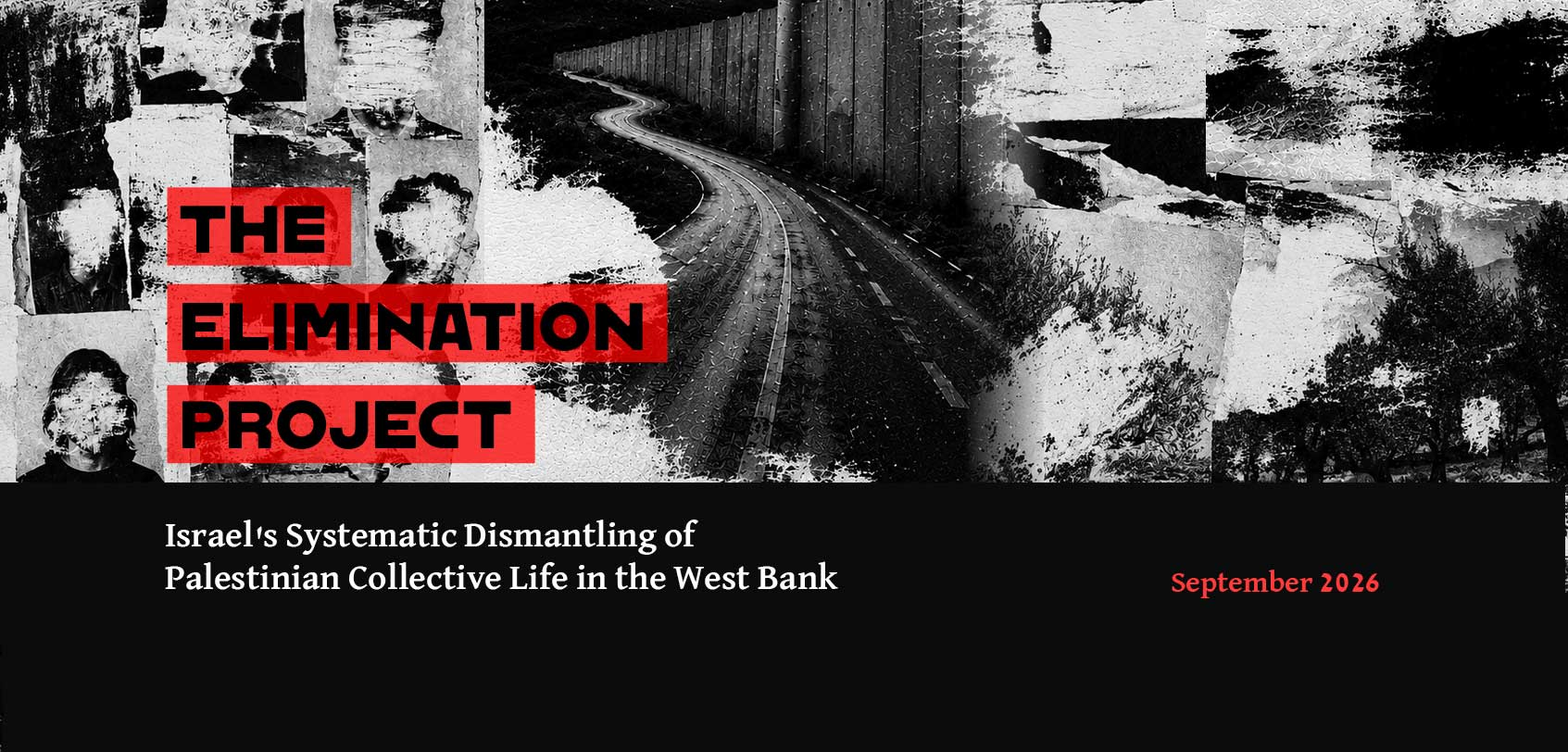
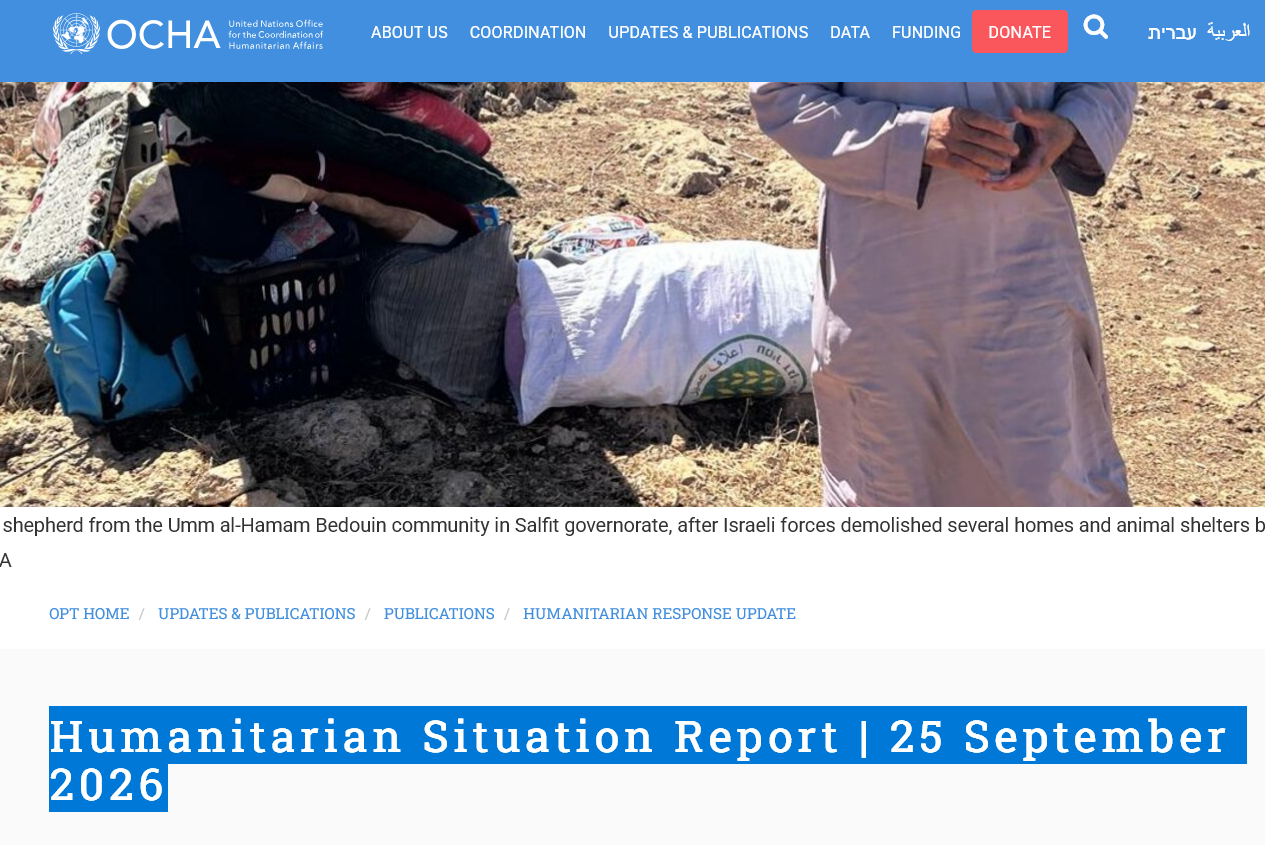
West Bank Monthly Snapshot – Casualties, Property Damage and Displacement | August 2026
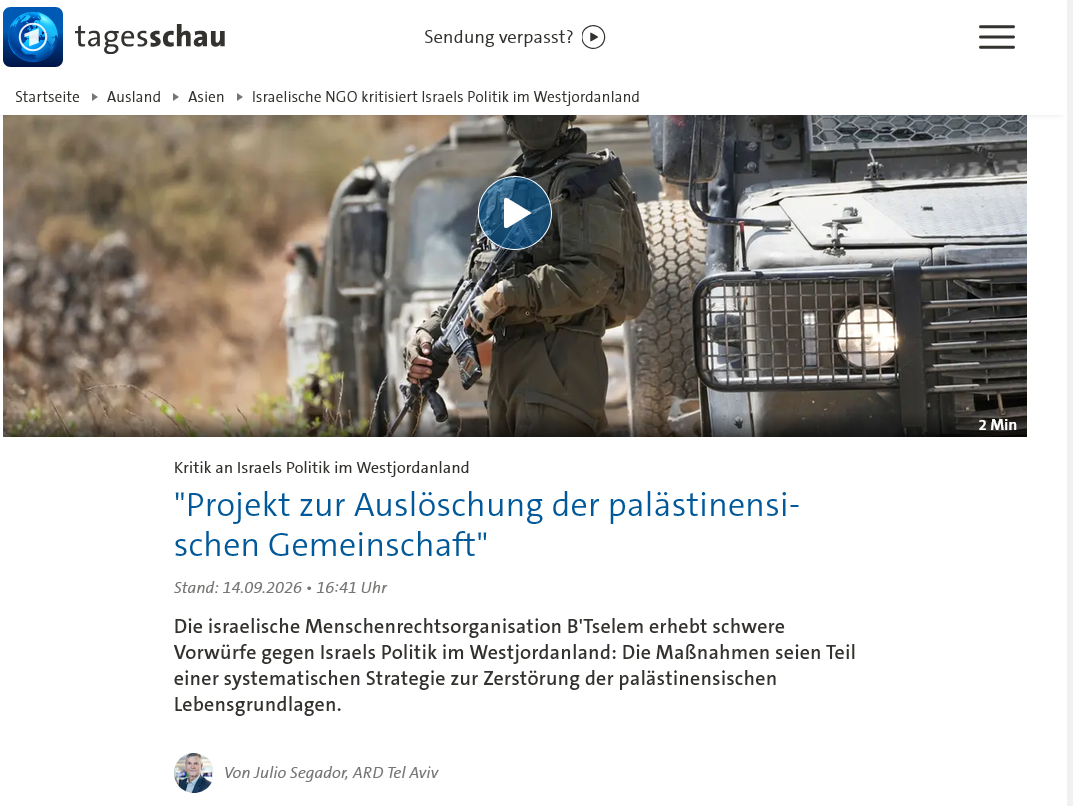
und darf doch nicht schweigen: Zuerst der Bericht der Tagesschau, darunter der Hinweis auf den Originalbeitrag von B’Tselem
***