Die Gewalt radikaler jüdischer Siedler:innen im besetzten Westjordanland gegen die palästinensische Bevölkerung hat seit dem Überfall der Hamas auf Israel am 7. Oktober 2023 sprunghaft zugenommen. Teile der rechten Regierung unterstützen diese Gewalt, bei denen mehrere Menschen getötet, zahlreiche Häuser in Brand gesteckt und Tausende zur Flucht gezwungen wurden. Ermutigt von der Tolerierung und teils Legitimierung durch die Regierung griffen Siedler letzte Woche Soldaten – und in der Nacht auf Montag sogar einen Militärstützpunkt – an.
Wie viel Frieden steckt in der Religion und im Glauben?
Ein Interview mit Pfarrer Dr. Andreas Goetze, Vorstandsmitglied des diAk, seines Zeichens Referent für den Interreligiösen Dialog mit dem Islam im Zentrum Oekumene von EKHN und EKKW über Hoffnung, Mißbrauch von Religion und Dialog im Nahostkonflikt.
Viele heilige Stätten im Nahen Osten sind für Judentum, Christentum und Islam von zentraler Bedeutung: Die Weihnachts-, Oster- und Pfingstgeschichte spielen in dieser Region, ebenso wie weitere christliche, viele islamische und jüdische Überlieferungen. Und doch: Statt Frieden erleben die Menschen dort immer wieder Gewalt. Auch nach dem jüngsten Waffenstillstand zwischen Israel und dem Iran bleibt die Lage angespannt.
Gründe für den Nahostkonflikt und Religion als Ideologie
Goetze betont: Der Ursprung des Israel-Palästina-Konflikts liegt nicht im Religiösen – sondern in Fragen von Land und Besitz. Er beobachtet, wie sich Religion in eine politische Ideologie verwandelt. Die größte Herausforderung liege in religiös aufgeladenen, exklusiven Nationalismen. Deshalb warnt er: „Religion wird dazu mißbraucht, eigene Land- und Besitzansprüche unter Ausschluß der jeweils anderen zu legitimieren. Dann geht es um absolute Wahrheiten ohne Kompromiß.“
Menschen miteinander ins Gespräch bringen – Schmerz teilen
Pfarrer Goetze fordert Gläubige auf, „gegen diesen Mißbrauch von Religion lautstark zu protestieren“, weil das den liebenden, gerechten und barmherzigen Gott bezeuge. Trotz aller Spannungen sieht Goetze Hoffnung. In Begegnungen von jüdischen und muslimischen Gläubigen habe er erlebt, wie Menschen einander zuhören, sich vom Schmerz des anderen berühren lassen. Deshalb empfiehlt Andreas Goetze: „Wir brauchen mehr Verständigungsorte. Räume, in denen wir lernen, den Schmerz des anderen wahrzunehmen.“
Wie sich der Krieg auf die Menschen im Nahen Osten auswirkt und welche religiösen Aspekte außerdem eine Rolle spielen, läßt sich im kompletten Interview nachlesen: evangelisch.de im Juni 2025
Deutschlandfunk Kultur – Wie Memes, Humor und KI im Krieg funktionieren
Im Nahen Osten verarbeiten die Menschen ihre Verzweiflung häufig mit Humor und Satire. Desinformation mit KI spielt auch eine immer größere Rolle. Mit den Journalisten Mohamed Amjahid und Franziska Klemenz geht es außerdem um queeres Reality-TV.
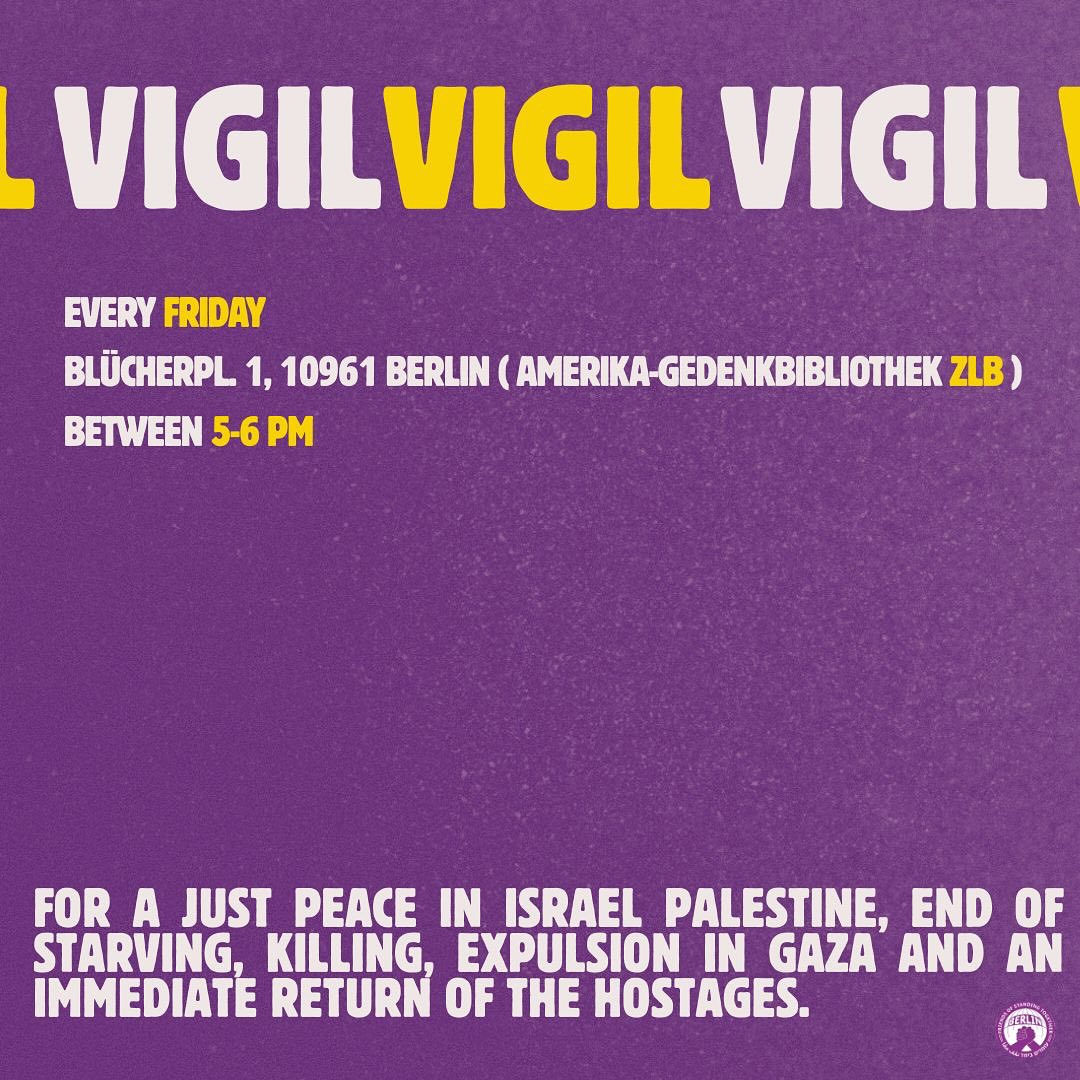
Wöchentlich Mahnwache – jeden Freitag, 17–18 Uhr, Blücherplatz 1 (vor der Amerika-Gedenkbibliothek, ZLB), 10961 Berlin. Für einen gerechten Frieden in Israel und Palästina – gegen das Aushungern, Töten und Vertreiben in Gaza und für die sofortige Rückkehr der Geiseln.
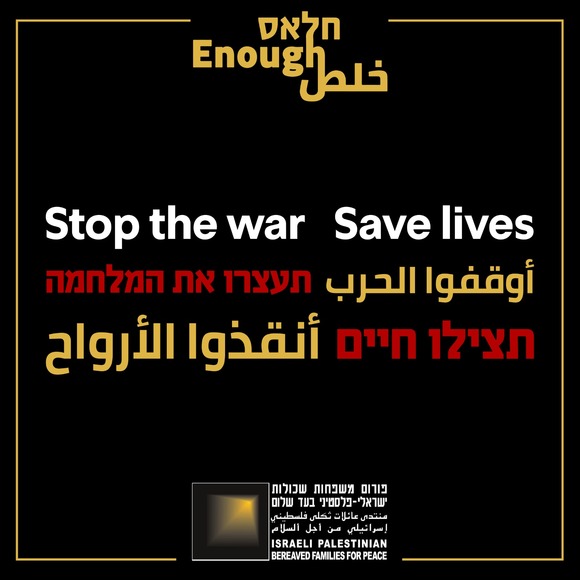
Erklärung des Parents Circle-Israeli Palestinian Bereaved Families for Peace vom 17. Juni 2025
„In diesen dramatischen und schmerzhaften Tagen haben wir – die palästinensischen und israelischen Familien, die den höchsten Preis bezahlt haben – eine klare Botschaft: Wir weigern uns, ein Leben zu führen, das von Mord, Besatzung und Angst bestimmt ist. Krieg und Konflikt werden uns nicht definieren. Wir bestehen weiterhin darauf, daß die Zukunft nur durch geteilte Menschlichkeit, Würde und die Hoffnung auf ein Leben in Freiheit, Gerechtigkeit und Sicherheit für alle gestaltet werden kann.“
As violence escalates and uncertainty grows, we remain steadfast in our commitment to nonviolence and to one another. Many CfP members remain in Paris for the Civil Society convening and are, for now, unable to return home. All of our members are safe, and those in the land are preparing for what may come next. Please keep the all those suffering and in fear in your thoughts and please join us on Monday for a time of connection.
This Monday, we invite you to leave your table empty, as an act of love, grief, and nonviolent co-resistance. This fast is made even more important by the recent news – let’s unite in every way possible to care for those in the land and call out for peace.
On June 16th at 12:00pm ET, while many of us are fasting, join AFCFP and our partners for a sacred hour of reflection, witness, and activism. Our gathering will be facilitated by three leaders from diverse traditions and will include a time for participants to connect with one another. We will use our bodies and voices to call for an end to the forcible starvation of those in Gaza and to affirm that our lives are intertwined.
Fast for Freedom: International Community Gathering Monday, June 16, 2025 12:00 pm ET | 7:00 pm Jerusalem Register Now
We are Palestinians, Israelis, and international allies united in nonviolence. We believe that true peace cannot grow from silence in the face of atrocity. We fast to say: We are united. We will not stop until all are safe and free.
Fasting has long been a sacred tool of resistance and reflection. Join us in this practice from wherever you are in the world on Monday June 16th. Pledge your fast by adding your name and location to our live global map. Upload a photo or video message if you wish. Share why you’re fasting and send a message of solidarity to Gazans, to the hostages, and to everyone trying to live through this unthinkable time.
P.S: We encourage you to share on social media. Upload a photo or video with the hashtag #EndGazaStarvation. Tag @combatantsforpeace_english and/or @afcfpeace. Selected videos will be subtitled and shared widely.
Israels Zivilgesellschaft protestiert, Eindrücke aus Israel
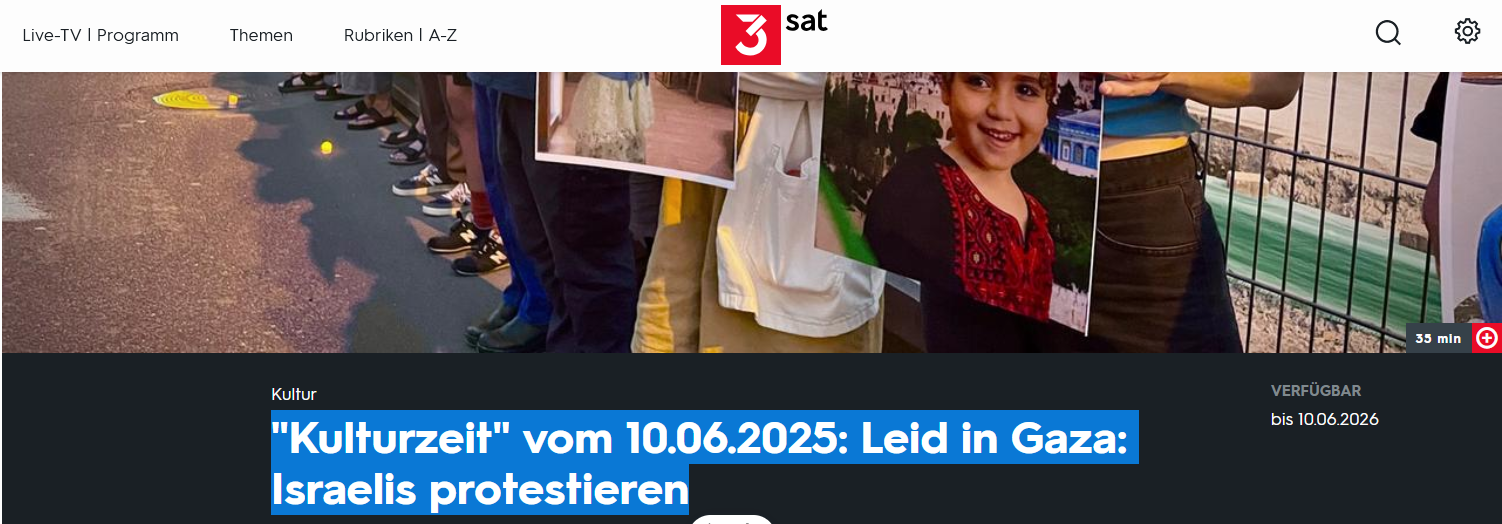
3Sat: „Kulturzeit“ vom 10. Juni 2025: Leid in Gaza: Israelis protestieren
Israels Zivilgesellschaft wacht auf
Die Reihe der stillen Demonstranten in Israel, die jeden Samstag am Rande der großen Antiregierungskundgebung Bilder von in Gaza getöteten Kinder in der Hand halten, will nicht aufhören. Unter ihnen Künstler wie Addam Yekutieli. Sie kommen mit einem Appell an ihr Land und ihre Regierung: Bewahrt die Menschlichkeit! Verschließt nicht die Augen vor dem Leid und der Trauer auch der anderen Seite – der palästinensischen Zivilisten in Gaza!
„Das Massaker des 7. Oktobers war ohne jeden Zweifel ein grauenhafter Einschnitt in unsere Gesellschaft“, sagt Yekutieli, der unter dem Alias Know Hope arbeitet. „Es traf uns in unserer tiefsten rohen, unterbewussten Psyche. Das Problem ist, dass in diesem Krieg das Trauma als Waffe eingesetzt wurde. Die andere Seite wird schlicht dehumanisiert. Vielleicht kennen die Leute die Opferzahlen in Gaza, aber sie sagen sich: ‚Na und? Es sind doch nur Palästinenser.‘ Unsere Aufgabe ist es jetzt, die humanistischen Werte hochzuhalten.“
Es sind nicht nur Ultralinke, die ein Ende des Krieges in Gaza fordern. Immer mehr begreifen, dass Israel zum „Pariah“ der Staatengemeinschaft wird, wie die Tageszeitung „Haaretz“ neulich titelte. In einem Meinungsartikel schrieb dort der ehemalige Ministerpräsident Ehud Olmert: „Es gibt zu viele Fälle von der grausamen Erschießungen von Zivilisten, von Zerstörung von Eigentum und Häusern. Israelis begehen Kriegsverbrechen.“ Der ehemalige Armeechef Moshe Yaalon beschuldigt die Netanyahu-Regierung, ethnische Säuberung zu betreiben. Der neue Parteichef der Arbeiterpartei, der Ex-General Yair Golan, sorgte für einen Skandal, als er offen sagte, Israel würde als Hobby Kinder töten. Worte, die noch vor ein paar Wochen undenkbar gewesen wären.
120.000 Reservisten der Armee haben die Regierung zu einem Waffenstillstand aufgerufen. Den Ball ins Rollen gebracht hat Uri Arad, ehemaliger Kampfpilot mit einem offenen Brief der Luftwaffenreservisten. „Die Regierung versucht uns Märchen zu erzählen, wie dass nur militärischer Druck unsere Geiseln in Gaza zurückbringen würde. 41 von ihnen sind bereits in der Geiselhaft gestorben“, sagt er. „Beendet den Krieg und bringt die Geiseln nachhause!“ Der offene Brief der Piloten war nur der erste. Es folgten Aufrufe der Fallschirmjäger, der Infanterie, der Ärzte und der Sanitäter.
Bringt Israels Kriegsführung das Land ins internationale Aus? Der Publizist Ben Dror Yamini sieht eine akute Gefahr. Doch Schuld daran, meint er, seien auch die internationalen Medien, die zunehmend Israel dämonisieren, während sie deren terroristische Gegner ignorieren. „Warum um Himmels willen, diese Doppelmoral?“, klagt er an. „Warum erzählt Ihr nicht die wahre Geschichte der Hamas? Eine Organisation, die mit deutlichsten Worten zur Vernichtung von Juden aufruft, zur muslimischen Weltherrschaft. Die Hamas war der IS bevor es den IS gab. All das zeigt man in den internationalen Medien nicht. Das muss gesagt werden! Andererseits heißt das nicht, dass ihr ausländischen Journalisten nicht das Vorgehen der israelischen Regierung kritisieren sollt.“
Eindrücke aus Israel – Gespräch mit Shai Hoffmann
Wir sprechen mit dem Schauspieler, Musiker, Sozialunternehmer und Aktivisten Shai Hoffmann über die Lage in Israel. Hoffmann ist deutscher Jude mit israelischen Wurzeln. Er engagiert sich für Demokratie und Toleranz, unter anderem ist er Initiator der „Israel-Palästina-Videos“ und hostet den Podcast „Über Israel und Palästina sprechen“