

15. Mai -> 06. Juni
15. Mai 2025 – 19.00 Uhr | Register for Livestream
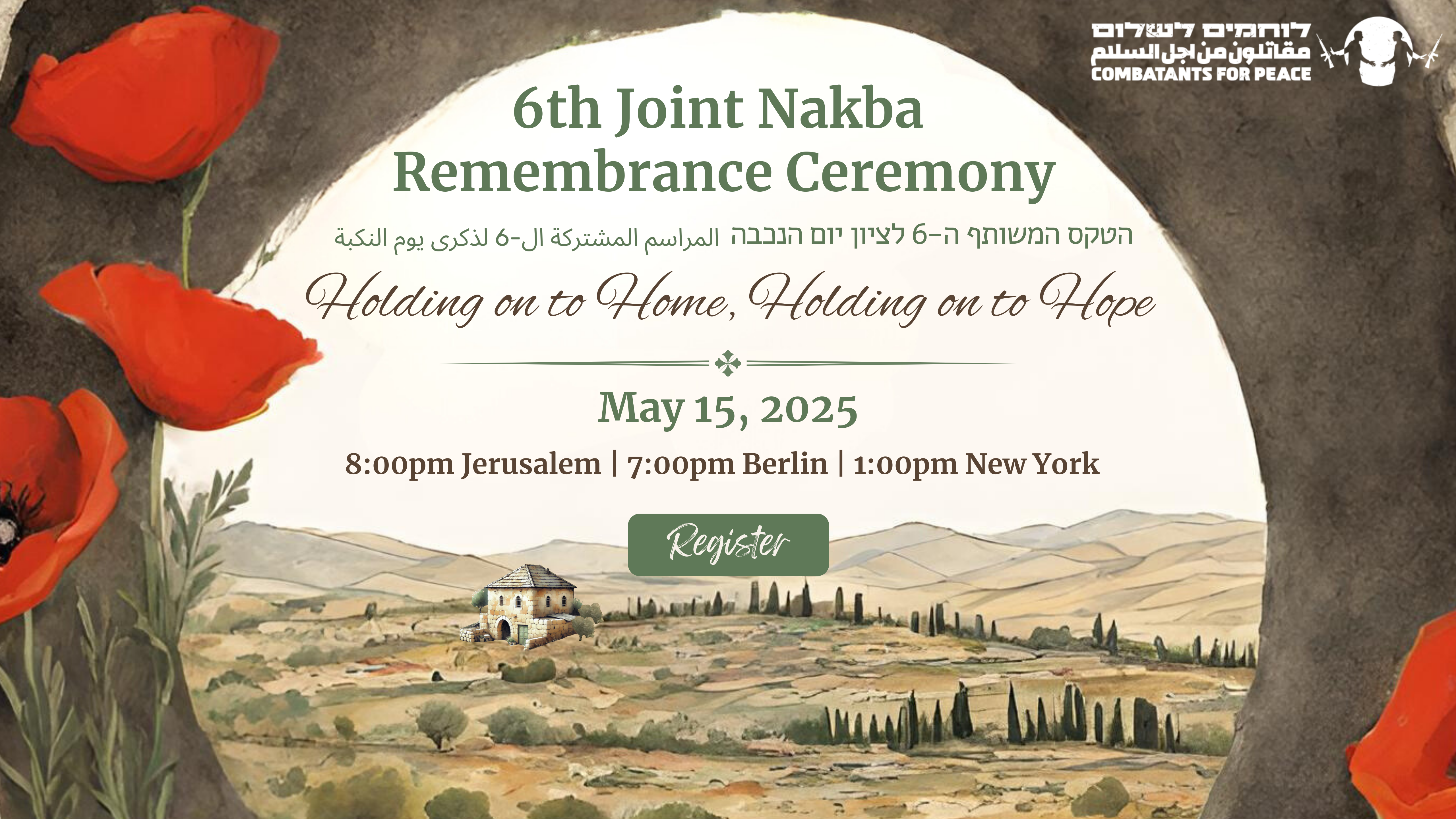
Combatants for Peace:
Visit the website: https://cfpeace.org/
Find them Facebook pages: English, Arabic, Hebrew
Find them on Twitter
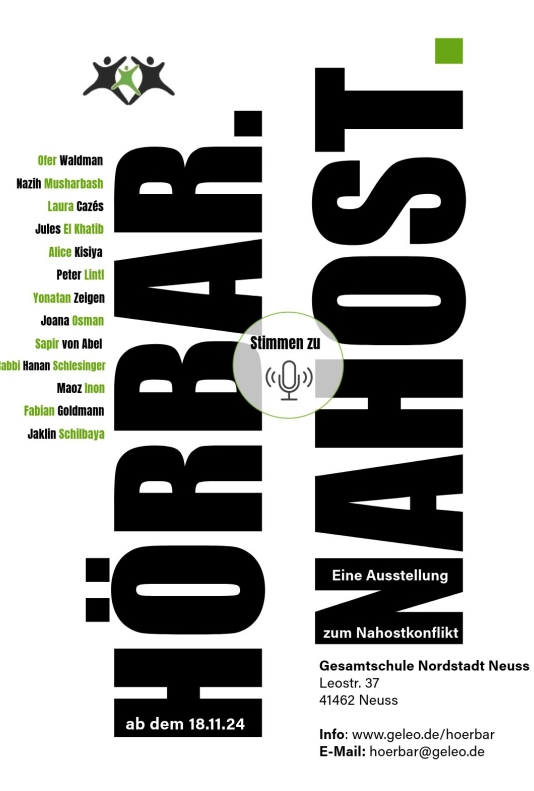
Eine multimediale Ausstellung zum Nahostkonflikt / Mehr Informationen
Redaktioneller Hinweis:
Falls jemand einen Bericht aus eigener Anschauung zu dieser Initiative beisteuern kann, sehr gerne, diese Hnweis erfolgt auf der Basis von berichten, nicht aus direkter Kenntnis!
Eine multimediale Ausstellung zum Nahostkonflikt / Mehr Informationen
Redaktioneller Hinweis:
Falls jemand einen Bericht aus eigener Anschauung zu dieser Initiative beisteuern kann, sehr gerne, diese Hnweis erfolgt auf der Basis von berichten, nicht aus direkter Kenntnis!
The People’s Peace Conference
Jerusalem 8. und 9. Mai 2025 (mit Livestream)

Heute einen Hinweis auf einen Podcastbeitrag zum Buch: Gaza, lebendig halten und mit dem Autor Wahad …
Lena Obermaier und Michael Sappir / Parallelwelt Palästina
https://open.spotify.com/embed/episode/1iyZVO9DEQ1EA5JN9VFCCK (www.acast.com)

Josep Borrell, ehedem Minister in Spanien, Präsident des Europäischen Parlaments, Hoher Vertreter der EU für Außen- und Sicherheitspolitik sowie Vizepräsident der Europäischen Kommission, reflektiert auf dem Portal http://www.ipg-journal.de über die Politik der EU mit Blick auf Gaza und auf Israel.

Unter anderem schreibt er:
“ (…) Bei einigen europäischen Ländern hat die historische Schuld am Holocaust sich offenbar in eine „Staatsräson“ verwandelt, die als Begründung für die bedingungslose Unterstützung Israels dient und die Gefahr in sich birgt, dass die EU sich zur Komplizin bei den Verbrechen gegen die Menschlichkeit macht. Ein Gräuel kann nicht als Rechtfertigung für andere Gräuel dienen. Wenn die Werte, welche die EU für sich in Anspruch nimmt, nicht vollends unglaubwürdig werden sollen, kann der Staatenverbund nicht länger passiv zuschauen, wie in Gaza das Grauen weiter um sich greift und das Westjordanland zu einem zweiten Gazastreifen wird. (…)“
Choosing Hope, Choosing Humanity
Im Nachgang zum Joint Memorial a, 29. April 2024 aus dem Mailing der CfP
Last night, tens of thousands of people gathered for the 20th Israeli-Palestinian Joint Memorial Ceremony, organized by Combatants for Peace and the Parents Circle – Families Forum. Together, we created a powerful shared space of grief, humanity, and hope. We are in awe at the bravery, courage and strength of our speakers, and filled with a renewed determination, fueled by their commitment to peace and justice.
Over 160 live broadcast screenings took place around the world in homes, community centers, places of worship, and even in the EU Parliament. In a moment where hatred continues to rise, our growing community chose another path – one of courage, empathy, and shared grief.
In Ra’anana, just 20 kilometers north of Tel Aviv, a screening held in a local synagogue was met with protesters shouting abuse and physically attempting to block people from entering. The 200 strong mob forced their way inside the synagogue and assaulted participants, hurling rocks and firecrackers at them. This is the reality we face – where fear breeds hatred, and hatred escalates into intimidation and violence. Yet even in the face of this hostility, our community stood tall. We stand in full solidarity with the organizers in Ra’anana and with everyone around the world who chose to listen to the voices of grief, empathy, and resistance – rather than give in to militarism, blame, and nationalism. Thank you for not turning away and for choosing to confront the pain of ‘the other,’ and for bearing witness not only to the loss within Israel, but to the ongoing devastation in the West Bank and Gaza, where war rages and starvation looms.
In a time filled with heartbreak and uncertainty, the ceremony reminded us of the simple but radical truth: humanity and hope must come first.
Liat Atzili, widow of Aviv Atzili who was murdered on October 7th, a survivor of the Nir Oz massacre and a former hostage in Gaza, spoke of her quest to find meaning after deep personal loss:
„Freedom is a heavy burden, but it is the only force capable of bringing peace among people and building a just and moral society.“
‚F‘ a Palestinian from Gaza whose mother was killed by sniper fire in Gaza, shared why she chose a path of peace despite her pain:
„Our lives are not only stories of sorrow – they are also stories of resilience, of standing firm and holding on to hope for a better tomorrow.“
We must stop the de-humanization of ‚the other‘ and remember that a mother is a mother, a child is a child, and a person is someone’s world. Last night was a lesson in profound empathy through these dark days of violence and trauma – let’s all take time to reflect on what we heard, and consider how we act now.
But what began last night doesn’t stop today – so we invite you to take the next step: become an active member of Combatants for Peace and play a role in ending the occupation, advancing peace and advocating for change. Here is what you can do today;
Share Our Message: Help spread the voices from within our movement by sharing our videos, stories, and updates. Change starts with conversation.
Donate: Support our work for peace, justice, and equality. Every contribution strengthens our ability to resist violence, amplify voices for change, and continue our transformational work across Palestine and Israel.
Create Community: Host a gathering, start a local group, or simply bring others into this journey. Building solidarity from the ground up is how we create lasting impact.
Zum Nachschauen und Nachhören auf Youtube
Der britische Guardian berichtet in einem bewegenden Beitrag von Hannah Ellis-Petersen und Quique Kierszenbaum (Tel Aviv) über den Protest von Überlebenden der Shoa in Israel, die das Leiden der Palästinenser:innen nicht aus den Augen verlieren …

Dr. Suhaila Tarazi, Direktorin des Al-Ahli-Krankenhauses in Gaza-Stadt zur Situation

Siehe auch die Seite des Middle East council of Churches (MECC) Abteilung für Soziale Dienste für Palästinensische Geflüchtete des Rates der Kirchen im Nahen Osten
