„We’re coming together, louder and broader than ever before. On May 8–9, thousands of Palestinians and Jews from across the country will gather in Jerusalem for the It’s Time Conference — a powerful act of collective vision in the face of violence and fear. Organized by over 60 civil society groups, this summit will bring together those who believe that freedom, dignity, and safety are rights for all.“ (Aus dem Mailing von Standing together) | Konferenzlink
Israel has now fully blocked the entry of humanitarian aid into Gaza for over fifty days. Essential supplies are either no longer available or quickly running out.
Palestinian civilians – including one million children – face an acute risk of starvation, epidemic disease and death. This must end. We urge Israel to immediately re-start a rapid and unimpeded flow of humanitarian aid to Gaza in order to meet the needs of all civilians. During the last ceasefire, the UN and INGO system was able to deliver aid at scale. The Israeli decision to block aid from entering Gaza is intolerable. Minister Katz’s recent comments politicising humanitarian aid and Israeli plans to remain in Gaza after the war are unacceptable – they harm prospects for peace. Humanitarian aid must never be used as a political tool and Palestinian territory must not be reduced nor subjected to any demographic change. Israel is bound under international law to allow the unhindered passage of humanitarian aid.
Humanitarians must be able to deliver aid to those who need it most, independent of parties to the conflict and in accordance with their humanitarian principles. Israel must ensure unhindered access for the UN and humanitarian organisations to operate safely across Gaza. Hamas must not divert aid for their own financial gain or use civilian infrastructure for military purposes.
We reiterate our outrage at recent strikes by Israeli forces on humanitarian personnel, infrastructure, premises and healthcare facilities. Israel must do much more to protect the civilian population, infrastructure and humanitarian workers.
This includes restoring deconfliction systems, allowing humanitarian workers free movement within Gaza. And Israel must prevent harm to medical personnel and premises in the course of their military operations. They must allow the urgent healthcare needs of the population to be met, while allowing the sick and wounded to temporarily leave the Gaza Strip to receive treatment.
Crucially, we urge all parties to return to a ceasefire. We continue to call on Hamas for the immediate release of all the remaining hostages, who are enduring terrible suffering. We must all work towards the implementation of a two-state solution, which is the only way to bring long-lasting peace and security to both Israelis and Palestinians and ensure long-term stability in the region.
Auch in Deutschland wächst die Unruhe, ob die verfassungsmäßige Ordnung, in deren Kern die Gewaltenteilung steht, die Stürme der kommenden (wie schon der aktuellen) Zeit überstehen wird.
In Israel zeigt sich gerade eine neue Drehung in der politischen Spirale, wenn der Chef des (resp. eines) Geheimdienstes ein explosives Memorandum an den Oberste Gerichtshof richtet.
… „No citadel has fallen,“ former Supreme Court President Esther Hayut said during the court hearings that ultimately produced an 11-0 ruling authorizing someone charged with serious crimes to serve as prime minister. Since then, Israelis have seen the fortress in the process of being brought down on its inhabitants‘ heads. The court must prevent Netanyahu from getting rid of someone who is trying to prevent him from finishing the job.
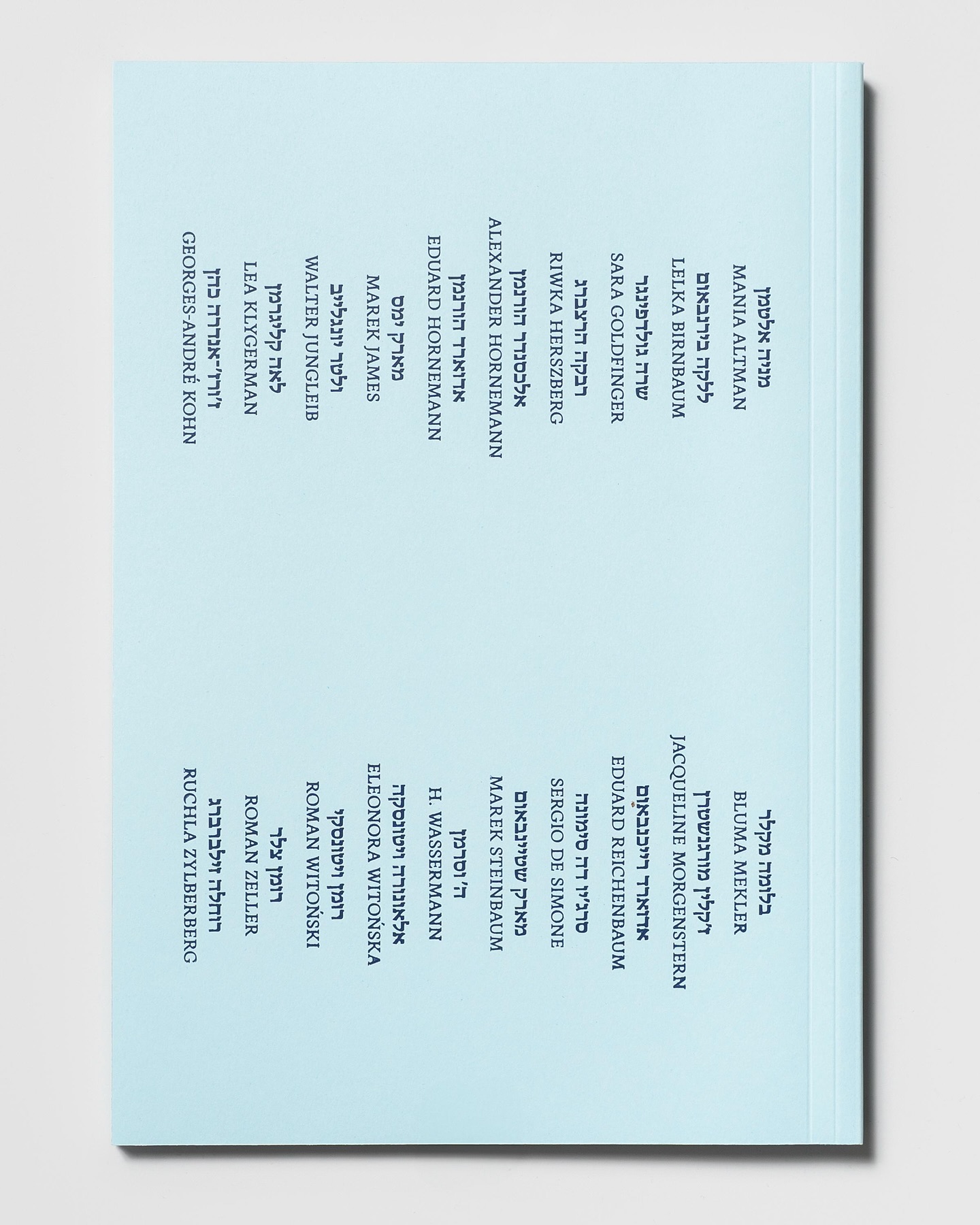
In der Nacht zum 21. April 1945 wurden zwanzig Kinder zusammen mit ihren Betreuern, vier politischen Häftlingen, im Keller des Gebäudes, das während des Krieges als Nebenlager des KZ Neuengamme gedient hatte, erhängt.
Liad Shadmi, ein Hamburger Typograph hat ein Veröffentlichung erstellt, damit „ihre Namen nicht vergessen werden“
Pessach geht zu Ende, heute ist Karfreitag. Es geht um Befreiung, um den Weg zu einem neuen Leben, dazu gehört auch ein wahrhaftige Blick auf das, was geschieht – Zwei aktuelle Beiträge dazu in deutschen Medien.
Ein Beitrag von Jan-Christoph Kitzler auf der Seite des Deutschlandfunks
***
Offener Brief: Ende des Militäreinsatzes
Interview bei Deutschlandfunk Kultur: Autor Ofer Waldman hofft auf Signalwirkung von Protest | Mehr dazu: Wenig Wirkung vor Ort
16. April 2025 | 19.30 Uhr | Lettrétage in der Veteranenstraße 21
Photo: (c) Bashir Bashir
Kilmé is a monthly talk series dedicated to Palestinian artists, intellectuals, and academics; a platform to present their work and speak about subjects that are important to them. Kilmé means word in Arabic. The organizers are dedicated to presenting palestinian voices in all of their diversity and creativity, thus contributing to the cultural landscape of Berlin, a city with the largest Palestinian population in Europe.
In the April issue of kilmé talks, Bashir Bashir will be the guest. The evening will be moderated by Tyme Khleifi and Michael Barenboim.
Bashir Bashir is associate professor in the department of sociology, political science and communication at the Open University of Israel and a senior research fellow at the Van Leer Jerusalem Institute. Currently, he is a fellow at the Wissenschaftskolleg zu Berlin. His primary research interests are nationalism and citizenship studies, liberalism, democratic theory, decolonization, the politics of reconciliation, and alternatives to partition in Palestine/Israel. Among other numerous publications, he is the co-editor of „The Holocaust and Nakba: A New Grammar of Trauma and History“ (Columbia University Press, 2018); and „The Arab and Jewish Questions: Geographies of Engagement in Palestine and Beyond“ (Columbia University Press, 2020). His writings have appeared in English, Hebrew, Arabic, Italian, German, and Japanese.
***
Ergänzung: 11. April 2025: Hybrid-Veranstaltung im ZMO | 24. April 2025, 17.00 Uhr
Egalitarian Bi-nationalism for Israel/Palestine
There is a growing agreement among scholars, politicians and experts that the oppressive realities and colonial policies in Palestine/Israel are politically unacceptable and morally indefensible. Leading human rights organizations like Human Rights Watch, Amnesty International and B’Tselem have published extensive reports that identify these colonial policies and their disastrous impacts on the lives and rights of the Palestinians. The question of putting an end to these wretched and segregationist realities and policies and moving to more transformative and inclusive solutions has preoccupied several scholars and politicians in Israel/Palestine and beyond. Liberal and national principles in the forms of one-person one-vote or territorial and ethnic partition have been at the center of debates on these transformative solutions.
This talk argues that egalitarian bi-nationalism is better equipped to address the underlying issues of the conflict in Israel/Palestine than the liberal and secessionist national frames. Egalitarian binationalism, the talk goes on to argue, better satisfies the urge for self-determination of Palestinian Arabs and Israeli Jews than the benign neglect majoritarianism of the liberal state or ethnic secession and the partition of the two-state solution. The talk concludes that egalitarian bi-nationalism’s insistence on envisioning affective relations of co-belonging based on an ethics of equality, parity, mutual legitimacy, and cohabitation offers rich resources for historical reconciliation and decolonization in Israel/Palestine.
Drei Vorschläge für Israel und Palästina – von Aleida Assmann Ein sehr lesenswerter und nachdenkenswerter Beitrag in der FR vom 08. April 2025
„Nach einem kurzen Waffenstillstand droht im Gaza-Krieg wieder der Status quo, dessen Dynamik Kardinal Pizzaballa von Jerusalem bereits nach dem ersten Jahr sehr klar beschrieben hat: „Die beiden Gesellschaften sind traumatisiert. Die israelische Gesellschaft hat den 7. Oktober als eine kleine Shoah erlebt. Und für die palästinensische Gesellschaft ist der Krieg in Gaza eine neue Nakba.“ Mit anderen Worten: beide Kriegsparteien sind gefangen im ewigen Kreislauf ihres Urtraumas – der Vertreibung bei den Palästinensern auf der einen Seite, und der Holocaust auf der anderen Seite. …“
…
„In Deutschland ist die Solidarität mit den Palästinensern prekär. Die immer wieder beschworene historische Verantwortung für den Holocaust sowie die Betonung der Sicherheit Israels als deutsche Staaträson führen hierzulande automatisch zu einer Entbindung von jeglicher Verantwortung für die Palästinenser. Das schlägt sich im Ungleichgewicht medialer Berichterstattung nieder und führt letztlich zu einem Aussetzen von Empathie. Denn Empathie ist ein Schalter, den man anstellen, aber auch abstellen kann. Das Abstellen von Empathie in Deutschland ist leicht durch den Krieg zu erklären. In einem Krieg kann man nicht unparteiisch sein. Der Sieg der einen Seite bedeutet den Untergang der anderen Seite. Unterstützung ist immer nur für eine Seite möglich. Den Deutschen wird zugemutet, sich hier moralisch zu entscheiden und politisch zu verpflichten. Für viele bedeutet das einen Konflikt mit dem eigenen moralischen Kompass.“
…
„Einzig die Palästinenser können den israelischen Juden diese Legitimität und Normalisierung auf eine Weise verschaffen, die wirklich tiefgehend und bedeutsam wäre. Das aber würde die Verwirklichung ihrer eigenen nationalen Rechte voraussetzen.“ Es hat sich inzwischen deutlich gezeigt, dass der Wunsch nach Sicherheit-ohne-Legitimität hochgefährlich ist, weil er in die Eskalation führt. Die Lösung des Problems beruht für Bashir auf dem einfachen Prinzip der Gegenseitigkeit: Die Legitimität, die die Palästinenser den Israelis geben können, ist genau das, was sie sich von ihnen wünschen.“