
Neuer Bericht von OCHA
Neuer Bericht von OCHA
A New Agenda for Peace (July 2023)

Am 20. Juli 2023 hat der Generalsekretär der Vereinten Nationen, António Guterres, ein neues grundelegendes Dokument (PDF zum Herunterladen) zur Rolle der Friedensarbeit der internationalen Organisation vorgelegt, das versucht neu zu bestimmen, was zu tun nötig ist, nachdem die Euphorie über das Ende des Kalten Krieges zu Beginn der 1990er Jahre vorbei ist.
Eine Einordnung des Papiers von Richard Gowan, International Crisis Group VN-Büro New York:

Israeli forces’ operation in Jenin | Flash Update #1 as of 16:30, 3 July 2023 | Full report
KEY POINTS
SITUATION OVERVIEW
On 3 July at about 1:00 am, Israeli forces conducted a series of airstrikes in and around the Jenin Refugee Camp. The airstrikes hit multiple locations within the camp, including a residential structure in the central area. As a result, three Palestinians were killed, and others were injured.
On 3 July at about 3:00 am, Israeli forces fatally shot a Palestinian man in the head with live ammunition near the Beit El DCO checkpoint in the northern entrance of Al Bireh (Ramallah). The man was shot as Palestinians protested the Israeli operation in Jenin, with some throwing stones and Israeli forces firing live ammunition.
On 3 July at about 8:00 am, Israeli forces bulldozed roads leading to Jenin Refugee Camp. Consequently, ambulances were unable to access the camp except from one entrance, which is controlled and monitored by Israeli forces inspecting `vehicles, including ambulances.
On 3 July about 10:00 am, the Israeli military stated that Israeli forces had discovered and destroyed a laboratory used to manufacture explosives. Additionally, they reportedly confiscated a rocket launcher along with other weapons.
On 3 July at about 10:40 am, Israeli forces prevented ambulances from entering and exiting Jenin Refugee Camp – a problem that has been reported by medical sources throughout the day. Paramedics entered the camp by foot to provide first aid to casualties. Exchanges of fire continued between Palestinians and Israeli forces while the latter also conducted air strikes hitting structures. Five Palestinians including two children were shot and killed with live ammunition fired by Israeli forces.
On 3 July at about 12:50 pm, according to reports from medical sources, several teargas canisters fired by Israeli forces landed inside the courtyards of the Jenin Governmental hospital.
HUMANITARIAN OVERVIEW
Stellungnahme des Generalsekretariats auf der Geberkonferez für die UNRWA, dem Flüchlingshilfswerk der VN (am 2. Juni 2023)

Handschriften der Staatsbibliotheken in Berlin und München in das UNESCO-Weltdokumentenerbe aufgenommen
Zwei bedeutende Handschriften des persischen Dichters Dschalal ad-Din Rumi (1207-1273) sind in das Register des UNESCO-Weltdokumentenerbes aufgenommen. Die beiden Werke – aus den Beständen der Staatsbibliothek zu Berlin und der Bayerischen Staatsbibliothek – sind Teil eines insgesamt 15 Handschriften umfassenden Gemeinschaftsantrags, an dem sechs Länder beteiligt waren und der unter Federführung der türkischen UNESCO-Kommission eingereicht wurde.
Dschalal ad-Din Rumi gilt als einer der bedeutendsten persischsprachigen Dichter, Philosophen und Mystiker des Mittelalters. Auf Rumi, auch als Maulana (türk. Mevlana, „unser Meister“) bekannt, geht der Mevlevi-Orden, der Orden der tanzenden Derwische, zurück.
Bei der Handschrift aus dem Bestand der Bayerischen Staatsbibliothek (BSB Cod.pers. 45) handelt es sich um das zweite von sechs Büchern des bedeutenden Werks „Masnawi-ye ma’nawi“ (dt. „Geistige Doppelverse“) von Rumi. Die Handschrift entstand 1307 und zählt zu den frühesten Manuskripten des „Masnawi-ye ma’nawi“. Zur hohen wissenschaftlichen und textgeschichtlichen Relevanz der Handschrift tragen die Sekundäreinträge an den Seitenrändern, zwischen den Zeilen oder den Kolumnen bei. Die Münchner Handschrift stammt aus der Bibliothek des bekannten französischen Orientalisten Étienne Marc Quatremère (1782-1857), die 1858 für die damalige Hofbibliothek erworben wurde.

Die Handschrift im Bestand der Staatsbibliothek zu Berlin (Minutoli 21) umfaßt alle sechs Bücher des „Maṯnawī-i maʿnawī“ und enthält etwa 25.000 Verse. Gefertigt im Jahr 1337, weist die Handschrift zwei Glossare auf, die das Textverständnis mit Erklärungen unterstützen und ist zusätzlich mit Randbemerkungen in Form von Ergänzungen und Varianten ausgestattet. Die Handschrift ist Teil der Minutoli-Sammlung, die 1863 von der damals Königlichen Bibliothek erworben wurde. Die Sammlung umfaßt 300 Bände, darunter 117 persische Manuskripte.
Dr. Achim Bonte, Generaldirektor der Staatsbibliothek zu Berlin – Preußischer Kulturbesitz, und Dr. Klaus Ceynowa, Generaldirektor der Bayerischen Staatsbibliothek: „Die Aufnahme der Handschriften von Dschalal ad-Din Rumi in die Liste des UNESCO-Weltdokumentenerbes unterstreicht einmal mehr die internationale Bedeutung, die den beiden Staatsbibliotheken aufgrund ihres einzigartigen historischen Bestandes zukommt.“
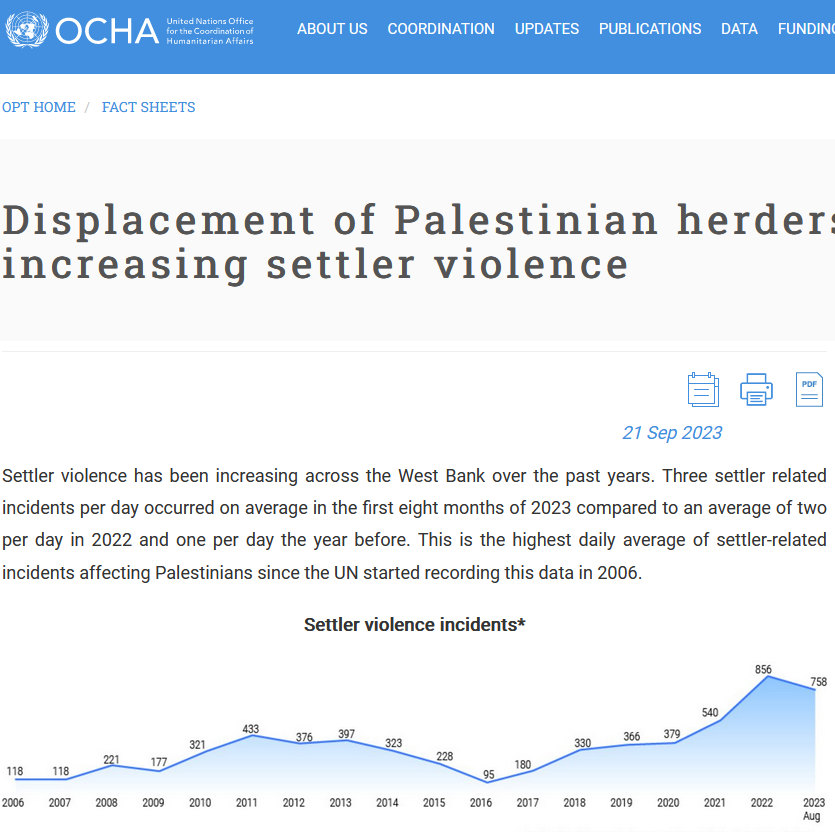
Die aktuelle Zusammenfassung der Entwicklungen (Bereich: Häuserzerstörungen und Vertreibungen) in den Palästinensischen Gebieten, so wie es das Büro der Vereinten Nationen regelmäßig beobachtet und dokumentiert (United Nations Office for the Coordination of Humanitarian Affairs in the occupied Palestinian territory [OCHA])
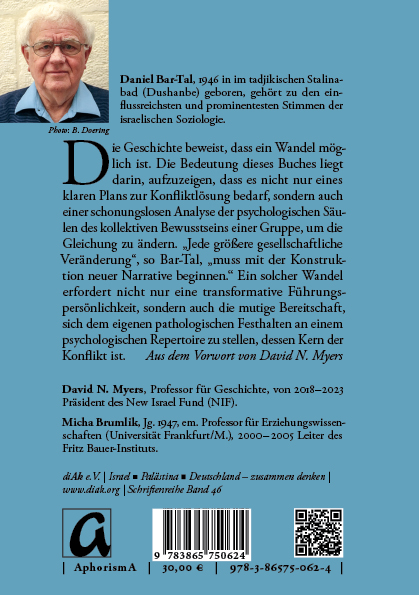
Unbekümmert in den Abgrund
Die Folgen von Konflikt und Besatzung für die jüdisch-israelische Gesellschaft
Mit einem Geleitwort von Micha Brumlik und einem Vorwort von David N. Myers
Ankündigung der Neuerscheinung:
Schriftenreihe des diAk – Band 46
Prof. em. Dr. Daniel Bar-Tal, Tel Aviv
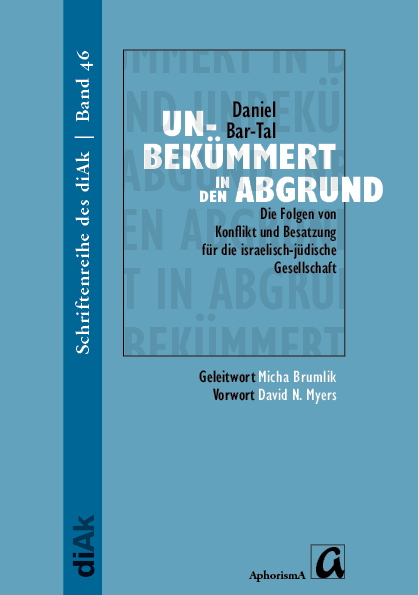
Erscheint zur Buchmesse in Leipzig, April 2023 – Erste Lesungen mit dem Autor in Heidelberg, Berlin und Leipzig sowie Hamburg.
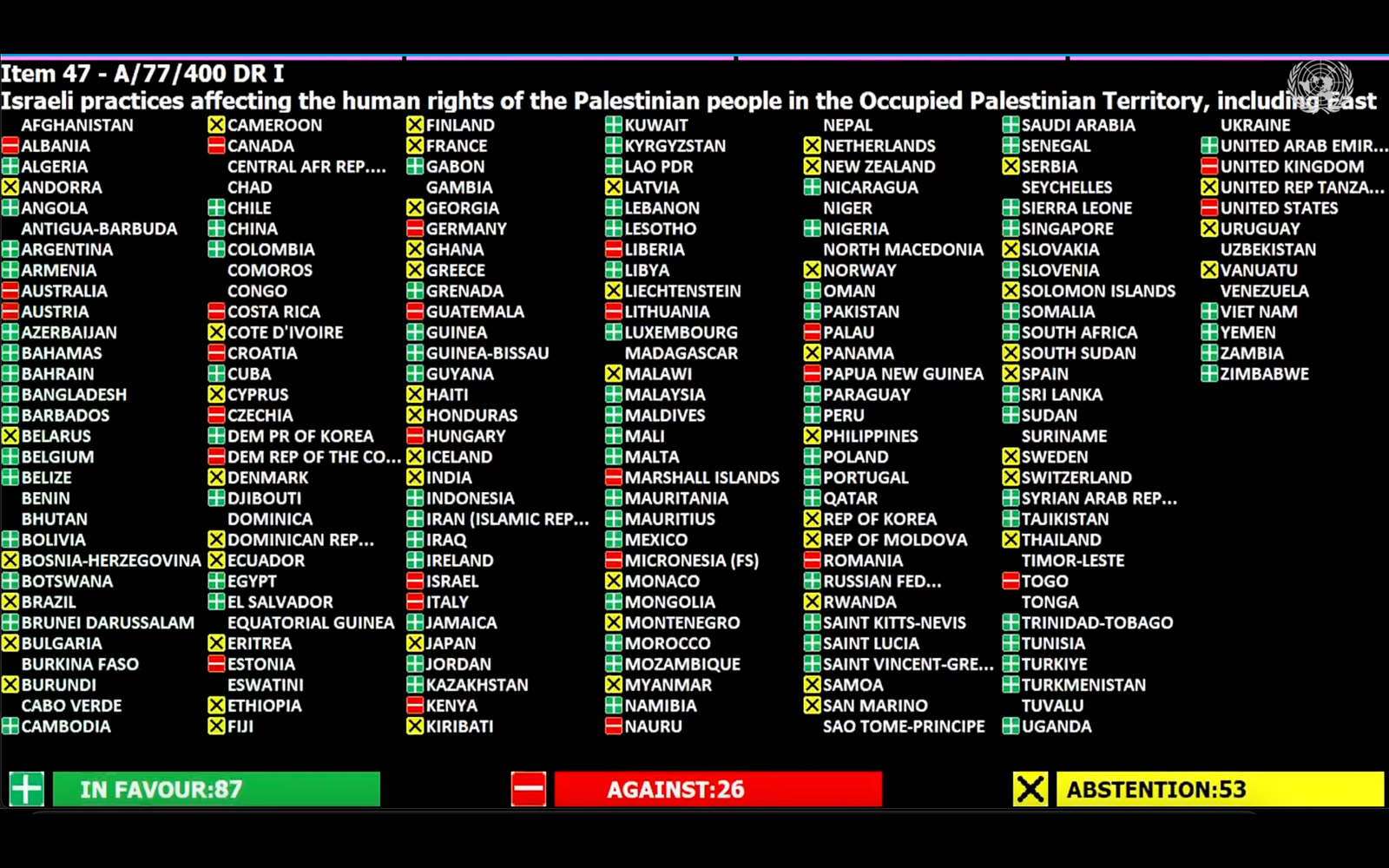
Vollversammlung der Vereinten Nationen: Abstimmungsverhalten
Die „neue“ wertebasierte Außenpolitk Deutschland hat dagegen gestimmt – nicht immer gilt in Deutschland derselbe Maßstab

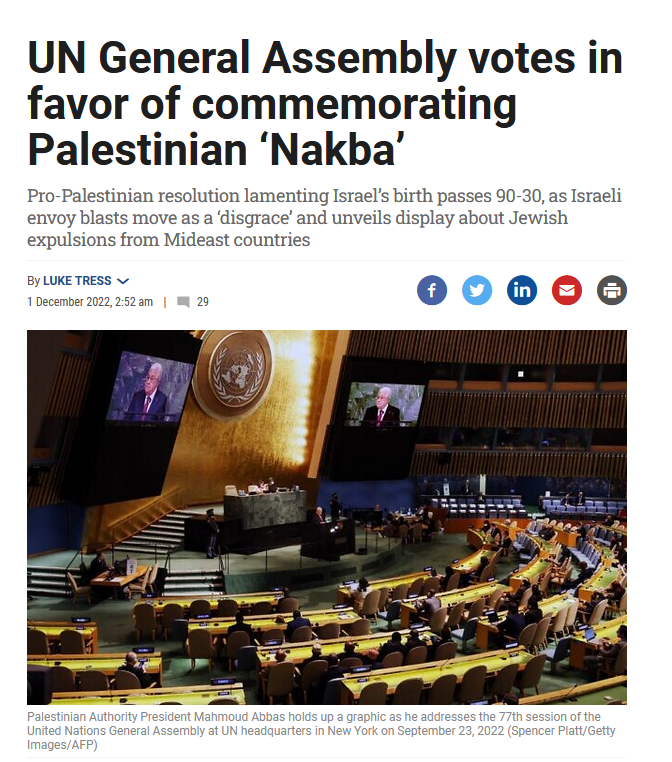
UN General Assembly votes in favor of commemorating Palestinian ‘Nakba’
Und Deutschland stimmt dagegen…. – was daran ist eine Schande?
Heute vor 75 Jahren hat die verfaßte Völkergemeinschaft im Rahmen der Vereinten Nationen das hist. „Palästina-Mandat“ geteilt.
Hier der Plan der Minderheit und der Mehrheit in der UNSCOP sowie ein Auszug aus dem Beschluß.

Eine umfangreiche Dokumentation und Einleitung in unserem Band 100 Dokumente aus 100 Jahren.
