Zur aktuellen Debatte um das Hilfswerk der Vereinten Nationen
Nach der Veröffentlichung des Berichts der VN-Expert:innenkommission über das VN-Palästinenserhilfswerk UNRWA will die deutsche Bundesregierung ihre Zusammenarbeit mit der VN-Organisation im Gazastreifen in Kürze fortsetzen.
„Ohne UNRWA geht es nicht,“, so Frank Schwabe, der menschenrechtspolitische Sprecher der SPD-Bundetagsfraktion, „Es ist richtig, Vorwürfe transparent aufzuarbeiten und Prozesse zu verändern. Aber wir brauchen gleichzeitig maximale Hilfe für die geschundenen Menschen in Gaza. Und das ist ohne UNRWA unmöglich. Deshalb ist die Fortsetzung der Finanzierung durch Deutschland richtig.“
„Angesichts der dramatischen humanitären Lage in Gaza ist die Arbeit der UNRWA nicht nur eine Hilfe, sondern eine Überlebensnotwendigkeit für hunderttausende Menschen“, so die stellvertretende menschenrechtspolitische Sprecher der SPD-Bundetagsfraktion Derya Türk-Nachbaur, „als Menschenrechtspolitiker*innen der SPD-Fraktion unterstützen wir ausdrücklich eine verbesserte Kontrolle und Transparenz in den Strukturen der UNRWA, die durch den Einsatz internationalen Personals erreicht werden soll. Fakt ist aber auch: Es gibt keine anderen Strukturen, die aktuell die Hilfsleistungen von UNWRA ersetzen könnten. Im Moment geht es um das Überleben von Menschen. Es ist unsere moralische Pflicht, diese Bemühungen zu unterstützen und zu verstärken, besonders jetzt, da die internationale Gemeinschaft durch die G7 bestärkt wurde, die Kapazitäten für humanitäre Hilfe in Gaza vollständig zu nutzen.“
Kein Hinweis auf viele Hamas-Unterstützer
Unter dieser Überschrift berichtet der ORF über die Arbeit der Kommission:
Aus der gemeinsamen Erklärung von Auswärtigem Amt und dem Bundesministerium für wirtschaftliche Zusammenarbeit und Entwicklung:
Berlin: Intensiv mit Israels Vorwürfen beschäftigt
Die Bundesregierung habe sich mit den von Israel erhobenen Vorwürfen gegen UNRWA intensiv auseinandergesetzt und sich hierzu eng mit der israelischen Regierung, den Vereinten Nationen und anderen internationalen Gebern ausgetauscht, ist in der Erklärung weiter zu lesen. Sie werde sich mit ihren internationalen Partnern auch bei der Auszahlung weiterer Mittel eng abstimmen.
Das Beobachterbüro der VN in den von Israel besetzten palästinensischen Gebieten, OCHA, hat einen Bericht zu den dringend notwendigen Hilfsmaßnahmen für die Menschen in Gaza und dem Westjordanland veröffentlicht.
Philippe Currat, Schweizer Experte für den Internationalen Strafgerichtshof im Gespräch mit Elene Servettaz
Die humanitäre Situation im Gazastreifen stellt ein Kriegsverbrechen oder sogar ein Verbrechen gegen die Menschlichkeit dar, sagt Philippe Currat, Schweizer Experte für den Internationalen Strafgerichtshof. Den Angriff der Hamas vom 7. Oktober kritisiert er scharf, stellt aber klar: Das war kein Völkermord.
Quelle: SWI swissinfo.ch – Zweigniederlassung der Schweizerischen Radio- und Fernsehgesellschaft
Hilfe an das Flüchtlingshilfswerk UNRWA einstellen – und dann?
Ein Großteil der politischen Klasse Israels lehnt die UNRWA gerade wegen ihres symbolischen Wertes für die Palästinenser ab. Sie argumentieren, daß jede Einrichtung, die sich für die Wahrung des Rückkehrrechts der Palästinenser einsetzt, die Existenz und Legitimität des israelischen Staates unmittelbar bedrohe.
Der israelische Premierminister Benjamin Netanjahu wiederholte am 31. Januar 2024 seine langjährige Forderung an die VN, die UNRWA zu schließen; am 7. Februar behauptete er, deren „Ersatz“ angeordnet zu haben.
Dabei stößt er jedoch auf Widerstand innerhalb des israelischen Sicherheitsapparats, der anerkennt, dass die Dienste des Hilfswerkes eine unverzichtbare Quelle der Stabilität in den palästinensischen Gebieten und in den Nachbarstaaten sind. Sollte die UNRWA zusammenbrechen, würde die Verantwortung für die von ihr erbrachten Leistungen direkt auf die Schultern Israels als Besatzungsmacht im Gazastreifen und im Westjordanland sowie auf die Regierungen des Libanons, Jordaniens und Syriens innerhalb ihrer Zuständigkeitsbereiche fallen – mit dem Risiko enormer Rückschläge für die lokale Bevölkerung.
International Crisis Group | Q&A | 7. Februar 2024
Der Prozeß vor dem Internationalen Gerichtshof hat mit den Statements von Südafrika (Über die Vereinten Nationen auf Youtube) und der Antwort Israel (Hier der Link dazu) begonnen.
In Den Haag wird vor dem International Court of Justice verhandelt, was die Republik Südafrika vor das Gericht gebracht hat: Wie ist zu bewerten, was Israel im Rahmen seiner Selbstverteidigung im Gazastreiifen tut. Genozid für die einen, Selbstschutz für die anderen. (Unterschiedlicher als an diesen beiden Tage vor Gericht kann der Konflikt kaum präseniert werden).
Die Meinungen gehen weit auseinander, unabhängig davon, ob man:frau einen sofortigen Waffenstillstand für angezeigt hält oder nicht. Eine Ende der Besatzung wäre jedenfalls allen Menschen zu wünschen, nur dann könnte Gerechtigkeit werden.
***
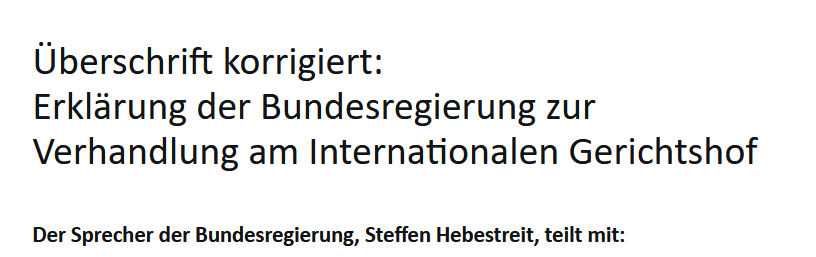
Bemerkeswert mit welcher Position sich die Bundesregierung in das Verfahren einmischt und ziemlich offen das Gericht angeht:
8:7 – trotz des Durchstechens eines Entwurfs des Urteils an die Presse ist es heute bei dieser Entscheidung des Obersten Gerichtshofs in Israel geblieben … ob die Politik damit verhältnismäßig und überprüfbar wird / bleibt… Eine Station in einem langen Weg der Auseinandersetzung, was es für ein Staat sein und was für eine Gesellschaft Israel sein wird.
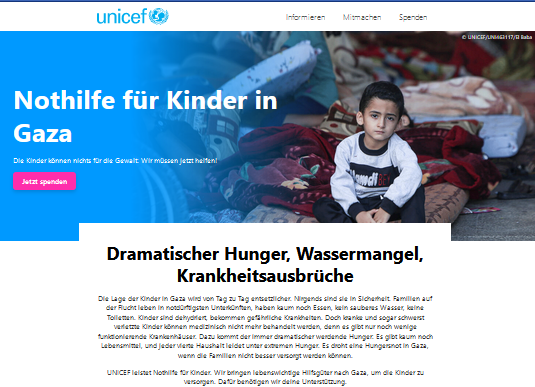
Auf der „anderen“ Seite bleibt es auch im neuen Jahr wichtig hinzuschauen – und weiter unten hinzuhören – … deshalb auch nach der großen Spendenzeit der Hinweis auf UNICEF
„In this episode, Jewish Currents editor-at-large Peter Beinart speaks with two political analysts from Gaza living abroad, Khalil Sayegh and Muhammad Shehada. Sayegh and Shehada discuss what it was like growing up under Hamas rule, how Hamas governs, the motivations behind the October 7th attack, and what’s next for Hamas in Palestinian politics.“
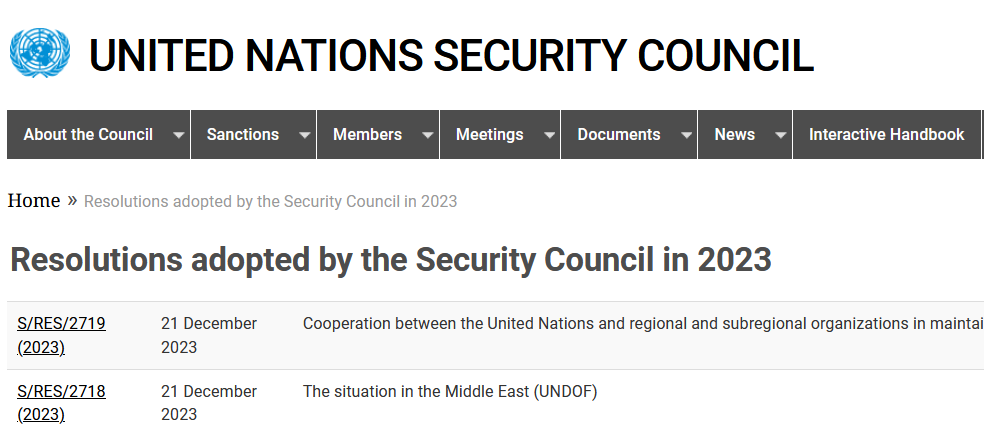
Nachtrag, 28. Dezember 2023 – Link zuim Text im UN-System
[Der Wortlaut des Beschlusses wird noch nachgereicht, er ist aktuell auf den Seiten der Vereinten Nationen noch nicht verfügbar.] – Ob der Beschluß mehr als symbolische Bedeutung hat, bleibt abzuwarten.
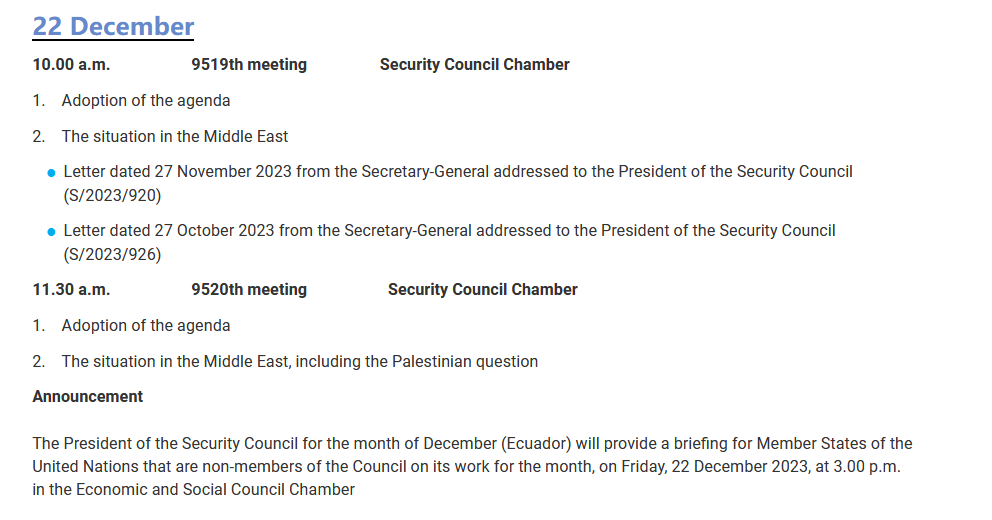
18.20 Uhr: Weltsicherheitsrat fordert mehr humanitäre Hilfe für den Gazastreifen
Nach tagelangem Ringen hat der Weltsicherheitsrat in einer Resolution die Aufstockung der humanitären Hilfe für etwa zwei Millionen Notleidende im Gazastreifen gefordert. Das mächtigste UN-Gremium verabschiedete am Freitag in New York einen deutlich aufgeweichten Kompromisstext. Die USA enthielten sich.
Seit Anfang der Woche hatte es danach ausgesehen, dass Washington seine Vetomacht einsetzen würde, um die Interessen des Verbündeten Israel zu schützen. Massive Zugeständnisse der Unterhändler verhinderten ein Scheitern des Beschlusses jedoch in letzter Sekunde. Insgesamt stimmten 13 der 15 Länder für den Text, neben den USA enthielt sich Russland.
Der völkerrechtlich bindende Beschluss fordert Israel dazu auf, „unverzüglich einen sicheren und ungehinderten humanitären Zugang“ in den Gazastreifen zu ermöglichen. Auch müssten die Voraussetzungen für eine nachhaltige Einstellung der Gewalt geschaffen werden.
In der strittigen Frage nach der Art der Kontrolle der Hilfsgüter einigten sich die Ratsmitglieder darauf, einen zuständigen UN-Koordinator einzusetzen. Dieser solle in Zusammenarbeit mit allen Akteuren auch für die Beschleunigung der Lieferungen sorgen. Der Rat verlangt weiter, dass humanitäre Güter über alle verfügbaren Grenzübergänge in den Gazastreifen fließen sollen. [Quelle: BR24]
Es ist der Internationale Tag der Menschenrechte, seit 1950 erinnert er an die Verkündigung der Allgemeine Erklärung der Menschenrechte 1948 durch die Generalversammlung der Vereinten Nationen.
Gerade in Zeiten des Krieges, in Zeiten, in denen weiterhin Menschen als Geiseln gehalten werden, in denen Bombadierungen und Gewalt weitergehen, darf der Kampf für die Achtung der Würde jedes/jeder Einzelnen nicht aufhören, das gilt auch für die politischen und Gruppenrechte…
Zwei Erinnerungen an diesem Abend dazu:
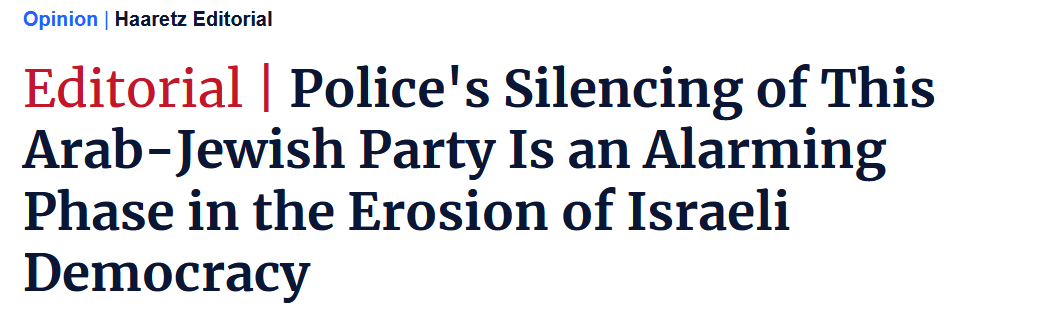
Das Editorial von Haaretz erinnert an die Fragilität der Demokratie auch in Israel und in der taz schreibt in einem Gastkommentar Prof. Elad Lapidot über „Protest und Kritik zu verbieten hilft niemandem, denn Juden und Palästinenser ziehen am selben Strang. Solidarität mit den Palästinensern ist notwendig“.
Advent, Channuka bald … zwischen Traumata und weiterer Gewalt – und kein Ende in Sicht … so sieht es an diesem Tag der Generalsekretär der Vereinten Nationen:
His Excellency Mr. José Javier de la Gasca Lopez Domínguez President of the Security Council New York
Dear Mr. President,
I am writing under Article 99 of the United Nations Charter to bring to the attention of the Security Council a matter which, in my opinion, may aggravate existing threats to the maintenance of international peace and security.
More than eight weeks of hostilities in Gaza and Israel have created appalling human suffering, physical destruction and collective trauma across Israel and the Occupied Palestinian Territory.
More than 1,200 people were brutally killed, including 33 children, and thousands were injured in the abhorrent acts of terror by Hamas and other Palestinian armed groups on 7 October 2023, which I have repeatedly condemned. Some 250 people were abducted, including 34 children, more than 130 of whom are still captive. They must be immediately and unconditionally released. Accounts of sexual violence during the attacks are appalling.
Civilians throughout Gaza face grave danger. Since the start of Israel’s military operation, more than 15,000 people have reportedly been killed, over 40 per cent of whom were children. Thousands of others have been injured. More than half of all homes have been destroyed. Some 80 per cent of the population of 2.2 million has been forcibly displaced, into increasingly smaller areas. More than 1.1 million people have sought refuge in UNRWA facilities across Gaza, creating overcrowded, undignified, and unhygienic conditions. Others have nowhere to shelter and find themselves on the street. Explosive remnants of war are rendering areas uninhabitable. There is no effective protection of civilians.
The health care system in Gaza is collapsing. Hospitals have turned into battlegrounds. Only 14 hospitals out of 36 facilities are even partially functional. The two major hospitals in south Gaza are operating at three times their bed capacity and are running out of basic supplies and fuel. They are also sheltering thousands of displaced persons. Under these circumstances, more people will die untreated in the coming days and weeks.
Nowhere is safe in Gaza.
Amid constant bombardment by the Israel Defense Forces, and without shelter or the essentials to survive, I expect public order to completely break down soon due to the desperate conditions, rendering even limited humanitarian assistance impossible. An even worse situation could unfold, including epidemic diseases and increased pressure for mass displacement into neighbouring countries.
In Resolution 2712 (2023), the Security Council “calls for the scaling up of the provision of such supplies to meet the humanitarian needs of the civilian population, especially children.”
The current conditions are making it impossible for meaningful humanitarian operations to be conducted. We are, nevertheless, preparing options for monitoring the implementation of the resolution, even if we recognize that in the present circumstances, that is untenable.
While delivery of supplies through Rafah continues, quantities are insufficient and have dropped since the pause came to an end. We are simply unable to reach those in need inside Gaza. The capacity of the United Nations and its humanitarian partners has been decimated by supply shortages, lack of fuel, interrupted communications, and growing insecurity. Humanitarian personnel have joined the vast majority of Gazan civilians in evacuating to south Gaza ahead of advancing military operations. At least 130 UNRWA colleagues have been killed, many with their families.
We are facing a severe risk of collapse of the humanitarian system. The situation is fast deteriorating into a catastrophe with potentially irreversible implications for Palestinians as a whole and for peace and security in the region. Such an outcome must be avoided at all cost.
The international community has a responsibility to use all its influence to prevent further escalation and end this crisis. I urge the members of the Security Council to press to avert a humanitarian catastrophe. I reiterate my appeal for a humanitarian ceasefire to be declared. This is urgent. The civilian population must be spared from greater harm. With a humanitarian ceasefire, the means of survival can be restored, and humanitarian assistance can be delivered in a safe and timely manner across the Gaza Strip.
Please accept, Mr. President, the assurances of my highest consideration.