Die israelische Wasserbehörde hat begonnen, entsalztes Wasser in das „galiläische Meer“ einzuspeisen, um dem weiteren Absinken des Wasserspiegels entgegen zu wirken. Ein historisches Experiment, dessen Ausgang auch für andere Teile der Welt von bedeutung sein kann.
Ein Bericht dazu in der Times of Israel (Weiteres dazu soll folgen)
Riesige Meerwasserentsalzungsanlage in Kooperation mit einem französischen Unternehmen in Jordanien auf den Weg gebracht, ursprünglich war ein solches Projekt mit Israel geplant, auch um den Wasserspiegel des Toten Meeres nicht weiter absinken zu lassen…
Bericht in der staatlichen jordanischen Nachrichtenagentur Petra
Amman, Jan 12 (Petra) — The Aqaba-Amman Water Desalination and Conveyance Project (National Carrier Project) moved from vision to reality Sunday with the signing of a historic contract between the Ministry of Water and Irrigation and the Meridiam-Suez investment alliance, setting in motion one of the region’s most ambitious water infrastructure ventures.
Palästinensische Perspektiven – Im Rahmen des gemeinsamen Projekts „Palästinensische Perspektiven auf den Wiederaufbau von Gaza“ veröffentlichten die Friedrich-Ebert-Stiftung (FES) und die Stiftung Wissenschaft und Politik (SWP) umfassende Analysen zur Wiederaufbau- und Zukunftsplanung des Gazastreifens.
Die Studien beleuchten erstmals die Bedürfnisse und Prioritäten der Palästinenser_innen für die Zeit nach dem Ende des noch andauernden Kriegs. Insgesamt elf Beiträge widmen sich zentralen Themenbereichen, die für den Wiederaufbau entscheidend sind.
Folgende Texte (veröffentlicht zwischen August und November) stehen zum Herunterladen zur Verfügung:
Hilles, Ahmed H.: Reconstruction and environment Arafah, Nur: Donor engagement: past, present and future Lahlouh, Alaa: Governance and political reform Misyef, Misyef Jamel: Restoring Palestinian economic unity Besaiso, Mamoun: Reconstruction governance – lessons learned Bashir, Nuha: Reconstruction of the education sector Iriqat, Dalal: Towards an inclusive political system Abu Zaiter, Walaa: Women at the heart of Gaza’s rebirth Dalalsha, Ibrahim: Security arrangements for long-term stability Al Qeeq, Farid: Urban planning after the war
Den Tag danach vorzubereiten, nötig, heikel, unabweisbar, … und doch es scheint die Quadratur des Kreises. Wer ist der Herr des Verfahrens („Ownershio“)? Die UNDP, die Entwicklungsorganisation der Vereinten Nationen hat die IUAV University of Venice mit einem Plan beauftragt … und es alles recht machen, das geht ganz offentlich nicht.
Das „Enviroment programme“ der Vereinten Nation (UNEP) hat einen ersten, vorläufigen Bericht über die Lage im Gazastreifen vorgelegt, hier das PDF des Gesamtberichtes.
Historisches Gasabkommen: „Libanon hat Israel als Staat anerkannt”
Israel und der Libanon haben sich auf eine Seegrenze geeinigt. Das bedeutet für die verfeindeten Länder eine neue Ära, glaubt der Politiker Samy Gemayel – Ein Interview im Berliner Tagesspiegel von Valentin Dreher und Alexander Karam.
„Seit Jahrzehnten befinden sich der Libanon und Israel offiziell im Kriegszustand. Jetzt haben sich die beiden Staaten nach jahrelangen Verhandlungen vertraglich auf eine gemeinsame Seegrenze geeinigt. Unter Vermittlung der USA haben die beiden Länder sich damit auch auf eine Förderung der Gasvorkommen im Mittelmeer verständigt.“
Das beanstandete die bischöfliche Kommission ‚Justitia & Pax / Justice and Peace in Jerusalem‘ am Freitag, 19. August 2022, in einer Stellungnahme. Israel übe eine strenge Kontrolle über alle Wasserressourcen in Palästina aus und habe dort nichts für die Wasserinfrastruktur getan, vermerkt die Kommission. Zusätzlich zu einer drastischen Verknappung führe dies zu einer Qualitätsverschlechterung des verfügbaren Wassers.
Besonders hart treffe die Situation Dutzende Gemeinden, „die von den israelischen Behörden daran gehindert werden, sich an ein funktionierendes Wassernetz anzuschließen“ sowie jene, die in der Landwirtschaft arbeiteten. Sie seien gezwungen, Wasser zu erheblichen Kosten privat zu kaufen. Da sich das viele nicht leisten könnten, müßten sie ihre landwirtschaftlichen Flächen aufgeben.
Die bischöfliche Kommission wirft Israel vor, mit der Nichtachtung des Rechts auf Wasser die Siedlungspolitik voranzutreiben. Durch Wassermangel aufgegebene Landwirtschaftsflächen etwa könnten von Israel beschlagnahmt werden. Ferner sorge die Zerstörung von Zisternen durch die israelische Armee oder Siedler „zur Entvölkerung, oft in Gebieten, in denen Israel die Präsenz von Siedlern verstärken will“. Israel müsse auf das menschliche Grundbedürfnis nach Wasser eingehen und „den Bewohner:innen Palästinas erlauben, Wasserzisternen zu bauen und zerstörte Zisternen zu reparieren, um Regenwasser zu sammeln und gekauftes Wasser zu speichern“, so die Stellungnahme.
Israel liegt in einer semi-ariden Zone, in der es durchschnittlich an nur 50 Tagen im Jahr regnet. Die Wüste Negev nimmt gut 60 Prozent des Landes ein. Nur drei Wasserquellen versorgen die Bevölkerung im Land. Die Regierung setzt auf Entsalzungsanlagen: 2025 sollen 85 Prozent des Trinkwassers durch das Filtern von Meerwasser gewonnen werden. In den Palästinensergebieten herrscht allerdings chronischer Wassermangel.
(Nachbemerkung: Der originale Wortlaut der Erklärung war noch nicht online zu finden und wird ggfs. nachgereicht bzw. verlinkt)
Nachtrag – 22.8.2022:
JUSTICE AND PEACE COMMISSION
Assembly of Catholic OrdinariesOf the Holy Land
August 19, 2022
A cry in the heat of the summer to respect the right to water
Drink water from your own cistern, flowing water from your own well. (Proverbs 5:15)
As the northern hemisphere passes through a scorching summer, we hear the voices of the thirsty rising up from our land. Water is a vital resource for human existence. The right to water is also basic right. Like in many places in the world, in Israel, people benefit from running water to meet their household needs twenty-four hours a day. However, hundreds of thousands of Palestinians face severe water shortages, especially during the summer months. Some of them have no running water during parts of the summer.
Israel maintains strict control of all water resources in Palestine (the areas of the Palestinian Autonomy and those areas under direct Israeli control). The Israeli authorities have not advanced the development of the water infrastructure in these areas nor its maintenance, causing dire hardship. This is not only causing drastic shortages but also the degradation of the quality of water when it is available.
Worst off are dozens of communities that the Israel authorities prevent from connecting to a functioning water grid, forcing them to buy water privately at considerable cost. The cost increases when water must be transported in areas where there is no easy road access due also to developmental neglect.
Those who work in agriculture in rural areas are particularly badly hit by the water shortage. They have to pay five to nine times the regular price for water, which many cannot afford. They must often abandon their agricultural lands, which can then be confiscated by the Israeli authorities. While Palestinian zones become wasteland because of the lack of water, Israeli settlements in these same areas continue to boast of green lawns and swimming pools.
We call on the Israeli authorities to respond to this basic human need and allow residents of Palestine to construct water cisterns and repair destroyed ones in order to gather rain water and store purchased water. We also hope that this attention to a basic human need will end the destruction of water cisterns by the Israeli army, also impeding Israeli settlers from doing the same. In the past fifteen years, hundreds of cisterns have been destroyed by the Israeli army or settlers. This destruction leads to depopulation, often in areas where Israel is seeking to intensify the presence of settlers.
The need for water is universal and God sends his rain down on one and all. Is anyone listening to this cry?
Thirsty for Life: Water Rights for Palestinians in Area C | Dienstag, 8. Februar 22 1:00 PM to 2:00 PM ET –Register – Berlin Time: 7:00 PM – 19:00-20.00 Uhr
As Combatants for Peace continues to campaign for water rights across Occupied Palestine, we’re excited to bring you an update from the activists doing the difficult work on the ground. Moderated by Combatants for Peace leader Avner Wishnitzer, this discussion will focus on ongoing policies aimed at depriving Palestinian communities across Area C of water, with the goal of driving them off their land – and will highlight how we are working to protect these communities.
We’ll be joined by Nada Majdalani, the Palestine Director of EcoPeace Middle East, as well as Dror Etkes, Founder of Kerem Navot, CfP Activist Adam Al-Herani, and local resident Fatma Noajaa.
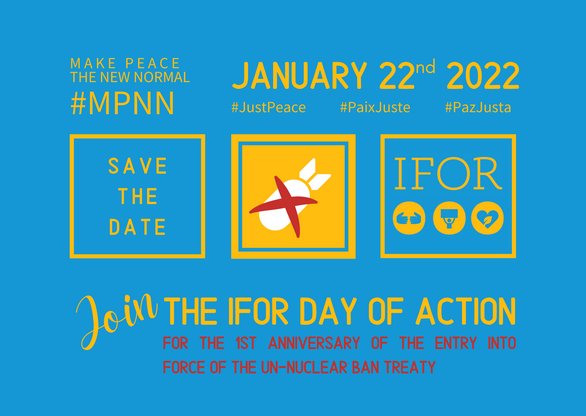
Anläßlich des ersten Jahrestag des Atomwaffenverbotsvertrages (AVV) am 22.01. gibt es einen landesweiten Aktionstag unter dem Motto „Licht im Dunkeln“, um die Bundesregierung dazu aufzufordern dem AVV beizutreten.
Aus der Mailinglist des HolyLand Trust Bethlehem: Nachhaltigkeit im C-Gebiet
We know here that the natural world speaks of the sacred, that seemingly insignificant people can bring great change and unexpected good news and words of peace transform lives. We sincerely believe the projects we have planned for 2022 can be good news for the people of Bethlehem today bringing peace, caring for creation and working for justice.
This spring, we will start the construction of our Greenhouse which will be located in area C – the area of Palestine that is controlled by Israeli Military law. In this zone, the impact of the occupation is felt every day in a myriad of ways. Water is controlled and is in short supply, the land is wrecked by military installations and home demolitions and farmers are often cut off from their fields unable to tend crops and animals.
Why are we building a greenhouse in this area?
The general objective is to improve the social and economic conditions of people who live in this zone and do not have a reliable source of income. We want to ensure food security for them in this uncertain context – this project aims to increase the productive capacity of 1 dunam of agricultural land through greenhouses and give training and employment to five rural workers in the target location.
This project will sustain itself as workers are supported to grow and sell vegetables. It will create a source of income and high quality products, strengthen the agricultural sector and enhance family participation in generating income in the Palestinian society. It will stimulate the economy and improve the economic situation of the unemployed workers. The project will serve the needs of the local Palestinian community. This project is fulfilling the Palestinian people needs in having income generating projects.
Your kind support has provided 60% of the money needed to launch this new initiative, but to be able to accomplish the project we need to raise more funds. Your donation will change lives, protect the sacred land and speak to people of hope, justice and a more secure future. Help us today to be good news to the people of Palestine.