
Mit gerade einmal vierzig Jahren stirbt Franz Kafka, sein Universum des Schreibens ist geblieben.
Eine neue Dokumentation auf arte (Link nicht über Bild).

Mit gerade einmal vierzig Jahren stirbt Franz Kafka, sein Universum des Schreibens ist geblieben.
Eine neue Dokumentation auf arte (Link nicht über Bild).
Ein bewegender dokumentarischer Liebesfilm, der auf der Suche nach den Wurzeln jiddischer Musik in Osteuropa auch von der Zerrissenheit der Nachkommen von Shoa-Überlebenden erzählt.

Eine Filmkritik von Gaby Sikorski
Yair Golan Elected New Leader of Israel’s Struggling Labor Party

Ein Beitrag von Steven Ganot auf http://www.themedialine.org
Ein Stück von Amos Gitai bei den Berliner Festspielen (15./16. Juni 2024)
„House“ ist eine Adaption der gleichnamigen Dokumentarfilmtrilogie (1980, 1998 und 2005), in der der israelische Regisseur Amos Gitai über mehrere Jahrzehnte ein Haus in Westjerusalem und dessen Bewohner*innen porträtierte.

„House“ ist eine Adaption der gleichnamigen Dokumentarfilmtrilogie (1980, 1998 und 2005), in der der israelische Regisseur Amos Gitai über mehrere Jahrzehnte ein Haus in Westjerusalem und dessen Bewohner*innen porträtierte.
Haaretz, 12. Mai 2024

I shall remember them all Monday. I shall remember Pvt. Gideon Bachrach, after whom I am named. I will stand at attention during the Memorial Day sirens, to honor his memory and the memory of all those who died in Israel’s wars. I will think about the people who were slaughtered at the Nova music festival and in the communities along the border with Gaza, and about hostages and the soldiers who were killed in Gaza. But at the same time I cannot help but think about the victims of Israel’s hostilities, the Palestinian residents of Gaza and the West Bank. I will also stand at attention in memory of them.
„The people of Israel will remember their sons and daughters“ – and this year especially it is obligatory to remember also the tens of thousands of sons and daughters on the other side. It is impossible not to mourn „the beauty of youth, the heroic passion, the sacred will and the self-sacrifice of those who perished in the heavy battle“ – including theirs. Many of the tens of thousands of Gaza’s dead, too, had the beauty of youth and heroic passion and sacred will and self-sacrifice. May the people of Israel also remember them.
They have no Memorial Day, and there is no one to keep their memory alive. Many of them do not even have a grave. They were buried in mass graves on traffic islands or beneath the ruins of their homes. Whole families erased, 15,000 children killed. How is it possible to stand at attention this Memorial Day to honor our dead and not think, even for a moment, about their dead, too?
A day of remembrance that ignores the multitudes of innocents killed in the past seven months in Gaza is not a complete day of remembrance. It is a day of ultranationalist remembrance, of selective remembrance. In a year when the number of Palestinian dead, most of them women and children, reached such horrific proportions, we have no right to think only of ourselves and to remember only our dead, even if the catastrophe visited on Israel was too great to bear. In numerical terms, our losses amount to a fraction of theirs.
I hope this will not be held against me, but I cannot but think on Memorial Day also about their sacrifice, the tens of thousands who were killed through no fault of their own. I cannot but think of the 30 people, eight of them children, killed overnight into Saturday near Rafah, whose bodies were brought Saturday morning to Al-Aqsa Hospital in Deir al-Balah.
The images on Al Jazeera – the forbidden TV station – were horrifying: a foot protruding from a sheet of white plastic; a living hand holding a dead hand, loath to let go; a father kissing his dead child’s face. That is how they sat on the hospital floor Saturday and remembered their dead: the last for now, but far from being the last of their dead. It is impossible on Memorial Day not to think about them as well, even if your country completely shut its eyes and its heart to them.
This will be my Memorial Day this year, the memory of our fallen and the memory of their fallen. I cannot do otherwise, especially this year. You don’t have to compute the relative justice and injustice of the two nations to understand that both experienced disaster. There is also no need for blame games: Innocents have died, in the thousands, on both sides. The kibbutznik from Nir Oz, the raver at Nova and the refugee from Jabalya were all killed in vain.
It is absolutely right to honor and remember them all. A person remembers first of all his own dead, and after them all the dead of his people. It is also appropriate to remember the dead on the other side. Their survivors wandered the Gaza Strip Saturday, destitute, fleeing from one „safe“ place to another. They barely made it to Rafah when 100,000 of them had to flee from there as well. They just returned to the ruins of Jabalya, to which their antecedents fled in 1948, when the Israeli army on Saturday ordered them to leave again. This year, Memorial Day is also a provisional memorial day: A myriad more dead are on the way. There is not a single person in Gaza today who is safe. In Israel, too, the danger is far from over.
This year’s Memorial Day will be the most difficult of all. That is precisely why we must remember everyone – our own dead and also their dead.
Omri Boehms Rede auf dem Wiener Judenplatz
Der israelisch-palästinensische Konflikt hat Europa zutiefst erschüttert. Die höchst unterschiedlichen Reaktionen der europäischen Staaten haben historische Wurzeln. Während der deutsche Verfassungspatriotismus als Versuch gedeutet werden kann, Verantwortung für den Holocaust zu übernehmen, ist das Selbstverständnis von Ländern wie Frankreich von ihrem kolonialen Erbe geprägt. Dieses schon lange bestehende Spannungsverhältnis zwischen zwei historisch gewachsenen Positionen wird im Zuge der jüngsten Ereignisse im Nahen Osten zunehmend explosiv. Die ansonsten einende Geschichte droht die Europäische Union zu zerreißen. Nach dem Historiker Timothy Snyder und der Menschenrechtsaktivistin Oleksandra Matviichuk wird sich der Philosoph Omri Boehm in der dritten „Rede an Europa“ den brisanten Fragen widmen, warum der israelisch-palästinensische Konflikt eine Gefahr für die europäische Identität darstellt und wie eine Verfassungskrise der Europäischen Union abgewendet werden kann.
Eine gemeinsame Veranstaltung von Wiener Festwochen | Freie Republik Wien und Institut für die Wissenschaften vom Menschen
Aufzeichnung der Rede mit eingeblendetem Text der Rede zum Mitlesen
Voices of Grief – Stories of Resilience and Reconciliation

Immediately following the 19th Annual Joint Israeli-Palestinian Memorial Day Ceremony, we will gather online to hear from bereaved Palestinian and Israeli peacemakers who are transforming their losses into catalysts for hope. Come hear from Musa Juma’a and Maoz Inon.
Sunday, May 12th – 2:30 PM EST (9:30 PM Jerusalem, 7:30 PM London) – REGISTER
(Simultaneous translation to English, Arabic, and Hebrew will be available)
American Friends of the Parents Circle – Families Forum
… und eine andere Zukunft ist möglich.
In solchen Zeiten ein Hinweis auf eine spannende Initiative, nicht die einzige und noch nicht mehrheitsfähig vielleicht, aber was nicht ist, kann/soll ja noch werden ….
Hanno Hauenstein im Gespräch (veröffentlicht in der Frankfurter Rundschau) mit der von der Universität Köln ausgeladenen US-amerikanischen Philosophin Nancy Fraser – der Präsident der Universität, der die (seine) Ausladung übermittel hat, ist übrigens auch der Präsident des DAAD …


Marylène Schultz kam vor dem Sechstagekrieg 1967 nach Bethanien und arbeitete bis 1997 für den Schweizer Christlichen Friedensdienst in den „Four Homes of Mercy“, einer Institution, die sich um Alte und Kinder, Behinderte und Waisen kümmert. Von ihr stammt das Buch „Die Waisenkinder von Bethanien“, Göttingen (Lamuv) 2003 – 978-3-88977-633-4.
Am Samstag. 6. April 2024 wurde sie „zu Füßen“ des ersten Bischofs der lutherischen Kirche Haddad und mit Blick auf Gilo und Beit Jala ins Grab gelegt.
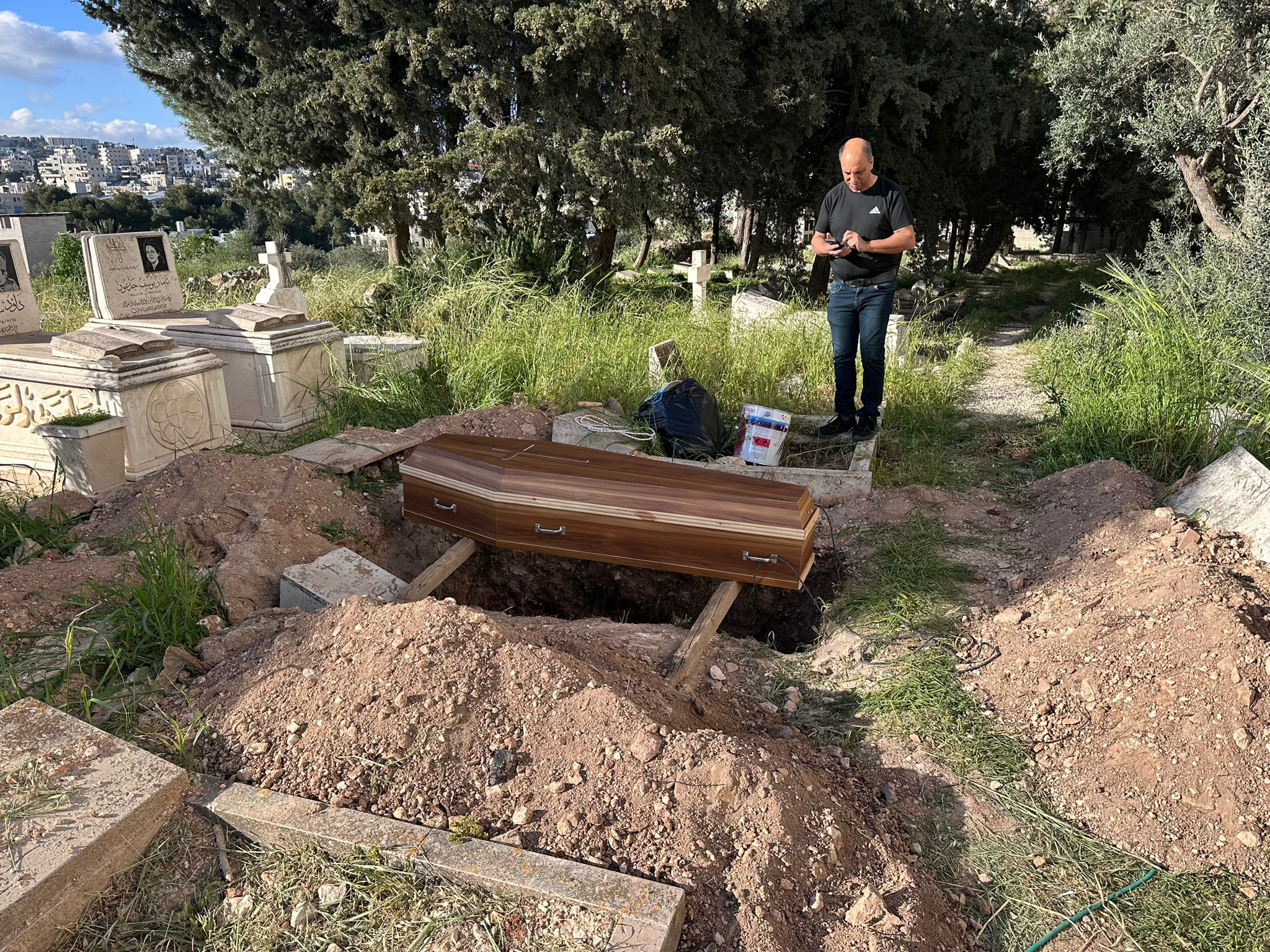
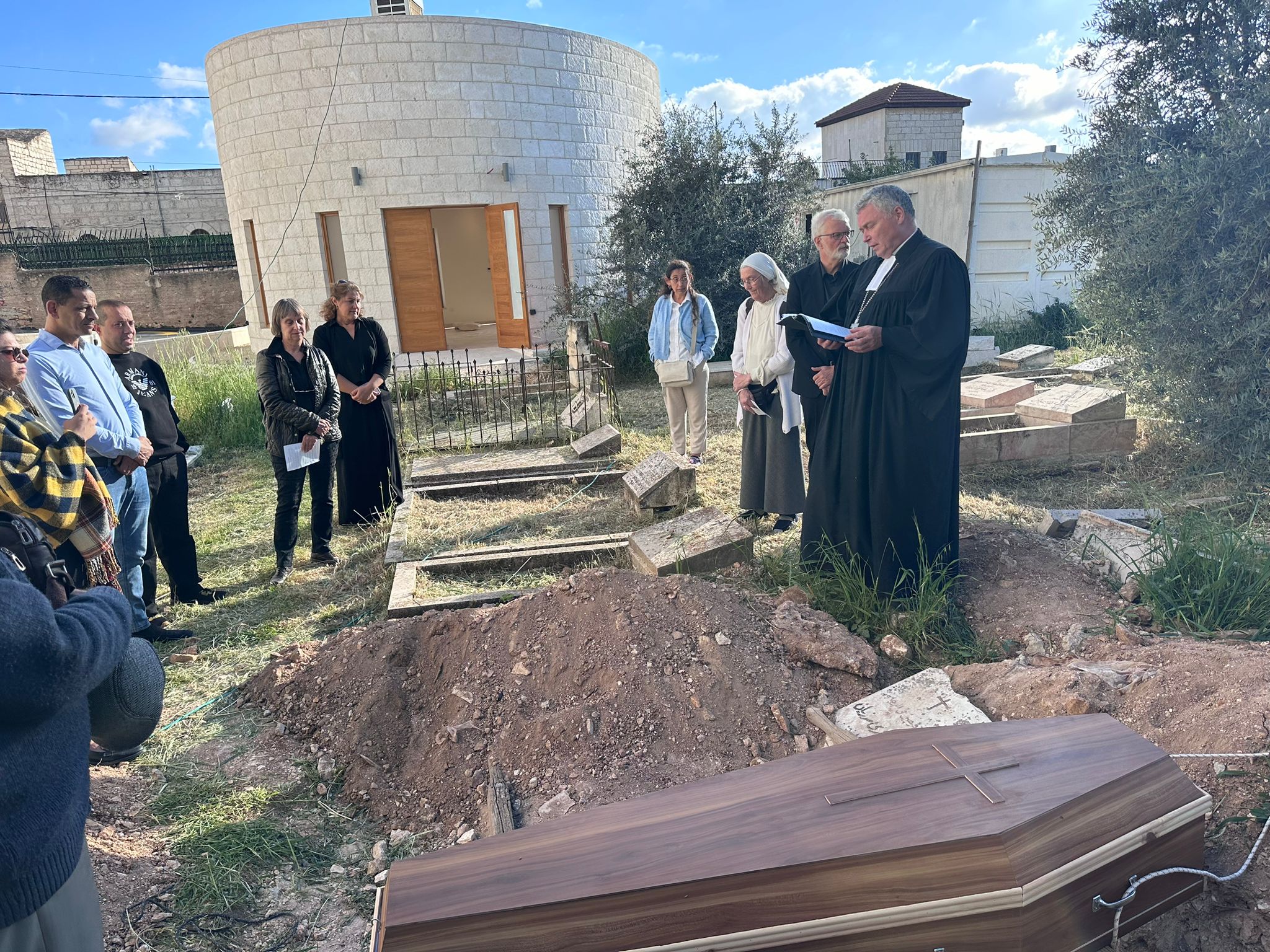
Der Jerusalemer Propst Joachim Lenz empfahl ihre Seele in den Gebeten den zärtlichen Armen Gottes.
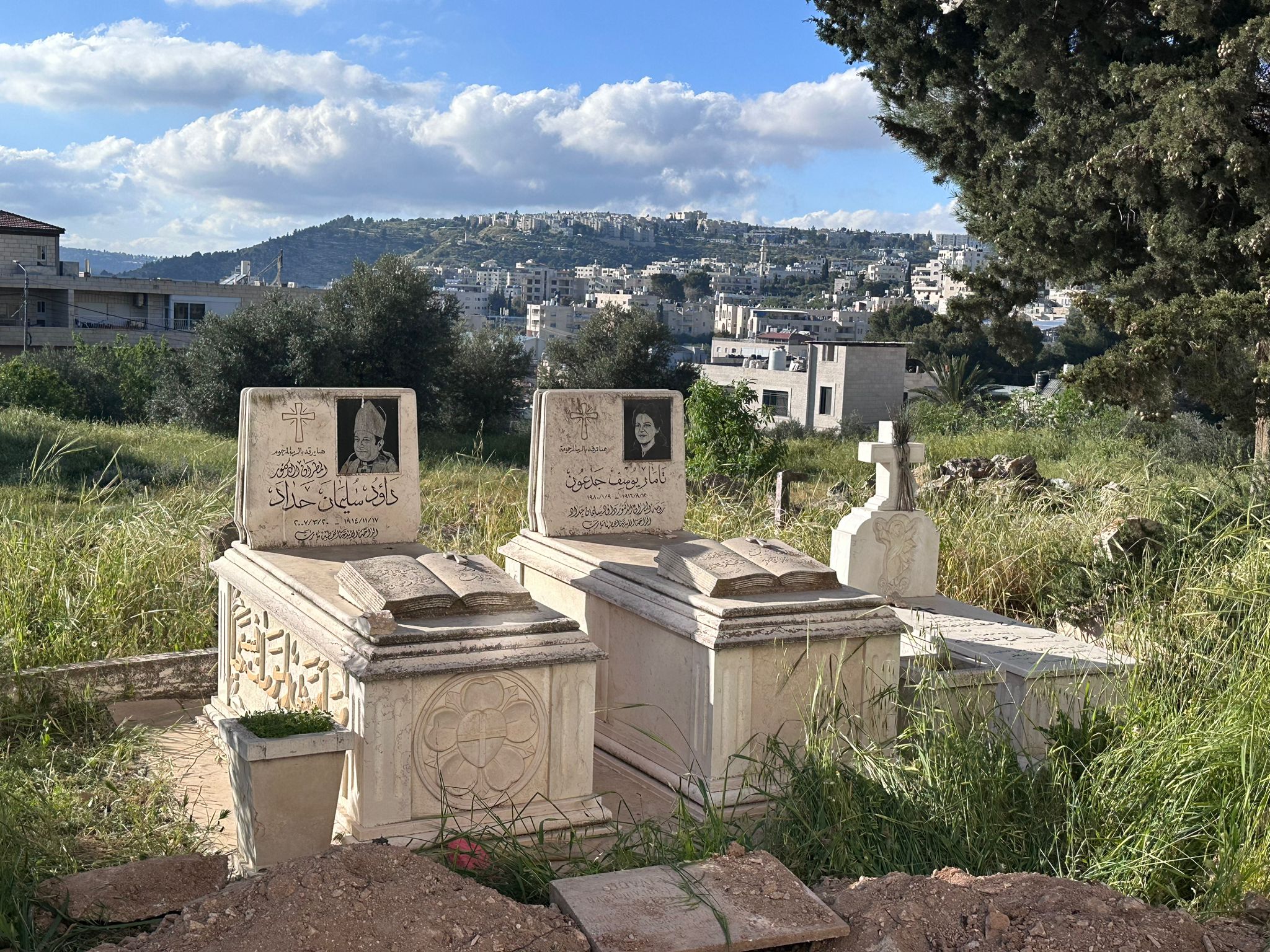
Photos: Matthias Wolf
