is a literary arts publication and cultural institution that curates content and programs on the greater Middle East and our communities in diaspora. The Markaz signifies “the center” in Arabic, as well as Persian, Turkish, Hebrew and Urdu.
Coming soon, TMR’s special issue on Berlin, from guest editor Viola Shafik. Essays, fiction, interviews, art, film and music
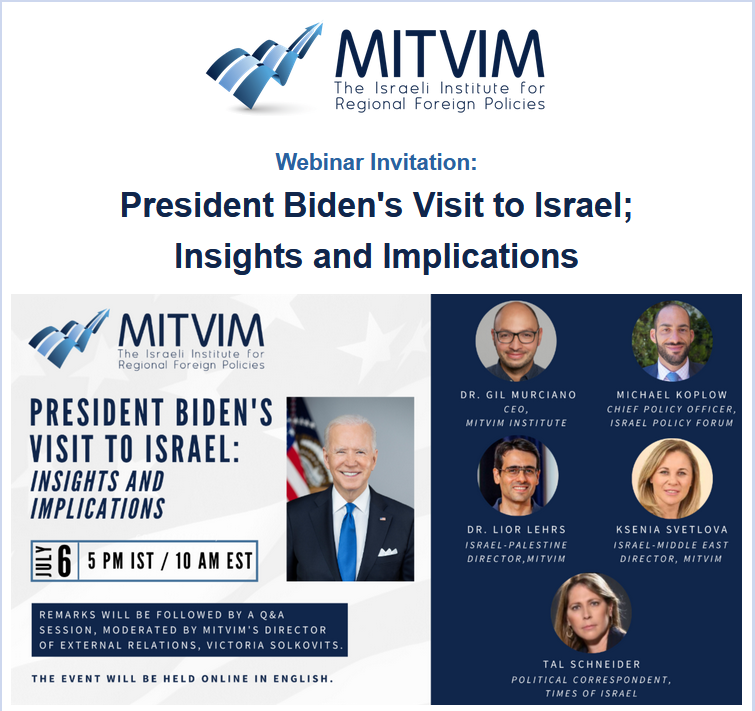
President Biden’s Visit to Israel – Insights and Implications
Wednesday, July 6, 2022 from 17:00-18:30 Jerusalem For any questions, please email vsolkovits@mitvim.org.il Please register below and the Zoom link will be sent to you prior to the event: To register for the Zoom, please click here
Umstrittener Literat und gefeierter Volksheld: Der palästinensische Schriftsteller Ghassan Kanafani Ein Radio-Feature im Deutschlandfunk Kultur von Anne Françoise Weber
Er gilt als einer der bedeutendsten arabischen Schriftsteller – und wurde am 8. Juli vor 50 Jahren wegen seiner politischen Aktivitäten ermordet.
Seine Novellen bewegen bis heute eine große Leserschaft, seine Äußerungen als Sprecher der linksextremistischen PFLP, der Volksfront zur Befreiung Palästinas, gingen um die Welt. Ghassan Kanafani gilt als einer der wichtigsten arabischen Schriftsteller – und zugleich verkörperte er das, was er den palästinensischen Befreiungskampf nannte. Vor 50 Jahren, am 8. Juli 1972, wurde er durch eine Autobombe in Beirut ermordet. In einer seiner berühmtesten Kurzgeschichten, „Rückkehr nach Haifa“ beschreibt Kanafani, wie palästinensische Flüchtlinge ihr früheres Haus in der israelischen Küstenstadt aufsuchen. Sie treffen dort auf polnische Einwanderer, die nicht nur das Haus übernommen, sondern auch den bei der Flucht zurückgelassenen Sohn adoptiert haben. Auch israelische Theater haben das Stück inszeniert. Doch ein Denkmal in Kanafanis Geburtsstadt Akko wurde schnell wieder abgebaut – Kritiker sehen in ihm einen Terroristen.
Paul Salem – President, Middle East Institute David Schenker – Taube Senior Fellow – Director, Program on Arab Politics, WI for Near East Policy Mona Yacoubian – Senior Advisor, U.S. Institute of Peace Ambassador Hesham Youssef, moderator – Senior Fellow, U.S. Institute of Peace
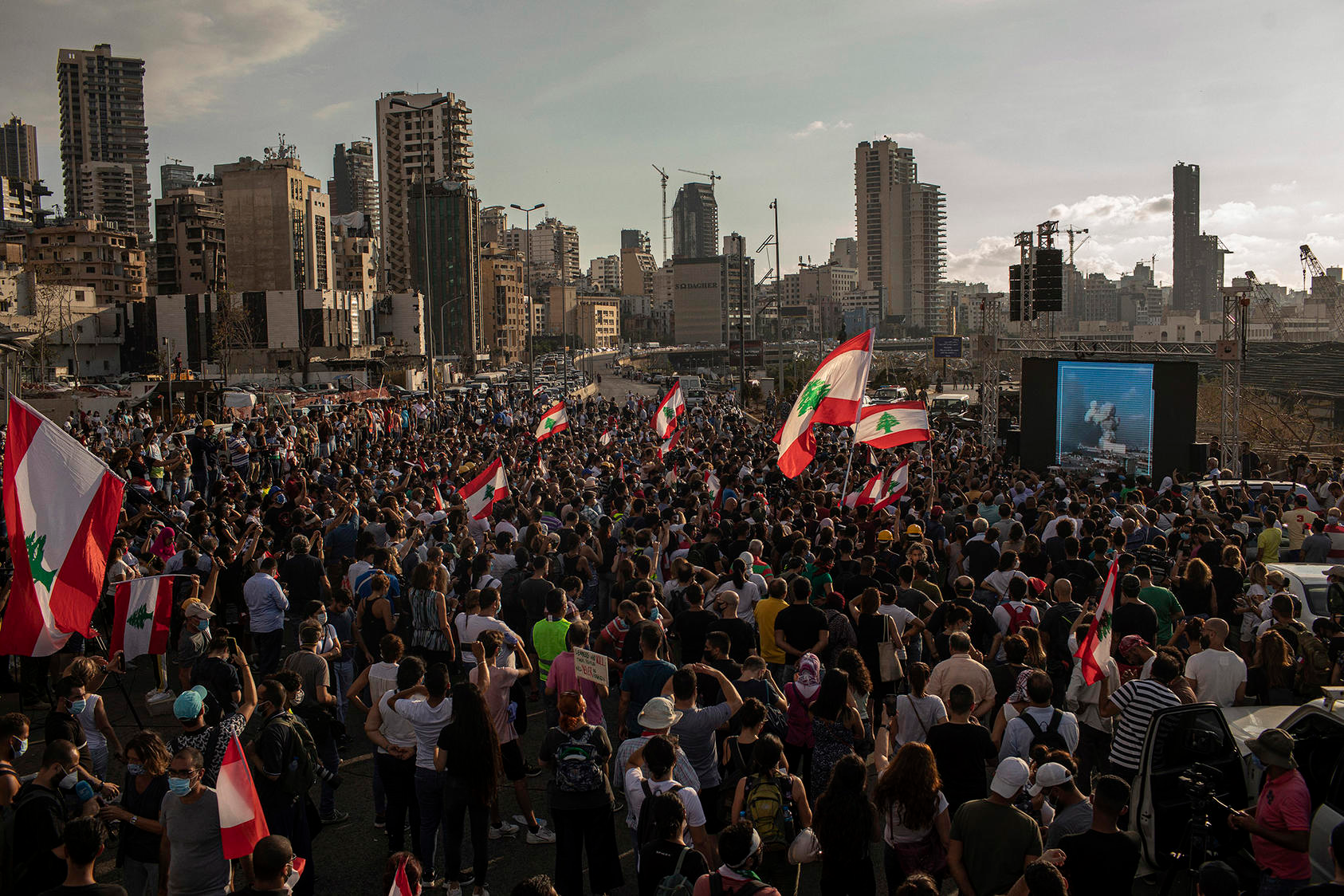
As Lebanon contends with cascading humanitarian, economic and political crises, the May 2022 parliamentary elections offered a glimmer of hope with the success of an unprecedented number of reform-minded candidates. Yet, the country is still grappling with the consequences of an imperfect peace that began with the 1989 Ta’if Accord, which ended a 15-year civil war. This flawed peace continues to resonate both internally and throughout the region.
An diesem Sonntag fiinden in dem Land, das einmal die Schweiz des Nahen Ostens genannt wurde, Parlamentswahlen statt. Dieser Urnengang trifft das Land am Abgrund, ökonomisch wie politisch.
Hier ein kleiner Überblick über Berichte aus Anlaß der Wahlen, die dem Land etwas internationale Aufmerksamkeit gebracht haben.
Viele Dinge sind im Umbruch in den internationalen Beziehungen, von den Abraham-Accords zum Überfall auf die Ukraine. Auch das Gefüge des Nahen Osten bleibt davon nicht unberührt.
Im Libanon, der an der Grenze zum Kollaps steht und dessen Zukunft mehr als unsicher ist, tagte jetzt eine bemerkenswerte Konferenz. Ein Libanon der Neutralität? Mit Auwirkungen auf die Hisbollah und auf die Beziehungen zu Israel? Und ziehen dabei die Palästinenser:innen wieder / noch weiter den Kürzeren?
Hier ein Beitrag vom Blog des Times of Israel(Can Lebanon be neutral on the Arab-Israeli conflict?) von David Daoud (Director of Lebanon, Israel, and Syria research at United Against Nuclear Iran (UANI) and a nonresident fellow at the Atlantic Council) und
hier ein Bericht im Wall Street Journal(There’s Hope for a More Peaceful Lebanon) von Tony Nissi (President of the International Committee of the United Nations Resolutions for Lebanon).
EIn Zugriff auf unterschiedliche Nachrichten, visuell zugeordnet auf einer Landkarte!
Aus der Selbstdarstellung der Verantwortlichen:
„Live Universal Awareness Map (“Liveuamap”) is a leading independent global news and information site dedicated to factual reporting of a variety of important topics including conflicts, human rights issues, protests, terrorism, weapons deployment, health matters, natural disasters, and weather related stories, among others, from a vast array of sources. We are passionate about what we do and are energized by the positive impact we bring, as demonstrated by the loyalty and recommendations of our growing viewers across the globe.“.
Vortrag von Florian Zemmin (Freie Universität Berlin)
Many Arab sociologists have been criticising the rather weak establishment of sociology in their countries. This concerns structural issues, especially political constraints for research and the underfunding of universities, but also theoretical issues, not least the Eurocentric formation and workings of sociology. Both structural and theoretical issues are especially pronounced when it comes to sociology of religion: to position religion as an object of sociological study faces political constraints and societal scepticism, also due to its representing a secular, supposedly particularly European perspective on religion. That being said, sociological approaches to religion in Arabic do have a longer history and feature more widely than is often assumed. This talk will provide glimpses into the history and presence of these approaches and their characteristics, addressing both structural and theoretical questions. One larger set of current debates that this talk will speak to are attempts at “decolonizing sociology” or establishing a “post-colonial sociology”. Such attempts often remain on a theoretical level and, ironically, hardly consider research in languages other than English. In turn, this talk engages sociologies of religion in Arabic also in order to arrive at more nuanced answers to the question of which aspects of sociology are more widely shared and which are specific to certain societies and academic contexts.
Ruslan Suleymanov, bis vor kurzem noch leitender Nahost-Korrespondent der Nachrichtenagentur TASS in Kairo, bevor er aus Protest über die russische Politik zurücktrat, hat auf dem Online-Portal ipg-journal der Friedrich Ebert-Stiftung (FES) die Reaktionen in der arabischen Welt zusammengefaßt.
„Die arabische Welt begegnet dem Ukraine-Krieg zurückhaltend. Während man am Golf von neuen Energiepartnerschaften profitiert, droht andernorts Hunger.“