Alice Shalvi (1926-2023)

Die in Deutschland (Essen) als Alice Hildegard Margulies geborene Israel-Preisträgerin, Frauenrechtlerin und Aktivistin starb am 2. Oktober in (West-)Jerusalem.
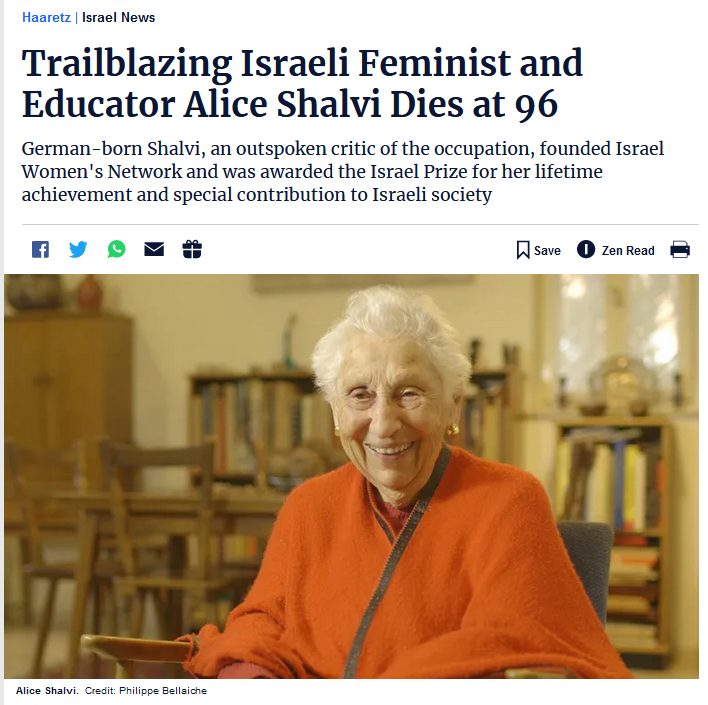
Aus dem Nachruf in Ha’aretz:

„Born and raised in an Orthodox family, Shalvi had a complicated relationship with Judaism. She belonged to a Conservative congregation and observed Shabbat and kashrut, but never hid the fact that she found the traditional Jewish prayers hard to digest. “The whole concept of God as male, it’s difficult for me,” she said in the 2018 interview. “There are certain things I keep on doing because that’s what we did at home and that’s what distinguishes me as a Jew – my folklore, if you like – but as far as my conception of God is concerned, it’s changed very radically.
During the last decades, Shalvi was an outspoken critic of the occupation of Palestinian territories. Her leftist views were also the reason she was forced out of her job as the principal of the Pelech School. „The worst thing that has happened is that we’ve become an occupying country,” she said. “I think that power corrupts and that to have power over another people and denying freedom that you enjoy yourself to others is sinful. What we have is a very ugly occupation.”
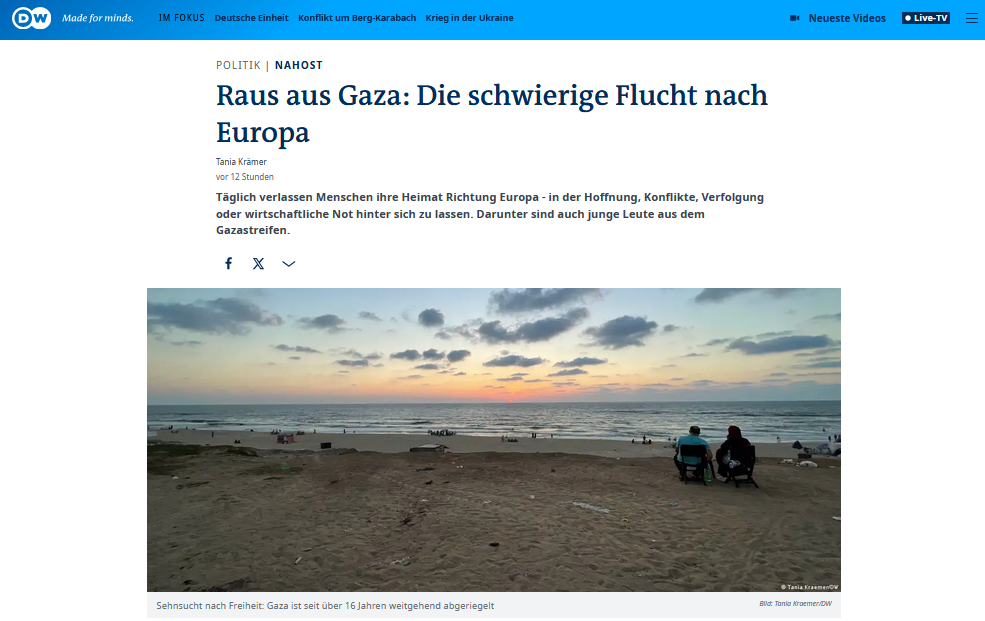
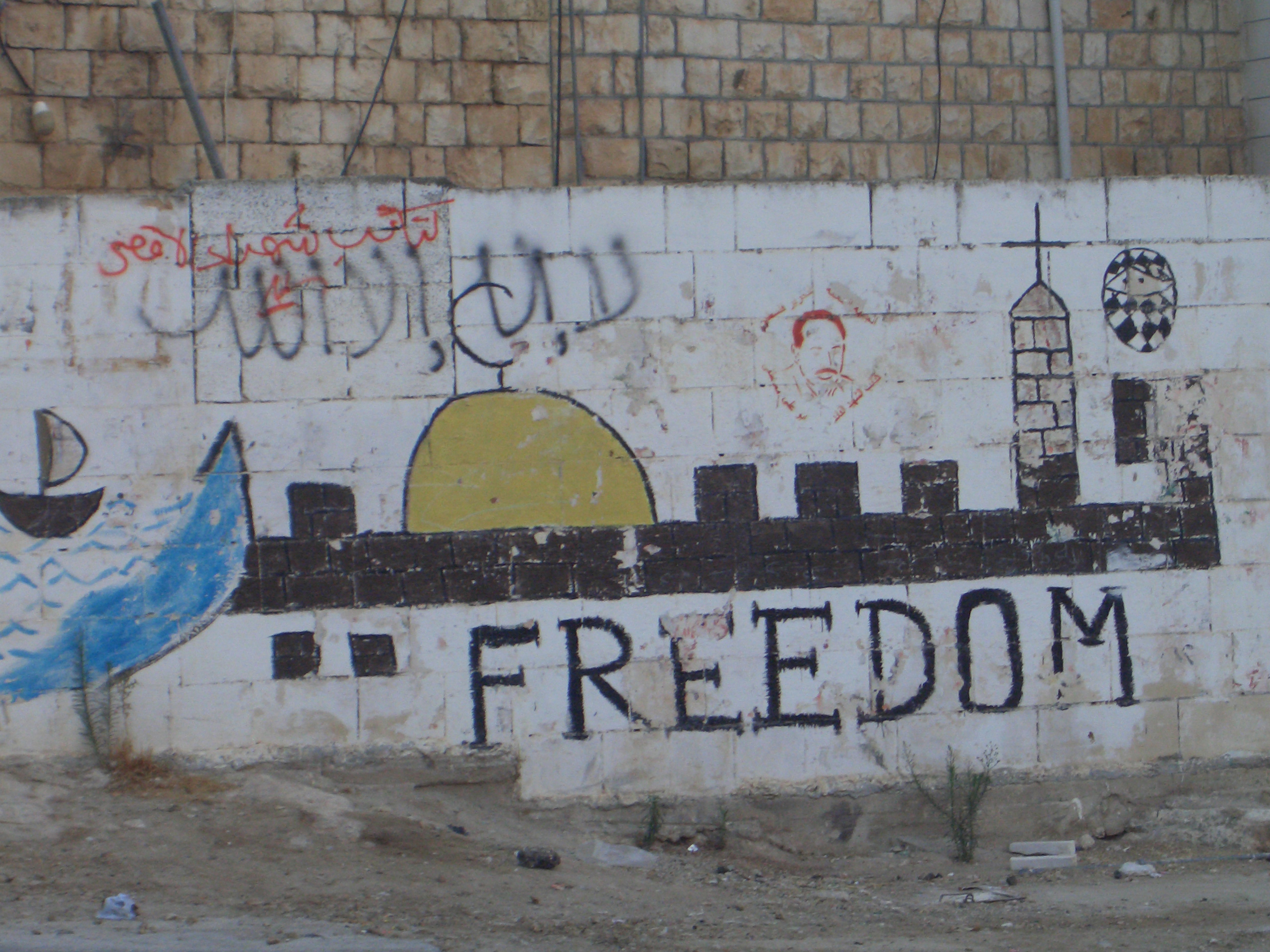
Raus aus Gaza

Eine Reportage von Tania Krämer auf der Seite des Deutschen Welle (dw) über „die schwieirige Flucht nach Europa…

Täglich verlassen Menschen ihre Heimat Richtung Europa – in der Hoffnung, Konflikte, Verfolgung oder wirtschaftliche Not hinter sich zu lassen. Darunter sind auch junge Leute aus dem Gazastreifen.

***

Verhältnis zu Israel und BDS: Kunstfreiheit in Gefahr

Kritische Töne zum deutsch-israelischen Verhältnis werden zunehmend vielstimmiger, ganz aktuell Hans Eichel, ehemals Ministerpräsident in Hessen und Bundesminister der Finanzen. Im Feuilleton der Frankfurter Rundschau einige grundlegende Reflektionen.

The 2023 Israeli Foreign Policy Index

Mitvim invites members of the diplomatic community, foreign press, and international experts and partners to a virtual briefing to learn about the position of the Israeli public on major foreign policy issues. Conducted by the Rafi Smith Institute in collaboration with the Friedrich Ebert Stiftung, Mitvim’s Israeli Foreign Policy Index (FPI) provides an overview of the key findings from our 11th annual public opinion poll.

This year, the FPI analyzed public perceptions on the drastic changes in Israel’s foreign affairs since the formation of Netanyahu’s far-right government. The index is divided into five areas: Israel’s foreign affairs apparatus, Israel’s foreign relations, the Judicial „Reform’s“ implications for Israel’s foreign relations, Israel and the region, and Israel and the Palestinians. 

The briefing will delve into significant insights from the FPI through an analysis of the critical gap between the public’s views and the fundamental foreign policy goals and mindset of the current government.

WHEN: Wednesday, September 27, 2023 from 7-8:30 PM IST / 12:00-1:30 PM EST

This event will be held over Zoom, and will include an interactive Q&A session.

For any questions / registration please reach out to Mitvim Director of External and Government Relations, Reef Itzhaki, at ritzhaki@mitvim.org.il

Vor Ort die Dinge besser verstehen

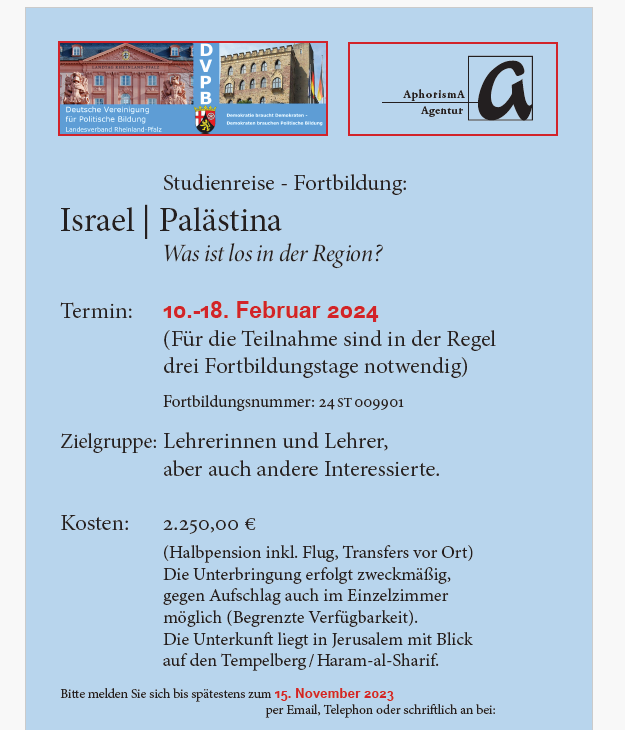
Die DVPB Rheinland-Pfalz bietet eine Studienreise / Fortbildung nach Israel-Palästina an. Die Reise richtet sich an Lehrkräfte, aber auch an alle anderen politisch Interessierten.

Thematisch geht es darum, einen differenzierten Einblick in beide am Nahost-Konflikt beteiligten Gesellschaften zu ermöglichen und die Gegebenheiten, Emotionen, Narrative sowie Friedensmöglichkeiten sowie -hemmnisse kennen zu lernen um den Konflikt insgesamt besser zu verstehen. 

Für Anmeldungen und Rückfragen: michael.sauer@dvpb-rlp.de.

Durchführung der Reise und Begleitung vor Ort: Rainer Zimmer-Winkel, AphorismA Agentur

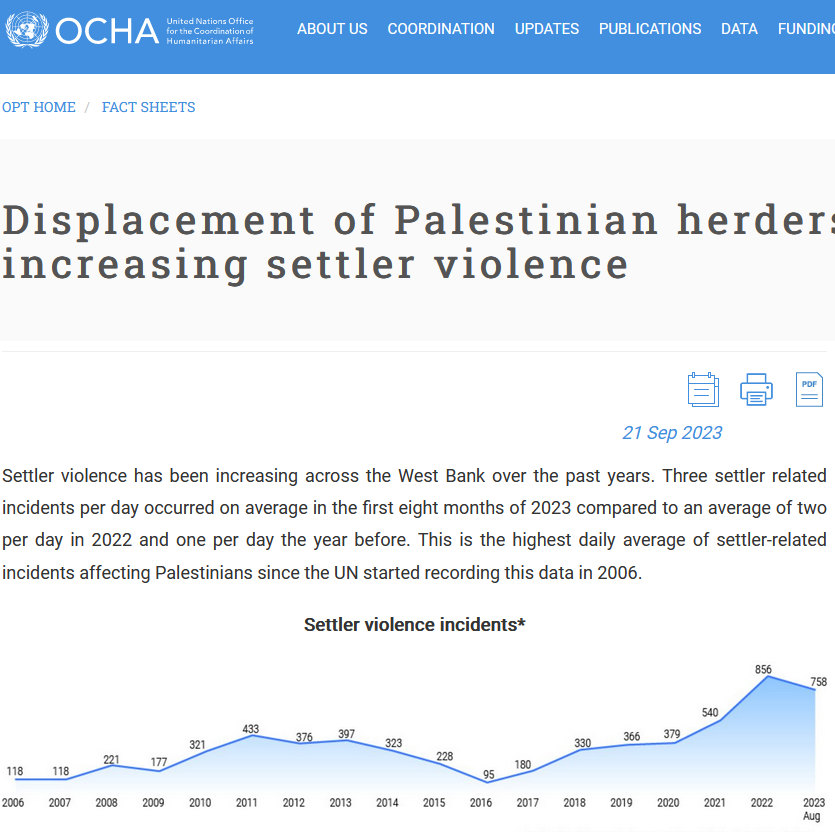
Zur Situation palästinenscher Hirten/Beduinen

Orthodox und gegen Bibi

Zu den vielen Facetten der innenpolitischen Entwicklungen in Israel, die das Land gerade verändern, gehört auch diese: Ulrich Gutmaier schreibt in der taz über einen anderen Widerstand von Rechts.

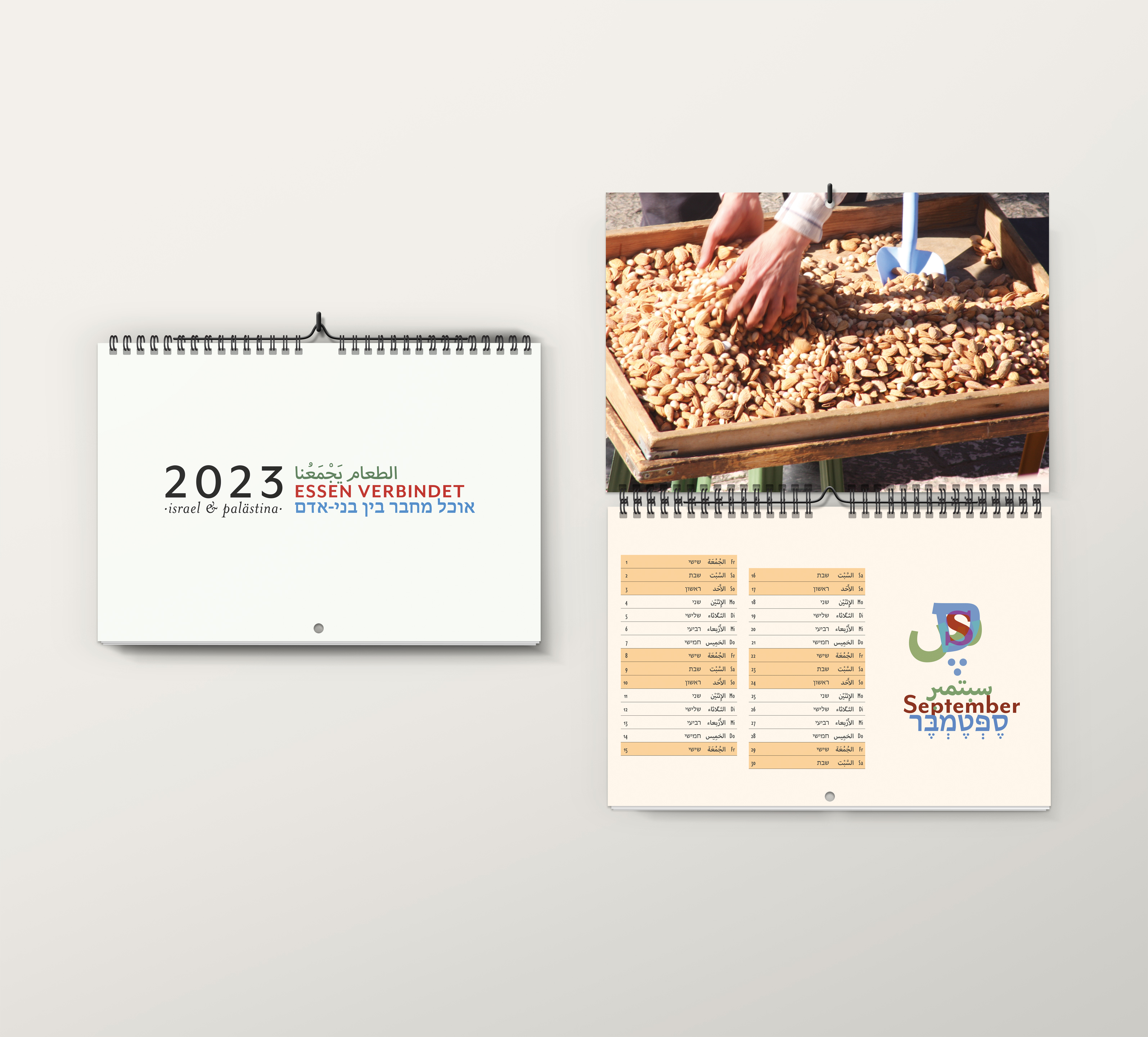
Kalender 2023 – September

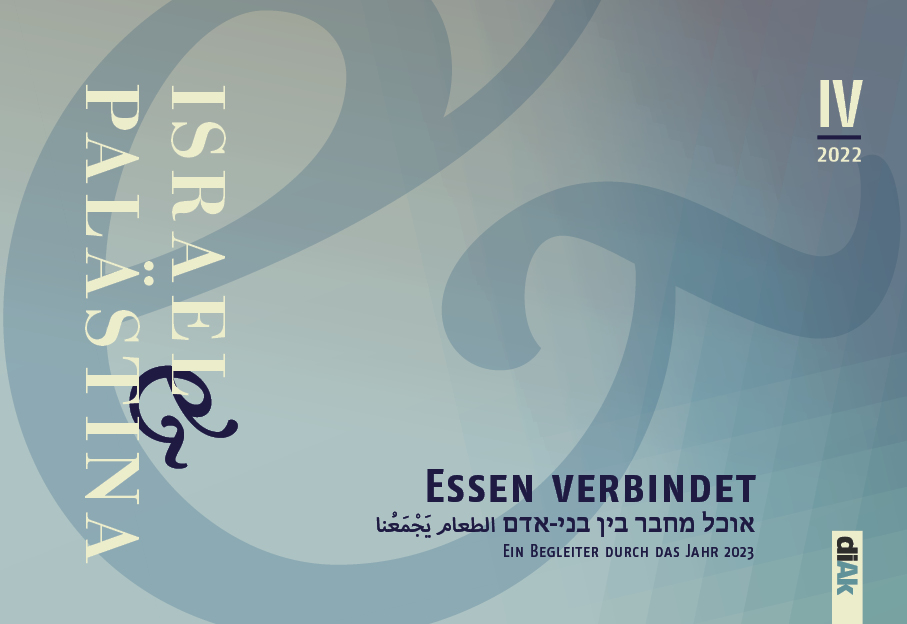
Essen verbindet Genug Nüsse zu knacken gibt es ja …

Ein Begleiter durch das Jahr 2023 – Mit Photos von Bärbel Doering und aus dem AphorismA Verlagsarchiv

Photo: Doering

israel & palästina – Zeitschrift für Dialog | Ausgabe 4-2022


Graben nach der Nakba

Wer erinnert was und wann?
Und wer erinnert gegen etwas oder jemanden, so das geht?

Erinnerungspolitik scheint immer öfter ein Kampffeld, es könnte auch zu einem Raum der Begegnung werden, im Respekt vor der Geschichte und dem Leiden anderer, welches das eigene Leiden nicht aufhebt, noch leugnet, noch verharmlost …

Combatants for Peace zum Neuen Jahr

„They [these demonstrators that oppose this government] need to recognise the inherent link between what is happening now, and the occupation. The militirisation within society, the apartness of Israelis and Palestinians for decades, and the military oppression of millions of people is what has led us here, this isn’t a sudden crisis that we couldn’t have foreseen“

Auszug aus dem Mailing zum Neuen Jahr von Rana Salman, Palestinian Director und Yonatan Gher, Israeli Director

„Our work in Israel has a clear focus. The weekly demonstrations are attracting hundreds of thousands of people, all proudly declaring their right to a free and democratic state. It’s hard for us to accept. We and others have been warning of a declining trend for decades, as illegal settlements were shrugged off as a problem for later, and international law is arrogantly ignored. There are consequences of our inaction and failure to respond – and they are obvious to all now, which is why we stand up on ladders and loudly declare that there is no democracy with occupation! We repeat ourselves over and over to crowds of people, some that raise an eyebrow and move on, and some that stop to talk.“