NEW EPISODE Hold the Fire FROM THE INTERNATIONAL CRISIS GROUP
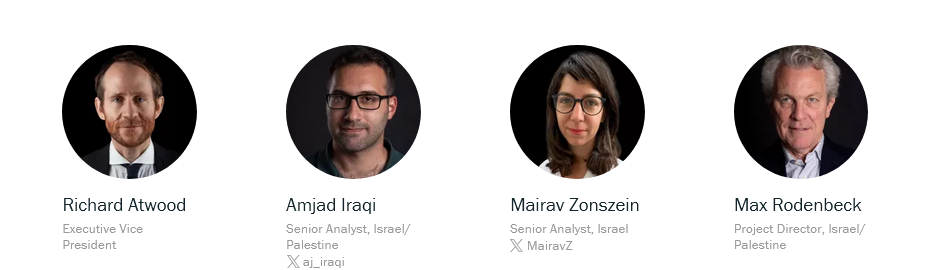
In this episode of Hold Your Fire!, Richard Atwood speaks with Crisis Group experts Amjad Iraqi, Mairav Zonszein and Max Rodenbeck about President Donald Trump’s Board of Peace and its implications for Gaza. They unpack the structure of the board’s different layers, how Palestinians are reacting to the new Palestinian technocratic Gaza committee and what that committee will do. They look at conditions on the ground in Gaza amid frequent ceasefire violations and Hamas’s continued hold of parts of the strip. They also assess the obstacles to moving the peace plan forward, including working out agreement on the sequencing of Hamas decommissioning weapons, on one hand, and Israeli withdrawing troops and letting in reconstruction aid on the other, as well as the still-uncertain prospects for an international stabilisation force in the strip.
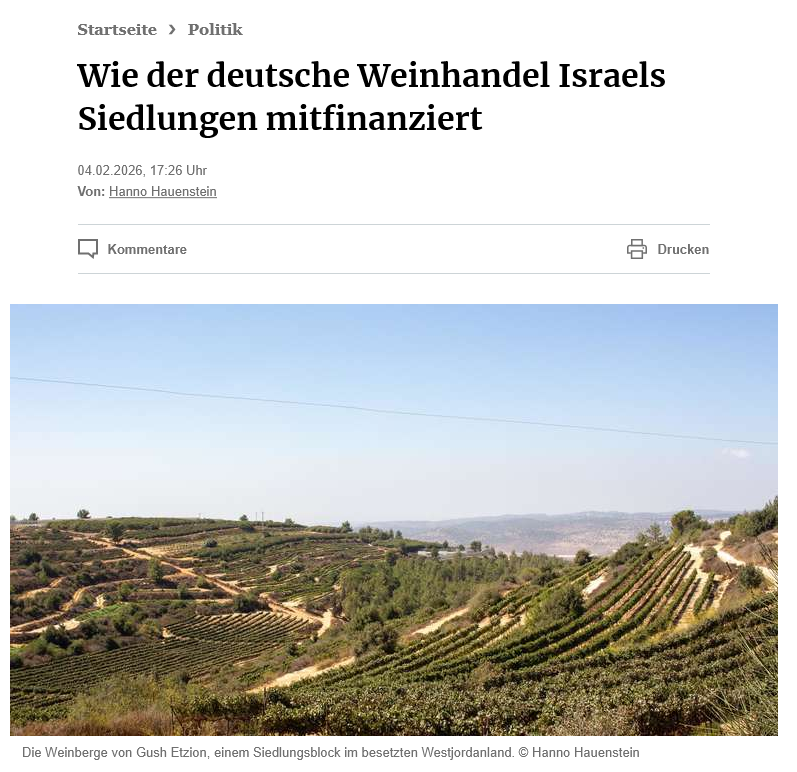
Weine aus israelischen Siedlungen werden in deutschen Supermärkten, Online-Shops und auf Fachmessen als ‚israelisch‘ vermarktet – und normalisieren so die illegale Besatzung der palästinensischen Gebiete
As the new year approaches, the people of Gaza continue to face the harsh reality of displacement. Here’s how we served last month to mitigate the pain of displacement:
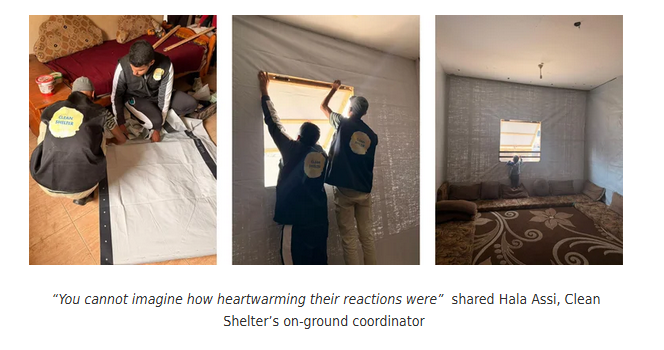
Housewarming of 61 homes in total at a cost of 160,000 Euros, using locally available materials such as wood and tarps to replace concrete, which remains restricted. We also repaired plumbing and sanitation systems to make homes warmer, safer, and more private for returning families. So far, we have helped 61 women-led households get back home, and we aim to support 70 more in the next couple of months.
Innovation in Sanitation: In Mariam Camp, Clean Shelter piloted an innovative sewage management system using locally manufactured galvanized steel underground seepage units. These now serve three toilet and shower blocks (12 units total), benefiting about 300 displaced people and preventing sewage overflow during the winter rains. Based on postive feedback we are expanding to more camps atiming to serve 3,200 Individuals across 4-6 displacement camps
In Mesk and Layan Camp, our team also repaired four toilets, restoring critical hygiene facilities and improving daily life for dozens of families.
Following recent strong winds and heavy rains, we replaced over 90 destroyed tents in the Zomi and Mariam Protection Camps, ensuring families once again have safe and dry spaces to live in.
As part of the Christmas/Winter Campaign, we distributed warm clothing and essentials across Mariam, Zomi, and Mesk & Layan Camps, reaching over 4,290 people at a total cost of $79,000 USD.Due to the dire needs on the ground and your generous response, we decided to extend the campaign to provide warmth to even more children
In parallel, we continue monitoring and maintaining the two desalination units installed last year, which currently deliver clean water to around 60,000 displaced people in the El-Mawasi area. These systems remain a lifeline for thousands of families during ongoing water shortages.
Looking Ahead As we move forward, Clean Shelter is surveying displaced families to evaluate how effectively our projects are meeting community needs. The findings will guide improvements across all our programs.
In the coming months, we will expand sewage systems, repair and warm more homes, provide clean drinking water, and continue responding to urgent shelter and sanitation needs across Gaza.
Many thanks for supporting us to do all we can to alleviate the hardship Donate Today to Help us continue supporting displaced families in Gaza. Every contribution makes a real difference.
Postsowjetische Identität in Deutschland und der Genozid in Gaza
Neunzig Prozent der deutschen Jüdinnen und Juden sind postsowjetischer Herkunft. Trotzdem werden sie selten mitgedacht und kommen im medialen Diskurs kaum vor, wenn es um deutsch-jüdische Erinnerungskultur geht. Die Journalistin Marina Klimchuk wanderte als Kind aus der Ukraine nach Deutschland ein, studierte hier und wurde Journalistin, lebte dann mehrere Jahre in Israel und den USA. Sie argumentiert, dass es ein Bewusstsein für diese postsowjetische Erfahrung brauche, um zu verstehen, weshalb sich jüdische Organisationen in Deutschland bis heute so israelsolidarisch verhalten. Bei unserem nächsten Vortrags- und Diskussionsabend wollen wir deshalb ausführlich mit Marina über die Rolle postsowjetischer Identität in der deutsch-jüdischen Haltung zu Israel/Palästina sprechen.
Das Gespräch findet am Dienstag, dem 3. Februar 2026, von 19 bis 20 Uhr auf Zoom statt. Eine Anmeldung ist nicht erforderlich. Der Link für den Zoom-Room ist:
7. Oktober 2025 – Sally Azar (Jerusalem), Evangelisch-Lutherische Kirche in Jordanien und im Heiligen Land: Die Situation palästinensischer Christ*innen nach dem 7. Oktober 2023
4. November 2025 – Prof. Dr. Markus Dreßler (Leipzig), Religionswissenschaftler und Türkeiexperte: Türkische Perspektiven auf den Nahostkonflikt und die Antisemitismusdebatte
2. Dezember 2025 – Dr. Maya Rosenfeld (Jerusalem), Soziologin an der Hebräischen Universität in Jerusalem: The Anthropology of Occupation – The Case of Dheheishe Refugee Camp
6. Januar 2026 – Dr. Dr. Peter Ullrich (Berlin), Soziologe und Kulturwissenschaftler, Zentrum für Antisemitismusforschung: Autoritärer Anti-Antisemitismus
Der 11. Kalender im Rahmen von israel & palästina | Zeitschrift für Dialog!
Dieser Kalender ging in den Druck zu einem Zeitpunkt, an dem es einen fragilen Waffenstillstand im Gazastreifen gab, von dem auch heute niemand weiß, ob er auch 2026 halten wird.
In der Westbank verschärft sich die Lage zugleich weiter und in Israel finden wir eine tiefgespaltene Gesellschaft vor, bei der noch nicht klar ist, ob sich die Kräfte der Dominanz oder der Kooperation durchsetzen werden.
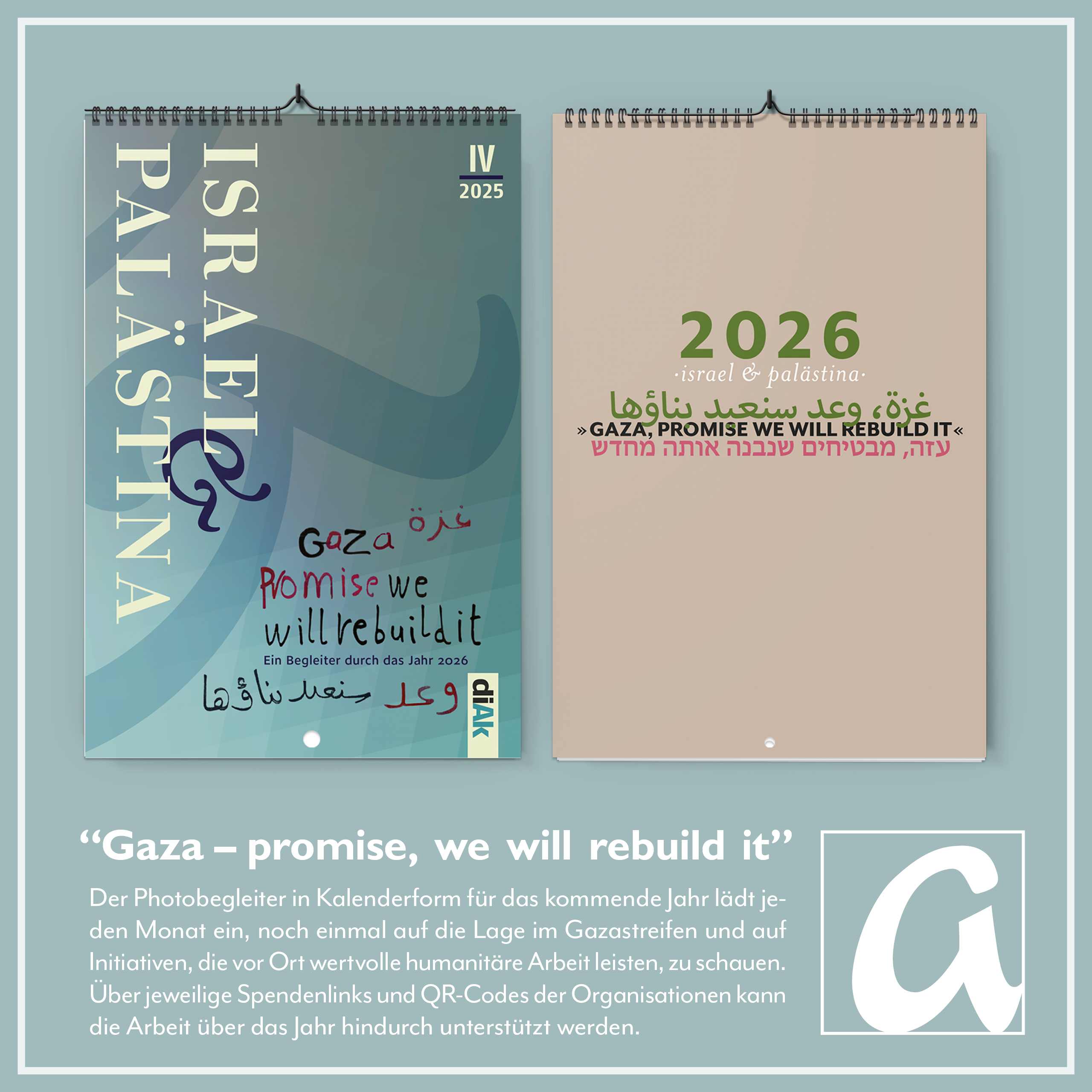
Der Photobegleiter in Kalenderform für das Jahr lädt jeden Monat ein, noch einmal auf die Lage im Gazastreifen zu schauen. Die wenigen Quadratkilometer sind versehrt und zerstört, wie es kaum denkbar schien. Aber es sind nicht nur die zerbombten Häuser, auch die Menschen haben Schaden genommen und der Weg der Heilung wird lang.
Die Wunden sind auf beiden Seiten tief und es gilt, sie nicht gegeneinander aufzurechnen, sondern mit Empathie und Zuwendung nach Möglichkeiten zu suchen, wie eine andere Zukunft aussehen kann und was (man:frau:wir) dafür tun können. Eine Möglichkeit gibt es über die jeweiligen Spendenlinks und QR-Codes der Organisationen.
israel & palästina – Zeitschrift für Dialog | Ausgabe 4-2025
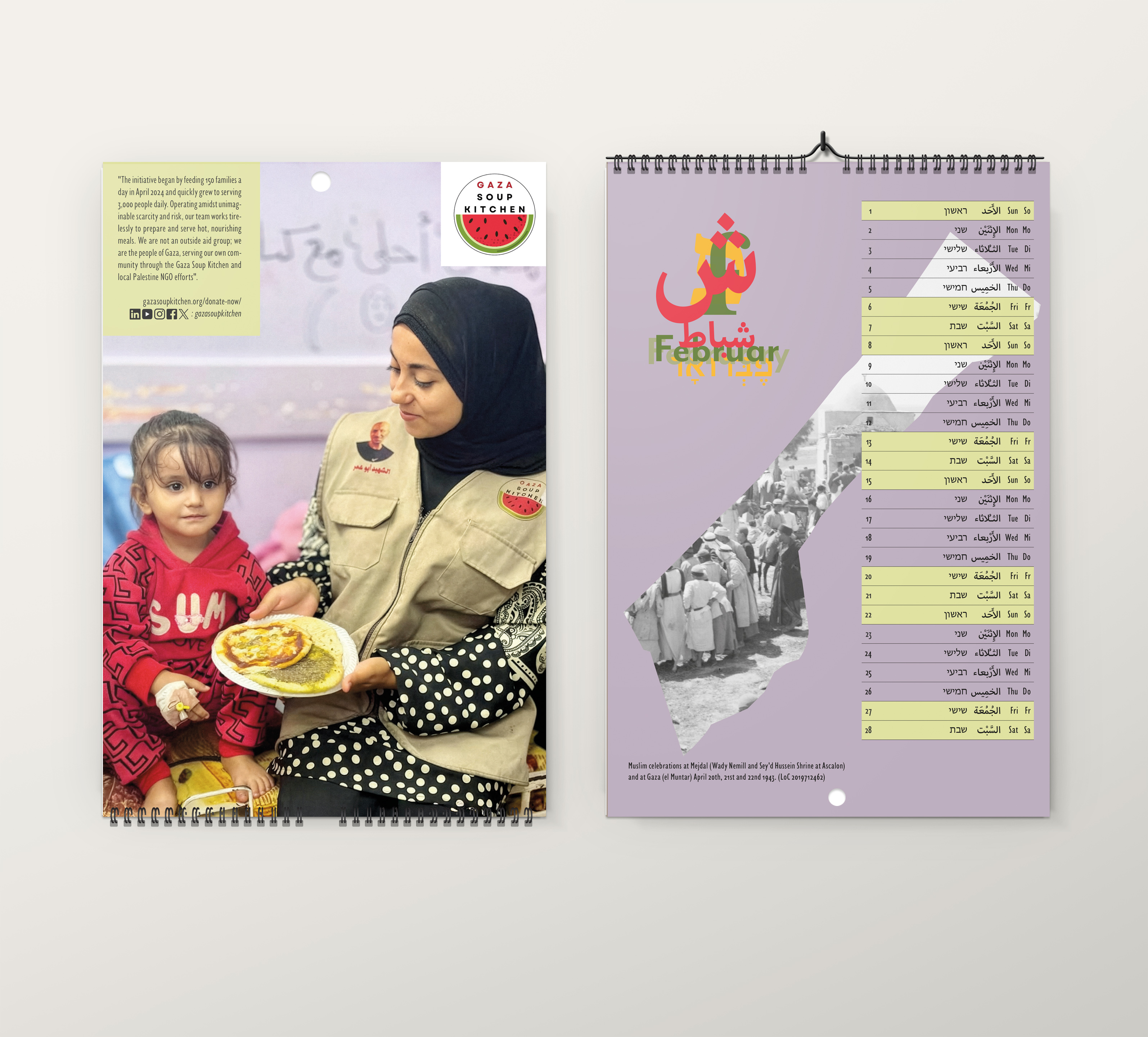
„The initiative began by feeding 150 families a day in April 2024 and quickly grew to serving 3,000 people daily. Operating amidst unimaginable scarcity and risk, our team works tirelessly to prepare and serve hot, nourishing meals. We are not an outside aid group; we are the people of Gaza, serving our own community through the Gaza Soup Kitchen and local Palestine NGO efforts“. gazasoupkitchen.org/donate-now/
Es war das elfte Mal, daß im Rahmen von israel & palästina | Zeitschrift für Dialog ein Photobegleiter in Kalenderform für das kommende Jahr erschienen ist:
Gaza – promise, we will rebuild it – Ein Begleiter durch das Jahr 2026
Postsowjetische Identität in Deutschland und der Genozid in Gaza
Neunzig Prozent der deutschen Jüdinnen und Juden sind postsowjetischer Herkunft. Trotzdem werden sie selten mitgedacht und kommen im medialen Diskurs kaum vor, wenn es um deutsch-jüdische Erinnerungskultur geht. Die Journalistin Marina Klimchuk wanderte als Kind aus der Ukraine nach Deutschland ein, studierte hier und wurde Journalistin, lebte dann mehrere Jahre in Israel und den USA. Sie argumentiert, dass es ein Bewusstsein für diese postsowjetische Erfahrung brauche, um zu verstehen, weshalb sich jüdische Organisationen in Deutschland bis heute so israelsolidarisch verhalten. Bei unserem nächsten Vortrags- und Diskussionsabend wollen wir deshalb ausführlich mit Marina über die Rolle postsowjetischer Identität in der deutsch-jüdischen Haltung zu Israel/Palästina sprechen.
Das Gespräch findet am Dienstag, dem 3. Februar 2026, von 19 bis 20 Uhr auf Zoom statt. Eine Anmeldung ist nicht erforderlich. Der Link für den Zoom-Room ist:
7. Oktober 2025 – Sally Azar (Jerusalem), Evangelisch-Lutherische Kirche in Jordanien und im Heiligen Land: Die Situation palästinensischer Christ*innen nach dem 7. Oktober 2023
4. November 2025 – Prof. Dr. Markus Dreßler (Leipzig), Religionswissenschaftler und Türkeiexperte: Türkische Perspektiven auf den Nahostkonflikt und die Antisemitismusdebatte
2. Dezember 2025 – Dr. Maya Rosenfeld (Jerusalem), Soziologin an der Hebräischen Universität in Jerusalem: The Anthropology of Occupation – The Case of Dheheishe Refugee Camp
6. Januar 2026 – Dr. Dr. Peter Ullrich (Berlin), Soziologe und Kulturwissenschaftler, Zentrum für Antisemitismusforschung: Autoritärer Anti-Antisemitismus
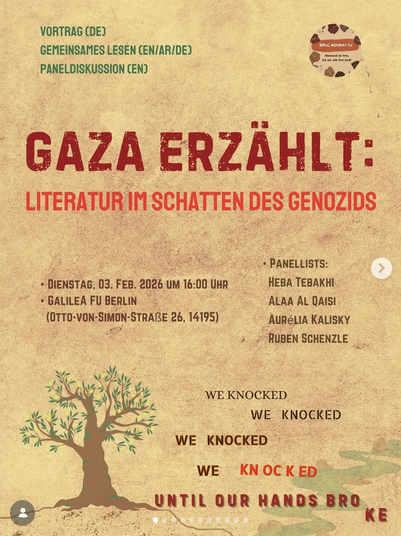
„Gaza erzählt: Literatur im Schatten des Genozids“.
BIPoC Referat des AStA FU lädt ein zu einer Literaturveranstaltung „Gaza erzählt: Literatur im Schatten des Genozids“. Gemeinsam mit Autor*innen und Literaturwissenschaftler*innen soll folgenden Fragen nachgegangen werden:
– Was schreiben die Autor*innen — oder können sie überhaupt schreiben —, während ihre Wohngegend, ihr Zuhause und ihre Familien bombardiert werden und Hunger bis hin zum Verhungern erleiden? – Warum schreiben Autro*innen inmitten des Elends? Um zu überleben? Um zu erinnern? Damit die Welt sie hört und auf ihr Leid aufmerksam wird? – Ist es sinnvoll, diese Texte als Literatur des Genozids zu bezeichnen und einzuordnen? – Wie beeinflußt die schnelle Übersetzung die Rezeption dieser Literatur? Verliert sie dadurch ihren Kontext — oder gewinnt sie notwendige Sichtbarkeit?
Dienstag, 03. Februar 2026, 16 Uhr 📍 GalileA @galileafuberlin (über Mensa 2 FU Berlin; Otto-von-Simson-Str. 26)
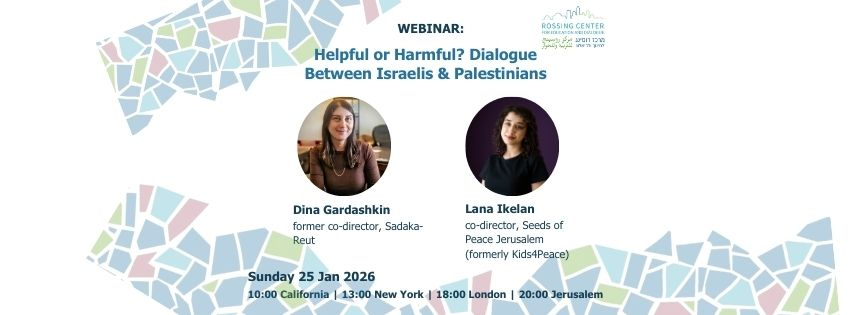
We’re starting from a shared premise: contact alone is not enough. If dialogue is meant to encourage participants to critically examine reality and imagine change, it must be intentionally designed and carefully facilitated. But that raises a central dilemma: Is dialogue most effective when it happens together or separately?
Both having begun their own journeys as participants in dialogue groups and working their way up to leadership positions, our speakers bring deep, lived experience from the field:
Lana Ikelan, Co-Director of Seeds of Peace Jerusalem (formerly Kids4Peace), engages young people across deep asymmetries of power and narrative. Dina Gardashkin, former Co-Director of Sadaka-Reut, confronts inequality, education, and political responsibility.
Together with Lana and Dina, questions such as will be explored: • How does the group setting impact the process participants undergo? • What kinds of transformation are possible only in mixed groups or only in separate groups? • What are the risks and limitations of each framework?
Sunday, January 25, 2026 | 8 pm Jerusalem time (19.00 Uhr MEZ)
This conversation is for educators, facilitators, activists, donors, and anyone grappling seriously with what dialogue can — and cannot — do in our current reality.




 Sunday, January 25, 2026 | 8 pm Jerusalem time (19.00 Uhr MEZ)