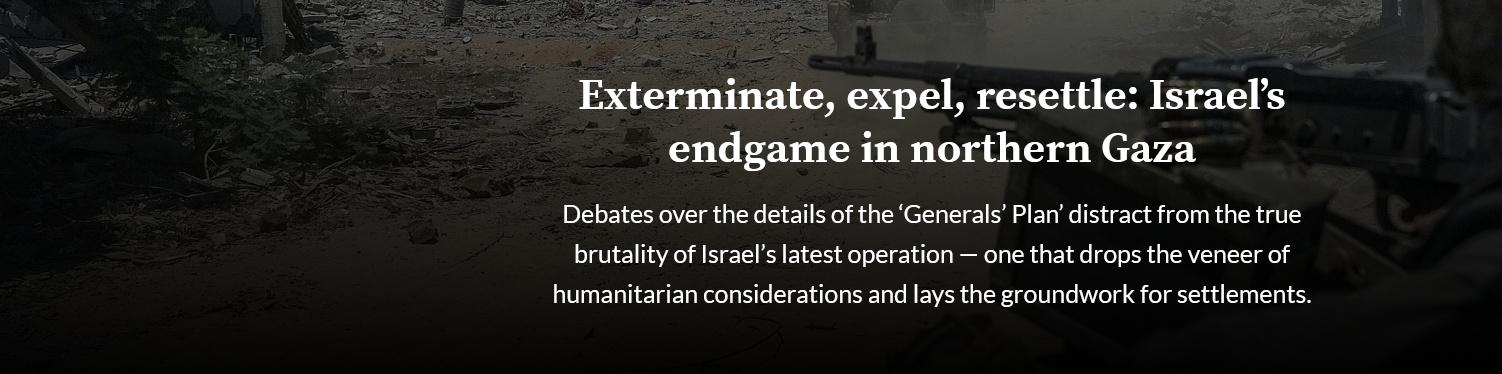
Neues Video der International Crisis Group zur steigenden Siedlergewalt

Neues Video der International Crisis Group zur steigenden Siedlergewalt
Der in Berlin lebende und aus Israel stammende Autor, Kurator und Aktivist, Mati Shemeolof schreibt in einem Beitrag für die Open-Source-Initiative der Berliner Zeitung, was der Krieg, die Kriege in Nahost mit ihm „hier“ machen …

„Passend“ zu den Nachrichten über eine anstehende mögliche Annektion des Besetzten Gebiete, kommt in die deutschen Kinos der auf der Berlinale 2024 prämierte Film No Other Land der Filmemacher Yuval Abraham und Basel Adra: Susanne Lenz schreibt zur Vorführung im Kino Babylon in der Berliner Zeitung:

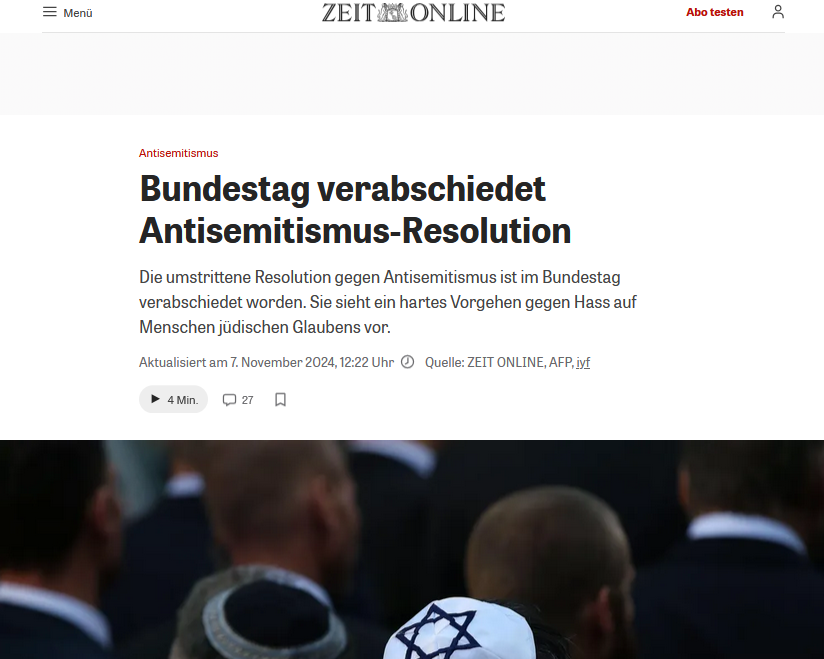
im Parlament: Bundestag verabschiedet Antisemitismus-Resolution
Trotz – oder wegen – der kontroversen Debatten hat der Bundestag – pünktlich für die deutsche Gedenkkultur – einen umstrittenen Beschluß gefaßt.
Zwei Stimmen unter vielen:

Keine Flucht vor den (heutigen) Realitäten, nur die Frage, was es denn für Zukünfte geben kann
Scenarios for Israel’s Future in 2048 – HYBRID EVENT
International Conference – Sunday, November 10 – Monday, November 11
As Israel approaches its 100th anniversary in 2048, CIS and the Kogod School of Business invite you to explore the future as modern futurists, utilizing contemporary foresight approaches. Please join us as we convene scholars, economists, politicians, and activists at the country’s most difficult hour, to explore potential future scenarios for the Jewish state.
Co-sponsored by the College of Arts and Sciences and School of International Service Department of Foreign Policy and Global Security.
Attend VIRTUALLY, please register here to receive ZOOM link for Conference:
https://tinyurl.com/AUisraelat100virtualrsvp

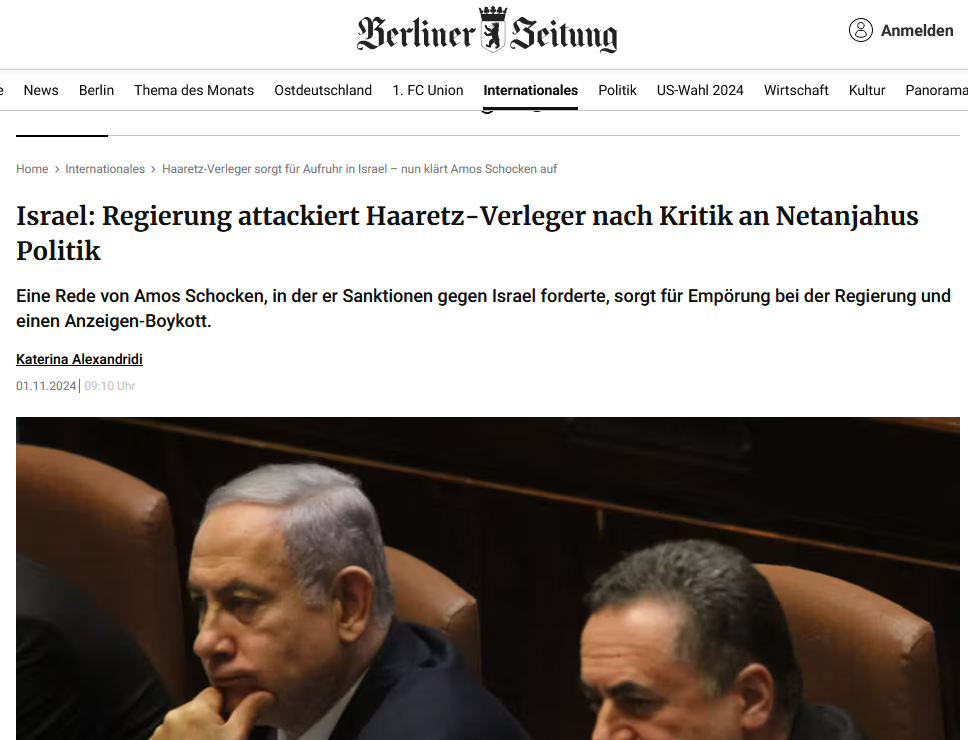
Ende Oktober der Bericht in der Berliner Zeitung von Katerina Alexandridi über den Vortrag von Amos Schocken in London:

Hier der Ausriß aus der Berliner Zeitung mit dem Artikel von Katerina Alexandridi über die darauf folgende Auseinandersetzung in Israel:
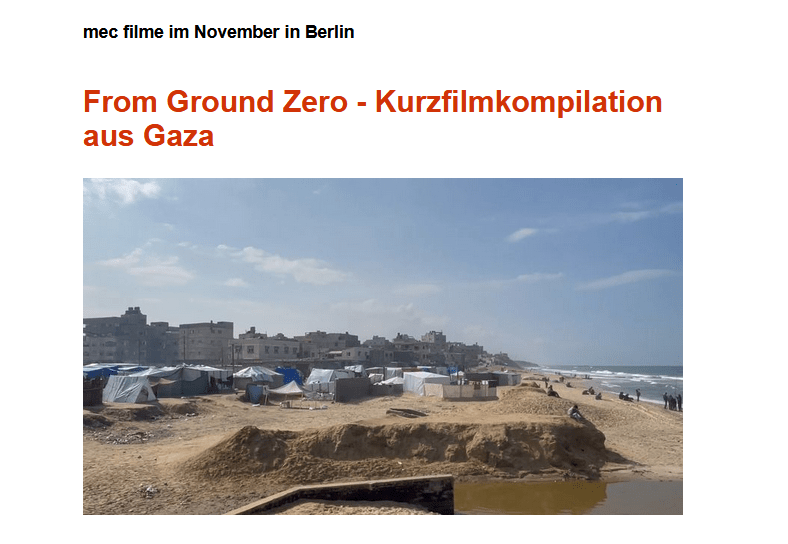
mec filme im November in Berlin
From Ground Zero – Kurzfilmkompilation aus Gaza
10. November 2024 at/um 18.30h im Künstlerhaus Bethanien (New Yorck), Mariannenplatz 2a – 10997 Berlin with /mit ENGLISH subtitles followed by a Q&A with Irit Neidhardt (distributor)
am 15. November 2024 at 18.30h (ENGLISH subtitles) und
am 17. November 2024 um 16.15h (Deutsche Untertitel) im/in
Sputnik Kino, Hasenheide 54/ 5.Etage, 10967 Berlin mit Gespräch / followed by Q&A
(for language please check/für die Sprachfassung siehe Sputnik Website)
FROM GROUND ZERO
From Ground Zero ist eine Kompilation mit 22 Kurzfilmen von Regisseurinnen aus Gaza. Gedreht zwischen Dezember 2023 und März 2024 fangen die zwischen drei und sechs Minuten kurzen Filme individuelle Perspektiven auf die aktuelle Kriegs-Realität in Gaza ein. Mit einem Genremix aus Spielfilm, Dokumentarfilm, Doku-Fiktion, Animation und experimentellem Kino präsentiert From Ground Zero eine Vielfalt an Geschichten, die die Trauer, den Überlebenswillen, die Freude und die Hoffnung widerspiegeln, die dem Leben in Gaza innewohnen. Das Projekt wurde von Rashid Masharawi, einem international renommierten palästinensischen Filmemacher aus Gaza, ins Leben gerufen. Kompilationsfilm aus 22 Kurzbeiträgen, 2 Teile à ca 56 min, div. Genres
Zu den Synopsen der einzelnen Filme und Biographien der Regisseurinnen.
Hüte, Haare, Haut – Köpfe in Jerusalem … –
Ein Begleiter durch das Jahr 2024 – Mit Photos von Bärbel Doering
… der Kalender 2025 ist schon in der Fertigstellung, Friedens- und Versöhnungsinitiativen – in Kooperation mit Allmep..
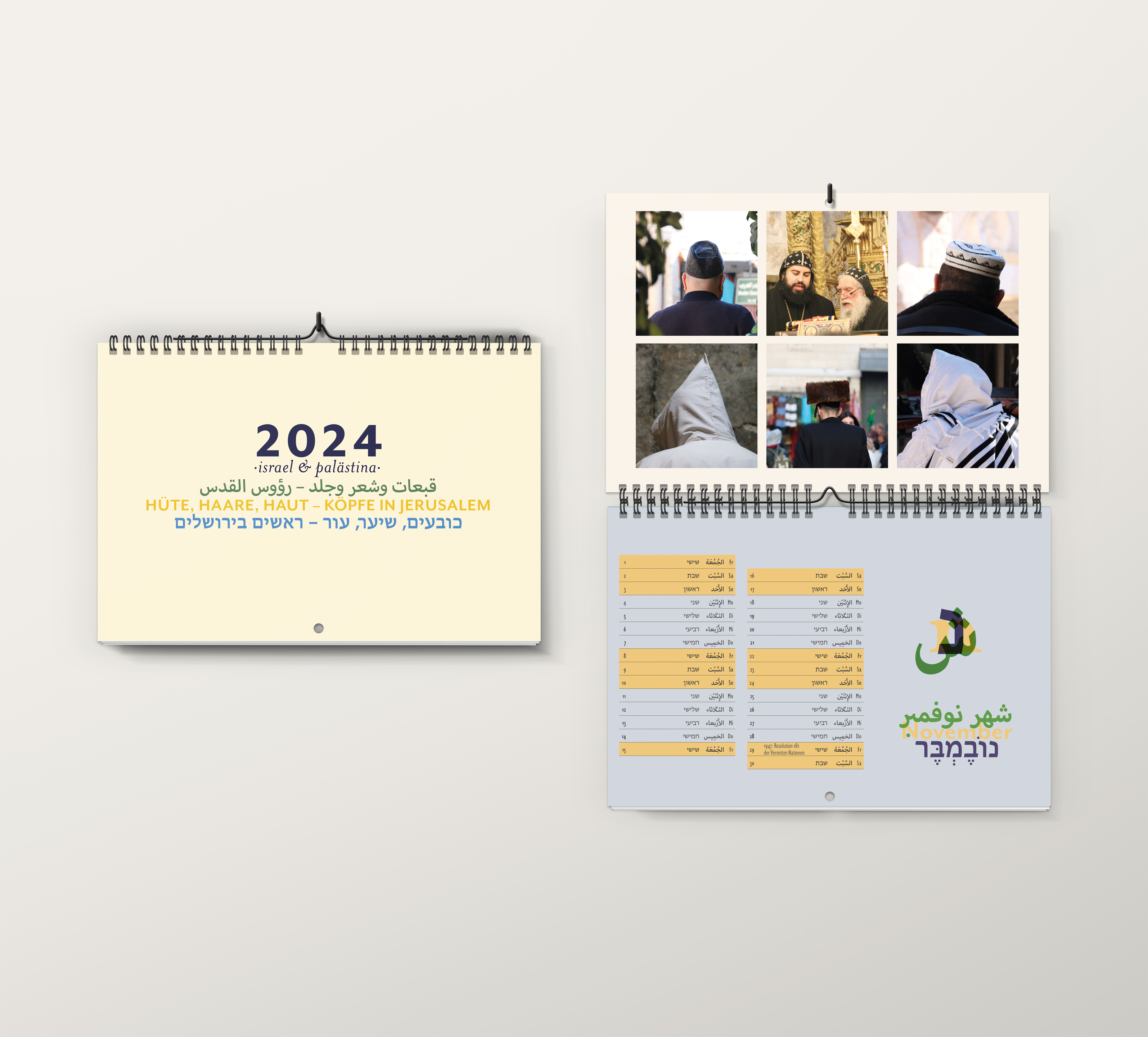
Photos: Doering
israel & palästina – Zeitschrift für Dialog | Ausgabe 4-2023
Es ist das neunte Mal, daß im Rahmen von israel & palästina | Zeitschrift für Dialog ein Photobegleiter in Kalenderform für das kommende Jahr erscheint: Hüte, Haare, Haut – Köpfe in Jerusalem, dieses Thema war schon lange festgelegt …
Das Thema begleitet uns dieses Jahr, auch wenn die täglichen Nachrichten einen eher verzweifeln lassen und sich die Frage, war unter den Hüten, den Haaren eigentlich steckt … schon naheliegt …
Hüte, Haare, Haut – Köpfe in Jerusalem … (2024)

Israel verbietet die Tätigkeit der UNRWA auf seinem Territorium und damit defacto auch in Palästina – ein alter „Widersacher“ soll damit erledigt werden
Hier einmal die Stellungnahme des britischen Premierminister:
Prime Minister’s Office, 10 Downing Street and The Rt Hon Sir Keir Starmer KCB KC MP
London, 28 October 2024
The UK is gravely concerned at the UNRWA bills that Israel’s Knesset has passed. This legislation risks making UNRWA‘s essential work for Palestinians impossible, jeopardising the entire international humanitarian response in Gaza and delivery of essential health and education services in the West Bank.
The humanitarian situation in Gaza is simply unacceptable. We need to see an immediate ceasefire, the release of the hostages and a significant increase in aid to Gaza.
Under its international obligations, Israel must ensure sufficient aid reaches civilians in Gaza.
Only UNRWA can deliver humanitarian aid at the scale and pace needed. We pay tribute to the 222 UNRWA staff who have lost their lives in the conflict. UNRWA has a UN mandate to support Palestinian refugees. We urge Israeli lawmakers to ensure that UNRWA can continue to deliver its essential work.