Wer befreit wen?

Auf der Seite von 972mag reflektiert Fadi Shabita über eine alte Frage, die nichts an Aktualität und auch nichts an Sprengkraft verloren hat: Kann es einen gemeinsamen Kampf von Israelis und Palästinenser.innen (nur?) geben – wenn die Basis echte Gleichheit und Gerechtigkeit ist? Und wie sähe / sieht das dann aus?

Rare Outcry

Der britische Guardian berichtet in einem bewegenden Beitrag von Hannah Ellis-Petersen und Quique Kierszenbaum (Tel Aviv) über den Protest von Überlebenden der Shoa in Israel, die das Leiden der Palästinenser:innen nicht aus den Augen verlieren …

When dehumanisation and destruction become the norm …

Ittay Flescher: The Holy and the Broken

Ittay Flescher is the Education Director at Kids4Peace Jerusalem, an interfaith movement for Israelis and Palestinians and the Jerusalem Correspondent for The Jewish Independent from Australia.

Besprechung erfolgt nach Möglichkeit

Immer noch hoffen können…

Siehe auch die Seite des Middle East council of Churches (MECC) Abteilung für Soziale Dienste für Palästinensische Geflüchtete des Rates der Kirchen im Nahen Osten

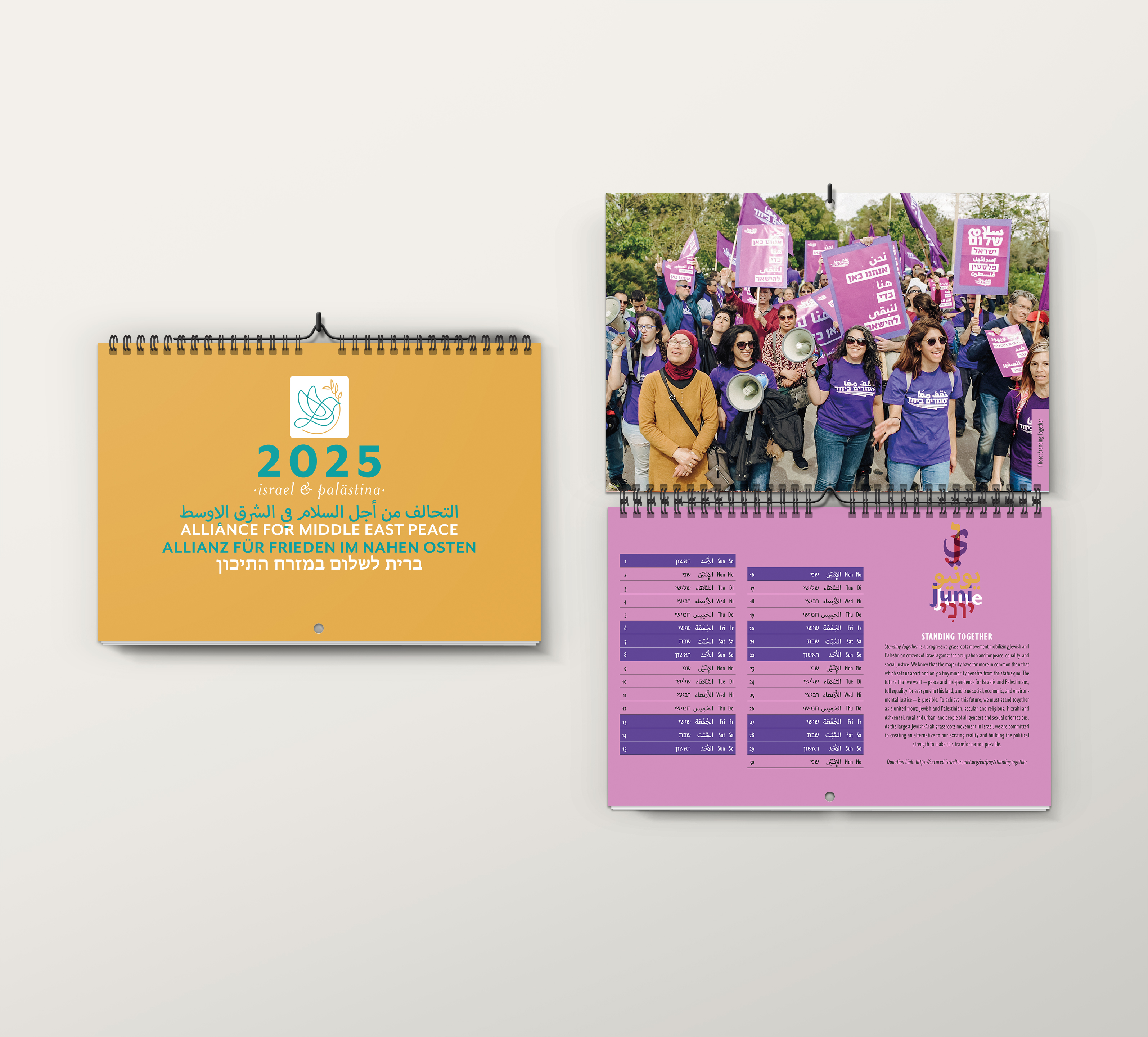
It’s time!

„We’re coming together, louder and broader than ever before. On May 8–9, thousands of Palestinians and Jews from across the country will gather in Jerusalem for the It’s Time Conference — a powerful act of collective vision in the face of violence and fear. Organized by over 60 civil society groups, this summit will bring together those who believe that freedom, dignity, and safety are rights for all.“
(Aus dem Mailing von Standing together) | Konferenzlink

Joint statement on behalf of the Foreign Ministers of France, Germany and the UK

Israel has now fully blocked the entry of humanitarian aid into Gaza for over fifty days. Essential supplies are either no longer available or quickly running out.

Palestinian civilians – including one million children – face an acute risk of starvation, epidemic disease and death. This must end. We urge Israel to immediately re-start a rapid and unimpeded flow of humanitarian aid to Gaza in order to meet the needs of all civilians. During the last ceasefire, the UN and INGO system was able to deliver aid at scale. The Israeli decision to block aid from entering Gaza is intolerable. Minister Katz’s recent comments politicising humanitarian aid and Israeli plans to remain in Gaza after the war are unacceptable – they harm prospects for peace. Humanitarian aid must never be used as a political tool and Palestinian territory must not be reduced nor subjected to any demographic change. Israel is bound under international law to allow the unhindered passage of humanitarian aid.

Humanitarians must be able to deliver aid to those who need it most, independent of parties to the conflict and in accordance with their humanitarian principles. Israel must ensure unhindered access for the UN and humanitarian organisations to operate safely across Gaza. Hamas must not divert aid for their own financial gain or use civilian infrastructure for military purposes.

We reiterate our outrage at recent strikes by Israeli forces on humanitarian personnel, infrastructure, premises and healthcare facilities. Israel must do much more to protect the civilian population, infrastructure and humanitarian workers.

This includes restoring deconfliction systems, allowing humanitarian workers free movement within Gaza. And Israel must prevent harm to medical personnel and premises in the course of their military operations. They must allow the urgent healthcare needs of the population to be met, while allowing the sick and wounded to temporarily leave the Gaza Strip to receive treatment.

Crucially, we urge all parties to return to a ceasefire. We continue to call on Hamas for the immediate release of all the remaining hostages, who are enduring terrible suffering. We must all work towards the implementation of a two-state solution, which is the only way to bring long-lasting peace and security to both Israelis and Palestinians and ensure long-term stability in the region.

Aus Israel gesehen …

Pessach geht zu Ende, heute ist Karfreitag. Es geht um Befreiung, um den Weg zu einem neuen Leben, dazu gehört auch ein wahrhaftige Blick auf das, was geschieht – Zwei aktuelle Beiträge dazu in deutschen Medien.

Ein Beitrag von Jan-Christoph Kitzler auf der Seite des Deutschlandfunks

***

Offener Brief: Ende des Militäreinsatzes

Interview bei Deutschlandfunk Kultur: Autor Ofer Waldman hofft auf Signalwirkung von Protest | Mehr dazu: Wenig Wirkung vor Ort

Verweigerer werden für Israel zum Problem

Ein Bericht von Jan-Christoph Kitzler (ARD Tel Aviv) auf tagesschau.de

‚eine laute Minderheit, um Anarchisten, die von ausländischen Nichtregierungsorganisationen unterstützt würden‘, so der israelsiche Ministerpräsident, einfache Antworten auf komplexe Situationen, das macht ja weltweit Schule ….

„Israels Armee ist auf ihre Reservisten angewiesen, und seit dem Überfall der Hamas am 7. Oktober 2023 hat sich gezeigt, wie wichtig sie sind. Frauen und Männer können in Israel nach Ihrem Militärdienst noch bis zum 40. Lebensjahr zum Reservedienst eingezogen werden, Offiziere auch darüber hinaus. Fast 300.000 Reservisten wurden nach dem 7. Oktober nach Angaben der Armee eingezogen, viele über Monate, auch mehrfach.

Doch inzwischen wird die Weigerung vieler Reservisten, in den Krieg zu ziehen, zum Problem. Die genauen Zahlen sind unter Verschluss – doch israelische Medien berichten über die größte Verweigerungswelle seit Jahrzehnten.

Von mehr als 100.000 Verweigerern ist die Rede. Überprüfen lässt sich das nicht. Was man weiß, ist, dass einige Soldaten Briefe veröffentlicht haben – darunter Reservisten der Luftwaffe, der Marine und von Spezialeinheiten der Aufklärung. … „

(Ganzer Bericht)

Haaretz Editorial

Der Text diese Editorial erschien am 14. April 2025 in der hebräischen und in der englischen Ausgabe und ist online zugänglich. Wir stellen hier einige Passagen online und verweisen insbesondere auf den letzten Abschnitt!:

On Wednesday, the Israeli military bombed an apartment building in Gaza City’s Shujaiyeh neighborhood. The target of the strike was Haytham Sheikh Khalil, whom the Israel Defense Forces identified as the commander of Hamas‘ Shujaiyeh battalion.

In the current war, the principle of proportionality has been cast aside. Killing dozens of civilians in order to assassinate a junior Hamas commander is not seen as unusual, even though it is very likely a war crime.

Additional values and principles were thrown away along with proportionality: purity of arms, compliance with international law, consideration of the suffering of innocent civilians and of what happens after the war is over.

Since Israel resumed fighting, more than 1,500 people have been killed in the Gaza Strip, including at least 500 children. The dead include 15 first responders whom IDF soldiers shot at close range and buried in a mass grave.

On Sunday morning, the IDF hit a building within the Al-Ahli Hospital complex in Gaza City, destroying the surgery building and the oxygen generation facility for the intensive care units.

All of this is happening alongside an explicit policy aimed at starving the residents of Gaza. For six weeks, the Strip has been completely closed to all food and aid deliveries.

This brutal policy toward the civilian population has forever tarnished the reputation of Israel, and we will pay a heavy price for it – in overt and covert boycotts, economic damage and the erosion of international legitimacy and of the moral and humanitarian foundations of Israeli society.

French President Emmanuel Macron stated the obvious last week: „The only path possible is a political one,“ and declared his support for the establishment of a Palestinian state. This statement was met with an embarrassing tantrum and obscenities on social media from Prime Minister Benjamin Netanyahu’s son Yair.

But Macron is right, and it is now that the truth must be told: The only way Israel can survive as a democracy and not as a pariah state is through an immediate cease-fire, hostage release agreement and diplomatic negotiations that will ultimately lead to the establishment of a Palestinian state. There is no other way.

The above article is Haaretz’s lead editorial, as published in the Hebrew and English newspapers in Israel.

SWP-Aktuell 2025/A 16

Israels Regierung baut in rasantem Tempo die Gewaltenteilung ab und weitet ihre Kontrolle über den Staatsapparat aus. Die militärische Reaktion auf den Angriff der Hamas und anderer bewaffneter Gruppierungen am 7. Oktober 2023 scheint in eine dauerhafte Wiederbesetzung des Gazastreifens zu münden. Die »freiwillige« Auswanderung der palästinensischen Bevölkerung des Küstengebiets wird als Option der Konfliktlösung gesehen. Gleichzeitig treibt die Netanjahu-Regierung das Siedlungsprojekt im Westjordanland mit neuer Verve voran. In ihren Ansätzen – sei es in der Innenpolitik, gegenüber den Palästinenser:innen oder gegenüber den Nachbarstaaten – sieht sie sich durch die Trump-Administration ermutigt. Damit entfernt sich Israel weiter von einer liberalen Demokratie. Eine Regelung der Palästina-Frage wird so konterkariert, die Region destabilisiert. Deutsche Politik darf diese Entwicklungen nicht ignorieren.

Muriel Asseburg / Peter Lintl
Israels radikale Regierung. Abbau der Gewaltenteilung, Übernahme des Staatsapparates und beschleunigte Annexion
SWP-Aktuell 2025/A 16 (April 2025) – 8 Seiten

Volltext (HTML) Volltext (PDF)