Über den Versuch, Stabilität durch ökonomische Vorteile für die Palästinenser:innen zu erreichen, hat das Palestinian Policy Network Al-Shabaka einen längeren Essay von Walid Habbas auf seine Seite gestellt, der diese Strategie, die besonders von B. Netanyahu vertreten wird, für nicht erfolgreich hält: „Palestinians will not be pacified with economic incentives„.
Nach den Vereinbarungen im Rahmen des Verhandlungskomplexes von Oslo unterstehen die ca. 60% C-Gebiete des Westjordanlandes allein den israelischen Militär- und Zivilbehörden; Palästinenser:innen haben keine Zugriffsrechte.
Gerade diese Gebiete aber sind als Landwirtschafts- und Infrastrukturflächen für die Entwicklung Palästinas wichtig. Im Rahmen der Folgevereinbarungen sollten C-Gebiete schrittweise an die palästinensische Seite gehen.
Wie war die konkrete Situation hinsichtlich der Vereinbarungen, wie ist der Stand und welche Szenarien gibt es für die nächste Zukunft? Dazu ist im Mitvim-Institut eine neue Studie erschienen.
Die israelische Tageszeitung Ha’aretz bezeichnete die erste Abstimmung im israelischen Parlament in ihrer Ausgabe am Dienstag (21. Februar) mit klaren Wochen „now that the governmental coup has passed its first hurdle in the parliament“.
Was war erfolgt?
„Die israelische Regierung ist am Dienstag mit ihrer »Justizreform« einen großen Schritt vorangekommen“, schreibt die Zeitung. Das Parlament stimmte nach stundenlanger Debatte am frühen Morgen kurz nach Mitternacht in erster Lesung einem wichtigen Gesetz zu….
Die Abstimmung am frühen Dienstag ergab eine klare Mehrheit von 63 gegen 47 Stimmen ohne Enthaltungen.“
Critics say Israeli judicial reform would end checks on Orthodox Jewish establishment
Critics of proposed judicial reform fear that it would allow the so-called religious parties that make up a crucial swing vote in Israel’s Knesset, or parliament, to impose fervently religious norms on the country’s non-Orthodox majority.
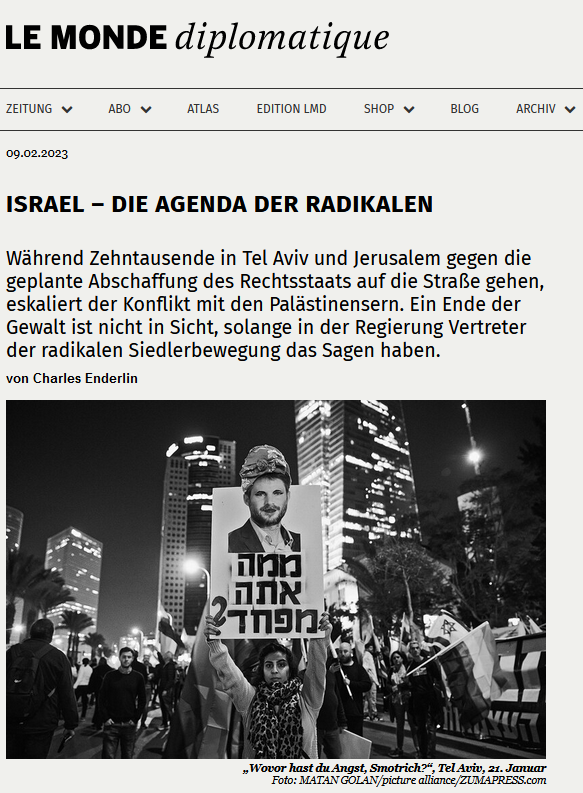
Charles Enderlin in einem längeren Beitrag in Le Monde diplomatique online nachzulesen
„Während Zehntausende in Tel Aviv und Jerusalem gegen die geplante Abschaffung des Rechtsstaats auf die Straße gehen, eskaliert der Konflikt mit den Palästinensern. Ein Ende der Gewalt ist nicht in Sicht, solange in der Regierung Vertreter der radikalen Siedlerbewegung das Sagen haben.“
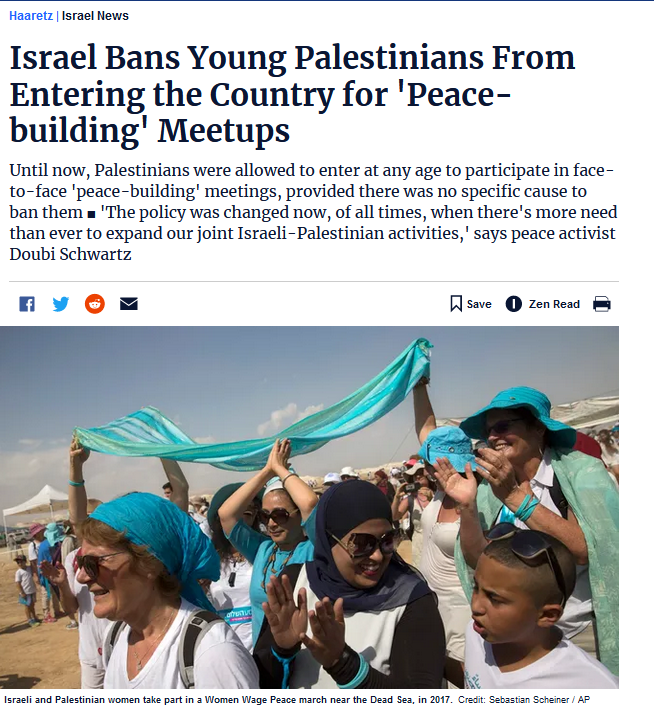
Israel Bans Young Palestinians From Entering the Country for ‚Peace-building‘ Meetups
Hagar Shezaf berichtet in Haaretz über eine weitere „kleine Hürde“ …
Until now, Palestinians were allowed to enter at any age to participate in face-to-face ‚peace-building‘ meetings, provided there was no specific cause to ban them ■ ‚The policy was changed now, of all times, when there’s more need than ever to expand our joint Israeli-Palestinian activities,‘ says peace activist Doubi Schwartz
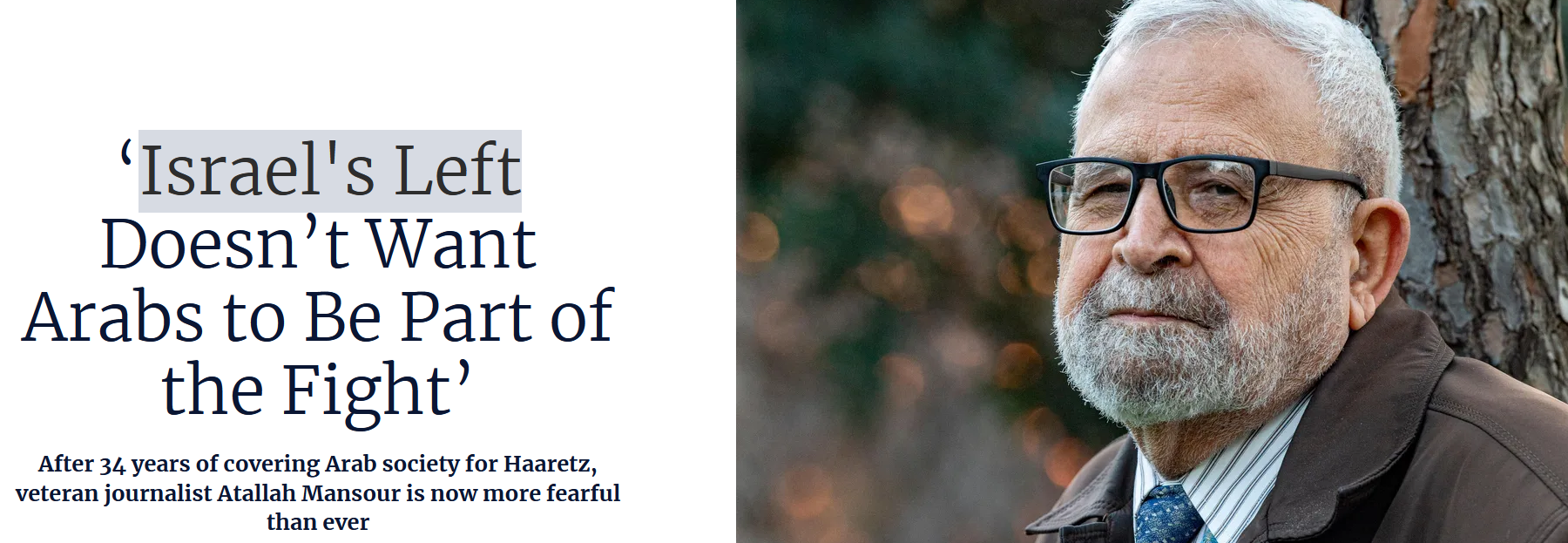
Jahrzehntelang war Atallah Mansour eine bekannte Stimme der linksliberalen Tageszeitung Haaretz. Nun kommt der palästinensich-israelische Journalist (Jg. 1934) in einem ausführlichen Interview (9. Februar 2023: Israel’s Left Doesn’t Want Arabs to Be Part of the Fight’ – After 34 years of covering Arab society for Haaretz, veteran journalist Atallah Mansour is now more fearful than ever) zu dem Schluß, daß die Lage der arabisch-palästinensischen Israelis nie so gefährdet war wie heute. Das Nationalstaatgesetz von 2018 machte sie zu Bürgern zweiter Klasse. Die geplante ‚Revolution‘ der neuen Regierung hat nicht nur fatale Folgen für den rechtlichen Status aller Minderheiten in Israel, sie wird diese weiter sozial und politisch diskriminieren.
Hier Auszüge aus dem Gespräch:
”Mansour, the first Arab journalist to work in Israeli media, began his career at Haaretz in 1958 and covered Arab society over the next 34 years. “I wasn’t in anyone’s pocket nor was I a spokesman for any particular community. I did my work as a journalist,” he says. From the start, he understood the challenges involved in covering the Arab community for the Israeli media.”
My meeting with Mansour took place at his home in Nazareth several days after another round of protests against the judicial revolution planned by the Netanyahu government. Like many Arab Israelis, he expresses fear and uncertainty about the plan. He says that compared to all the other events of his long career, including the Second Lebanon War and the second intifada, “the situation this time is different from anything I’ve seen.”
“The changes this right-wing government is now proposing didn’t happen suddenly but have been taking place gradually and over an extended period of time,” he says. “In July 2018, they submitted the nation-state law [Basic Law on Israel as the Nation-State of the Jewish People, which critics say turns non-Jews in Israel into second-class citizens] – that was the first breaking point. … The Declaration of Independence takes into account minorities, among them Arabs, and recognizes the principle of equality, human dignity and freedom, even if it is only in theory. But the nation-state law doesn’t relate to equal rights for minorities – even the Druze who serve in the army aren’t mentioned. The nation-state law erases minorities – we’re no longer thought of as equals. That’s the worst thing that’s happened, not just on the level of the law. We’ve seen the consequences of it and they are far-reaching.”
Even the Joint List broke up. “That happened as part of changes underway in Arab society. I voted for the Joint List – it’s the only choice left for me – but over the years we’ve seen support for Hadash [whose roots are in the Communist Party] weaken. Once they were as strong as the sun; today, they’re barely candlelight. Meanwhile, the Muslim tendencies have strengthened throughout the Arab world – the United Arab List and Mansour Abbas are part of that phenomenon.”
Do you still believe in the two-state solution? Do you think it’s a realistic scenario?
“There’s no other solution apart from two states. But if there really isn’t any readiness to compensate the families that were expelled from here, it will never happen. Peace has a price and Israel needs to make an effort. Annexation, if it happens, will ultimately harm the State of Israel – it will no longer be the same country. How long can the Palestinians remain without equality? The number of Arabs when the state was established was about 160,000. Today we are 2 million, and we are still fighting for full equality of rights.”
On Friday last week, a Palestinian gunman killed seven civilians in occupied East Jerusalem, the deadliest such attack for years. The shooting came the day after a raid by Israeli forces in a refugee camp in the West Bank city of Jenin, also the deadliest such operation for years. The week’s violence follows months in which more Palestinians died, according to human rights groups, than in the past almost two decades. More frequent Israeli raids, which Israel says aim to root out Palestinian militants behind an increasing number of attacks on Israelis, often provoke gun battles in West Bank cities. Militants have died, but also civilians, including many young Palestinians. In West Bank cities, new militias have formed, attracting young Palestinians angry not only at Israel but also at their own political leadership. Meanwhile, the new Israeli government of Prime Minister Benjamin Netanyahu, which is the most right-wing in Israeli history and comprises openly Jewish nationalist and anti-Palestinian ministers, promises an even tougher line on Palestinians.
This week on Hold Your Fire!, Richard Atwood speaks with Mairav Zonszein and Tahani Mustafa, Crisis Group’s Israel/Palestine experts, about the latest spike in violence. They talk about Israel’s new government, its efforts to curb judicial power and what it might mean for policy toward the Palestinians. They also talk about Palestinian politics, many Palestinians’ disillusionment at their leadership, the emergence of new militias in West Bank cities and what might happen when ageing Palestinian President Mahmoud Abbas passes from the political scene. They ask whether there is any hope of change in policy from Washington and other Western capitals following U.S. Secretary of State Antony Blinken’s trip to the region this past week. They also talk about flashpoints in the months ahead.
Nachdem erst vor wenigen Tagen der protestantische Friedhof auf dem Zion Ziel der Zerstörungen war, brach am 2. Februar (Maria Lichtmeß) ein radikaler Jude in die Kirche der Flagellation (Geißelungskapelle am Beginn der Via Dolorosa) ein und zerstörte eine Christusfigur, bevor er von Wächtern überwältigt werden konnte.
Hier die Stellungnahme des Custos der Franziskaner, auf deren Gelände die Kapelle liegt, sowie ein kurzes Video.
Erst am Tag zuvor war es zu „violant attacks“ gekommen, wie es in Erklärung des Lateinischen Patriarchates heißt:
A STATEMENT ISSUED BY THE JERUSALEM PATRIARCHATE REGARDING THE RECENT RADICALS’ ATTACK ON THE CHRISTIANS OF THE NEW GATE AREA