‚Deutschland verwechselt Israels faschistische Regierung mit seinen Bürger.innen‚
Hanno Hauenstein für den Freitag im Gespräch mit der palästinensischen Knesset-Abgeordneten Aida Touma-Suleiman (Hadash-Partei); sie ist eine führende Kritikerin des Gaza-Krieges und berichtet von der Unterdrückung unter Benjamin Netanjahu – und denkt über eine Zukunft Palästinas nach
Ronit Vered schreibt in der Wochenendbeilage von Haaretz über das Restaurant Majda in der Nähe von Jerusalem – und über sein Ende, vielleicht / wohl nicht das einzige, das zu Ende geht …
„On the last Saturday of June, the Majda restaurant outside Jerusalem closed its doors for the last time, 14 years after it opened. „Summer 2024, the last meal,“ a note atop that day’s menu stated. And at the bottom of the changing, seasonal menu, penned as always in Michal Baranes‘ lovely handwriting: „Majda is closing at the end of this week. Thanks to all the good people who accompanied us over all the years. In the end things will be good. Yakub and Michal.
I too came to take leave of Majda, located in the Arab village of Ein Rafa, west of the capital. From the place, from the people, from the food. On the table in the beautiful garden – a green, tangled Eden of wild, decorative and edible vegetation – the waiter placed a jug of cold water, and on the neck of a bottle of rosé, which Yaakov Barhum makes himself from the grapes of a vine he planted in the yard, beads of moisture glistened in the heat of the day. On the plate of gazpacho made from red-yellow tomatoes, the foliage of the trees played games of light and shade, flitting between ice cubes and puddles of olive oil.
…
„It’s very likely that the leaving tendency – or the attempt to move the center of one’s activity abroad – will only gather momentum. An end to the war is not looming on the horizon, and in contrast to previous rounds of fighting, the trauma will not make it possible to repress easily the fragmentary nature of the ability to maintain a stable, tranquil life here. The state creates difficulties for the food and restaurant industries here even in times of calm – in the form of draconian regulations, rigid kashrut laws and the high cost of living.
Living eternally by the sword and the absence of foreign tourists, an important element in the thriving of a restaurant scene, are death blows to an industry that has already found it difficult to stay afloat in recent years. It’s hard to blame those who are looking for other places in which they and their children can enjoy a life of sanity, but also where they can realize professional dreams and make an honorable living.“
Bericht von Peace Now über eine der aktuellen Maßnahmen der israelischen Regierung
„Based on media reports, at the cabinet meeting on Thursday, June 27, 2024, it was decided to establish five new settlements in isolated areas deep in the West Bank by legalizing five illegal outposts: Givat Assaf, Adorayim, Sde Ephraim, Evyatar, and Heletz. At this stage, the full text of the decision has not been published and the announcement about the legalization of the outposts was released to the media by Minister Smotrich’s office.“
On July 2, a tree-planting ceremony at Ahihud Forest in northern Israel commemorated nine Druze soldiers who died in the Iron Swords war.
Ein Beitrag auf „Themedialine.org – Trusted Mideast News“
The army announced July, 7, 2024 that another Druze soldier, Maj. Jalaa Ibrahem, a company commander in the 601st Combat Engineering Battalion, was killed in the line of duty in the Gaza Strip.
For the Druze community, loyalty to the state they reside in is a religious commitment, often manifested through military and police service. The Druze, along with the Circassian community, have a long-standing history of military service in Israel, a tradition of loyalty that many feel is not reciprocated by the government in civil matters such as housing, planning, and community development.
Systemic issues like the Kaminitz Law and the nation-state law, which are seen as discriminatory, along with restrictive building regulations and less governmental financial support compared to Jewish communities, impact the ability of the Druze to expand and develop. Amid a backdrop of demonstrations countrywide from multiple societal fronts, the Druze are protesting to address the inequalities they face as a response to being treated differently regarding rights compared to their service obligations.
The protests, including a significant gathering in Jerusalem, aim to highlight these discrepancies and push for a change that aligns the community’s civil treatment with their contributions to national security. To learn more, read Giorgia Valente’s latest for The Media Line, which highlights the Druze community’s sense of dual identity: treated like Jews in terms of national service but like Arabs in terms of civil rights.
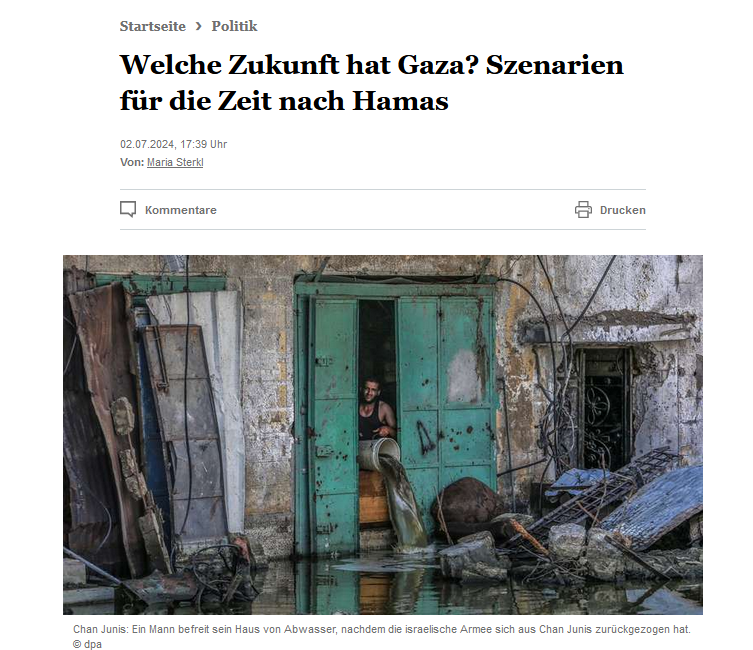
In der Frankfurter Rundschau finden sich ein Interview, daß Maria Sterkl mit der Juristin Netta Barak-Corren und dem Militärhistoriker Danny Orbach geführt hat, beide sind Autor:innen eines Stragegiepapiers, das in Israel seit einiger Zeit diskutiert wird („Von einem Mörder-Regime zu einer gemäßigten Gesellschaft: Die Transformation und Rehabilitation von Gaza in der Post-Hamas-Ära“)
Hier ein Zitat aus dem Papier, dessen Duktus israelische Interessen reflektiert und aus historischen Erfahrungen (und Fehlern) lernen will …
Wann würden Sie den Übergang in Gaza als geglückt bezeichnen – wenn es dort Demokratie gibt? Orbach: Nein, es wäre bevormundend und kontraproduktiv, wenn wir Gaza ein demokratisches System aufzwingen wollten. Das ist eine Sache der Menschen in Gaza. Unser Erfolgsmaßstab ist, dass es gelingt, eine Art Kontinuität aufzubauen – ein Modell eines Sunni-Staates, der konservativ ist, aber nicht jihadistisch, ähnlich wie in den Emiraten. Wir sollten nicht anstreben, dass die Menschen in Gaza ein israelisches Narrativ übernehmen. Sie sind Palästinenser und werden auch weiterhin die Nakba als ihr bestimmendes Ereignis sehen. Sie werden weiterhin Zionismus verachten und Jassir Arafat verehren. Das macht mich nicht glücklich, aber das ist die Realität. Die Hauptsache ist, dass sie sich für Koexistenz einsetzen. Welches Narrativ sie dabei anleitet, das sollen und können wir nicht kontrollieren.
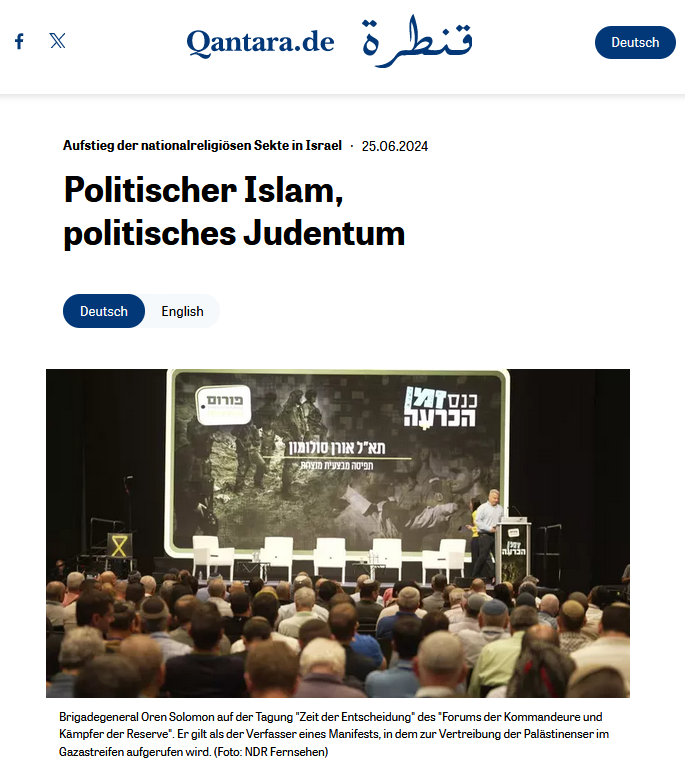
Auf der Plattform quantara.de, die sich in diesen Tagen von der Deutschen Welle zur ifa, dem Institut für Auslandbeziehungen, verabschiedet – zum Schluß ein spannender Beitrag von Stefan Buchen über (die) Entwicklungen im jüdisch-national-religiösen Bereich:
Diskussion mit Moshe Zimmermann, Angelika Timm und Gil Shohat
Analog in der Bibliothek der Rosa-Luxemburg-Stiftung, Straße der Pariser Kommune 8A 10243 Berlin
02. Juli 2024, 19:00 – 21:00 Uhr oder digital im Livestream – anmeldung erfoderlich
Der israelische Historiker Moshe Zimmermann nimmt den Überfall der Hamas auf Israel am 7. Oktober 2023 zum Ausgangspunkt, um in seinem neuen Buch eine kritische Bilanz des israelisch-palästinensischen Konflikts und der Geschichte des Staates Israel zu ziehen. Er zeigt historische Linien auf und hinterfragt Optionen für ein künftiges Miteinander jüdischer und palästinensischer Bürgerinnen und Bürger.
Sein Fazit ist sowohl pessimistisch als auch konstruktiv; es sieht nicht nur die regionalen Akteure, sondern auch die internationale Gemeinschaft in der Verantwortung, um dem Teufelskreis von Gewalt und Gegengewalt zu entfliehen.
Angelika Timm, erste Büroleiterin der Rosa-Luxemburg-Stiftung in Israel, diskutiert mit Moshe Zimmermann über dessen Buch «Niemals Frieden? Israel am Scheideweg». An dem Gespräch beteiligt sich, zugeschaltet aus Tel Aviv, auch Gil Shohat, der gegenwärtige Büroleiter der RLS in Israel.
Eine Anmeldung ist erforderlich, bitte geben Sie bei der Anmeldungim Bemerkungsfeld an, ob die Teilnahme vor Ort oder digital gewünscht ist.
Die Vereinigten Arabischen Emirate und Bahrain waren nach Ägypten (1979) und Jordanien (1994) die ersten arabischen Länder, die ihre Beziehungen zu Israel normalisiert haben.
Eine Analyse von Dina Esfandiary und Dialla Jandali von der International Crisis Group zur aktuellen Einschätzung und den Perspektiven dieser Kooperationen.