Am Abend des 6. Dezember

Advent, Channuka bald … zwischen Traumata und weiterer Gewalt – und kein Ende in Sicht … so sieht es an diesem Tag der Generalsekretär der Vereinten Nationen:

His Excellency
Mr. José Javier de la Gasca Lopez Domínguez
President of the Security Council
New York

Dear Mr. President,

I am writing under Article 99 of the United Nations Charter to bring to the attention of the Security Council a matter which, in my opinion, may aggravate existing threats to the maintenance of international peace and security.

More than eight weeks of hostilities in Gaza and Israel have created appalling human suffering, physical destruction and collective trauma across Israel and the Occupied Palestinian Territory.

More than 1,200 people were brutally killed, including 33 children, and thousands were injured in the abhorrent acts of terror by Hamas and other Palestinian armed groups on 7 October 2023, which I have repeatedly condemned. Some 250 people were abducted, including 34 children, more than 130 of whom are still captive. They must be immediately and unconditionally released. Accounts of sexual violence during the attacks are appalling.

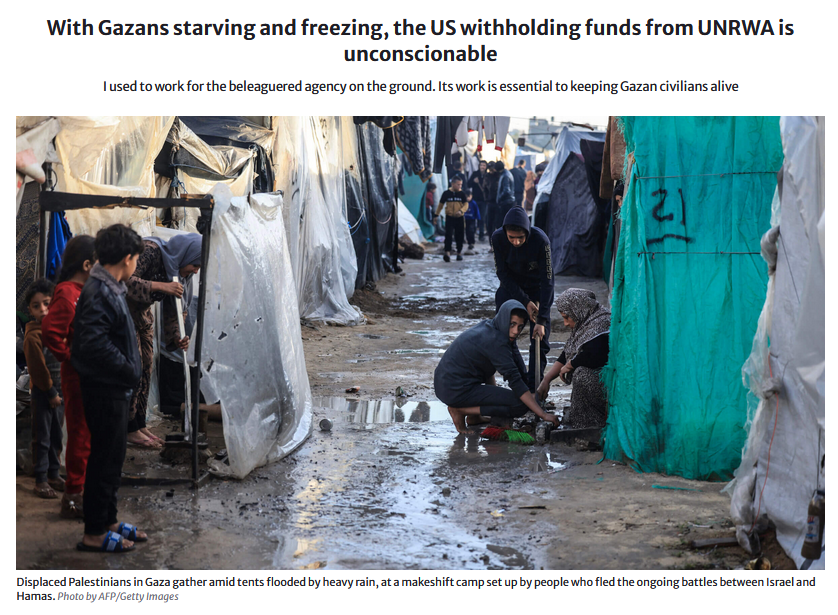
Civilians throughout Gaza face grave danger. Since the start of Israel’s military operation, more than 15,000 people have reportedly been killed, over 40 per cent of whom were children. Thousands of others have been injured. More than half of all homes have been destroyed. Some 80 per cent of the population of 2.2 million has been forcibly displaced, into increasingly smaller areas. More than 1.1 million people have sought refuge in UNRWA facilities across Gaza, creating overcrowded, undignified, and unhygienic conditions. Others have nowhere to shelter and find themselves on the street. Explosive remnants of war are rendering areas uninhabitable. There is no effective protection of civilians.

The health care system in Gaza is collapsing. Hospitals have turned into battlegrounds. Only 14 hospitals out of 36 facilities are even partially functional. The two major hospitals in south Gaza are operating at three times their bed capacity and are running out of basic supplies and fuel. They are also sheltering thousands of displaced persons. Under these circumstances, more people will die untreated in the coming days and weeks.

Nowhere is safe in Gaza.

Amid constant bombardment by the Israel Defense Forces, and without shelter or the essentials to survive, I expect public order to completely break down soon due to the desperate conditions, rendering even limited humanitarian assistance impossible. An even worse situation could unfold, including epidemic diseases and increased pressure for mass displacement into neighbouring countries.

In Resolution 2712 (2023), the Security Council “calls for the scaling up of the provision of such supplies to meet the humanitarian needs of the civilian population, especially children.”

The current conditions are making it impossible for meaningful humanitarian operations to be conducted. We are, nevertheless, preparing options for monitoring the implementation of the resolution, even if we recognize that in the present circumstances, that is untenable.

While delivery of supplies through Rafah continues, quantities are insufficient and have dropped since the pause came to an end. We are simply unable to reach those in need inside Gaza. The capacity of the United Nations and its humanitarian partners has been decimated by supply shortages, lack of fuel, interrupted communications, and growing insecurity. Humanitarian personnel have joined the vast majority of Gazan civilians in evacuating to south Gaza ahead of advancing military operations. At least 130 UNRWA colleagues have been killed, many with their families.

We are facing a severe risk of collapse of the humanitarian system. The situation is fast deteriorating into a catastrophe with potentially irreversible implications for Palestinians as a whole and for peace and security in the region. Such an outcome must be avoided at all cost.

The international community has a responsibility to use all its influence to prevent further escalation and end this crisis. I urge the members of the Security Council to press to avert a humanitarian catastrophe. I reiterate my appeal for a humanitarian ceasefire to be declared. This is urgent. The civilian population must be spared from greater harm. With a humanitarian ceasefire, the means of survival can be restored, and humanitarian assistance can be delivered in a safe and timely manner across the Gaza Strip.

Please accept, Mr. President, the assurances of my highest consideration.

António Guterres

The Secretary-General

Euro-Arabische Beziehungen

Während die Kämpfe in Gaza weitergehen – und mehr als 1,5 Millionen Menschen von einer Ecke des Gazastreifens sich in eine andere Ecke in Sicherheit bringen – sollen …

Der GIGA Focus Middle East beleuchtet die euro-arabischen Beziehungen und wirft dabei auch einen Blick auf die Haltung der Arabischen Liga zum Gaza-Konflikt

Am Abend des 3. Dezember

Wir werden in den nächste Monaten sehen, was der 7. Oktober wohin verändert hat / verändern wird – auf allen Seiten, vielleicht sind dabei auch konstruktive Veränderungen.

Mansour Abbas, der in (und mit) der letzten israelischen Regierung bereit war, einen offen kooperativen Weg zu gehen, hat jetzt im innerisraelischen Diskurs dafür geworben, daß die palästinensischen Fraktionen einsehen, daß ihr bewaffneter Kampf nie zum Erfolg geführt hat und sie die Waffen niederlegen sollten, um mit der PA einen palästinensischen Staat aufzubauen.

Screenshot CNN Mansour Abbas

Hier das Interview, das Abbas CNN (Werbung vor dem Interview) gegeben hat, dann der Bericht in der Times of Israel darüber, der es dann sogar zu einem Bericht im Berliner Tagesspiegel (eigentlich auch nicht so überraschend beim TS) geschafft hat.

Am Abend des 24. November

Krieg ist immer ein Krieg der Bilder… an diesem Abend wieder einmal: Befreite Geiseln, entlassene Gefangene … wer sieht mit welchem Blick worauf / darauf? Haaretz – von der eigenen Regierung unter Druck wegen ihrer Berichterstattung (!) – bindet in die Updates eigene Bilder und das von der Hamas veröffentlichte Bildmaterial ein …

***

Nachdenklich und lesenswert, was Lydia Bothe auf www.ipg-journal.de schreibt.

Am Abend des 21. November

Die Brüsseler EU-Kommission hat einen Untersuchungsbericht vorgelegt, der die zusätzliche Untersuchung über die Verwendung von EU-Hilfsgeldern an die Palästinenser:innen darstellt.

Bericht u.a. Deutsche Welle / Pressemitteilung der EU-Kommission (Englisch) sowie der 20-seitige Gesamtbericht (Download)

Am Abend des 19. November

Wie weit ist eine „Vereinbarung“ über ein (kurzes?) Schweigen der Waffen und die Freilassung von Geiseln noch entfernt?

Jack Khoury weist in der Haaretz zu Recht auf die wachsenden Spannungen an der „dritten“ Front, der Westbank hin, hier ein paar Zitate aus dem Beitrag:

„If, before the war, incidents were focused on the northern West Bank, between Nablus and Jenin, since October 7 there has not been a city or refugee camp in which clashes have not been recorded.

In addition to the large number of dead and wounded, there has also been a drastic increase in the number of people arrested in the West Bank, including East Jerusalem. Close to 3,000 people have been detained since the start of the war. The Palestinian Prisoners’ Administration notes that such a large number of arrests in such a short time has not been seen since the Second Intifada.
(…)

Israel can continue to crush the Gaza Strip under the banner of “hunting Hamas” and it can bulldoze the West Bank under the slogan of “fighting terrorism,” but in between, we must understand that with force and more force there will be no horizon for either side. For every fatality, another generation of young Palestinians will emerge and will join the struggle against Israel, seeing themselves as freedom fighters.

Every time Israel punishes the Palestinians by deducting taxes it collects on their behalf, it puts another nail in the coffin of the PA. Every expropriation of land for the construction of another outpost, every roadblock, every closure, every narrowing of civilian living space, closes another window of hope for change.

A month and a half after the war began, someone in Israel needs to realize that another attack and more force will only increase the anger and frustration among another generation of Palestinians. (…)“

„In Israel, October 7 is often described – and rightly so – as a trauma that will lead to fundamental change, both social and political. The question is what kind of change Israel hopes for. A society that aspires to change for the better must rise from a crisis and think about reality. Because even after the crushing of Hamas and the paralyzing of the PA, the Palestinian people will not go away – not in the Gaza Strip and not in the West Bank.“

Am Abend des 13. November

Was kommt, was muß am Tag danach kommen? Sonja Thomaser erläutert in der Frankfurter Rundschau die Debatten, die z.B. in der israelischen Tageszeitung Haaretz (etwa hier) geführt werden.

Am Abend des 11. November

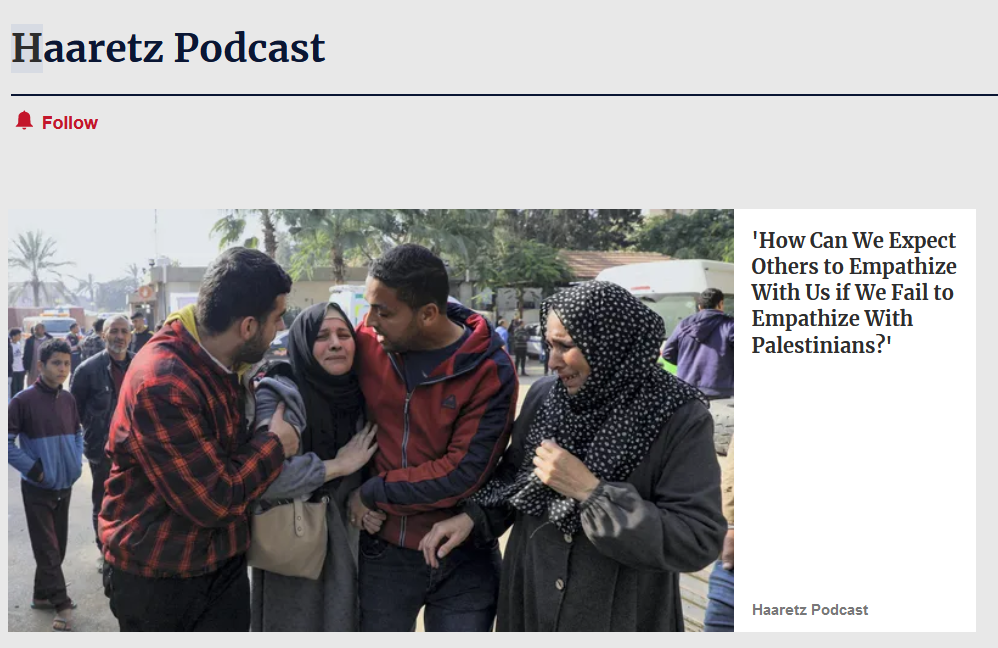
Während die gewaltsame Auseinandersetzung andauert und ein Ende oder ein Waffenstillstand kaum abzusehen sind, auch wenn es erste (öffentliche) Signale dafür gibt, ist die Debatte über Empathie und Solidarität, über Verständnis(se) und Kontexte wohl gerade erst am Anfang und wird die veröffentlichte Meinung noch lange beschäftigen (müssen).

Hier die lesenswerte Stellungnahme der amerikanischen Philosophin Seylah Benhabib zur Debatte innerhalb der Linken über die „Kontextualisierung“ des Krieges.

Hier zwei kurze Zitate:

„The attacks of October 7, 2023 are not “just one salvo in an ongoing war between an occupying state and the people it occupies, or as an occupied people exercising a right to resist violent and illegal occupation“, [Columbia Faculty Letter: Grave Concerns About the Well-Being of Our Students (google.com) ] They are a turning point not only for the Jewish people in Israel and elsewhere, but also in the history of the Palestinian people.“

„But at the end of the day, a Palestinian state must be established. There must be an exchange of prisoners for hostages. Israel is holding thousands of Palestinians in its prisons; some must be released in accordance with conditions conforming to international law in return for hostages.“

Am Abend des 10. November

Die International Crisis Group wendet sich speziell dem US-amerikanischen-iranischen Verhältnis zu und beleuchtet mögliche Eskaltionsszenarien:

Mitvim, ein aus dem progressiven israelischen Lager stammendes Politikberatungs- und Forschungsinstitut gibt aus der Sicht des Landes kurze Einschätzungen der regionalen Akteure (A Regional Perspective / Egypt / US / Saudi Arabia / Europe / Iran / Jordan / Turkey / ‚Hellenic Alliance‘ / Lebanon – Die Vereinten Nationen sind nicht daruner [sic])

Am Abend des 8. November

Die Ereignisse der letzten Wochen lassen auch hierzulande die Menschen nach Worten suchen, das Geschehene und das Geschehende zu „begreifen“ und einen Blick auf die Konsequenzen und das ‚zu Tuende‘ werfen. Pfr. Andreas Goetze, lange Jahre Landeskirchlicher Pfarrer für das interreligiöse Gespräch in Berlin (EKBO), jetzt tätig im Zentrum Ökumene EKHN/EKKW in Frankfurt/Main, hat das in einem Beitrag für das Portal Die Eule versucht, es gibt eben trotz allem keine einfachen Antworten in der komplexen Gemengelage des ‚Nahen Ostens‘ und unserer Beziehungen dorthin und dorther…