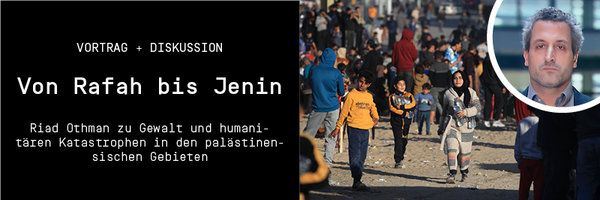
Von Rafah bis Jenin

Gewalt und humanitäre Katastrophe in den palästinensischen Gebieten

Seit dem besonders unter israelischen Zivilist*innen opferreichen Angriff der Hamas vom 7. Oktober 2023 begann ein verheerender Krieg in dem seit Jahrzehnten abgeriegelten Gaza-Streifen. Systematische Angriffe auf zivile Ziele, die Vorenthaltung humanitärer Hilfe, die gezielte Zerstörung der Lebensgrundlagen der Bevölkerung und zahlreiche Attacken gegen Gesundheitseinrichtungen gehören zu den Waffen dieses Krieges mit zigtausenden Opfern. Angesichts dieser humanitären Katastrophe bleiben die politischen Reaktionen internationaler Verbündeter Israels, wie der USA und Deutschlands, verhalten. Unterdessen eskalieren auch im Westjordanland die Vertreibung palästinensischer Gemeinden und die militärische Gewalt.

Riad Othman berichtet als Nahost-Referent von medico international über die Situation vor Ort in Gaza und der Westbank. Im Anschluß besteht die Möglichkeit Fragen zu stellen und miteinander ins Gespräch zu kommen.
Anmeldung: https://eveeno.com/324034212
Angemeldete erhalten vor dem Event per eMail einen Web-link.

Israel’s Druze Protest …

On July 2, a tree-planting ceremony at Ahihud Forest in northern Israel commemorated nine Druze soldiers who died in the Iron Swords war.

Ein Beitrag auf „Themedialine.org – Trusted Mideast News“

The army announced July, 7, 2024 that another Druze soldier, Maj. Jalaa Ibrahem, a company commander in the 601st Combat Engineering Battalion, was killed in the line of duty in the Gaza Strip.

For the Druze community, loyalty to the state they reside in is a religious commitment, often manifested through military and police service. The Druze, along with the Circassian community, have a long-standing history of military service in Israel, a tradition of loyalty that many feel is not reciprocated by the government in civil matters such as housing, planning, and community development. 

Systemic issues like the Kaminitz Law and the nation-state law, which are seen as discriminatory, along with restrictive building regulations and less governmental financial support compared to Jewish communities, impact the ability of the Druze to expand and develop. Amid a backdrop of demonstrations countrywide from multiple societal fronts, the Druze are protesting to address the inequalities they face as a response to being treated differently regarding rights compared to their service obligations.

The protests, including a significant gathering in Jerusalem, aim to highlight these discrepancies and push for a change that aligns the community’s civil treatment with their contributions to national security. To learn more, read Giorgia Valente’s latest for The Media Line, which highlights the Druze community’s sense of dual identity: treated like Jews in terms of national service but like Arabs in terms of civil rights.

Justitia et Pax Jerusalem

Aus der aktuellen Erklärung (PDF) hier zwei Zitate:

“As Catholics in the Holy Land, who share .. (the) vision for a peaceful world, we are outraged that political actors in Israel and abroad are mobilizing the theory of “just war” in order to perpetuate and legitimate the ongoing war in Gaza. … Though we are a small community in the Holy Land as Catholics we are an integral part of this land’s identity. We wish to make it clear that we, and our theological tradition, must not be used in order to justify this violence. The witness that we bring is not one of war, but one of transformational love, one of freedom and equality, one of justice and peace, one of dialogue and reconciliation”.

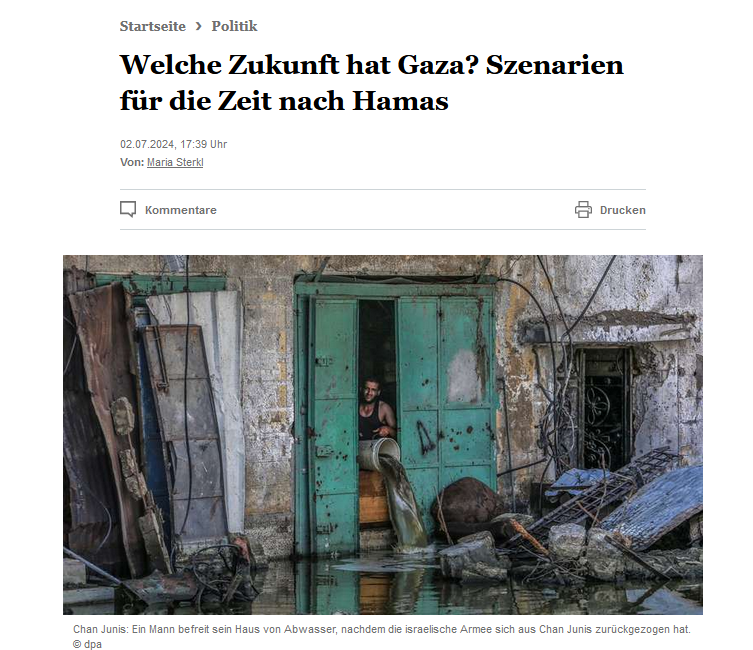
Ein (israelisches) Gedankenmodell für Gaza

In der Frankfurter Rundschau finden sich ein Interview, daß Maria Sterkl mit der Juristin Netta Barak-Corren und dem Militärhistoriker Danny Orbach geführt hat, beide sind Autor:innen eines Stragegiepapiers, das in Israel seit einiger Zeit diskutiert wird („Von einem Mörder-Regime zu einer gemäßigten Gesellschaft: Die Transformation und Rehabilitation von Gaza in der Post-Hamas-Ära“)

Hier ein Zitat aus dem Papier, dessen Duktus israelische Interessen reflektiert und aus historischen Erfahrungen (und Fehlern) lernen will …

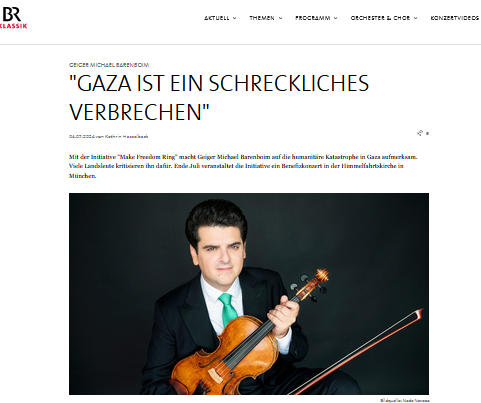
Make Freedom Ring

Mit der Initiative „Make Freedom Ring“ macht Geiger Michael Barenboim auf die humanitäre Katastrophe in Gaza aufmerksam. Viele Landsleute kritisieren ihn dafür. Ende Juli veranstaltet die Initiative ein Benefizkonzert in der Himmelfahrtskirche in München – Ein Beitrag (Kathrin Hasselbeck) auf br-klassik.de

Krieg ohne Ende?

SWP-Podcast 2024/P 16 mit Muriel Asseburg und Peter Lintl

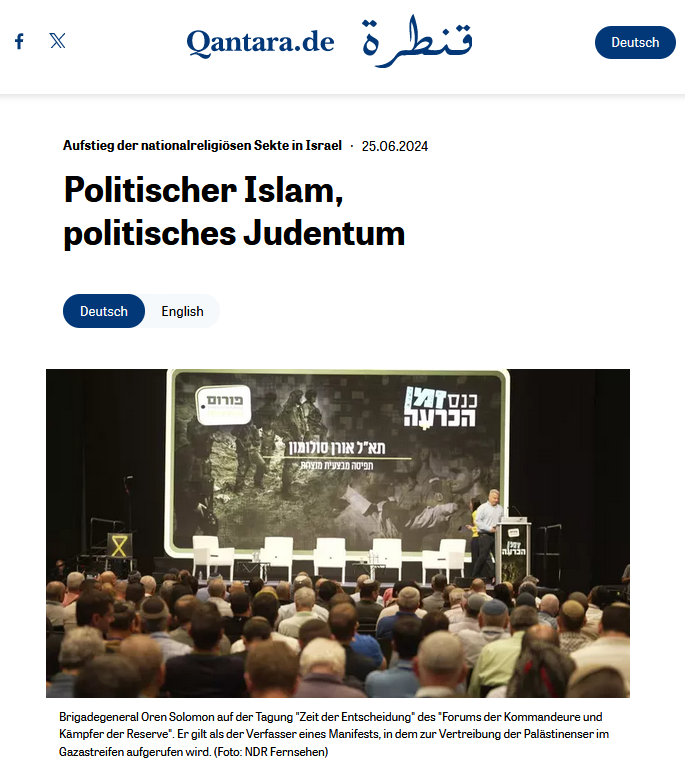
Politischer Islam, politisches Judentum

Auf der Plattform quantara.de, die sich in diesen Tagen von der Deutschen Welle zur ifa, dem Institut für Auslandbeziehungen, verabschiedet – zum Schluß ein spannender Beitrag von Stefan Buchen über (die) Entwicklungen im jüdisch-national-religiösen Bereich:

Niemals Frieden? Israel am Scheideweg

Analog in der Bibliothek der Rosa-Luxemburg-Stiftung, Straße der Pariser Kommune 8A
10243 Berlin

02. Juli 2024, 19:00 – 21:00 Uhr oder digital im Livestream – anmeldung erfoderlich

Der israelische Historiker Moshe Zimmermann nimmt den Überfall der Hamas auf Israel am 7. Oktober 2023 zum Ausgangspunkt, um in seinem neuen Buch eine kritische Bilanz des israelisch-palästinensischen Konflikts und der Geschichte des Staates Israel zu ziehen. Er zeigt historische Linien auf und hinterfragt Optionen für ein künftiges Miteinander jüdischer und palästinensischer Bürgerinnen und Bürger.

Sein Fazit ist sowohl pessimistisch als auch konstruktiv; es sieht nicht nur die regionalen Akteure, sondern auch die internationale Gemeinschaft in der Verantwortung, um dem Teufelskreis von Gewalt und Gegengewalt zu entfliehen.

Angelika Timm, erste Büroleiterin der Rosa-Luxemburg-Stiftung in Israel, diskutiert mit Moshe Zimmermann über dessen Buch «Niemals Frieden? Israel am Scheideweg». An dem Gespräch beteiligt sich, zugeschaltet aus Tel Aviv, auch Gil Shohat, der gegenwärtige Büroleiter der RLS in Israel.

Eine Anmeldung ist erforderlich, bitte geben Sie bei der Anmeldung im Bemerkungsfeld an, ob die Teilnahme vor Ort oder digital gewünscht ist.


Zur Umweltsituation in Gaza

Das „Enviroment programme“ der Vereinten Nation (UNEP) hat einen ersten, vorläufigen Bericht über die Lage im Gazastreifen vorgelegt, hier das PDF des Gesamtberichtes.

Mehr ‚Peacebuilding‘ der Zivilgesellschaft

Bis in die Schlußerklärung des G7 Gipfels hat es der Appell „Call to Action“ geschafft, jetzt gilt es der Politik!

„We affirm our commitment to working together – and with other international partners – to closely coordinate and institutionalize our support for civil society peacebuilding efforts, ensuring that they are part of a larger strategy to build the foundation necessary for a negotiated and lasting Israeli-Palestinian peace.“

ALLMEP has spent the last month leading a global coalition united in calling for this new approach from the G7. 37 UK Parliamentarians, 22 Members of the European Parliament, and His Holiness Pope Francis – who attended the summit today– all added their support to the campaign, standing in solidarity with the ALLMEP community and recognizing the critical role that grassroots organizations have to play in any long term, sustainable peace process. The letter was signed by more than 160 Israeli and Palestinian peacebuilding NGOs, and over 200 civil society organizations from around the world, including from places like Northern Ireland, South Africa, Colombia, and Kashmir, where communities know only too well the pain of entrenched conflict and the importance of civil society in breaking cycles of violence and injustice. 

Hier noch einmal der Call to Action from Over 350 Organizations to the G7, den auch der diAk unterschrieben hat.

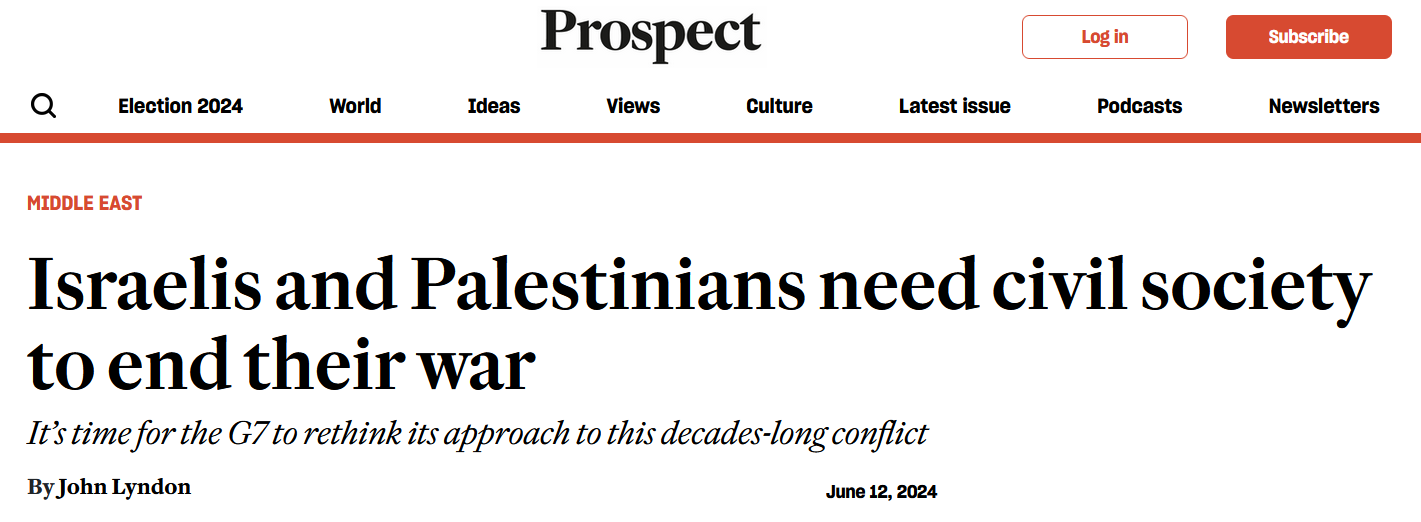
Zum Thema auch ein Beitrag im britischen Prospect-Magazin: