Heute gibt es den Text des lutherischen Bischofs in Jerusalem, Sani-Ibrahim Azar, den in Deutschland ja einige kennen, weil er unterem anderem im Jerusalemsverein aktiv ist und auch in Deutschland studiert hat.
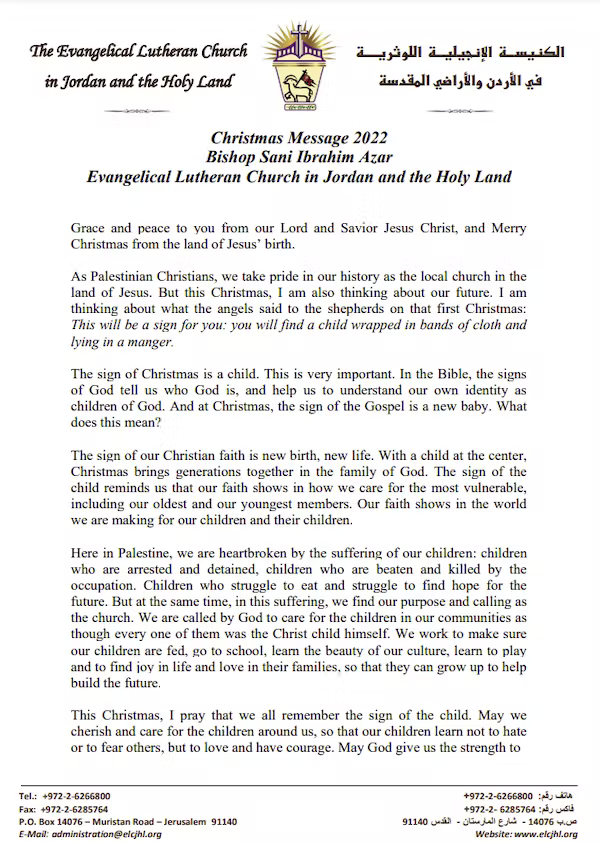

Heute gibt es den Text des lutherischen Bischofs in Jerusalem, Sani-Ibrahim Azar, den in Deutschland ja einige kennen, weil er unterem anderem im Jerusalemsverein aktiv ist und auch in Deutschland studiert hat.
… und es gibt viel leicht Entzündliches in der ‚Heiligen‘ Stadt‘ …

Alarming developments in coalition agreements and promised ministerial appointments following the Israeli elections in November have left many of us rightfully worried about the future of Israeli democracy and human rights in the region.
The incoming government, comprised of far-right extremist and Jewish supremacist politicians, is shaping up to give their parties profound power and control over a wide range of politically sensitive and explosive issues in East Jerusalem, the West Bank, and within the Green Line.
What does this mean for Jerusalem and the prospects for peace?
Ir Amim invites you to join us for a virtual event exploring the implications of the incoming government on Jerusalem and what it means for civil society organizations active in pursuing justice, equality, and the end of the occupation.
The event will take place on Zoom on Sunday, December 18th @ 12:30 Eastern US | 17:30 London | 19:30 Jerusalem
Register Here for Our Upcoming Virtual Event on Dec 18
** Zoom link will be sent upon registration **
Featuring the expert analyses of:
Professor Naomi Chazan, Professor Emerita of Political Science – Hebrew University of Jerusalem & former MK
Nivine Sandouka, Regional Chief of Staff – ALLMEP & Board Director – Hoqoqna
Kleine Geschichte des israelisch-palästinensischen Konflikts
Von Jörn Böhme und Christian Sterzing, beide Jahrzehnte im diAk aktiv und unseren Anliegen verbunden …
Das Buch bietet einen kurzen, aber multiperspektivischen Überblick über die komplexe Konfliktgeschichte. Auch wird diskutiert, welche Friedensregelungen nach mehr als fünfzig Jahren israelischer Besatzung palästinensischer Gebiete noch denkbar sind und menschen- wie völkerrechtlichen Maßstäben genügen. Ist die international geforderte, aber heftig umstrittene Zwei-Staaten-Regelung noch machbar? Die Spaltung Palästinas, ein Rechtsruck in Israel und der völkerrechtswidrige Siedlungsbau sowie Krisen und Kriege in arabischen Staaten rücken den Frieden in immer weitere Ferne. Die Kernpunkte kontroverser Debatten werden knapp geschildert: eine erste Orientierung in einem vielschichtigen Diskurs.
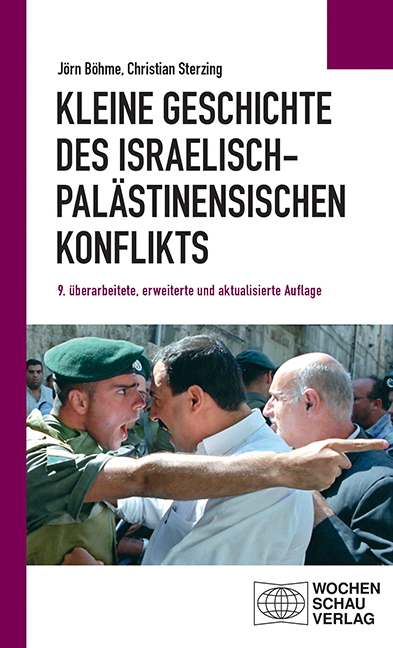
978-3-7566-1527-8 | 248 S. | 9. überarbeitete, erweiterte und aktualisierte Auflage | 18,00 €
Gedenktag zur Allgemeinen Erklärung der Menschenrechte aus dem Jahr 1948
Hier ein Auschnitt aus der Reflektion von Rabbiner Arik Ascherman zum heutigen Tag:
„Israel that has always been plagued by human rights violations, but we can only be embarrassed and horrified that we have now openly and knowingly voted for extremist advocates of massive human rights violations towards non-Jews, the LGBTQ community, non-Orthodox religious Jews and women, and whose first Finance Minister will be an open advocate of neo-liberal policies violating the human rights of Israeli Jews living in poverty. Israel is drifting farther and farther from the principles of international law we celebrate on December 10th. We are slapping in the face the many Jews whose Jewish values and consciousness of Jewish history drove them to be primary authors of these principles representing the highest aspirations of humanity.
Now the question is will be prove ourselves to be worthy descendants of Jacob? Will we succeed in wrestling with our demons and prevail? This is our moment of truth. We are being tested. We are at a moment when each of us is called to say “Hineni – I am here. Count me in to be a part of the struggle for our Jewish values, human rights and decency. Our side is being dragged across the line in a very serious game of tug of war. Will we collapse, or find the inner resources to dig in and pull back?“
Der ganze Text findet sich hier.
Zwischen den Fronten und an der Seite – um des Friedens willen …
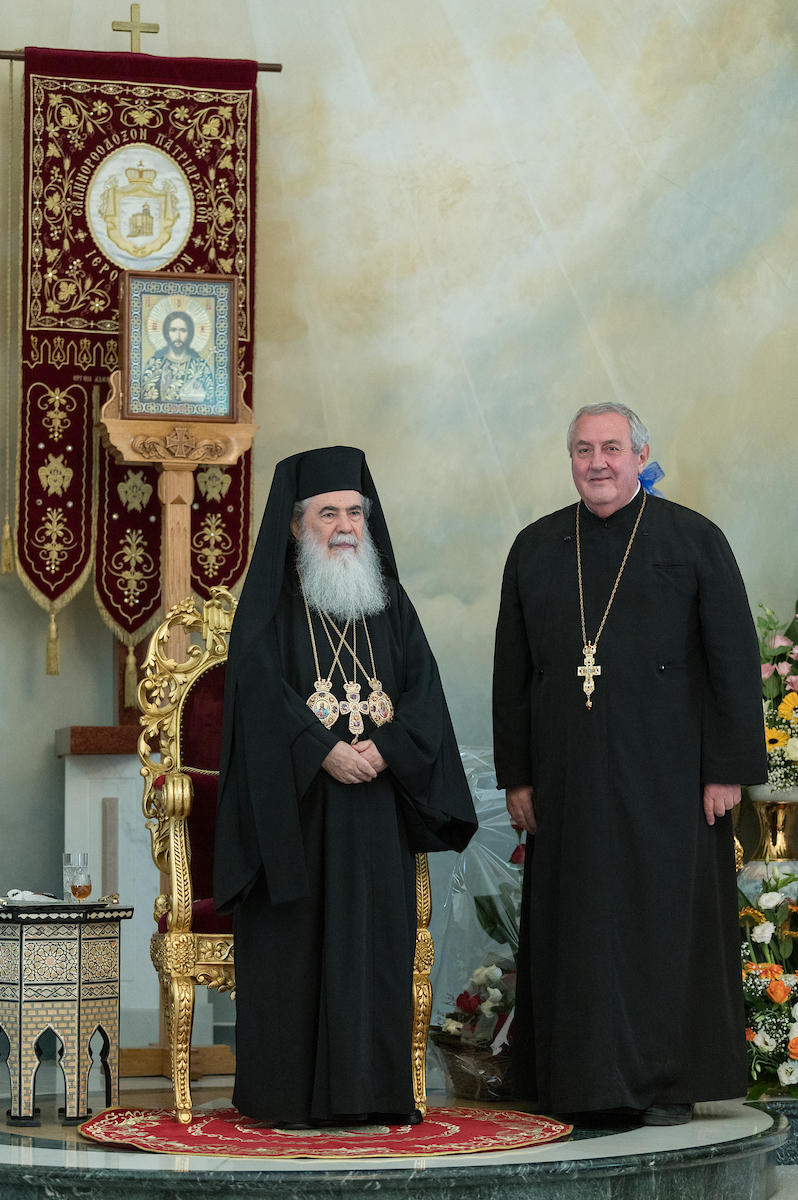
Neben einer Begegnung mit dem Griech.-orth. Patriarchen Theoplilos III. traf die Deleggation unter Leitung des amtierenden Generalsekretärs des World Council of Churches (WCC), Rev. Prof. Dr Ioan Sauca, unter anderem mit dem israelischen Staatspräsidenten Herzog und dem palästinsensischen Präsidenten Abbas zusammen
Hier eine Bilderdokumentation und weitere Nachrichten (WCC-Verbindungsbüro / Herzog / Abbas)
Ein Meinungsbeitrag von Susie Becher, Kommunikationsdirektorin der Policy Working Group, einer Gruppe von Israelis, darunter ehemaligen Mitgliedern des diplomatischen Dienstes und der Sicherheitseinrichtungen des Landes, die sich gegenüber der internationalen Gemeinschaft weiterhin für eine Regelung des Israelisch-Palästinensischen Konflikts auf der Basis der einer Zwei-Staaten-Regelung einsetzen:
„Not only the Israeli left but progressive governments everywhere are reeling from the outcome of the Israeli elections. It is not so much the decisive victory of the right-wing, pro-Netanyahu camp, whose voters showed utter disregard for the values of honesty, integrity, and truth as characteristics for leadership, that has shaken liberals around the world. What is far more worrisome is the impressive 12% of the seats in parliament won by the extremist Religious Zionism party, the wretched alliance of the Kahanist Itamar Ben-Gvir with the fundamentalist Bezalel Smotrich that has both Jews and Arabs, quaking at the thought of the racist, reactionary, homophobic, chauvinistic policies they may seek to advance.
Smotrich, Ben-Gvir, senior Likud members, and commentators identified with the right wing are busy trying to assure the public that there is nothing to fear, that the status quo on gay rights, abortion laws, and other issues related to civil rights will be preserved. It is too early to assume that that will not be the case, to no small degree because of the Religious Zionist leaders’ understanding that the surge in this popularity did not come from a public hungry for halakhic rule but rather from a public that loathes the Arabs among whom we live. Despite assurances to the contrary, there may yet be a turn on the domestic scene that makes the current level of religious coercion in Israel look like a liberal paradise, but what is an absolute certainty is that we will see an increase in anti-Arab discourse designed to delegitimize the Arab political parties and make the entire Palestinian population in Israel appear suspect and entitled to no more than conditional citizenship. Furthermore, the incoming government – right wing from end to end with a large percentage of religious parties – will be united not only in its objection to the establishment of a Palestinian state but also in its refusal to recognize the very need for a diplomatic resolution of the Israel-Palestine conflict and its portrayal of the expansion of settlement in East Jerusalem and the West Bank as the fulfillment of the destiny of the “chosen people” on its own land.
Germany, as a leading EU member state but, even more importantly, as a country that has committed itself to the defense of the security of the Jewish people and the State of Israel as its raison d’etat, is facing a unique challenge. Its leaders are wondering how Germany can chastise the Israeli Government or impose punitive measures without breaking the promise that lies at the foundation of German-Israel relations and without being perceived as reverting to an antisemitic stance reminiscent of the Nazi era. The real question, however, is how can it not?
Following the approach adopted by the Biden administration, Europe and Germany in particular must stress that democratic values are fundamental to their relations with Israel and that they expect to see these values upheld both domestically and in its treatment of the Palestinians.
Such a change in German policy would not constitute abandonment of its unwavering commitment to the security of Israel; rather, it would demonstrate willingness to act when Israel strays from the path of justice and democracy because it recognizes that the greatest danger to the security of the state and of world Jewry would be giving license to a racist, fascist government whose policies ignite the Middle East.“
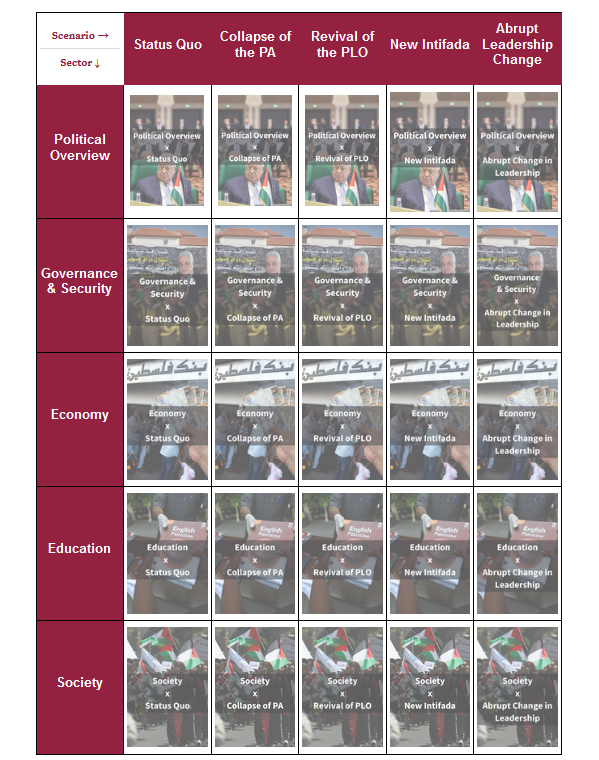
Al-Shabaka, das PalestinianPolicyNetwork hat auf seiner Seite ein neues ‚Tool‘ freigeschaltet, eine Scenario Matrix für die Westbank und Gaza – mit seiner Hilfe läßt sich strukturiert(er) betrachten und bedenken, welche Optionen es für die palästinensische Seite (noch) gibt …

Auf der 11. Vollversammlung des Weltkircherates in Karlsruhe im September 2022 waren auch die Fragen von Israel & Palästina und die Position zur Verwendung der Begrifflichkeit „Apartheid“ auf der Tagesordnung.
Hier das Heft 2/2002 des PRO ÖKUMENE-Informationsdienstes, das einen Rückblick auf die Tagung und die unterschiedlichen Debatten wirft, auch zu zahlreichen anderen Fragen natürlich.
Daniel Barenboim zum 80. Geburtstag

Deutsch-Israelisch-Palästinensisches Promotionskolleg in Flensburg wird gefördert
Wissenschaftler*innen präsentieren Arbeit zu internationaler Verständigung im Deutschen Bundestag
Mit insgesamt 2,1 Millionen Euro fördert der Bund die European Wasatia Graduate School for Peace and Conflict Resolution an der Europa-Universität Flensburg. Das hat der Haushaltsausschuß des Bundestages entschieden. Damit ist die Graduiertenschule, in der Promovierende aus Israel, Palästina und Deutschland gemeinsam religionsübergreifend und interdisziplinär zu Lösungen des Konflikts im Nahen Osten forschen, bis zum Jahr 2029 gesichert. Zudem kann mit dem Geld ein Programm für Gastwissenschaftler*innen (scholar-in-residence) aufgelegt und eigene Stipendien vergeben werden.
„Ich freue mich sehr darüber, daß es gelungen ist, dieses in Deutschland bisher einmalige Programm für Promovierende aus Israel, Palästina und Deutschland weiter zu fördern. Die European Wasatia Graduate School for Peace & Conflict Resolution wird zukünftig bis zu 359.000 € jährlich im Rahmen ihrer Arbeit für Frieden, Verständigung und Versöhnung vom Bund erhalten“, so Dr. Wiebke Esdar, zuständige Haushaltspolitikerin der SPD-Bundestagsfraktion für den Etat des Bundesministeriums für Bildung und Forschung.
Prof. Dr. Ralf Wüstenberg, Professor für evangelische Theologie und Direktor des Graduiertenkollegs bewertet diese Anschlußfinanzierung als wichtiges friedensethisches Signal. „Dieses Zeichen strahlt über den Nahost-Konflikt hinaus und berührt wesentlich auch europäische Fragen. Es ist nun sichergestellt, daß über die gegenwärtig eingeschriebenen Promovierenden zwei weitere Kohorten in 2023 und in 2026 aufgenommen werden können. Neben Israelis, Palästinensern und Deutschen sollen Stipendien auch an junge Promovierende aus andere Transformationsgesellschaften gehen, wie u.a. Südafrika, Irland, Albanien. Gemeinsames Lernen, eigenständiges Forschen und das wechselseitige Entdecken von Konfliktlösungsstrategien im Horizont von Wasatia und Versöhnung sind die Eckpfeiler des Programms.“
Auch Prof. Dr. Udo Steinbach, Leiter des MENA Study Centre der Maecenata Stiftung, das eng mit der Wasatia Graduate School zusammenarbeitet, schätzt die Entscheidung des Deutschen Bundestags als nachhaltigen Beitrag Deutschlands für die Lösung des palästinensisch-israelischen Konflikts ein.
Projektkoordinatorin Dr. Zeina Barakat freut sich über das breite Interesse an der European Wasatia Graduate School for Peace and Conflict Resolution unter den Parlamentariern des Deutschen Bundestages und erklärte: „Als in Jerusalem geborene Palästinenserin, die sich über ein Jahrzehnt auch wissenschaftlich mit Friedensethik befaßt, sind die Ziele der Graduiertenschule auch eine Herzenzangelegenheit.“
Die „European Wasatia Graduate School for Peace and Conflict Resolution“
Das interdisziplinäre, transnationale und multireligiöse Promotionskolleg wurde im November 2021 gegründet. Derzeit sind zwölf Doktorand*innen Teil der „European Wasatia Graduate School for Peace and Conflict Resolution“.
Das Kolleg identifiziert Wahrheit wie Recht als Bedingung für Frieden und Konfliktlösung im israelisch-palästinensischen Verhältnis. Vor dem Hintergrund, dass rechtliche, politische und religiöse Dimensionen der Versöhnung ihrerseits mentale Komponenten beinhalten, wie etwa die Anerkennung von Leid, die Befähigung zur inter-religiösen Toleranz und zur Dekonstruktion festgefahrener Narrative, soll die Wasatia Graduate School als ein interdisziplinäres Forum fungieren, das Versöhnung als zentrales Element zur gesellschaftlichen Konfliktlösung herausstellt.