Ehemals kolonisierte Länder und ihre Gemeinschaften fordern zunehmend die Anerkennung kolonialen Unrechts und konkrete Schritte zur Wiederherstellung von Gerechtigkeit. Deutschland hat sich zwar zur Aufarbeitung verpflichtet, bisher gibt es jedoch nur einzelne freiwillige Maßnahmen ohne klare rechtliche Grundlage, was Risiken wie inkonsistente Umsetzung, fehlende Langfristigkeit und mangelnde Transparenz birgt. Als globaler Akteur ist Deutschland gefordert, eine glaubwürdige, menschenrechtsbasierte Außenpolitik gegenüber Ländern des Globalen Südens zu gestalten. In unserem Fachgespräch möchten wir gemeinsam mit Expert*innen aus Wissenschaft, Zivilgesellschaft und Politik diskutieren, welche Ansprüche Deutschland berücksichtigen sollte, um einen kohärenten und langfristig tragfähigen Rahmen für den Umgang mit seiner Kolonialvergangenheit zu schaffen – und Lehren aus dem laufenden Versöhnungsprozess zwischen Namibia und Deutschland zu ziehen.
Mit dabei: Awet Tesfaiesus MdB, Obfrau im Ausschuss für Kultur und Medien, Stellvertretendes Mitglied im Auswärtigen Ausschuss | Deborah Düring MdB, Sprecherin für Außenpolitik | Claudia Roth MdB, Staatsministerin für Kultur und Medien a.D., Obfrau im Unterausschuss Kultur und Bildungspolitik, Mitglied im Auswärtigen Ausschuss und entwicklungspolitische Sprecherin | Maria Kind, Heinrich-Böll-Stiftung | Kirsten Krampe,Heinrich-Böll-Stiftung | Prof. Dr. Henning Melber, Extraordinary Professor, Institut für Politikwissenschaften, Universität Pretoria | Jephta Nguherimo, Autor und Genozid-Aktivist, Washington D.C. | Dr. Sebastian Spitra, Postdoctoral Researcher, Institut für Rechts- und Verfassungsgeschichte, Universität Wien | Almaz Teffera, Senior Researcherin, Racism in Europe, Human Rights Watch
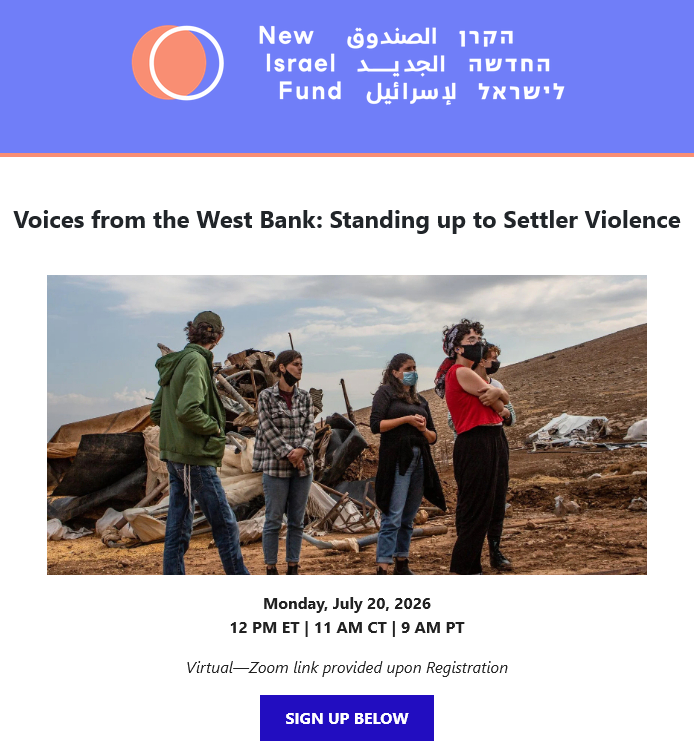
Tu Bishvat calls us to protect the people whose lives and dignity are tied to the land. Below, we share a message from Combatants for Peace (from Sunday) about their recent work standing with Palestinian farmers under threat, and an invitation to give in honor of the recent holiday:
Tonight marks the beginning of Tu Bishvat, the Jewish New Year of the Trees – a time that calls for renewal, responsibility, and the protection of land and the people who depend on it. We chose to mark this moment as a call to action and a reminder that Israelis and Palestinians can, and must, stand together to protect livelihoods and resist dispossession, settler terrorism and incitement.
On Friday, activists from Combatants for Peace and Bnei Abraham gathered to support a Palestinian organic farm located in the heart of the Gush Etzion settlement bloc. The family has lived and farmed this land for more than 200 years. Today, they are the only Palestinian farming family left in the area, surrounded by settlements, outposts, and a growing pattern of settler violence, intimidation, and land takeover.
Der 11. Kalender im Rahmen von israel & palästina | Zeitschrift für Dialog!
Dieser Kalender ging in den Druck zu einem Zeitpunkt, an dem es einen fragilen Waffenstillstand im Gazastreifen gab, von dem auch heute niemand weiß, ob er auch 2026 halten wird.
In der Westbank verschärft sich die Lage zugleich weiter und in Israel finden wir eine tiefgespaltene Gesellschaft vor, bei der noch nicht klar ist, ob sich die Kräfte der Dominanz oder der Kooperation durchsetzen werden.
Der Photobegleiter in Kalenderform für das Jahr lädt jeden Monat ein, noch einmal auf die Lage im Gazastreifen zu schauen. Die wenigen Quadratkilometer sind versehrt und zerstört, wie es kaum denkbar schien. Aber es sind nicht nur die zerbombten Häuser, auch die Menschen haben Schaden genommen und der Weg der Heilung wird lang.
Die Wunden sind auf beiden Seiten tief und es gilt, sie nicht gegeneinander aufzurechnen, sondern mit Empathie und Zuwendung nach Möglichkeiten zu suchen, wie eine andere Zukunft aussehen kann und was (man:frau:wir) dafür tun können. Eine Möglichkeit gibt es über die jeweiligen Spendenlinks und QR-Codes der Organisationen.
israel & palästina – Zeitschrift für Dialog | Ausgabe 4-2025
„The initiative began by feeding 150 families a day in April 2024 and quickly grew to serving 3,000 people daily. Operating amidst unimaginable scarcity and risk, our team works tirelessly to prepare and serve hot, nourishing meals. We are not an outside aid group; we are the people of Gaza, serving our own community through the Gaza Soup Kitchen and local Palestine NGO efforts“. gazasoupkitchen.org/donate-now/
Es war das elfte Mal, daß im Rahmen von israel & palästina | Zeitschrift für Dialog ein Photobegleiter in Kalenderform für das kommende Jahr erschienen ist:
Gaza – promise, we will rebuild it – Ein Begleiter durch das Jahr 2026
Ein taz Talk mit Aktivist:innen von Standing Together.
Inmitten von Krieg, Gewalt und Spaltung setzen sie sich für universelle Menschenrechte ein. Standing Together (Naqaf Ma’an – Omdim Beyachad) kämpft für ein Ende der Besatzung, soziale Gerechtigkeit und eine friedliche und gleichberechtigte Zukunft für Israelis und Palästinenser:innen.
Veranstaltungsinformationen
Wann: Do., 05.02.2026, 19:00 Uhr
Einlaß: 18:30 Uhr – Wo: taz Kantine und im Livestream
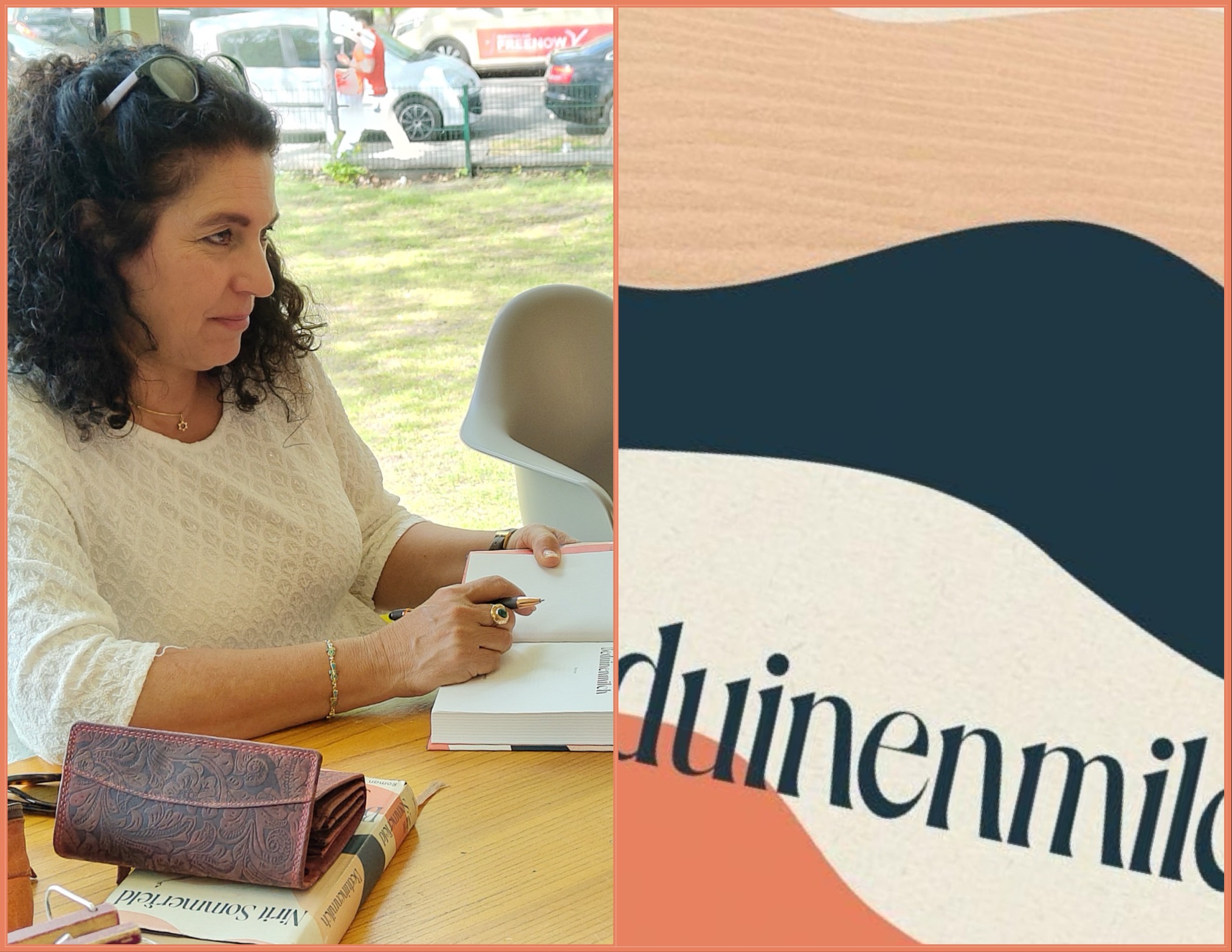
“Gidi & Mati” will be presenting their album, “The Strangers Are the Friends”, with a live performance on 13 February at Lettrétage in Berlin.
Here quotes form the mailing of Mati Shemoelof
„I would like to elaborate on it from an artistic point of view – Two years ago, we started jamming in Gidi’s Berlin living room. We didn’t know what would come of this project. I approached my art without fear, embracing insecurity in a new field, and so I started this musical journey, which, truth be told, I had never taken before. But to start down the path to a fruitful artistic career, one must be blind. We never said that we would have an album, but after performing in Potsdam, Berlin and Zürich, we realized that the time was right to record for future generations. I remember the thrill of entering the studio; for me, it was as if I was becoming a session musician with the Beatles. Gidi controlled the whole session and played all the instruments, but sometimes we jammed with the guitar. I learned so much and remember not even eating my sandwich on the way to the studio because I was so concentrated. Now, having reached one of the pivotal moments of my artistic career, we will celebrate with an album where I wrote the lyrics and Gidi composed the music, which we sing together. „
Thomas Schütt will read the English translation and friends will join us. Please listen to the two magical singles that we have just released to all the music channels.
We hope to see you all at our special event in Berlin, celebrating this unforgettable moment with us.
We’re starting from a shared premise: contact alone is not enough. If dialogue is meant to encourage participants to critically examine reality and imagine change, it must be intentionally designed and carefully facilitated. But that raises a central dilemma: Is dialogue most effective when it happens together or separately?
Both having begun their own journeys as participants in dialogue groups and working their way up to leadership positions, our speakers bring deep, lived experience from the field:
Lana Ikelan, Co-Director of Seeds of Peace Jerusalem (formerly Kids4Peace), engages young people across deep asymmetries of power and narrative. Dina Gardashkin, former Co-Director of Sadaka-Reut, confronts inequality, education, and political responsibility.
Together with Lana and Dina, questions such as will be explored: • How does the group setting impact the process participants undergo? • What kinds of transformation are possible only in mixed groups or only in separate groups? • What are the risks and limitations of each framework?
Sunday, January 25, 2026 | 8 pm Jerusalem time (19.00 Uhr MEZ)
This conversation is for educators, facilitators, activists, donors, and anyone grappling seriously with what dialogue can — and cannot — do in our current reality.
Ein Bericht in der ARD Mediathek über Giden Lev, geboren als Peter Wolfgang Löw 1935 in Karlsbad
Gidon Lev ist Holocaustüberlebender – und eine der wohl außergewöhnlichsten Stimmen auf Social Media. Dieser Zeitzeugenbericht erzählt von seinem bewegten Leben. Gidon Lev wächst als einziges Kind seiner jüdischen Eltern im böhmischen Ort Karlsbad auf. Mit dem Münchner Abkommen von 1938 endet Gidons Kindheit …