Die russische Seele der “Weißen Rose”

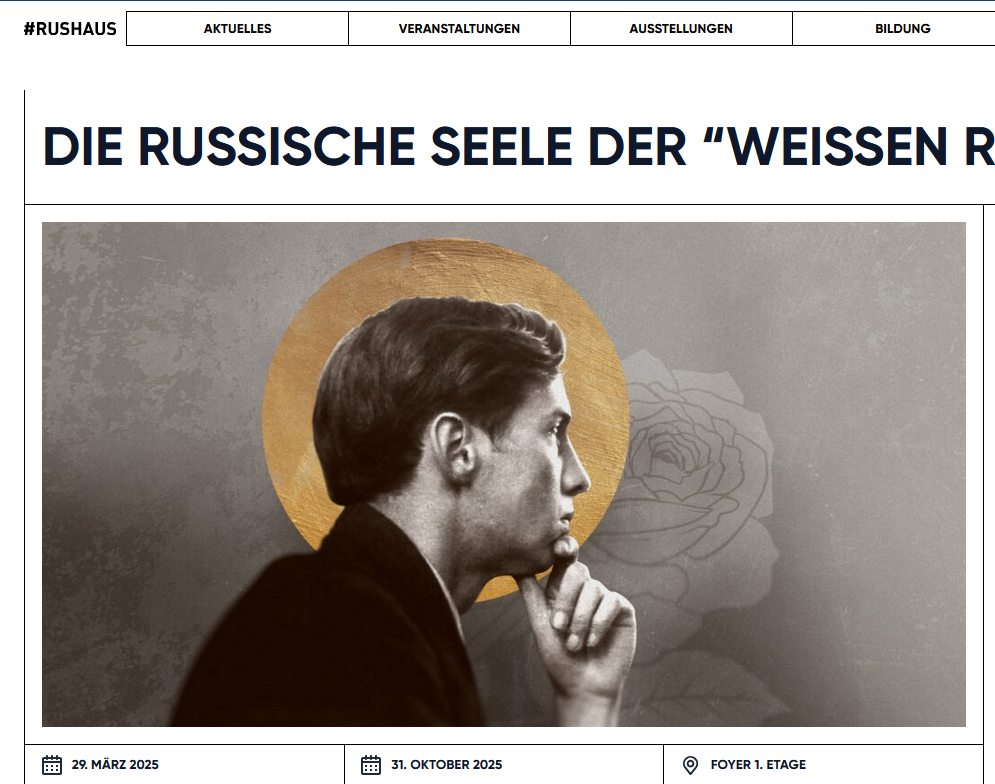
Der Name Alexander Schmorell ist vielen als einer der bedeutenden Widerstandskämpfer gegen den Nationalsozialismus während des Zweiten Weltkriegs bekannt. Als Mitbegründer der studentischen Widerstandsgruppe Weiße Rose setzte er sich mutig gegen das NS-Regime ein.

Sein Name steht in einer Reihe mit anderen prägenden Figuren des deutschen Widerstands wie Willi Graf sowie Hans und Sophie Scholl. Weniger bekannt sind jedoch seine russischen Wurzeln, sein tief verwurzelter orthodoxer Glaube und seine enge Verbindung zu Rußland. Nur wenige wissen, daß die Russische Orthodoxe Kirche im Ausland ihn im Jahr 2012 als Heiligen unter dem Namen Alexander von München kanonisiert hat.

Die von der Orenburger Stiftung ‚Eurasia‘ mitgestaltete Ausstellung beleuchtet die vielschichtigen Facetten seines Lebens. Sie gewährt Einblicke in die Geschichte seiner Familie, seine Kindheit in Orenburg und seine Jugend in Deutschland. Zudem erzählt sie von seinen Freundschaften, der Entstehung und Tätigkeit der Weißen Rose sowie von seinem Einsatz an der Ostfront. Besonders hervorgehoben werden sein unermüdliches Streben nach Freiheit, seine geistige Verbundenheit mit Rußsland, seine Heiligsprechung und die heutige Erinnerung an sein Vermächtnis.
(Noch frei) zugänglich bei der Berliner Zeitung ein Bericht von Michael Maier zur Ausstellung: SS-Himmler über Alexander Schmorell: Täter wegen „russischen Blutsanteils“ – Eine Ausstellung erinnert an einen Deutsch-Russen, der wegen seiner Mitwirkung an Aktionen der Weißen Rose von den Nationalsozialisten hingerichtet wurde.

Von der Taktik zur Liebe(sehe)

In einem Interview in der Frankfurter Rundschau befragt Inge Günther den israelischen Shoa-Forscher Amos Goldberg über die Beziehungen seines Landes zu Ultrarechten aus aller Welt und warum er Genozid-Vorwürfe für stichhaltig hält, auch wenn Gaza nicht Auschwitz ist.

Andere Stimmen! (IV)

Combatents for Peace: These words do not represent us

Polarisierung überwinden

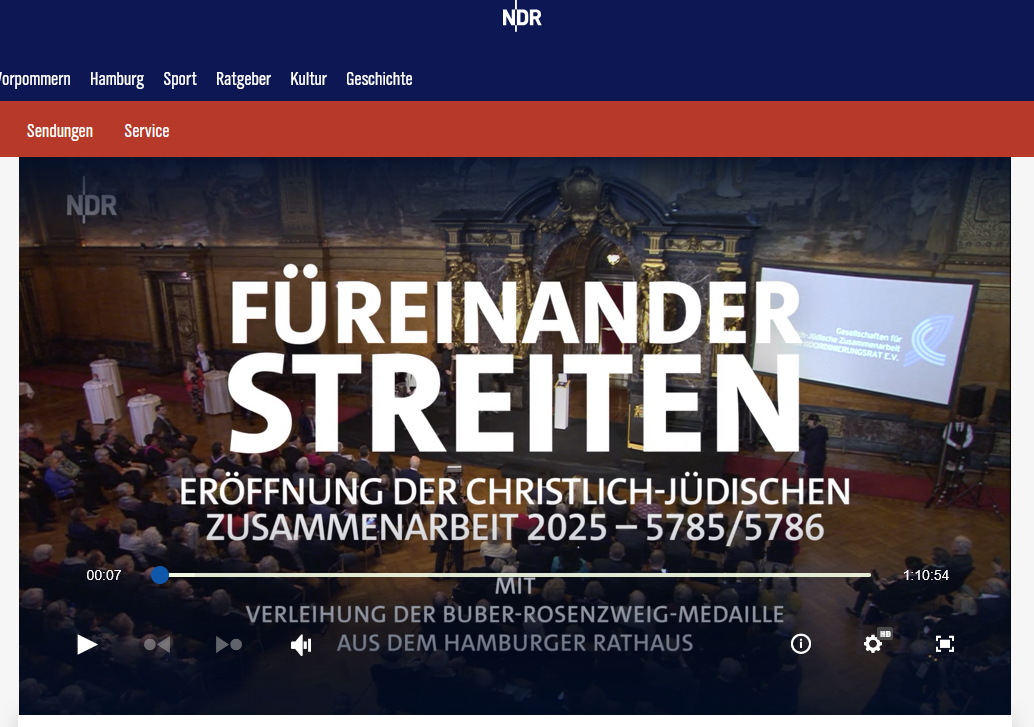
Mitschnitt der Verleihungszeremonie und Artikel auf ndr.de

Das kostbarste aller Güter

© Studiocanal – Trailer

„Wie läßt sich heute einer jungen Generation von der Shoa erzählen? Der Franzose Michel Hazanavicius versucht es in seinem neuen Film »Das kostbarste aller Güter« mit einer mehrfachen Verfremdung: Er nutzt Animation, um keine realen Gräuel darstellen zu müssen, und er erzählt es in Form eines Märchens. Es war einmal … „

Filmkritik von Thomas Abeltshauser auf dem Portal: epd-film.de

Ein Vergleich

Moshe Zuckermann im Overton-Blog vom 1. März 2025 über die AfD und Kahanismus.

„Der Erfolg der AfD bei den diesjährigen Bundestagswahlen darf als Meilenstein der deutschen Nachkriegsgeschichte gewertet werden. Er ist mit einem israelischen Meilenstein vergleichbar.“

Turning Holocaust Slang into Art: Between K. Tzetnik and Chava Rosenfarb

Prof. Hannah Pollin-Galay, Tel Aviv University – Zoom 3. März 2024 – Details

2025 Annual Naomi Prawer Kadar Memorial Lecture

Esteemed scholar Hannah Pollin-Galay explores how the Yiddish language evolved in Nazi ghettos and camps, gaining roughly 3,000 new words. Examining the works of K. Tzetnik and Chava Rosenfarb, this talk considers how these writers transformed „Khurbn Yiddish“ into powerful expressions of horror, resilience, and artistic memory.

***

The Yiddish language drastically changed in the ghettos and camps of Nazi Europe. By one estimate, roughly 3,000 new words and phrases were added to the language. Many of these neologisms were of a vulgar nature, relating to topics like theft and sex work. While some people found these new words embarrassing, unseemly and just plain ugly, others attempted to uplift them and transform them into art. Among the writers that incorporated Khurbn Yiddish (Yiddish of the Holocaust), into their postwar poetry and prose, the authors K. Tzetnik and Chava Rosenfarb stand out. Each extracted and presented the aesthetic potential of Khurbn Yiddish words in different ways.  K. Tzetnik emphasized the horrifying, bizarre side of Khurbn Yiddish words, molding them into an expressionistic scream. Rosenfarb, by contrast, shined a light onto the small acts of resilience contained within Khurbn Yiddish words, memories of self-expression and communication against the odds. Her ghetto terms become beautiful in the way they invite readers into scenes of everyday life under Nazi rule, moments from the margins of history that are rarely considered worthy of notice. The two authors also clash on the topic of female sexuality—and the ways that words relate to the body.

Hannah Pollin-Galay is Associate Professor in the Department of Literature at Tel Aviv University, where she is also Head of the Jona Goldrich Institute for Yiddish Language, Literature and Culture. Pollin-Galay researches and teaches primarily in the fields of Yiddish literature and Holocaust Studies, and has recently begun to foray into the field of ecocriticism. Her first book, Ecologies of Witnessing: Language, Place and Holocaust Testimony came out with Yale University Press in 2018 and her second, Occupied Words: What the Holocaust Did to Yiddish (U Penn Press, 2024) asks how the Holocaust changed the Yiddish language. She is currently working on a project exploring the fraught connections between Jews and non-human nature, across time and space. In addition to being a 2024-2025 Senior Scholar at the Fortunoff Archive for Holocaust Testimony at Yale University, Pollin-Galay is also a Yiddish Book Center Translation Fellow, where she is translating Yiddish ecopoetry from the Holocaust.

Zum Zustand unserer Debattenkultur

(und der politischen Kultur)

medico international und Amnesty International in Deutschland warnen gemeinsam vor dem Angriff gegen internationale Institutionen des Völkerrechts.

„Wir werden ihn besitzen“

So US-Präsident Donald Trump zum Gazastreifen.

Foreign Policy bat zehn Autoren, auf die Ankündigung des US-Präsidenten zu reagieren. Die Frankfurter Rundschau legt die Antworten erstmals in deutscher Sprache vor – zuerst veröffentlicht wurden sie am 6. Februar 2025 Magazin Foreign Policy.

Yousef Munayyer, einem palästinensischen Staatsbürger Israels und Leiter des Programms Palästina/Israel am Arab Center Washington DC

Robert A. Pape, Professor für Politikwissenschaft an der University of Chicago und Direktor des Chicago Project on Security and Threats.

Ahmed Fouad Alkhatib, einem in Gaza ansässigen Schriftsteller, Analyst und Senior Fellow beim Atlantic Council.

Dennis Ross, einem angesehenen Fellow am Washington Institute for Near East Policy.

Khaled Elgindy, Gastwissenschaftler am Center for Contemporary Arab Studies der Georgetown University.

Matthew Duss, dem geschäftsführenden Vizepräsidenten des Center for International Policy.

Dalia Hatuqa, Multimedia-Journalistin aus den USA und dem Westjordanland.

Sara Khorshid, Doktorandin an der Western University in Kanada.

Rala Rharrit, einer ehemaligen US-Diplomatin, die 18 Jahre lang im US-Außenministerium tätig war, bevor sie im April 2024 aus Protest gegen die Gaza-Politik der Biden-Regierung zurücktrat.

Aaron David Miller, Senior Fellow bei der Carnegie Endowment for International Peace.

From the Ruins of Gaza

In an interview, Pankaj Mishra discusses his forthcoming book on the Palestinians and the Shoah.

Pankaj Mishra is an Indian essayist and novelist who was born in northern India in 1969. He graduated with a Bachelor of Commerce degree from Allahabad University before completing his M.A. in English literature at Jawaharlal Nehru University in New Delhi. Mishra is the author of numerous books, among them From the Ruins of Empire: The Revolt Against the West and the Remaking of Asia (Picador, 2013), Age of Anger: A History of the Present (Picador, 2017), and a book of essays, titled Bland Fanatics: Liberals, Race, and Empire (Verso, 2020). His most recent book, The World After Gaza: A History, will be published on February 6 by Penguin Press. Diwan interviewed Mishra in late January to discuss his forthcoming book, and more broadly the themes that it addresses.

Diwan

Diwan, a blog from the Carnegie Endowment for International Peace’s Middle East Program and the Malcolm H. Kerr Carnegie Middle East Center, draws on Carnegie scholars to provide insight into and analysis of the region.