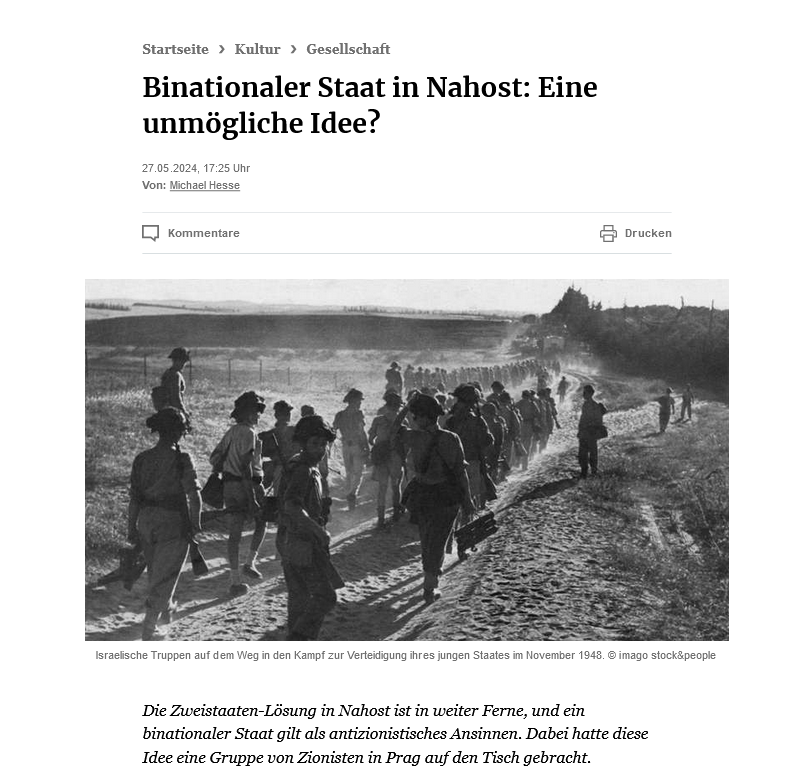
Michael Hesse schreibt in der Frankfurter Rundschau unter dem Titel: Binationaler Staat in Nahost: Eine unmögliche Idee? eine Annäherung an die Überlegungen von Omri Boehm und geht dabei auch noch einmal auf den Brit Shalom, besonders auf den Kreis des ‚Prager Zionismus‘ ein – lesenswert und heute umso mehr bedenkenswert, was einmal alles „denkbar“ war …
Auf der Seite von Feinschwarz sucht Ottmar Fuchs ’nach einem Weg, um im Nahost-Konflikt zweiseitig auf der Seite der Opfer zu stehen und würdigt die darin liegende, konstitutive und zugleich zu riskierende Überforderung‘.
Sechs Episoden – Es ist der 7. Oktober 2023: Radikalislamische Hamas-Terroristen ermorden in Israel 1.200 Jüdinnen und Juden. Ein Massaker, das sich – zumindest für große Teile der Weltöffentlichkeit – nicht angekündigt hat und in einem blutigen Krieg enden sollte. In einem Krieg, der, wenn auch nicht auf europäischem Boden, doch auch mitten in den europäischen Gesellschaften ausgetragen wird. Haß, Hetze und Antisemitismus inklusive. In den Folgen des Podcasts „Krieg und Frieden“ stehen wieder ethische und völkerrechtliche Themen im Fokus.
Mit ihren Gesprächspartnerinnen und -partnern versucht Susanne Krischke in dieser Staffel, konkrete Antworten auf konkrete Fragen zum Nahost-Konflikt zu finden.
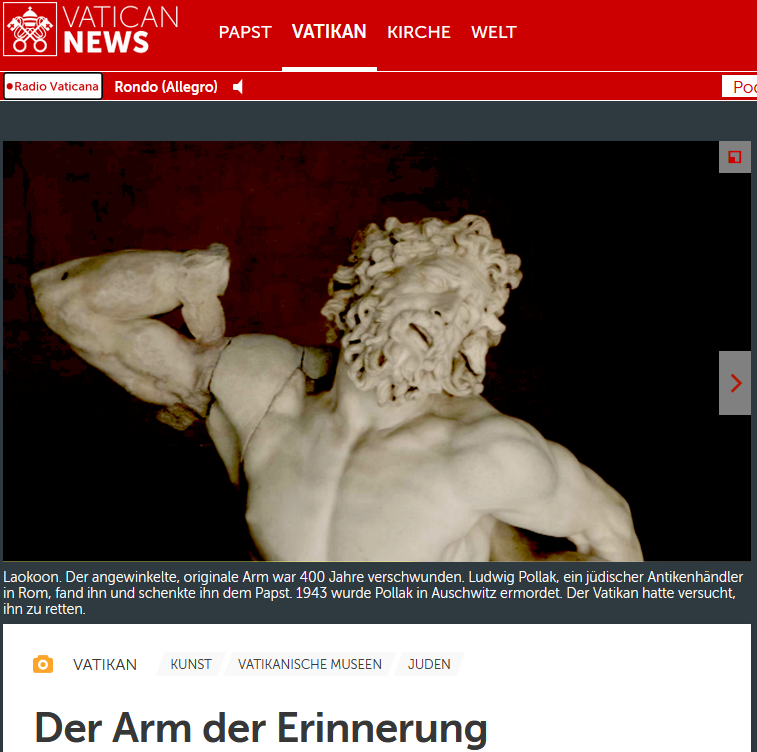
Ludwig Pollak, geboren 1868 in Prag, ein international bekannter, lange in Rom lebender jüdischer Antiquar, Kunsthändler und Archäologe, fand den fehlenden Arm des Laokoon – Im Oktober 1943 wurden er uns seine Familie in Auschwitz ermordet.
Ein Beitrag auf der Seite von Radio Vatican erinnert an den fehlenden Arm des Laokoon und was aus seinem Finder wurde…
Ein offener Brief jüdischer Hochschullehrer:innen aus den USA gegen die Bestrebungen EINE (diejenige der IHRA) Definiton des Antisemitismus zum Gesetz werden zu lassen.
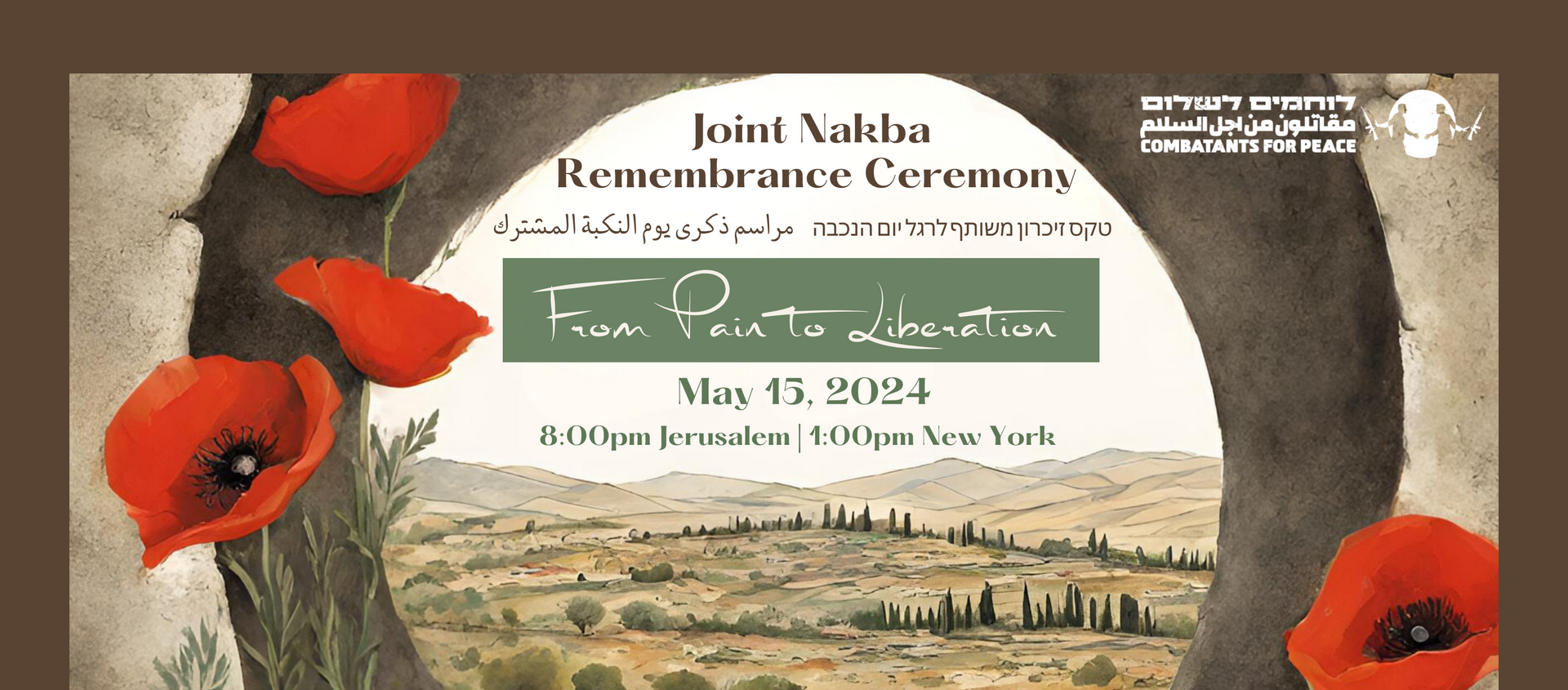
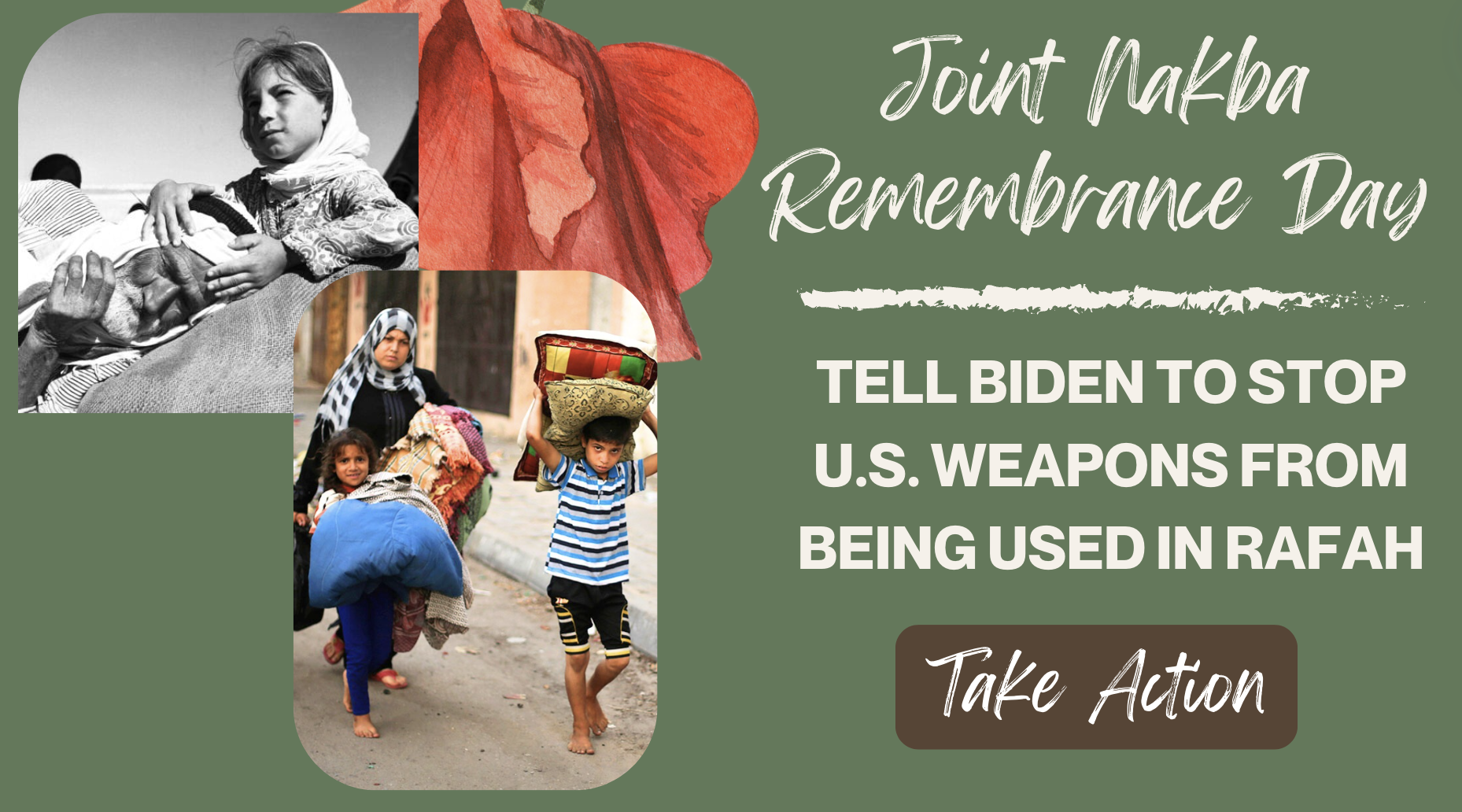
I shall remember them all Monday. I shall remember Pvt. Gideon Bachrach, after whom I am named. I will stand at attention during the Memorial Day sirens, to honor his memory and the memory of all those who died in Israel’s wars. I will think about the people who were slaughtered at the Nova music festival and in the communities along the border with Gaza, and about hostages and the soldiers who were killed in Gaza. But at the same time I cannot help but think about the victims of Israel’s hostilities, the Palestinian residents of Gaza and the West Bank. I will also stand at attention in memory of them.
„The people of Israel will remember their sons and daughters“ – and this year especially it is obligatory to remember also the tens of thousands of sons and daughters on the other side. It is impossible not to mourn „the beauty of youth, the heroic passion, the sacred will and the self-sacrifice of those who perished in the heavy battle“ – including theirs. Many of the tens of thousands of Gaza’s dead, too, had the beauty of youth and heroic passion and sacred will and self-sacrifice. May the people of Israel also remember them.
They have no Memorial Day, and there is no one to keep their memory alive. Many of them do not even have a grave. They were buried in mass graves on traffic islands or beneath the ruins of their homes. Whole families erased, 15,000 children killed. How is it possible to stand at attention this Memorial Day to honor our dead and not think, even for a moment, about their dead, too?
A day of remembrance that ignores the multitudes of innocents killed in the past seven months in Gaza is not a complete day of remembrance. It is a day of ultranationalist remembrance, of selective remembrance. In a year when the number of Palestinian dead, most of them women and children, reached such horrific proportions, we have no right to think only of ourselves and to remember only our dead, even if the catastrophe visited on Israel was too great to bear. In numerical terms, our losses amount to a fraction of theirs.
I hope this will not be held against me, but I cannot but think on Memorial Day also about their sacrifice, the tens of thousands who were killed through no fault of their own. I cannot but think of the 30 people, eight of them children, killed overnight into Saturday near Rafah, whose bodies were brought Saturday morning to Al-Aqsa Hospital in Deir al-Balah.
The images on Al Jazeera – the forbidden TV station – were horrifying: a foot protruding from a sheet of white plastic; a living hand holding a dead hand, loath to let go; a father kissing his dead child’s face. That is how they sat on the hospital floor Saturday and remembered their dead: the last for now, but far from being the last of their dead. It is impossible on Memorial Day not to think about them as well, even if your country completely shut its eyes and its heart to them.
This will be my Memorial Day this year, the memory of our fallen and the memory of their fallen. I cannot do otherwise, especially this year. You don’t have to compute the relative justice and injustice of the two nations to understand that both experienced disaster. There is also no need for blame games: Innocents have died, in the thousands, on both sides. The kibbutznik from Nir Oz, the raver at Nova and the refugee from Jabalya were all killed in vain.
It is absolutely right to honor and remember them all. A person remembers first of all his own dead, and after them all the dead of his people. It is also appropriate to remember the dead on the other side. Their survivors wandered the Gaza Strip Saturday, destitute, fleeing from one „safe“ place to another. They barely made it to Rafah when 100,000 of them had to flee from there as well. They just returned to the ruins of Jabalya, to which their antecedents fled in 1948, when the Israeli army on Saturday ordered them to leave again. This year, Memorial Day is also a provisional memorial day: A myriad more dead are on the way. There is not a single person in Gaza today who is safe. In Israel, too, the danger is far from over.
This year’s Memorial Day will be the most difficult of all. That is precisely why we must remember everyone – our own dead and also their dead.
Der 95-jährige Schriftsteller und ehemalige KZ-Häftling Ivan Ivanji ist in Weimar gestorben. Er lebte in Belgrad und war wegen der Eröffnung des Museums zur Zwangsarbeit im Nationalsozialismus dorthin gekommen.
Kurzer Filmausschnitt mit Würdigung des Museums durch Ivanji über die Seite der Deutschen Welle
Der israelisch-palästinensische Konflikt hat Europa zutiefst erschüttert. Die höchst unterschiedlichen Reaktionen der europäischen Staaten haben historische Wurzeln. Während der deutsche Verfassungspatriotismus als Versuch gedeutet werden kann, Verantwortung für den Holocaust zu übernehmen, ist das Selbstverständnis von Ländern wie Frankreich von ihrem kolonialen Erbe geprägt. Dieses schon lange bestehende Spannungsverhältnis zwischen zwei historisch gewachsenen Positionen wird im Zuge der jüngsten Ereignisse im Nahen Osten zunehmend explosiv. Die ansonsten einende Geschichte droht die Europäische Union zu zerreißen. Nach dem Historiker Timothy Snyder und der Menschenrechtsaktivistin Oleksandra Matviichuk wird sich der Philosoph Omri Boehm in der dritten „Rede an Europa“ den brisanten Fragen widmen, warum der israelisch-palästinensische Konflikt eine Gefahr für die europäische Identität darstellt und wie eine Verfassungskrise der Europäischen Union abgewendet werden kann.
Eine gemeinsame Veranstaltung von Wiener Festwochen | Freie Republik Wien und Institut für die Wissenschaften vom Menschen
Aufzeichnung der Rede mit eingeblendetem Text der Rede zum Mitlesen