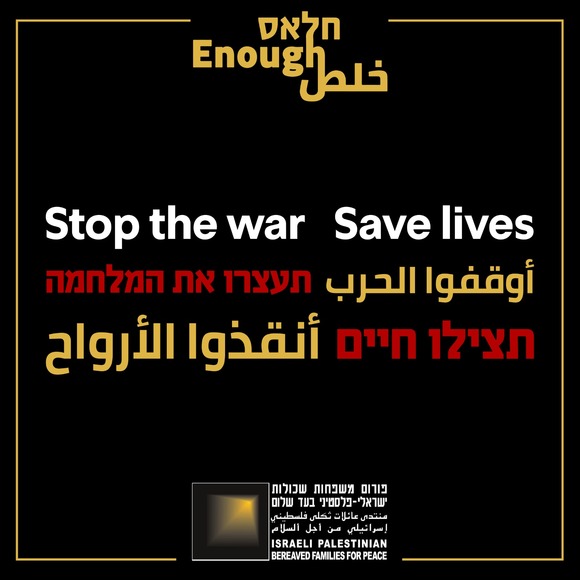
Erklärung des Parents Circle-Israeli Palestinian Bereaved Families for Peace vom 17. Juni 2025
„In diesen dramatischen und schmerzhaften Tagen haben wir – die palästinensischen und israelischen Familien, die den höchsten Preis bezahlt haben – eine klare Botschaft: Wir weigern uns, ein Leben zu führen, das von Mord, Besatzung und Angst bestimmt ist. Krieg und Konflikt werden uns nicht definieren. Wir bestehen weiterhin darauf, daß die Zukunft nur durch geteilte Menschlichkeit, Würde und die Hoffnung auf ein Leben in Freiheit, Gerechtigkeit und Sicherheit für alle gestaltet werden kann.“
Neuer von Forschenden aus Chemnitz und Leipzig herausgegebener Band erkundet Aufarbeitung und Gedenken bei rechten Gewalttaten
Buchvorstellung am 2. Juli 2025 im Chemnitzer NSU-Dokumentationszentrum
„Rechtsextreme Gewalttaten – darunter gerade auch rechtsterroristische Morde – stellen heute erschreckenderweise eine wiederkehrende, aber nicht hinnehmbare Begebenheit dar. Wie man:frau etwa am noch immer suchenden Umgang mit der Aufarbeitung des NSU-Komplexes sieht, bleibt der angemessene Umgang damit eine offene Frage“, sagt Dr. Ulf Bohmann, Vertreter der Professur Soziologie mit dem Schwerpunkt Soziologische Theorien an der Technischen Universität Chemnitz. Mit der jüngsten Eröffnung des NSU-Dokumentationszentrums Offener Prozess in Chemnitz sei dies auch zentraler Teil der Europäischen Kulturhauptstadt 2025, in der die TU Chemnitz eine wichtige Akteurin und Partnerin sei.
Bohmann und Dr. Piotr Kocyba, langjähriger Wissenschaftlicher Mitarbeiter an der TU Chemnitz und heute am Else-Frenkel-Brunswik-Institut Leipzig tätig, widmen sich in ihrem neu erschienenen und online frei zugänglichen Band „Rechte Gewalttaten in Deutschland. Aufarbeitung und Gedenkarbeit im lokalen Kontext“.
Grundlagen, Fallanalysen und Praxisbeispielen in diesem Zusammenhang. Auf 246 Seiten kommen einschlägige Forschende aus diversen akademischen Disziplinen wie auch zivilgesellschaftlich Engagierte zu Wort. Dies wird ergänzt durch Interviews zur Perspektive von Betroffenen (Semiya Şimşek, Tochter des ersten Mordopfers des NSU), des Journalismus (Annette Ramelsberger, Gerichtsreporterin der Süddeutschen Zeitung) sowie der Rechtsstaatlichkeit (Dr. Björn Elberling, Anwalt für Betroffene rechtsextremer Gewalt).
Der Band richtet sich gleichermaßen an Forscherinnen und Forscher wie Praktikerinnen und Praktiker:innen aus dem Bereich Rechtsextremismus und politische Bildung, und ist darüber hinaus auch für Bürgerinnen und Bürger und zivilgesellschaftliche Akteure interessant, die sich mit den Herausforderungen und Möglichkeiten der gelingenden lokalen Gedenk- und Aufklärungsarbeit auseinandersetzen wollen.
Hintergrund des Bandes ist eine Tagung, die im Kontext der von den beiden Herausgebern erarbeiteten Ausstellung „Zwickau und der NSU. Auseinandersetzung mit rechtsextremen Taten“ von 2024. Ausstellung, Tagung und Band wurden gefördert mit Mitteln des (mittlerweile ehemaligen) Sächsischen Staatsministeriums für Justiz und für Demokratie Europa und Gleichstellung sowie in Zusammenarbeit mit dem Kulturamt der Stadt Zwickau und dem Chemnitzer Verein ASA-FF e.V.
Veranstaltungshinweis: Am 2. Juli 2025 wird der Band ab 18:30 Uhr im Rahmen des Programms des NSU-Pilotdokumentationszentrums „Offener Prozess“ (Johannisplatz 8, Chemnitz) von den beiden Herausgebern Piotr Kocyba und Ulf Bohmann kurz vorgestellt, gefolgt von Kurzvorträgen der Autoren Christian Nicolae-Gesellmann und Danilo Starosta, die einen besonderen Fokus auf den lokalen Kontext in Chemnitz und Zwickau legen. Anschließend gibt es die Möglichkeit ins Gespräch zu kommen. Hier geht es zur Anmeldung:
Kommentar dazu in der Frankfurter Allgemeinen Sonntagszeitung (Tania Martini)
To the Association of University Heads in Israel, the Board of Academic Public Colleges, the Israel Academy of Sciences and Humanities, and Academics for Israeli Democracy
We, members of the academic and administrative staff in institutions of higher education in Israel, call on you to act immediately to mobilize the full weight of Israeli academia to stop the Israeli war in Gaza.
Israeli higher education institutions play a central role in the struggle against the judicial overhaul. It is precisely against this backdrop that their silence in the face of the killing, starvation, and destruction in Gaza, and in the face of the complete elimination of the educational system there, its people, and its structures, is so striking. Since Israel violated the ceasefire on March 18, almost 3,000 people have been killed in Gaza. The vast majority of them were civilians. Since the start of the war, at least 53,000 people have been killed in Gaza, including at least 15,000 children and at least 41 Israeli hostages. At the same time, many international bodies are warning of acute starvation – the result of intentional and openly declared Israeli government policy – as well as of the rendering of Gaza into an area unfit for human habitation. Israel continues to bomb hospitals, schools, and other institutions. Among the war’s declared goals, as defined in the orders for the current military operation “Gideon’s Chariots,” is the “concentration and displacement of the population.” This is a horrifying litany of war crimes and even crimes against humanity, all of our own doing.
As academics, we recognize our own role in these crimes. It is human societies, not just governments, that commit crimes against humanity. Some do so by means of direct violence. Others do so by sanctioning the crimes and justifying them, before and after the fact, and by keeping quiet and silencing voices in the halls of learning. It is this bond of silence that allows clearly evident crimes to continue unabated without penetrating the barriers of recognition.
We cannot claim that we did not know. We have been silent for too long. For the sake of the lives of innocents and the safety of all the people of this land, Palestinians and Jews; for the sake of the return of the hostages; if we do not call to halt the war immediately, history will not forgive us. We will not forgive ourselves. It is our duty to act to stop the slaughter; it is our duty to save lives. It is our duty to save what can still be saved of this land’s future. The institutions of higher education in Israel must raise their voices, address their students and the public at large, look at reality directly and call things what they are – unspeakable actions being done in our name, with our own hands, that will ultimately result in destroying higher education in Israel and the entire society from within.
For the online version of the letter in Hebrew, Arabic, and English with the full list of signatories, click here [Googledoc].
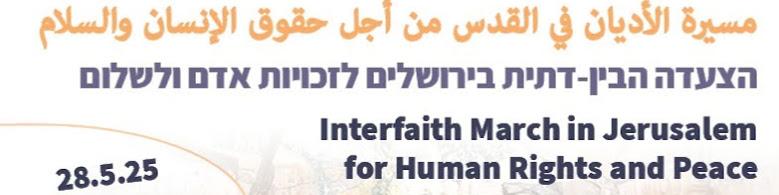
600 Tage nach Beginn des Gaza-Kriegs sind Vertreter verschiedener Religionen am Mittwoch von der Jerusalemer Innenstadt in Richtung Altstadt gezogen. Das Motto der Demonstration lautete: Frieden ist der Weg, und am besten geht man ihn gemeinsam.
Gewidmet war die dritte Ausgabe des interreligiösen Marsches der israelischen Friedensaktivistin Vivian Silver, die am 7. Oktober 2023 von der Hamas ermordet worden ist. Er war als Gegenpol zum nationalistisch aufgeladenen und oft gewalttätigen Flaggenmarsch am sogenannten Jerusalem-Tag entstanden, der in diesem Jahr auf den 26. Mai fiel.
Zu den Teilnehmer:innen gehörte auch der deutsche Botschafter in Tel Aviv, Steffen Seibert und Ines Fischer, Pfarrerin der deutschsprachigen lutherischen Gemeinde in Jerusalem, sie sagte gegenüber der Nachrichtenagentur KNA.„Es ist so wichtig, dass Menschen zusammen für die Gottebenbildlichkeit auf die Straße gehen – und schön, daß es geht“.
Bericht auf Vaticannews (und Audienz für Vertreter:innen von Friedensbewegungen im Vatikan)
TU Berlin verleiht Arthur Langerman die Würde eines Ehrensenators – Ausstellungseröffnung #FakeImages
Die Technische Universität Berlin hat am 26. Mai 2025 auf Beschluss des Akademischen Senats dem belgischen Shoa-Überlebenden Arthur Langerman die Würde eines Ehrensenators verliehen. Mit dieser Auszeichnung würdigt die Universität sein jahrzehntelanges Engagement gegen Antisemitismus sowie die großzügige Überlassung seiner weltweit einzigartigen Sammlung visueller Antisemitika an die TU Berlin.
Arthur Langermans Eltern sowie zahlreiche weitere Verwandte wurden 1944 nach Auschwitz deportiert, nur seine Mutter kehrte zurück. Er selbst überlebte in mehreren Kinderheimen. Seit über fünfzig Jahren sammelt er judenfeindliche Bilder, um auf deren Wirkungsmacht hinzuweisen und der Verbreitung von Hassbildern entgegenzuwirken.
Die Sammlung, die Langerman in jahrzehntelanger mühevoller und akribischer Arbeit zusammengetragen hat, bildet das Fundament des nach ihm benannten Arthur Langerman Archivs zur Erforschung des visuellen Antisemitismus, das am Zentrum für Antisemitismusforschung der TU Berlin angesiedelt ist. Sie stellt einen einzigartigen Quellenbestand mit mehr als 11.000 Artefakten zur Erforschung historischer und gegenwärtiger Judenfeindschaft dar, dient Bildungs- sowie Ausstellungszwecken und steht für die kritische wissenschaftliche Auseinandersetzung mit visuellem Antisemitismus.
Pioniere im Kampf gegen Antisemitismus und für die Demokratie
In ihrer Laudatio sagte Prof’in. Drin. Stefanie Schüler-Springorum, Direktorin des Zentrums für Antisemitismusforschung: „Seine Sammlung ist ein unbequemes kulturelles Erbe, aber auch ein zentraler Teil der historischen Verantwortung Deutschlands. Sie verpflichtet uns und hilft uns, die Erinnerung an die Folgen des Judenhasses ebenso lebendig zu halten wie die Wachsamkeit in der Gegenwart. Gleichzeitig stärkt sie durch ihre weltweite Einzigartigkeit auch den Wissenschaftsstandort Berlin. Daß ein Holocaust-Überlebender sein Lebenswerk einer deutschen Universität vermacht, ist alles andere als eine Selbstverständlichkeit. Sein Geschenk und sein Vertrauen erfüllen uns mit Dankbarkeit und Demut – und dem Wissen um unsere Verantwortung. Denn Arthurs Hoffnung und Auftrag sind eindeutig: ‚Deutschland und Berlin müssen Pioniere sein im Kampf gegen den Antisemitismus und für die Demokratie!‘“
Die Ehrensenatorenwürde überreichte TU-Präsidentin Prof. Dr. Geraldine Rauch.
Eröffnung der Ausstellung #FakeImages – Gefahren von Stereotypen erkennen
Am Vormittag des 26. Mai 2025 eröffnete Lars Oeverdieck, TU-Kanzler und Mitglied im Kuratorium „Arthur Langerman Archive for the Study of Visual Antisemitism Foundation“ (Arthur Langerman Foundation) die Ausstellung #FakeImages – Gefahren von Stereotypen erkennen im Lichthof der TU Berlin. Sie wurde aus den Beständen der Langerman-Sammlung zusammengestellt. Gemeinsam mit Dr. Angelika Königseder, Forschungs- und Projektkoordinatorin des Arthur Langerman Archivs, führte Arthur Langerman durch die vom Museum Kazerne Dossin (Mechelen, Belgien) kuratierte Schau, die nach Stationen u.a. bei den Vereinten Nationen in New York und der Europäischen Kommission in Brüssel erstmals in Deutschland gezeigt wird. Die Ausstellung thematisiert die Wirkung und Funktionsweise antisemitischer Bildpropaganda und richtet sich an eine breite Öffentlichkeit.
Die Ausstellung #FakeImages ist bis voraussichtlich 19. Juli 2025 um den Lichthof des Hauptgebäudes der TU Berlin zu sehen. Eintritt ist frei. Adresse: TU Berlin, Hauptgebäude, 1. Etage, Straße des 17. Juni 135, 10623 Berlin
Jerusalem Declaration on Antisemitism /Jerusalemer Erklärung zum Antisemitismus
Die Debatte um die verschiedenen, allesamt in der Wissenschaft diskutierten Definitonen, hat durch den Beschluß des Parteitages der Linken wieder Fahrt aufgenommen. Hier dazu eine
Das Jüdische Museum Berlin lädt den amerikanischen Autor Joshua Cohen ein, das kulturelle Erbe des Verlegers und Warenhaus-Unternehmers Salman Schocken zu erkunden. Anhand ausgewählter Exponate aus der Sammlung des Museums kommentiert Cohen in der Ausstellung die Geschichte des Schocken-Verlags und nimmt sie zum Ausgangspunkt für eine zeitgenössische Perspektive auf Kultur und Kapital, auf Warenhäuser und Museen und nicht zuletzt auf Fragen der (Wieder-)Aneignung und der Zugehörigkeit.
The Research Centre for Religious Diversity,(Forschungsstelle für religiöse Vielfalt, FAU Erlangen-Nürnberg)is delighted to invite you to an onlineDiscussion with Photographer and Film MakerMr Nadir Mauge
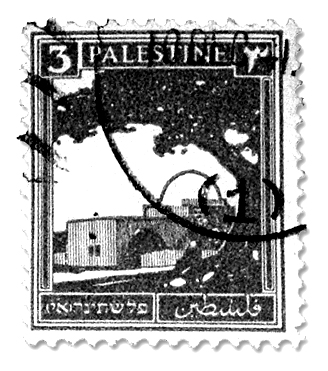
Mr Mauge will show parts of his film “My tomb, our tomb, Rachel’s Tomb” as well as discuss his monograph „Väter des Heiligen Landes“, a visual work documenting Christian monastic traditions in the Holy Land (co-authored with Michael Ragsch and Sebastian, Be+Be-Verlag, 2020).
Nadir Mauge is a visual storyteller based in Bethlehem, Palestine, specializing in film and photography. His has exhibited and screened internationally, including at the Toronto Palestine Film Festival and Photo Independent in Hollywood. Through his craft, he documents stories that raise awareness of social issues and celebrate the essence of genuine humanity. His work is especially relevant for documenting the religious diversity in Palestine, a diversity embedded in the lives and histories of the people.