Giorgia Valente und Veronica Neifakh schreiben auf Medialine über Bilder, die Kinder in diesen Tagen schaffen …

Giorgia Valente und Veronica Neifakh schreiben auf Medialine über Bilder, die Kinder in diesen Tagen schaffen …

Der anglikanische Primas, Justin Welby, Erzbischof von Canterbury, hat vom 15-19. November das Heilige Land besucht, hier die Erklärung, die er am Ende des Besuchs am 21. November zusammen mit dem anglikanischen Erzbischof in Jerusalem, Hosam E. Naoum, abgegeben hat.
Dear Friends,
Grace to you and peace from God our Father, and the Lord Jesus Christ.
Over five days, 15-19 November 2024, we travelled together, as fellow brothers in Christ, on a long-planned pilgrimage to pray and worship with the living stones of Palestine and Israel, listening to their voices, and offering solidarity with them in the shadow of the ongoing war in the region. As Archbishop Justin prepares to leave office, we give thanks that his final official visit to the Holy Land affirmed the prayerful solidarity of the Church of England with the Diocese of Jerusalem and all Palestinian Christians.
The last time we met in Jerusalem was just two weeks after the sudden eruption of war in the Holy Land in October 2023. Since then, the world has witnessed unimaginable suffering, death, destruction and displacement that has made Gaza simply uninhabitable. We give thanks that even in the midst of such horrors the Al Ahli Anglican Hospital in Gaza City continues to serve those in need. We stand united in our call for an immediate end to the war, the release of all hostages and prisoners and an end to forced displacement.
In Ramallah and Bethlehem we were profoundly shocked and shaken to hear from Palestinian Christians – lay and ordained, young and old, male and female – about their daily struggles to survive the ongoing occupation. Such is the despair we encountered that many, especially young adults, question their own future here. We fear for the long-term survival of the indigenous Christian presence in the Holy Land that stretches back to the time when our Lord walked this land. This existential challenge demands our focused attention and collective response.
We met with the Nassar family at the Tent of Nations outside Bethlehem City. We heard of their never-ending legal battles before Israel’s Supreme Court to defend their ownership of their farm, which has been in their family since Ottoman times. In the Al Makhrour valley we met with the Kisiyia family, who are challenging through the Courts the demolition of their home and the confiscation of their land by settlers.
We met with the Nasir family in their home in Birzeit and heard of the ongoing administrative detention of their daughter Layan, a young Palestinian Christian from St Peter’s Anglican Church, Birzeit. Layan has been detained since 4 April 2024 without legal proceedings, by order of a regional military court, based on classified evidence that leaves her facing unknown allegations. Layan’s family do not know when she will be released, all the time without being charged, tried or convicted. There are thousands of Palestinians like Layan in administrative detention.
We thank all the families we met for their peaceful resistance and costly witness. These are not isolated cases, but part of a deliberate strategy of harassment and intimidation to force Palestinian families from the land. Reducing Palestinians to a position of despondent surrender, where they must either live under the yoke of occupation or emigrate, is deeply wrong and unjust. It will bring neither peace nor security.
In Nazareth, we met with the clergy and indigenous Christians, and heard about the challenges that church schools and Arab communities are facing in Israel. We prayed at St Gabriel’s Church of the Annunciation and the Basilica of the Annunciation. We are greatly encouraged by the ecumenical life that exists amongst the churches in Galilee and give thanks to the leadership of the Heads of Churches in Jerusalem for their ecumenical witness.
Throughout our journey together, we heard repeatedly that many indigenous Christians of the Holy Land feel abandoned by the global Church’s response to the war and the challenges they face. This must change. As disciples of Jesus Christ, we must be united in saying there can be no Gospel justification for denying people their God-given human dignity and the rights that flow from this.
As we approach Advent, when we remember and celebrate the birth of the Messiah and anticipate his second coming, we invite Christians across the Anglican Communion to recall the parable of the persistent widow (Luke 18: 1-8). Please join together in prayer against these injustices, appealing both to God to intervene and enact justice, and to soften the hearts of the oppressor. We must always pray and never lose heart. Through our prayerful persistence, justice will prevail.
We call on you to advocate with your political representatives for a just and lasting peace that recognises the human dignity of all people, and upholds international humanitarian law. We ask for your help in pressing for the immediate release of Layan Nasir.
Finally, we renew our appeal of 24 October 2023, and ask that you support financially, if you are able to do so, the Church’s ongoing ministries in Gaza, Israel and Palestine and across the whole Diocese of Jerusalem. Alongside healthcare programmes and hospitals, the Diocese also provides education and training, youth and women’s ministries and ecumenical and interfaith engagement, all of which builds the resilience of the local indigenous Christian community at a time of great crisis and emergency.
Thank you for your ongoing support for the living stones of the Holy Land and for the work of the Diocese of Jerusalem in the very lands in which our Lord Jesus Christ was born and ministered in his earthly life – before offering up his life on our behalf and then rising again victorious from the grave, overcoming death and giving hope for a new life.
May God bless you and your loved ones this Advent, and may the peace of Christmas bring peace to all the peoples of the Holy Land.
The Most Reverend Justin Welby, The Archbishop of Canterbury
The Most Reverend Hosam E. Naoum, The Anglican Archbishop in Jerusalem
Notes: International Partners receiving donations for this appeal include:
Jerusalem Middle East Church Association and Friends of the Holy Land in the UK; EMS in Germany; the American Friends of the Episcopal Diocese of Jerusalem in the USA; Canadian Companions in Canada and the Anglican Board of Mission in Australia.


Zwei kleine Bausteine zur Debatte innert der palästinensischen Gesellschaft(en):
Hierzulande: In der taz ein Kommentar von Rajaa Natour über alternative Narrative.
In Gaza: Salman al-Daja, ehemaliger Dekan der Fakultät für Scharia und Recht, verurteilt Hamas-Angriff auf Israel mit Fatwa (Beitrag ORF)

Auf dem Youtub-Kanal des Deutschen Koordinierungsrats der Gesellschaften für christlich-jüdische Zusammenarbeit findet sich jetzt der Mitschnitt eines Akademieabends mit Dr. Monika Boll, Prof. Dr. Helmut König und Prof. Dr. Thomas Meyer (Berlin/München)
Hier der Link zur Aufzeichnung: youtu.be/dWLM7b23V6M?si=Bv9kosQEpjzJVo9m.

18. Dezember 2024 – Veranstaltungen in Berlin
(… sicher wird es auch anderenorts etwas geben … )
Landeszentralbibliothek – Amerika-Gedenkbibliothek | PopUp-Saal
Zoom-Gespräch mit Yonathan Mizrachi (Peace Now Settlement Watch)
20. November 2024 – 20.30 Uhr | Anmeldung

A Horizon of Violence – so lautet der Titel eines längeres Essays von Ursula Lindsey (Amman), keine einfache Lektüre …

Er ist erschienen in einer Serie bei der Open Society Foundations.
Ursula Lindsey is a reporter, essayist and book reviewer who largely writes about North Africa and the Middle East, where she has lived for the last two decades. After living in Egypt and Morocco, she is now based in Amman, Jordan. She is a frequent contributor to The New York Review of Books and a co-host of the BULAQ podcast, which focuses on Arabic literature in translation.
Internationalen Graduiertenkollegs »Belongings« zur jüdischen materiellen Kultur
Leibniz-Institut für jüdische Geschichte und Kultur – Simon Dubnow
Mit einem Festvortrag von Ofer Ashkenazi wurde am 12. November 2024 im Paulinum der Universität Leipzig das Internationale Graduiertenkolleg »Belongings: Jewish Material Culture in Twentieth-Century Europe and Beyond« feierlich eröffnet. Das Kooperationsprojekt der Hebräischen Universität (West-)Jerusalem, der Universität Leipzig und des Dubnow-Instituts bietet ein vielseitiges Qualifizierungsprogramm für herausragende internationale Promovierende.
Das Internationale Graduiertenkolleg »Belongings« (IGK) beruht auf der Idee, daß jüdische Geschichte auf substanzielle und innovative Weise durch die Analyse ihrer Welt der Objekte rekonstruiert, erzählt und erinnert werden kann. Es vereint deutsche, israelische und andere internationale Forscherinnen und Forscher aus allen akademischen Karrierestufen. Wissenschaftsminister Sebastian Gemkow hebt hervor: „Die Forschung zur Verwurzelung und zur Zugehörigkeit der jüdischen Kultur in und zu Europa hat nicht zuletzt vor dem Hintergrund neuer antisemitischer Tendenzen nicht nur in Deutschland ganz besondere Bedeutung. Ich freue mich sehr, daß das Graduiertenkolleg »Belongings« jetzt seine Arbeit aufnimmt. Nicht nur weil hier mit der Universität Leipzig, dem Dubnow-Institut und der Hebräischen Universität (West)Jerusalem drei starke Institutionen ihre Expertise bündeln, sondern weil die Forschung und die gewonnenen Erkenntnisse künftig zur gesellschaftlichen Verständigung beitragen werden. Ich wünsche allen Forscherinnen und Forschern gutes Gelingen bei ihren Projekten.“
Während der Eröffnung betonte Yfaat Weiss, Sprecherin des Kollegs und Direktorin des Leipziger Dubnow-Instituts: „Die politischen Umstände als äußerer Rahmen des Kollegs belasten uns sehr. Das Ausmaß der Verwerfungen stellt die Frage nach der Relevanz unseres Vorhabens. Ich persönlich halte aber gerade diese für den Grund und den Kern unserer Tätigkeit. Und hoffe sehr, daß es uns gelingt, die Kluft zwischen der Dringlichkeit der Gegenwart und dem langen Atem, den Wissenschaft und Forschung brauchen, überbrücken zu können und uns auf diesem Wege historischen Themen mit der notwendigen Aufmerksamkeit für Fragen unserer Zeit zu widmen.“ Zusätzlich zu ihr sprachen Eva Inés Obergfell, Rektorin der Universität Leipzig, Oron Shagrir, Vize-Präsident der Hebräischen Universität (West) Jerusalem sowie Benjamin Pollock, Sprecher des Kooperationspartners im IGK.
Fünf Forschungscluster des Kollegs ermöglichen die Erforschung jüdischer materieller Kulturen in Europa und den Gebieten jüdischer (erzwungener) Emigration vom 19. bis zum 21. Jahrhundert aus multidisziplinärer Perspektive. Zwei Kohorten internationaler junger Wissenschaftlerinnen und Wissenschaftler forschen im Wechsel in Leipzig und Jerusalem und teilen ihre Ergebnisse mit der wis-senschaftlichen Gemeinschaft und der interessierten Öffentlichkeit. Zudem arbeiten sie eng mit Bibliotheken, Museen und Archiven zusammen, um Netzwerke in verschiedenen beruflichen Bereichen aufzubauen.
Das Kolleg wird gefördert durch die Deutsche Forschungsgemeinschaft (DFG) und die Alfred Landecker Foundation.

Von links nach rechts: Eva Inés Obergfell, Oron Shagr-ir, Yfaat Weiss und Jörg Deventer (Stellvertreter der Direktorin am Dubnow-Institut) während der Eröffnungsfeier. Photo: Swen Reichhold (Quelle)
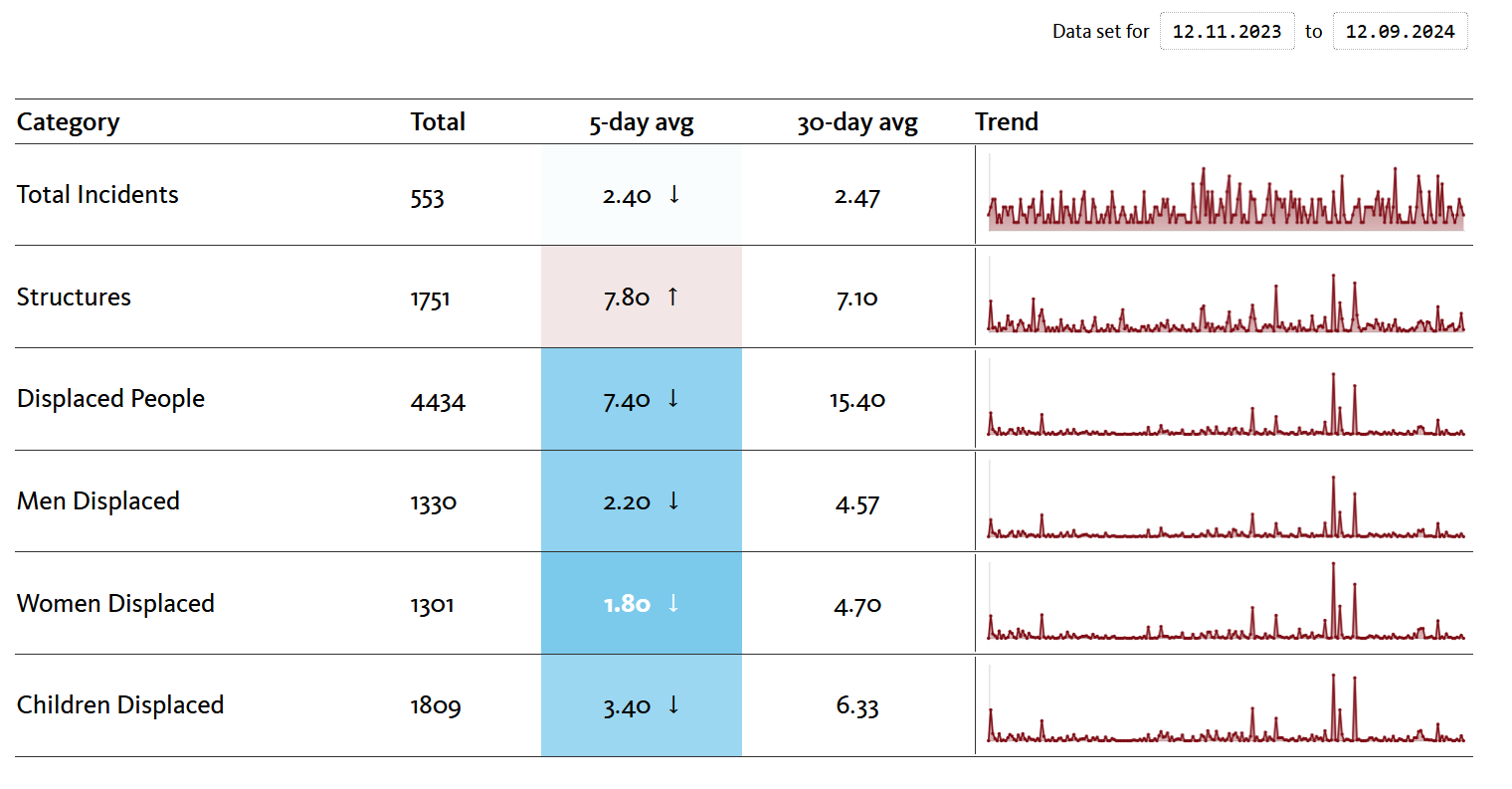
Neues Video der International Crisis Group zur steigenden Siedlergewalt