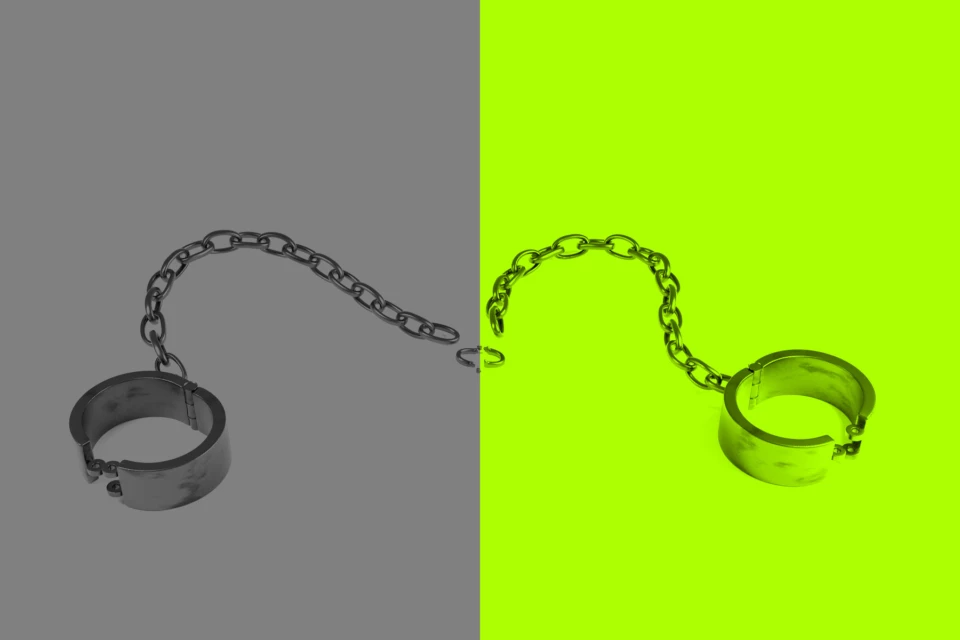
Eight artists representing a diversity of Jewish identities and artistic practices, the works on display pull from literature, opera, film, psychoanalysis, mythology, disability studies, and personal experience. They take history, real and imagined, to explore the rocky, recursive, and often disjointed path from breaking to recovery after trauma. Some artists engage with the moment of rupture, some interrogate the promise of reparation and repair, while others explore the shapes of the broken pieces.
Introduction Here are this year’s versions of the “small” and “large” Yom Kippur viduim (Confessions of our sins) combining the traditional texts and our modern Israeli sins. Reciting these words may not feel like prayer because, like the traditional vidui, it is concrete and asks us to take individual responsibility for the collective sins of our society and our people. The traditional confessions were never meant to be just a collection of words that we thoughtlessly recite on Yom Kippur. They are burning words, intended to make us feel uncomfortable because they speak painful truths about our lives and our society and our people that we must confront if we are to truly engage in the kheshbon nefesh (soul searching) that is a primary task during this season. We can then engage in “teshuvah.” Often translated as “repentance,” it means to hear and answer the call of God and conscience, make an effort to turn and change, and return to our truest and highest selves individually and collectively. Just as the High Priest in ancient times had to recite his own vidui before saying a vidui for others, we need to look at our own sins before we recount the sins of others. One misses the point if one reads these modern versions in order to criticize those we don’t agree or identify with. The vidui is in the plural, because we say that, even if I have not personally committed these sins, my society has committed the sins recited in the traditional or the modern vidui, and I therefore share responsibility. This vidui is written for those who in some way identify with Israel, and include themselves in the Israeli “we” when you recite “For the sins we have committed…” If you are not a part of the Israeli “we,” you might want to construct a similar vidui looking at the societies and communities of which you are a part, and share responsibility for. For some the sin they must confess is always assuming the worst about Israel, while others must confess defending Israel, no matter what. If some of the lines do not feel to you like they apply to Israeli society, please try to drop your defenses, and think again. If you still don’t think something applies, we again hope that the Torat Tzedekvidui will challenge you to create your own. Please feel free to download our vidui, then cut and paste and add and subtract to create your own personal/societal vidui. The point is to challenge you to engage in khesbon nefesh (soul searching), not to silence or intimidate. It is also possible to only recite a limited number of these texts, and concentrate on them. In many cases the first line is from the traditional viduis, and there are notes after the vidui explaining which traditional sources many of the concepts are taken from. Most of us simply can’t be so self critical for most of the year. But, sometimes the power of the High Holy days allows us to do what we don’t manage to do at other times of the year. These viduis are not intended to be a delegitimization of ourselves, of our people, or our country. They are actually an expression of our deep faith in ourselves, our ability to return to the good that is our true selves, and our ability to improve our society. When we engage in kheshbon nefesh about ourselves and Israel on Yom Kippur, we can then celebrate our personal and Israeli assif rukhani (spiritual harvest) on Sukkot-our attributes and accomplishments that we are proud of as individuals and as a nation. The vidui and the assif go together.
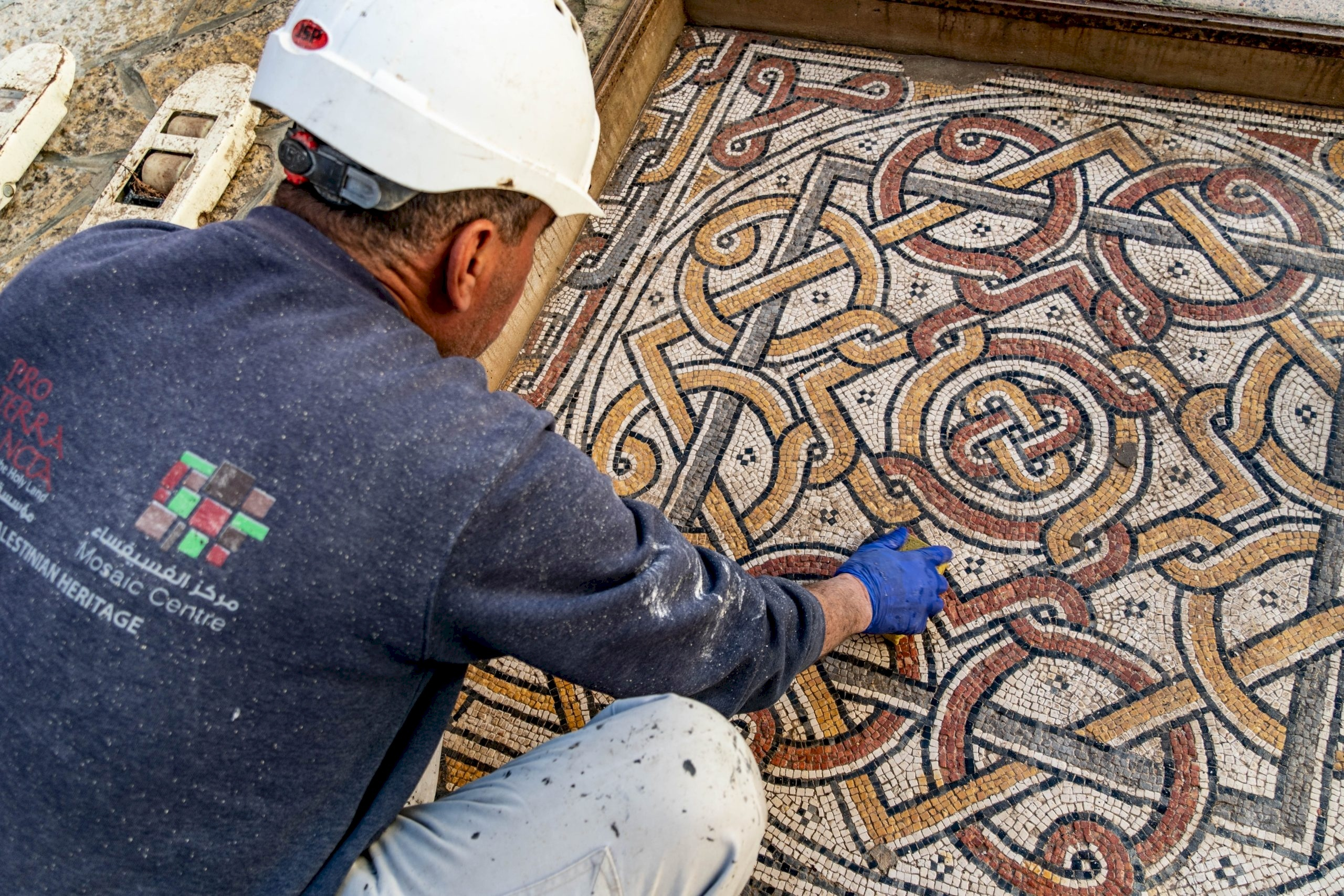
Ein Interview mit Osama Hamdan, Direktor des Mosaic Center of Jericho, geführt von Cécile Leca (lpj.org) – Hier das Gespräch auf Englisch und der Hinweis auf die Arbeit des Zentrums in Jericho.
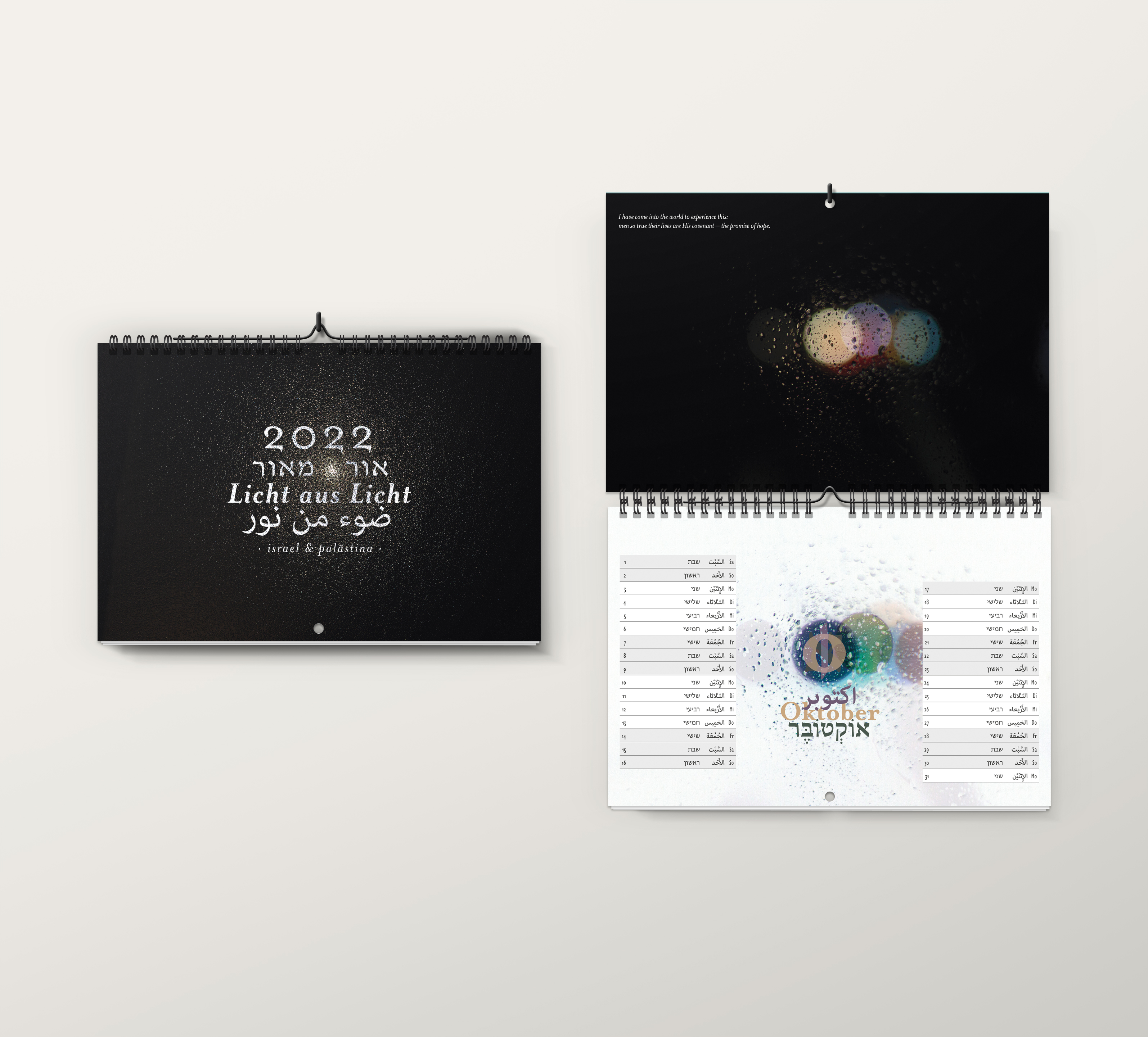
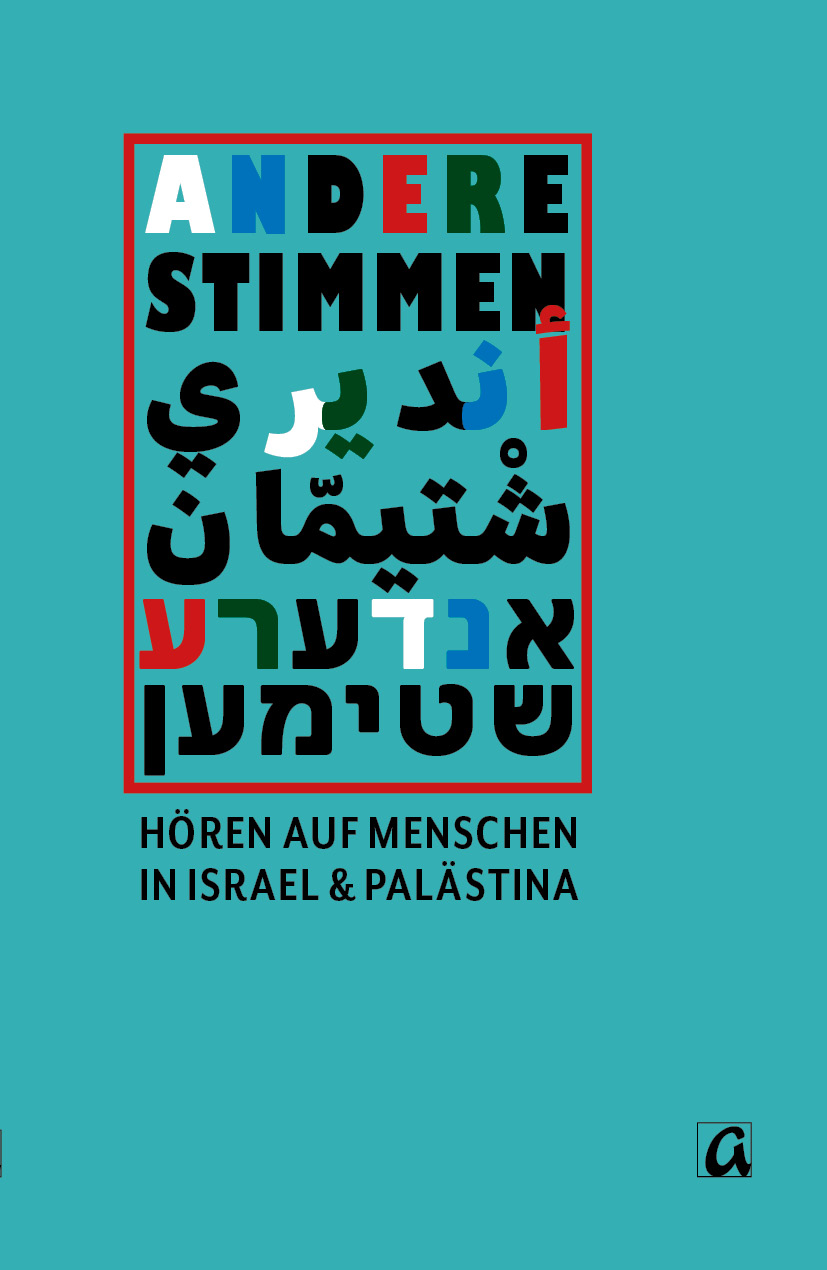
Die Ausgabe 2/2022 unserer Zeitschrift israel & palästina ist auch als Buchausgabe im AphorismA Verlag erschienen. „Hören auf Menschen in Israel & Palästina“ – Herausgegeben von Jürgen Schulz und mit einem Vorwort von Ulrich Duchrow.
Offering a glimpse into the vital Mizrahi literary landscape, this panel will gather several Mizrahi authors of different generations, backgrounds, and experiences. These well-known authors will be reading from their invaluable work and engaging the audience in a conversation about their specific texts as well as about their more general struggles and challenges. While aiming at giving a flavor of the wide-ranging aesthetics, generic, and stylistic scope of Mizrahi creativity, the panel, more broadly, hopes to give a sense of the intricacies of the Mizrahi story. The reading will be accompanied with English translation to facilitate the discussion with the audience.
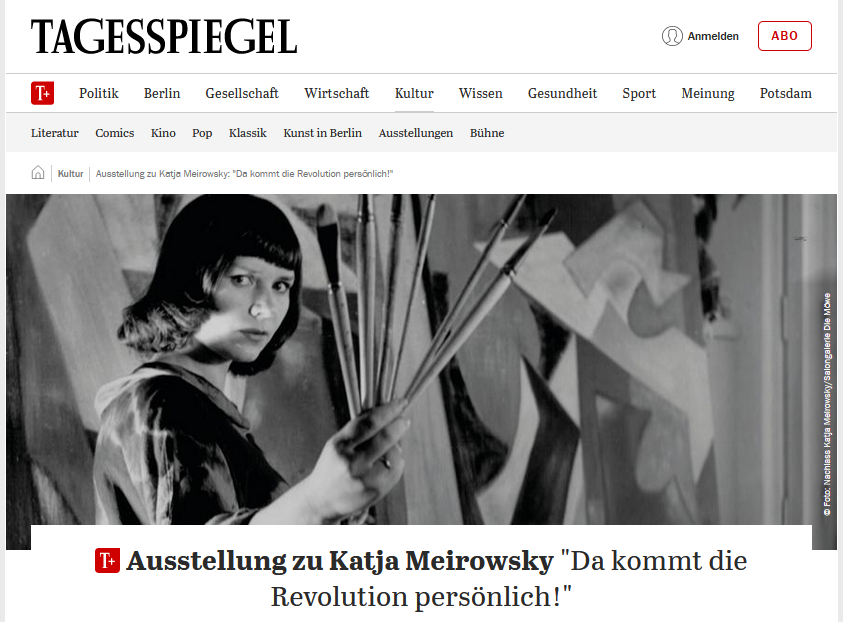
Ihrer künstlerischen Begabung folgend, begann Katja Meirowsky 1939 in Berlin Malerei zu studieren. Aufgrund ihrer jüdischen Herkunft verboten ihr die Nationalsozialisten 1942 die Fortsetzung des Studiums. Im selben Jahr flüchtete sie nach Polen. 1945 kehrte Katja Meirowsky nach Berlin zurück, gehörte zum Kreis der avantgardistischen Künstlerinnen und Künstler der Stadt und beteiligte sich erfolgreich an nationalen und internationalen Ausstellungen.
Der Titel der Ausstellung »Katja Meirowsky – Zurück in die Stadt« verweist auf die gleichnamige Serie von Kohlezeichnungen der Künstlerin aus dem Jahr 1947 und auf ihre zweimalige Rückkehr nach Berlin: 1945 aus dem polnischen Exil und im Jahr 2000 von ihrem fast fünf Jahrzehnte langen Aufenthalt auf der Insel Ibiza. … Mehr dazu bei der Salongalerie »Die Möwe« Auguststraße 50 b – 10119 Berlin
Über das spannungsreiche Verhältnis von Anti-Antisemitismus und Postkolonialismus
Podiumsgespräch am 13. Oktober 2022, 19:00 Uhr in der Katholischen Akademie in Berlin
An der Diskussion nehmen teil:
Prof. Dr. Dan Diner, Profin. Drin. Christina von Braun, Prof. Dr. Gregor Maria Hoff Als Gastgeber Prof. Dr. Elad Lapidot.
Die Veranstaltung ist Teil des interreligiösen Dialogprojekts „Kohäsion durch Konflikt“.
Ort: Katholische Akademie in Berlin, Hannoversche Str. 5, 10115 Berlin
Die Leo Baeck Foundation (Berlin), die Eugen-Biser-Stiftung (München), der Lehrstuhl für Fundamentaltheologie und Ökumenische Theologie an der Paris-Lodron-Universität Salzburg und die Katholische Akademie bilden das Netzwerk Religion und Demokratie. Die vier Institutionen nehmen sich in dem über mehrere Jahre angelegten Projekt zentraler Konflikt- und Streitfelder im Verhältnis von Religion und Demokratie an. Theoretische Grundlegung, praktische Bildungs- und Dialogarbeit und öffentliche intellektuelle Debatte werden aufeinander bezogen, um Konfliktlinien des interreligiösen Gesprächs auszuleuchten.
Zeitgenössische Debatten zeigen eine wachsende Spannung zwischen dem theoretischen und politischen Kampf gegen Antisemitismus einerseits und dem theoretischen und politischen Diskurs des Postkolonialismus andererseits.
Positionspapier christlicher Intellektueller im Nahen Osten
Die Herderkorrespondenz weist in einem aktuellen Beitrag von Hilde Naurath auf den Text Wir wählen das Leben in Fülle. Christen im Vorderen Orient auf dem Weg zu erneuerten theologischen, sozialen und politischen Entscheidungen, hin, der auch als Kleiner Text 88 im AphorismA Verlag erschienen ist.