
Gemeinsam mit den Kirchen des Ostens und des Westens
Ostern 2025
Gemeinsam mit den Kirchen des Ostens und des Westens
Gemeinsam mit den Kirchen des Ostens und des Westens
Inmitten der Gewalt und der Dunkelheit dieser Tage für viele, viele Menschen…
Easter Message – 2025 | Patriarchs and Heads of Churches in Jerusalem
Easter Message 2025 | Message from His Beatitude Pierbattista Cardinal Pizzaballa, Latin Patriarch of Jerusalem
Easter Message – 2025 | Bishop Sani Ibrahim Azar, Head of the Evangelical Lutheran Church in Jordan and The Holy Land (ELCJHL)
A Statement issued by The Orthodox Patriarchate of Jerusalem
Palm Sunday Grief: A Sanctuary of Healing Struck in the Land of the Divine Healer
A Statement issued by The Orthodox Patriarchate of Jerusalem
Palm Sunday: A passage from the Earthly Jerusalem to the Heavenly Jerusalem
***
Ostern im Heiligen Land – Im Schatten des Gazakrieges
WDR 5 Interview mit Ralf Melzer von der Friedrich-Ebert-Stiftung
Pessach geht zu Ende, heute ist Karfreitag. Es geht um Befreiung, um den Weg zu einem neuen Leben, dazu gehört auch ein wahrhaftige Blick auf das, was geschieht – Zwei aktuelle Beiträge dazu in deutschen Medien.
Ein Beitrag von Jan-Christoph Kitzler auf der Seite des Deutschlandfunks

***
Offener Brief: Ende des Militäreinsatzes
Interview bei Deutschlandfunk Kultur: Autor Ofer Waldman hofft auf Signalwirkung von Protest | Mehr dazu: Wenig Wirkung vor Ort

Das Exemplar des Babylonischen Talmuds der Bayerischen Staatsbibliothek ist in die Liste aufgenommen worden
Der bedeutende Babylonische Talmud der Bayerischen Staatsbibliothek ist in das Register des UNESCO-Weltdokumentenerbes aufgenommen. Die Münchner Handschrift des Babylonischen Talmuds (Cod.hebr. 95) ist die einzige weltweit, in der der gesamte Text des Talmuds enthalten ist.
Neben der Hebräischen Bibel ist der Talmud die zweite textliche Grundlage des Judentums. Dieses Kompendium von Kommentaren zur Torah, von gottesdienstlichen Praktiken, Verhaltensregeln, Überlieferungen und Erzählungen ist in zwei Versionen bekannt: dem ‚Palästinischen‘ oder ‚Jerusalemer Talmud‘, der im oströmischen Palästina zusammengestellt wurde, und dem ‚Babylonischen Talmud‘ im sassanidischen und früharabischen Irak. Der umfangreichere Babylonische Talmud wird als vorrangig angesehen. Der Codex hebraicus 95 der Bayerischen Staatsbibliothek, bekannt als die Münchner Handschrift des Babylonischen Talmuds, ist die einzige erhaltene Handschrift weltweit, die den gesamten Text umfaßt. Sie bewahrt eine Textquelle von größter Bedeutung für das Judentum und einen der wichtigsten religiösen Quellentexte der Menschheit. Der Codex ist eine der wertvollsten Handschriften in der reichen Handschriftensammlung der Bayerischen Staatsbibliothek. Die UNESCO hat sie im April 2025 in das Internationale Register Memory of the World aufgenommen.
Die beiden Teile des Babylonischen Talmuds, die Mischna und die Gemara, wurden etwa vom 2. bis zum 8./9. Jahrhundert n. Chr. schriftlich fixiert. Die Münchner Handschrift wurde am 17. Tevet 5103 (hebräisches Datum), d. h. am 15. Dezember 1342 n. Chr., in Frankreich fertiggestellt, wie das Kolophon auf Blatt 563 verso vermerkt. Seit dem Ende des 15. Jahrhunderts befindet sich der Codex in Deutschland. Er wurde Ende des 18. Jh. vom Augustinerchorherrenstift Polling erworben und gelangte 1803 im Rahmen der Säkularisation in den Besitz der Bayerischen Staatsbibliothek. Der Codex überlebte Jahrhunderte der Verfolgung im Mittelalter, in der Neuzeit und selbst die Greueltaten der Nazis in Deutschland und die Zerstörung der Bibliothek durch Fliegerbomben im Zweiten Weltkrieg.
Mit ihrem Kontext und ihrer Geschichte bildet diese Handschrift eine Brücke zwischen Orient und Okzident und ist von wahrhaft weltweiter Bedeutung. Aufgrund ihrer Unikalität, ihrer Geschichte, ihres wissenschaftlichen Wertes und ihrer religiösen Bedeutung zählt die Münchner Handschrift des Babylonischen Talmuds zu den kostbarsten Buchschätzen der Menschheit.
Generaldirektor Dr. Klaus Ceynowa: „Wir freuen uns sehr über die Aufnahme des Babylonischen Talmuds in die Liste des UNESCO-Weltdokumentenerbes. Dies unterstreicht die Einzigartigkeit und globale Bedeutung dieser wertvollen Handschrift.“
Die Handschrift wurde bereits 2003 von der Bayerischen Staatsbibliothek vollständig digitalisiert. Sie wird im Katalog und in den Digitalen Sammlungen der Bibliothek sowie in der Deutschen Digitalen Bibliothek präsentiert.
Codex Hebr. 95 536 verso – Kolophonvermerk
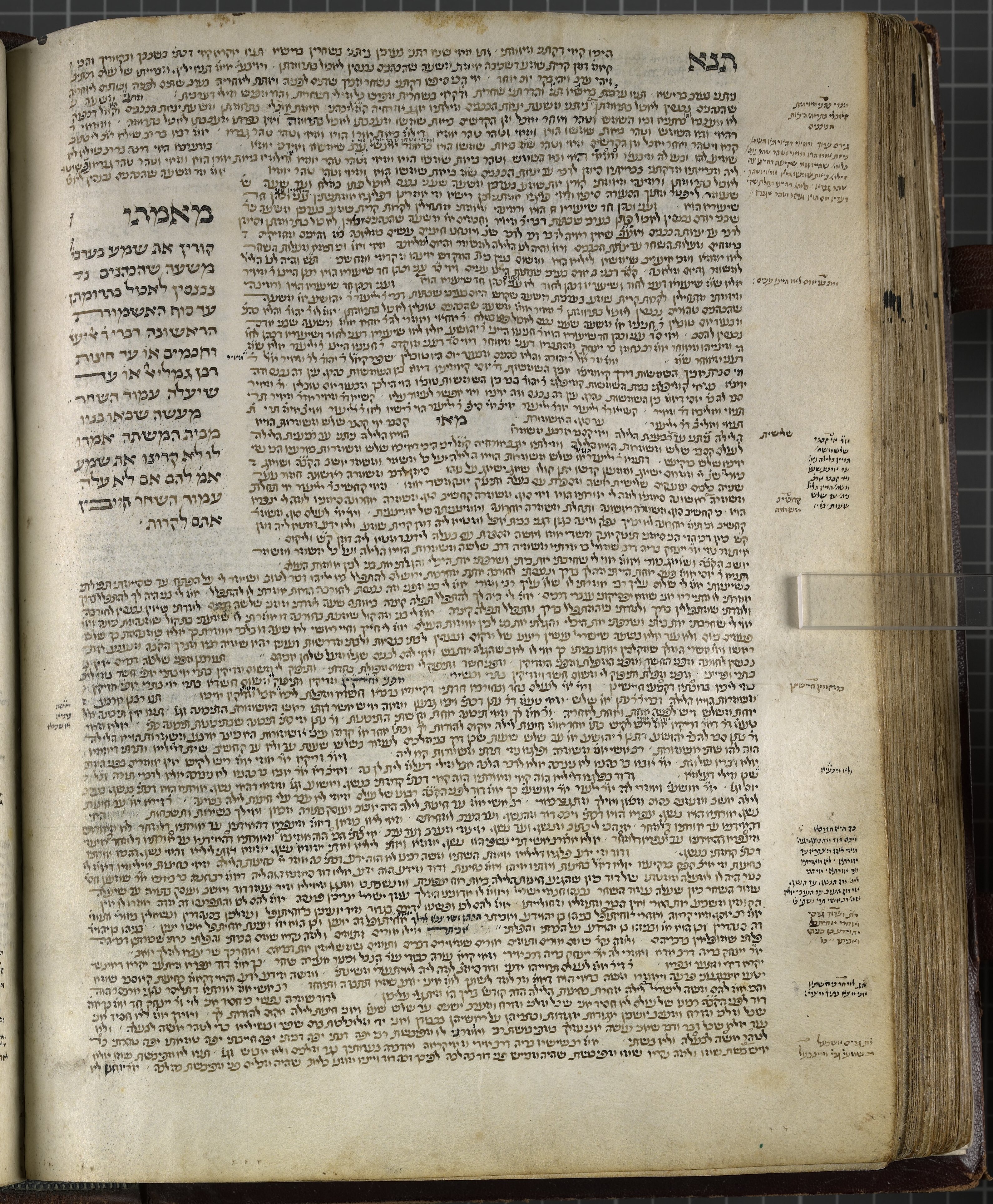
(c) Bayerische Staatsbibliothek (https://syncandshare.lrz.de/getlink/fiH1zYj3mw6Y1WQzBu73iv/)
Ein Bericht von Jan-Christoph Kitzler (ARD Tel Aviv) auf tagesschau.de –
‚eine laute Minderheit, um Anarchisten, die von ausländischen Nichtregierungsorganisationen unterstützt würden‘, so der israelsiche Ministerpräsident, einfache Antworten auf komplexe Situationen, das macht ja weltweit Schule ….
„Israels Armee ist auf ihre Reservisten angewiesen, und seit dem Überfall der Hamas am 7. Oktober 2023 hat sich gezeigt, wie wichtig sie sind. Frauen und Männer können in Israel nach Ihrem Militärdienst noch bis zum 40. Lebensjahr zum Reservedienst eingezogen werden, Offiziere auch darüber hinaus. Fast 300.000 Reservisten wurden nach dem 7. Oktober nach Angaben der Armee eingezogen, viele über Monate, auch mehrfach.
Doch inzwischen wird die Weigerung vieler Reservisten, in den Krieg zu ziehen, zum Problem. Die genauen Zahlen sind unter Verschluss – doch israelische Medien berichten über die größte Verweigerungswelle seit Jahrzehnten.
Von mehr als 100.000 Verweigerern ist die Rede. Überprüfen lässt sich das nicht. Was man weiß, ist, dass einige Soldaten Briefe veröffentlicht haben – darunter Reservisten der Luftwaffe, der Marine und von Spezialeinheiten der Aufklärung. … „
Cease-fire. Release the Hostages. Establish a Palestinian State. There Is No Other Way
Der Text diese Editorial erschien am 14. April 2025 in der hebräischen und in der englischen Ausgabe und ist online zugänglich. Wir stellen hier einige Passagen online und verweisen insbesondere auf den letzten Abschnitt!:
On Wednesday, the Israeli military bombed an apartment building in Gaza City’s Shujaiyeh neighborhood. The target of the strike was Haytham Sheikh Khalil, whom the Israel Defense Forces identified as the commander of Hamas‘ Shujaiyeh battalion.
…
In the current war, the principle of proportionality has been cast aside. Killing dozens of civilians in order to assassinate a junior Hamas commander is not seen as unusual, even though it is very likely a war crime.
Additional values and principles were thrown away along with proportionality: purity of arms, compliance with international law, consideration of the suffering of innocent civilians and of what happens after the war is over.
Since Israel resumed fighting, more than 1,500 people have been killed in the Gaza Strip, including at least 500 children. The dead include 15 first responders whom IDF soldiers shot at close range and buried in a mass grave.
On Sunday morning, the IDF hit a building within the Al-Ahli Hospital complex in Gaza City, destroying the surgery building and the oxygen generation facility for the intensive care units.
All of this is happening alongside an explicit policy aimed at starving the residents of Gaza. For six weeks, the Strip has been completely closed to all food and aid deliveries.
…
This brutal policy toward the civilian population has forever tarnished the reputation of Israel, and we will pay a heavy price for it – in overt and covert boycotts, economic damage and the erosion of international legitimacy and of the moral and humanitarian foundations of Israeli society.
…
French President Emmanuel Macron stated the obvious last week: „The only path possible is a political one,“ and declared his support for the establishment of a Palestinian state. This statement was met with an embarrassing tantrum and obscenities on social media from Prime Minister Benjamin Netanyahu’s son Yair.
But Macron is right, and it is now that the truth must be told: The only way Israel can survive as a democracy and not as a pariah state is through an immediate cease-fire, hostage release agreement and diplomatic negotiations that will ultimately lead to the establishment of a Palestinian state. There is no other way.
The above article is Haaretz’s lead editorial, as published in the Hebrew and English newspapers in Israel.

Muriel Asseburg und Peter Lintl zu den Entwicklungen in Israel
Israels Regierung baut in rasantem Tempo die Gewaltenteilung ab und weitet ihre Kontrolle über den Staatsapparat aus. Die militärische Reaktion auf den Angriff der Hamas und anderer bewaffneter Gruppierungen am 7. Oktober 2023 scheint in eine dauerhafte Wiederbesetzung des Gazastreifens zu münden. Die »freiwillige« Auswanderung der palästinensischen Bevölkerung des Küstengebiets wird als Option der Konfliktlösung gesehen. Gleichzeitig treibt die Netanjahu-Regierung das Siedlungsprojekt im Westjordanland mit neuer Verve voran. In ihren Ansätzen – sei es in der Innenpolitik, gegenüber den Palästinenser:innen oder gegenüber den Nachbarstaaten – sieht sie sich durch die Trump-Administration ermutigt. Damit entfernt sich Israel weiter von einer liberalen Demokratie. Eine Regelung der Palästina-Frage wird so konterkariert, die Region destabilisiert. Deutsche Politik darf diese Entwicklungen nicht ignorieren.

Muriel Asseburg / Peter Lintl
Israels radikale Regierung. Abbau der Gewaltenteilung, Übernahme des Staatsapparates und beschleunigte Annexion
SWP-Aktuell 2025/A 16 (April 2025) – 8 Seiten

… an diesem Pessach und nicht nur dann …

16. April 2025 | 19.30 Uhr | Lettrétage in der Veteranenstraße 21

Photo: (c) Bashir Bashir
Kilmé is a monthly talk series dedicated to Palestinian artists, intellectuals, and academics; a platform to present their work and speak about subjects that are important to them. Kilmé means word in Arabic. The organizers are dedicated to presenting palestinian voices in all of their diversity and creativity, thus contributing to the cultural landscape of Berlin, a city with the largest Palestinian population in Europe.
In the April issue of kilmé talks, Bashir Bashir will be the guest. The evening will be moderated by Tyme Khleifi and Michael Barenboim.
Bashir Bashir is associate professor in the department of sociology, political science and communication at the Open University of Israel and a senior research fellow at the Van Leer Jerusalem Institute. Currently, he is a fellow at the Wissenschaftskolleg zu Berlin. His primary research interests are nationalism and citizenship studies, liberalism, democratic theory, decolonization, the politics of reconciliation, and alternatives to partition in Palestine/Israel. Among other numerous publications, he is the co-editor of „The Holocaust and Nakba: A New Grammar of Trauma and History“ (Columbia University Press, 2018); and „The Arab and Jewish Questions: Geographies of Engagement in Palestine and Beyond“ (Columbia University Press, 2020). His writings have appeared in English, Hebrew, Arabic, Italian, German, and Japanese.
***
Ergänzung: 11. April 2025: Hybrid-Veranstaltung im ZMO | 24. April 2025, 17.00 Uhr
There is a growing agreement among scholars, politicians and experts that the oppressive realities and colonial policies in Palestine/Israel are politically unacceptable and morally indefensible. Leading human rights organizations like Human Rights Watch, Amnesty International and B’Tselem have published extensive reports that identify these colonial policies and their disastrous impacts on the lives and rights of the Palestinians. The question of putting an end to these wretched and segregationist realities and policies and moving to more transformative and inclusive solutions has preoccupied several scholars and politicians in Israel/Palestine and beyond. Liberal and national principles in the forms of one-person one-vote or territorial and ethnic partition have been at the center of debates on these transformative solutions.
This talk argues that egalitarian bi-nationalism is better equipped to address the underlying issues of the conflict in Israel/Palestine than the liberal and secessionist national frames. Egalitarian binationalism, the talk goes on to argue, better satisfies the urge for self-determination of Palestinian Arabs and Israeli Jews than the benign neglect majoritarianism of the liberal state or ethnic secession and the partition of the two-state solution. The talk concludes that egalitarian bi-nationalism’s insistence on envisioning affective relations of co-belonging based on an ethics of equality, parity, mutual legitimacy, and cohabitation offers rich resources for historical reconciliation and decolonization in Israel/Palestine.

