Die Betreiber des israelisch-palästinensischen Restaurants „Kanaan“ in Berlin (Prenzlauer Berg), Jalil Dabit und Oz Ben David, erhalten den diesjährigen Moses-Mendelssohn-Preis des Landes Berlin. Das gab die Senatsverwaltung für Kultur und Gesellschaftlichen Zusammenhalt bekannt.
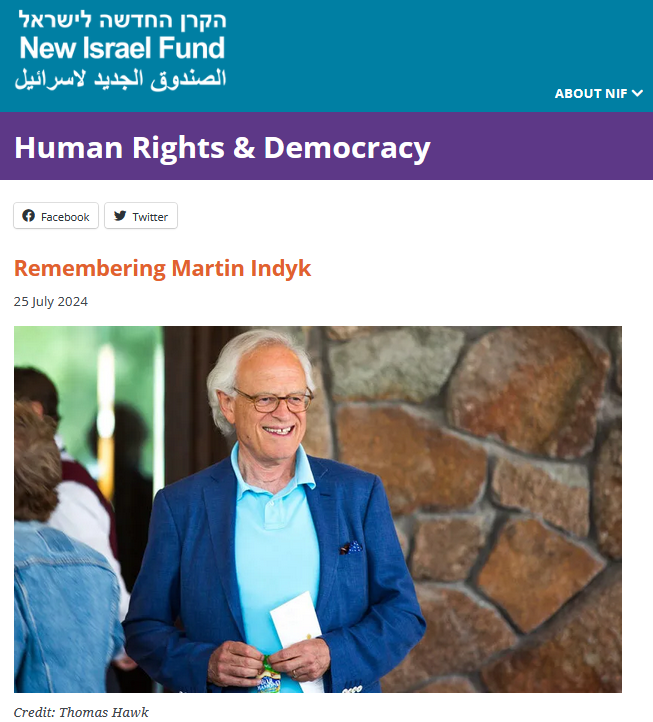
Der (zweimalige) US-amerikanische Botschafter in Israel (1995-1997 und 2000-2001) starb im Alter von 73 Jahren. 2013 ernannte in B. Obama zum Sondergesandten für die Wiederaufnahme der Friedensverhandlungen zwischen Israelis und Palästinsern. Er diente auch im Board des New Israel Fund.
Aus einem Nachruf von Dennis Ross in Haaretz [Premiumausgabe] (28. Juli 2024)
„Martin knew he would not live to see this outcome and in April spoke of what he believed would eventually happen. Like Moses, he said „I’ve seen the Promised Land, I’ve seen what it looks like. I’ve negotiated the details. I know where they end up … And so even though I won’t cross over, I’m still confident that in the end, as all conflicts come to an end, this one will too, and its result will be a two-state solution.“
Ronit Vered schreibt in der Wochenendbeilage von Haaretz über das Restaurant Majda in der Nähe von Jerusalem – und über sein Ende, vielleicht / wohl nicht das einzige, das zu Ende geht …
„On the last Saturday of June, the Majda restaurant outside Jerusalem closed its doors for the last time, 14 years after it opened. „Summer 2024, the last meal,“ a note atop that day’s menu stated. And at the bottom of the changing, seasonal menu, penned as always in Michal Baranes‘ lovely handwriting: „Majda is closing at the end of this week. Thanks to all the good people who accompanied us over all the years. In the end things will be good. Yakub and Michal.
I too came to take leave of Majda, located in the Arab village of Ein Rafa, west of the capital. From the place, from the people, from the food. On the table in the beautiful garden – a green, tangled Eden of wild, decorative and edible vegetation – the waiter placed a jug of cold water, and on the neck of a bottle of rosé, which Yaakov Barhum makes himself from the grapes of a vine he planted in the yard, beads of moisture glistened in the heat of the day. On the plate of gazpacho made from red-yellow tomatoes, the foliage of the trees played games of light and shade, flitting between ice cubes and puddles of olive oil.
…
„It’s very likely that the leaving tendency – or the attempt to move the center of one’s activity abroad – will only gather momentum. An end to the war is not looming on the horizon, and in contrast to previous rounds of fighting, the trauma will not make it possible to repress easily the fragmentary nature of the ability to maintain a stable, tranquil life here. The state creates difficulties for the food and restaurant industries here even in times of calm – in the form of draconian regulations, rigid kashrut laws and the high cost of living.
Living eternally by the sword and the absence of foreign tourists, an important element in the thriving of a restaurant scene, are death blows to an industry that has already found it difficult to stay afloat in recent years. It’s hard to blame those who are looking for other places in which they and their children can enjoy a life of sanity, but also where they can realize professional dreams and make an honorable living.“
Kaum war die «Pfeffermühle» eröffnet, kamen die Nazis an die Macht. Erika Mann musste aus München fliehen. In der Schweiz führte sie ihr politisches Kabarett weiter. Am Ende unter Polizeischutz.
On July 2, a tree-planting ceremony at Ahihud Forest in northern Israel commemorated nine Druze soldiers who died in the Iron Swords war.
Ein Beitrag auf „Themedialine.org – Trusted Mideast News“
The army announced July, 7, 2024 that another Druze soldier, Maj. Jalaa Ibrahem, a company commander in the 601st Combat Engineering Battalion, was killed in the line of duty in the Gaza Strip.
For the Druze community, loyalty to the state they reside in is a religious commitment, often manifested through military and police service. The Druze, along with the Circassian community, have a long-standing history of military service in Israel, a tradition of loyalty that many feel is not reciprocated by the government in civil matters such as housing, planning, and community development.
Systemic issues like the Kaminitz Law and the nation-state law, which are seen as discriminatory, along with restrictive building regulations and less governmental financial support compared to Jewish communities, impact the ability of the Druze to expand and develop. Amid a backdrop of demonstrations countrywide from multiple societal fronts, the Druze are protesting to address the inequalities they face as a response to being treated differently regarding rights compared to their service obligations.
The protests, including a significant gathering in Jerusalem, aim to highlight these discrepancies and push for a change that aligns the community’s civil treatment with their contributions to national security. To learn more, read Giorgia Valente’s latest for The Media Line, which highlights the Druze community’s sense of dual identity: treated like Jews in terms of national service but like Arabs in terms of civil rights.
Keine kurze Nachricht heute einmal, sondern einen relativ langen Essay von Sheryl Ono, der sehr einfühlsam und lesenswert ist … es gibt keine einfachen Antworten ..
„I am proud of my Jewish heritage. I am proud of our commitment to scholarship, the arts, and activism, of our role in the civil rights and union movements. I am proud of the young Jews speaking out on college campuses and the older ones who took over the Cannon Building in the Capitol last November. This is the culture that I know and connect with — people whose hearts are capable of aching for the Israeli hostages and the Palestinians at the same time.“
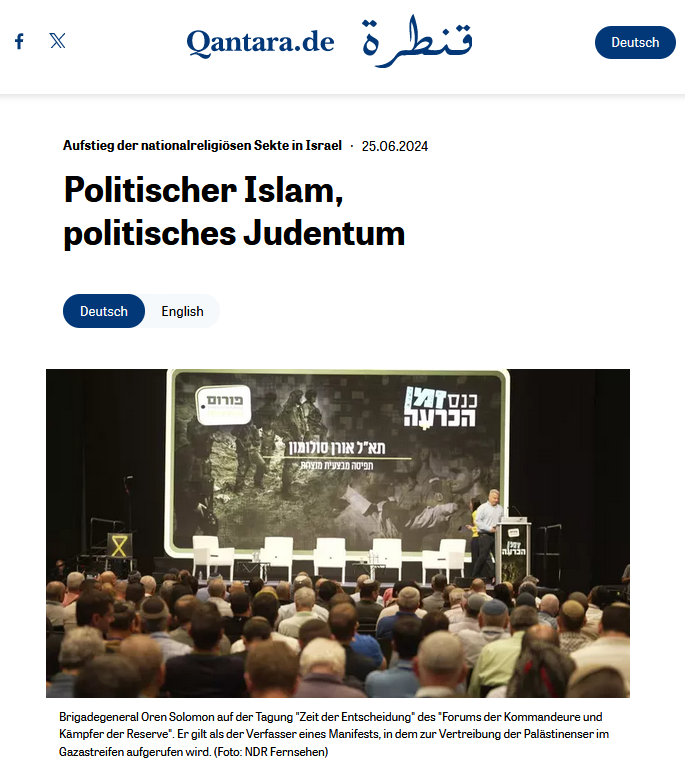
Auf der Plattform quantara.de, die sich in diesen Tagen von der Deutschen Welle zur ifa, dem Institut für Auslandbeziehungen, verabschiedet – zum Schluß ein spannender Beitrag von Stefan Buchen über (die) Entwicklungen im jüdisch-national-religiösen Bereich:
Es gibt auch ‚andere‘ Nachrichten aus Israel und Palästina … wir weisen an dieser Stelle immer wieder einmal auf ermutigende, neue, andere Initiativen hin, heute A Land for All:
Our Vision
A Land for All is a shared movement of Israelis and Palestinians who believe that the way towards peace, security and stability for all passes through two independent states, Israel and Palestine, within a joint framework allowing both peoples to live together and apart. Israeli-Jews and Arab-Palestinians are heavily intertwined on both side of the Green Line and therefore building walls between them is neither realistic nor desirable. Recognizing that both Jews and Palestinians are part of the same shared homeland, and respecting their equal individual and national rights, A Land for All provides pragmatic and viable solutions to the obstacles that have stymied prior negotiations, moving us from a paradigm of separation towards a future based on power sharing and shared interests.
In Le Monde Diplomatique begibt sich Charlotte Wiedemann auf die Suche, auf die Suche nach Einem Land für alle, nach Lebensrealitäten und Erinnerungen, nach inklusiven Narrationen, nach wechselseitigem Respekt für die Traumata, die auf beiden Seiten so prägend sind: Shoa und Nakba – das war schon vor dem 7. Oktober und diesem Gaza-Krieg schwierig, jetzt erst recht und doch noch nötiger als je.