Am 1. März 2025 verstarb Prof. Haim Goren. Der 1946 geborene Historiker war lange Zeit Professor am Tel Hai-College im äußersten Norden Israels und DER Experte für den deutschen, v.a. auch katholischen Beitrag zur Geschichte des Heiligen Landes ab dem 19. Jahrhundert. Mehrere seiner zahlreichen Werke wurden deshalb auch in die deutsche Sprache übersetzt, die er selbst so gut beherrschte, daß er auch Quellen in Sütterlin lesen und auswerten konnte – in Israel heute eine Seltenheit.
Für deutsche Leser:nnen sind dementsprechend auch die diesbezüglichen Werke besonders interessant: So behandelte er in „Zieht hin und erforscht das Land“ (Göttingen 2003) die deutsche Palästinaforschung im 19. Jahrhundert, in „Echt katholisch und gut deutsch“ (Göttingen 2009) das Engagement der deutschen Katholiken in Palästina vor dem 1. Weltkrieg – insbesondere das des Deutschen Vereins vom Heiligen Lande (DVHL).
In dem von ihm und Yossi Leshem herausgegebenen Band über Pater Ernst Schmitz (2020) stellte er den Naturforscher und längjährigen Leiter der DVHL-Einrichtungen vor, und der Sammelband „Deutschland und Deutsche in Jerusalem“ (2011) versammelte Aufsätze zu ganz unterschiedlichen Aspekten – vom Besuch Kaiser Wilhelms II. bis zu deutschen Krankenhäusern und Photographen in Jerusalem. Weitere Werke aus den letzten Jahren waren den historischen Friedhöfen der Templer im Nahen Osten (1869-1948) gewidmet, aber auch dem ‚Vater‘ der modernen Palästina-Wissenschaft Edward Robinson oder der Erforschung des Toten Meeres. Außerdem galt sein besonderes Interesse der Geschichte Galiläas – wohnte er doch seit Jahrzehnten in Rosh Pinna.
In zahlreichen Vorträgen und Exkursionen gab er sein Wissen weiter – selbst für den Tag vor seinem Tod war noch eine Führung in Tabgha geplant. Er wird fehlen.
Prof. Hannah Pollin-Galay, Tel Aviv University – Zoom 3. März 2024 – Details
2025 Annual Naomi Prawer Kadar Memorial Lecture
Esteemed scholar Hannah Pollin-Galay explores how the Yiddish language evolved in Nazi ghettos and camps, gaining roughly 3,000 new words. Examining the works of K. Tzetnik and Chava Rosenfarb, this talk considers how these writers transformed „Khurbn Yiddish“ into powerful expressions of horror, resilience, and artistic memory.
***
The Yiddish language drastically changed in the ghettos and camps of Nazi Europe. By one estimate, roughly 3,000 new words and phrases were added to the language. Many of these neologisms were of a vulgar nature, relating to topics like theft and sex work. While some people found these new words embarrassing, unseemly and just plain ugly, others attempted to uplift them and transform them into art. Among the writers that incorporated Khurbn Yiddish (Yiddish of the Holocaust), into their postwar poetry and prose, the authors K. Tzetnik and Chava Rosenfarb stand out. Each extracted and presented the aesthetic potential of Khurbn Yiddish words in different ways. K. Tzetnik emphasized the horrifying, bizarre side of Khurbn Yiddish words, molding them into an expressionistic scream. Rosenfarb, by contrast, shined a light onto the small acts of resilience contained within Khurbn Yiddish words, memories of self-expression and communication against the odds. Her ghetto terms become beautiful in the way they invite readers into scenes of everyday life under Nazi rule, moments from the margins of history that are rarely considered worthy of notice. The two authors also clash on the topic of female sexuality—and the ways that words relate to the body.
Hannah Pollin-Galay is Associate Professor in the Department of Literature at Tel Aviv University, where she is also Head of theJona Goldrich Institute for Yiddish Language, Literature and Culture. Pollin-Galay researches and teaches primarily in the fields of Yiddish literature and Holocaust Studies, and has recently begun to foray into the field of ecocriticism. Her first book,Ecologies of Witnessing: Language, Place and Holocaust Testimony came out with Yale University Press in 2018 and her second,Occupied Words: What the Holocaust Did to Yiddish (U Penn Press, 2024) asks how the Holocaust changed the Yiddish language. She is currently working on a project exploring the fraught connections between Jews and non-human nature, across time and space. In addition to being a 2024-2025 Senior Scholar at the Fortunoff Archive for Holocaust Testimony at Yale University, Pollin-Galay is also a Yiddish Book Center Translation Fellow, where she is translating Yiddish ecopoetry from the Holocaust.
In an interview, Pankaj Mishra discusses his forthcoming book on the Palestinians and the Shoah.
Pankaj Mishra is an Indian essayist and novelist who was born in northern India in 1969. He graduated with a Bachelor of Commerce degree from Allahabad University before completing his M.A. in English literature at Jawaharlal Nehru University in New Delhi. Mishra is the author of numerous books, among them From the Ruins of Empire: The Revolt Against the West and the Remaking of Asia (Picador, 2013), Age of Anger: A History of the Present (Picador, 2017), and a book of essays, titled Bland Fanatics: Liberals, Race, and Empire (Verso, 2020). His most recent book, The World After Gaza: A History, will be published on February 6 by Penguin Press. Diwan interviewed Mishra in late January to discuss his forthcoming book, and more broadly the themes that it addresses.
Diwan
Diwan, a blog from the Carnegie Endowment for International Peace’s Middle East Program and the Malcolm H. Kerr Carnegie Middle East Center, draws on Carnegie scholars to provide insight into and analysis of the region.
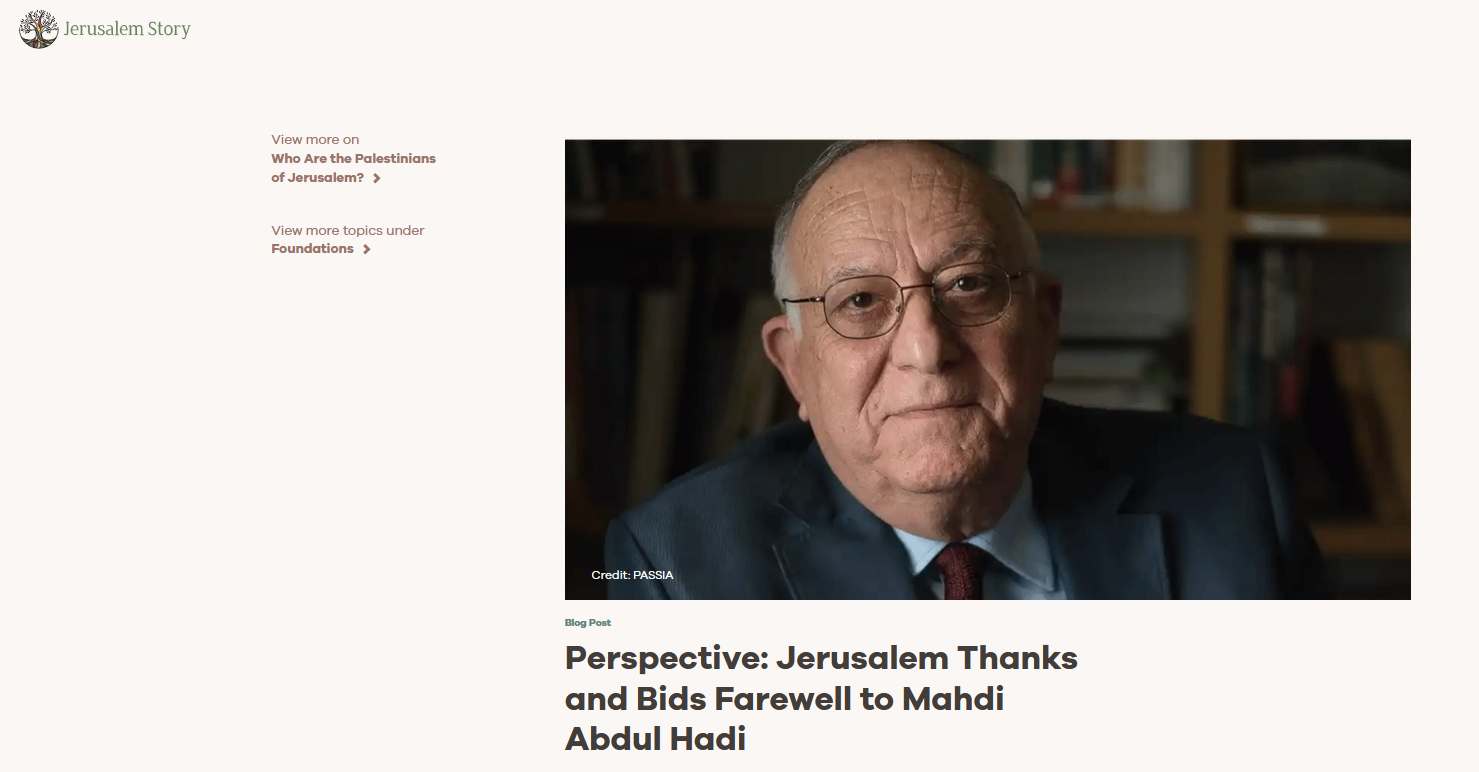
Schon am 15. Januar ist „Dr. Mahdi“ gestorben, eine Stimme Jerusalems, eine Stimme der palästinensischen Sache – eine Institution in sich selbst und untrennbar mit PASSIA verbunden … sein Büro in Wadi Joz war ein Anlaufpunkt für Information, für Analyse, für Kontakte, für Dialog und Gespräch …
Frauen und jüdischer Widerstand unterrepräsentiert
Neue Studie der Arbeitsstelle Holocaustliteratur der JLU und KiKA (von ARD und ZDF) untersucht, welche Menschen Schulen in Deutschland ihre Namen geben
Maria Montessori, Johann Heinrich Pestalozzi und die Geschwister Scholl stehen an der Spitze der bundesweiten TOP10: Nach diesen Persönlichkeiten werden Schulen in Deutschland besonders häufig benannt.
So lautet das Ergebnis einer ersten umfassenden und flächendeckenden Studie zu Schulnamen, die die Arbeitsstelle Holocaustliteratur der Justus-Liebig-Universität Gießen (JLU) und KiKA (von ARD und ZDF) am Dienstag in Gießen vorgestellt haben. Auch wenn mit Maria Montessori eine Frau die Rangliste anführt: Die Studie belegt, daß nur etwa ein Sechstel der Schulen in Deutschland, die den Namen einer historischen Persönlichkeit tragen, nach Frauen benannt sind. Ein weiteres Ergebnis: Zwar tragen viele Schulen die Namen sowohl von Opfern des Nationalsozialismus als auch von (deutschen) Widerstandskämpferinnen und -kämpfern gegen das NS-Regime, aber der jüdische Widerstand ist so gut wie kaum repräsentiert.
„Die Benennung deutscher Schulen spiegelt damit ein zentrales Defizit der deutschen Erinnerungskultur“, betont der Studienleiter und Leiter der Arbeitsstelle Holocaustliteratur, Prof. Dr. Sascha Feuchert. Das Projekt „Wir geben Schulen den Namen“ begleitet die neue Staffel des KiKA-Geschichtsformats „Triff…“ (KiKA/WDR/hr), das unter anderem in einem mehrteiligen Schulnamen-Spezial die am häufigsten vertretenen Namensgeber vorstellt.
Als Schulnamen sind die Großen (und auch die Kleinen) unserer Geschichte in der Lebenswelt von Kindern und Jugendlichen gegenwärtig und werden ihnen als Vorbilder präsentiert. „Von den rund 31.000 deutschen Schulen tragen etwa 40 Prozent den Namen mehr oder weniger berühmter Personen. Neben den zu erwartenden Paten gibt es auch einige handfeste Überraschungen“, erklärt Prof. Feuchert. Zu diesen zählt zum Beispiel Udo Lindenberg, der in Bayern einer Schule den Namen verleiht. Die breit angelegte Studie, deren Datenbasis auf Listen der Kultusministerien der 16 Bundesländer beruht, kartographiert erstmals ein zentrales Feld der Erinnerungskultur, das bislang kaum systematisch untersucht wurde, obwohl die Namensgebung mancherorts immer wieder für heftige Diskussionen sorgt.
„Namen sind eben mehr als Schall und Rauch – die erinnerten Personen geben uns schließlich auch ihre Werte mit. Deshalb darf es Schülerinnen und Schülern, Lehrerinnen und Lehrern sowie den Eltern nicht egal sein, wie eine Schule heißt“, so Feuchert weiter. Gerade in Zeiten, in denen die Demokratie massiven Bedrohungen ausgesetzt sei und viel von der Resilienz der Schulen die Rede sein müsse, liege hier viel Potenzial brach, das zu einer kritischen, lebensnahen Auseinandersetzung mit demokratischen Werten und Normen beitragen könne. Während viele Schulen sich bereits intensiv und zum Teil auch kritisch mit dem Leben und Wirken ihrer Namensgeberinnen und Namensgeber beschäftigten, scheuten andere nach Einschätzung der Forschenden diesen Umgang. „Und rund 60 Prozent der deutschen Schulen haben zudem eben gar keine Patin oder Paten – auch da liegt ein großes Potenzial“, wie die Co-Autorin Jennifer Ehrhardt von der AHL betont.
Zentrale Ergebnisse der Studie können hier eingesehen werden.
Parallel zur Studie erzählen mehrere animierte Kurzbeiträge des preisgekrönten KiKA-Geschichtsformats „Triff…“, das Kindern auf unterhaltsame Weise bedeutende Persönlichkeiten der Weltgeschichte näherbringt, im Fernsehen und nonlinear von den häufigsten Namensgebern deutscher Schulen.
Die neue Staffel startete am 8. Januar 2025 und ist auch auf kika.de und im KiKA-Player, barrierefrei mit Untertiteln, Audiodeskription und Gebärde, verfügbar. Außerdem können Kinder mit „Triff… Spezial – Das Schulnamen-Quiz“ in der KiKA-Quiz App ebenfalls seit dem 8. Januar die Vielfalt der Schulnamenslandschaft auch spielerisch entdecken.
Das Geschichtsformat ist eine Produktion von Crossmedia (Halle/Saale) und Ifage (Wiesbaden) im Auftrag von KiKA und hr. Verantwortliche Redakteure bei KiKA sind Tina Wilß und Matthias Huff und Tanja Nadig beim hr. Die Fachberatung der Reihe „Triff…“ liegt bei Prof. Jörg Rüpke von der Universität Erfurt, die Fachberatung für das Namens-Special bei Prof. Sascha Feuchert.
Die jahrtausendealten Überreste der Stadt Byblos im heutigen Libanon gehören zu den faszinierendsten archäologischen Stätten des Nahen Ostens. Die antike Stadt wird seit rund 150 Jahren erforscht. Nun machte ein französisch-libanesisches Forscherteam eine außergewöhnliche Entdeckung: Unter Byblos ruht seit fast 4.000 Jahren eine riesige, intakte Nekropole …
An der libanesischen Küste liegt eine der ältesten Städte der Welt: Byblos. Mit ihren jahrtausendealten Ruinen aus verschiedenen Epochen und Stilen ist sie seit Mitte des 19. Jahrhunderts eine der bedeutendsten Ausgrabungsstätten des Nahen Ostens. Ende der 2010er Jahre machte ein französisch-libanesisches Team eine ebenso außergewöhnliche wie unerwartete Entdeckung: riesige unterirdische Strukturen, die fast 4.000 Jahre alt sind.
Das Archäologen-Team entdeckte eine weitläufige Nekropole mit monumentalen Grabkammern, die teilweise aus mehreren Einzelkammern bestehen. Die Gräber liegen übereinander und bilden eine Anordnung, die in dieser Region noch nie zuvor entdeckt wurde. Noch erstaunlicher ist, daß die Grabkammern intakt und ungeplündert sind. Die Nekropole enthält noch alle Gebeine und Gegenstände, die die Toten auf ihrer Reise ins Jenseits begleiten sollten.
Diese Gegenstände verraten, daß die Verstorbenen einst zur Elite von Byblos gehörten. Sie zeugen auch von den Verbindungen der Stadtbewohner zum alten Ägypten. Byblos war über Jahrtausende Hauptlieferant eines Rohstoffes, der für die Entwicklung des ägyptischen Reichs eine zentrale Rolle spielte: Bauholz, vor allem Zedernholz. Es war für die Pharaonen unentbehrlich, um Pyramiden, Schiffe und Paläste zu bauen.
Diese Dokumentation begleitet die Ausgrabungen in der Nekropole, die von einem Archäologen-Team des Louvre und der libanesischen Generaldirektion für antike Schätze vorangetrieben werden. Jeder Arbeitsschritt, jede Entdeckung in diesem seit der Bronzezeit verschütteten Labyrinth bringt neue Erkenntnisse über die Blütezeit von Byblos.
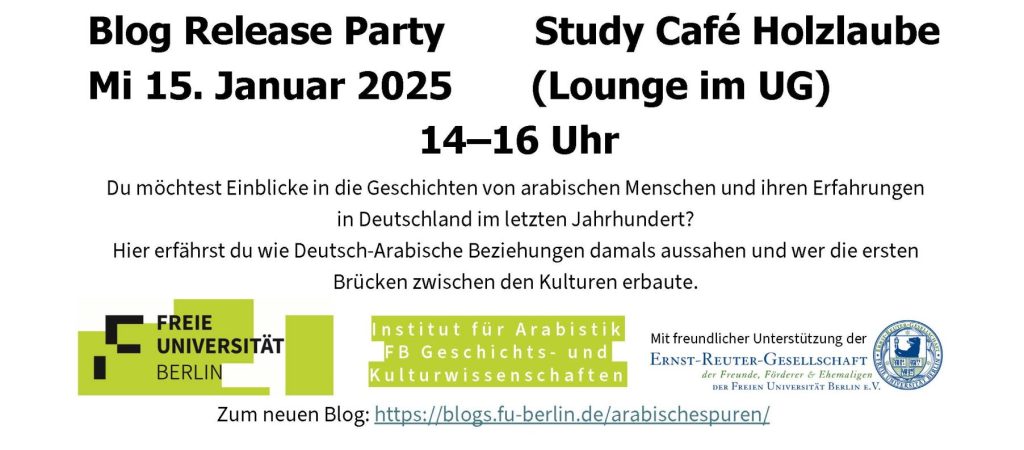
Aus dem Blog mit Beiträgen von Studierenden der Arabistik an der FU Berlin
„Menschen aus dem Nahen Osten lebten auch schon vor über 100 Jahren in Deutschland, doch da sah das arabische Leben hier noch ganz anders aus. Du möchtest Einblicke in die Geschichten von arabischen Menschen und ihren Erfahrungen in Deutschland im letzten Jahrhundert? Dann schau mal bei der Release Veranstaltung unseres Blogs vorbei. Hier erfährst du wie Deutsch-Arabische Beziehungen damals aussahen und wer die ersten Brücken zwischen den Kulturen erbaute. Viele spannende Beiträge unseres Blogs werden bei Snacks und Getränken vorgestellt. Also komm vorbei für eine Reise in die Arabische Vergangenheit Deutschlands.“
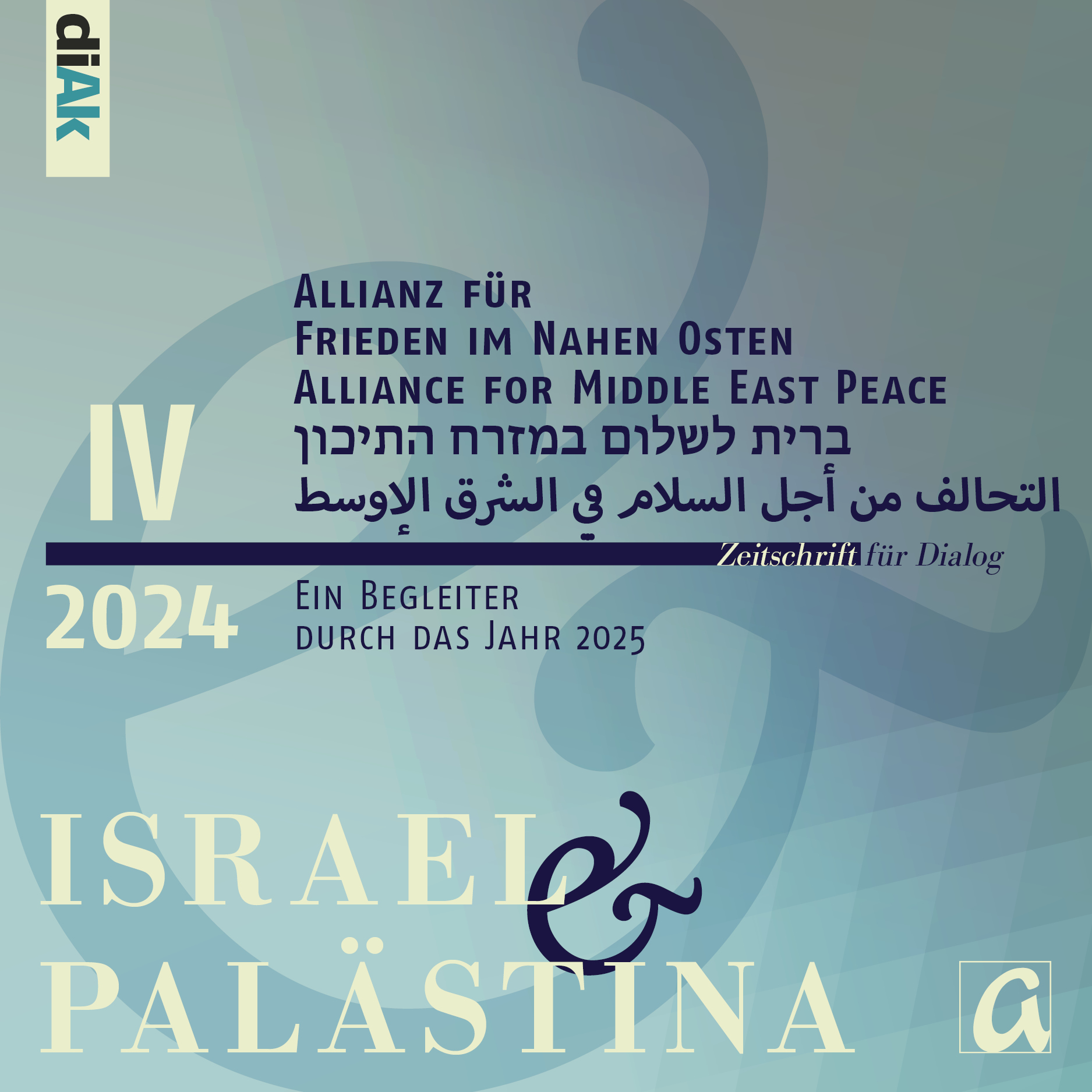
Allianz für Frieden im Nahen Osten… – Zwölf Organisationen stellen sich vor Ein Begleiter durch das Jahr 2025 – … der Kalender 2025 ist schon ausgeliefert, ein paar ganz wenige Exemplare sind noch lieferbar … .
israel & palästina – Zeitschrift für Dialog | Ausgabe 4-2024
Es war das zehnte Mal, daß im Rahmen von israel & palästina | Zeitschrift für Dialog ein Photobegleiter in Kalenderform für das kommende Jahr erschienen ist:
Allianz für Frieden im Nahen Osten – Ein Begleiter durch das Jahr 2025
Das Zeitalter der Zeitzeug:innen geht zu Ende, erinnern wir uns in Dankbarkeit derjenigen, die mit ihrem Lebenszeugnis für eine andere Welt standen und stehen.
Eine der großen Legenden des Turnsports ist tot. Die ungarische Olympiasiegerin und Shoa-Überlebende Agnes Keleti ist im Alter von 103 Jahren gestorben. Ein Nachruf auf tagesschau.de.