Neuer Podcast (englisch) von Shmuel Feiner in der Reihe Jewish Lives
The “German Socrates,” Moses Mendelssohn (1729–1786) was the most influential Jewish thinker of the 18th and 19th centuries. A Berlin celebrity and a major figure in the Enlightenment, Mendelssohn suffered the indignities common to Jews of his time while formulating the philosophical foundations of a modern Judaism suited for a new age.
Hier das Titelblatt einer seiner Schriften Jerusalem oder über religiöse Macht und Judentum
Ronit Vered schreibt in der Wochenendbeilage von Haaretz über das Restaurant Majda in der Nähe von Jerusalem – und über sein Ende, vielleicht / wohl nicht das einzige, das zu Ende geht …
„On the last Saturday of June, the Majda restaurant outside Jerusalem closed its doors for the last time, 14 years after it opened. „Summer 2024, the last meal,“ a note atop that day’s menu stated. And at the bottom of the changing, seasonal menu, penned as always in Michal Baranes‘ lovely handwriting: „Majda is closing at the end of this week. Thanks to all the good people who accompanied us over all the years. In the end things will be good. Yakub and Michal.
I too came to take leave of Majda, located in the Arab village of Ein Rafa, west of the capital. From the place, from the people, from the food. On the table in the beautiful garden – a green, tangled Eden of wild, decorative and edible vegetation – the waiter placed a jug of cold water, and on the neck of a bottle of rosé, which Yaakov Barhum makes himself from the grapes of a vine he planted in the yard, beads of moisture glistened in the heat of the day. On the plate of gazpacho made from red-yellow tomatoes, the foliage of the trees played games of light and shade, flitting between ice cubes and puddles of olive oil.
…
„It’s very likely that the leaving tendency – or the attempt to move the center of one’s activity abroad – will only gather momentum. An end to the war is not looming on the horizon, and in contrast to previous rounds of fighting, the trauma will not make it possible to repress easily the fragmentary nature of the ability to maintain a stable, tranquil life here. The state creates difficulties for the food and restaurant industries here even in times of calm – in the form of draconian regulations, rigid kashrut laws and the high cost of living.
Living eternally by the sword and the absence of foreign tourists, an important element in the thriving of a restaurant scene, are death blows to an industry that has already found it difficult to stay afloat in recent years. It’s hard to blame those who are looking for other places in which they and their children can enjoy a life of sanity, but also where they can realize professional dreams and make an honorable living.“
Kaum war die «Pfeffermühle» eröffnet, kamen die Nazis an die Macht. Erika Mann musste aus München fliehen. In der Schweiz führte sie ihr politisches Kabarett weiter. Am Ende unter Polizeischutz.
On July 2, a tree-planting ceremony at Ahihud Forest in northern Israel commemorated nine Druze soldiers who died in the Iron Swords war.
Ein Beitrag auf „Themedialine.org – Trusted Mideast News“
The army announced July, 7, 2024 that another Druze soldier, Maj. Jalaa Ibrahem, a company commander in the 601st Combat Engineering Battalion, was killed in the line of duty in the Gaza Strip.
For the Druze community, loyalty to the state they reside in is a religious commitment, often manifested through military and police service. The Druze, along with the Circassian community, have a long-standing history of military service in Israel, a tradition of loyalty that many feel is not reciprocated by the government in civil matters such as housing, planning, and community development.
Systemic issues like the Kaminitz Law and the nation-state law, which are seen as discriminatory, along with restrictive building regulations and less governmental financial support compared to Jewish communities, impact the ability of the Druze to expand and develop. Amid a backdrop of demonstrations countrywide from multiple societal fronts, the Druze are protesting to address the inequalities they face as a response to being treated differently regarding rights compared to their service obligations.
The protests, including a significant gathering in Jerusalem, aim to highlight these discrepancies and push for a change that aligns the community’s civil treatment with their contributions to national security. To learn more, read Giorgia Valente’s latest for The Media Line, which highlights the Druze community’s sense of dual identity: treated like Jews in terms of national service but like Arabs in terms of civil rights.
Keine kurze Nachricht heute einmal, sondern einen relativ langen Essay von Sheryl Ono, der sehr einfühlsam und lesenswert ist … es gibt keine einfachen Antworten ..
„I am proud of my Jewish heritage. I am proud of our commitment to scholarship, the arts, and activism, of our role in the civil rights and union movements. I am proud of the young Jews speaking out on college campuses and the older ones who took over the Cannon Building in the Capitol last November. This is the culture that I know and connect with — people whose hearts are capable of aching for the Israeli hostages and the Palestinians at the same time.“
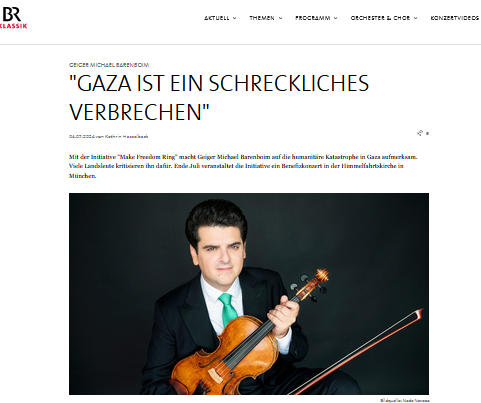
Mit der Initiative „Make Freedom Ring“ macht Geiger Michael Barenboim auf die humanitäre Katastrophe in Gaza aufmerksam. Viele Landsleute kritisieren ihn dafür. Ende Juli veranstaltet die Initiative ein Benefizkonzert in der Himmelfahrtskirche in München – Ein Beitrag (Kathrin Hasselbeck) auf br-klassik.de
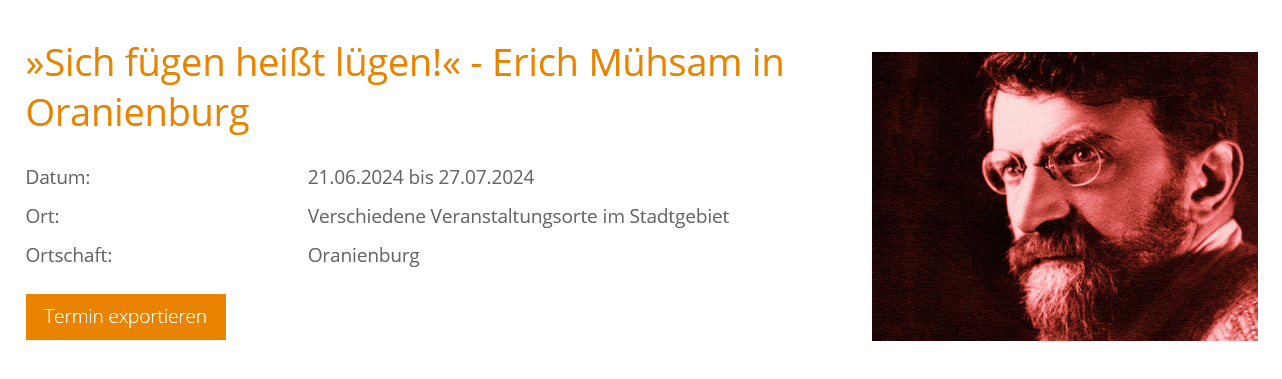
Ausstellungseröffnung am 21. Juni 2024 in Oranienburg: Erich Mühsam (1878-1934)
„Sich fügen heißt lügen“ heißt es in einem vielzitierten Gedicht des deutsch-jüdischen Literaten Erich Mühsam. Diese Worte sind mehr als nur eine Gedichtzeile; es ist das Credo des 1878 in Berlin geborenen und in der Nacht vom 9. auf den 10. Juli 1934 im KZ Oranienburg ermordeten Literaten gewesen.
Eine umfangreiche Veranstaltungsreihe – inklusive Ausstellung und Kongreß – zum 90. Todestag des Schriftstellers Erich Mühsam, der 1934 von der SS im KZ Oranienburg ermordet wurde.
Am 10. Juli 2024 jährt sich die Ermordung von Erich Mühsam im KZ Oranienburg. Zum 90. Mal. Erich Mühsam steht wie kaum ein zweiter Dichter für die gesellschaftlichen Umbrüche der Weimarer Republik.
Ein Kreis von Menschen aus dem Kulturverein Alte Mosterei Eden e.V., dem Demokratieforum Oranienburg, dem Förderverein der Gedenkstätte und des Museums Sachsenhausen e.V. sowie der Erich Mühsam-Gesellschaft hat sich zum Ziel gesetzt, an den 90. Todestag von Erich Mühsam mit einem Veranstaltungsreigen zu erinnern.
Hüte, Haare, Haut – Köpfe in Jerusalem … – Ein Begleiter durch das Jahr 2024 – Mit Photos von Bärbel Doering
Photos: Doering
israel & palästina – Zeitschrift für Dialog | Ausgabe 4-2023
Es ist das neunte Mal, daß im Rahmen von israel & palästina | Zeitschrift für Dialog ein Photobegleiter in Kalenderform für das kommende Jahr erscheint: Hüte, Haare, Haut – Köpfe in Jerusalem, dieses Thema war schon lange festgelegt …
Was wird dieses Jahr 2024 bereithalten – wir wissen das nie zuvor, wer hätte schon geahnt, welche Katastrophen das Jahr 2023 bereithalten würde?
Zusammen denken und zusammendenken, aus diesem Geist heraus versucht der diAk seit 45 Jahren auf die Region zu schauen, auch auf unsere Verbindungen dorthin. Die tiefen Wunden, welche die Ereignisse des Jahres 2023 geschlagen haben, individuell, aber auch kollektiv, lassen zweifeln, wie eine kooperative Vision für die Region aussehen kann.
Jedoch: Die Vielfalt zu sehen und die Einheit in der Vielfalt zu spüren, bleibt eine entscheidende Voraussetzung … In allen, die das Land kennen, werden bei den Bildern aus und um Jerusalem Assoziationen aufsteigen, Erinnerungen lebendig werden: Es ist so viel der Schönheit der Welt über Jerusalem ausgegossen, sie reicht für alle!
Das Sächsische Staatsministerium für Wissenschaft, Kultur und Tourismus (SMWK) fördert das Forschungsprojekt »›Betrieb und Idee‹. Salman Schockens Universum im Jerusalemer Archiv« des Leibniz-Instituts für jüdische Geschichte und Kultur – Simon Dubnow (DI), Leipzig. Die Förderung ermöglicht, das in (West-)Jerusalem bewahrte »Schocken-Archiv« als transnationalen Wissensspeicher zu befragen. Die Geschichte und Struktur des Archivs eröffnen neue Perspektiven auf das Wirken des Unternehmers, Verlegers und Mäzens Salman Schocken. Die Ergebnisse werden zum Themenjahr »Tacheles« 2026 in Sachsen einer breiteren Öffentlichkeit in Form einer Publikation sowie einer Ausstellung zugänglich gemacht.
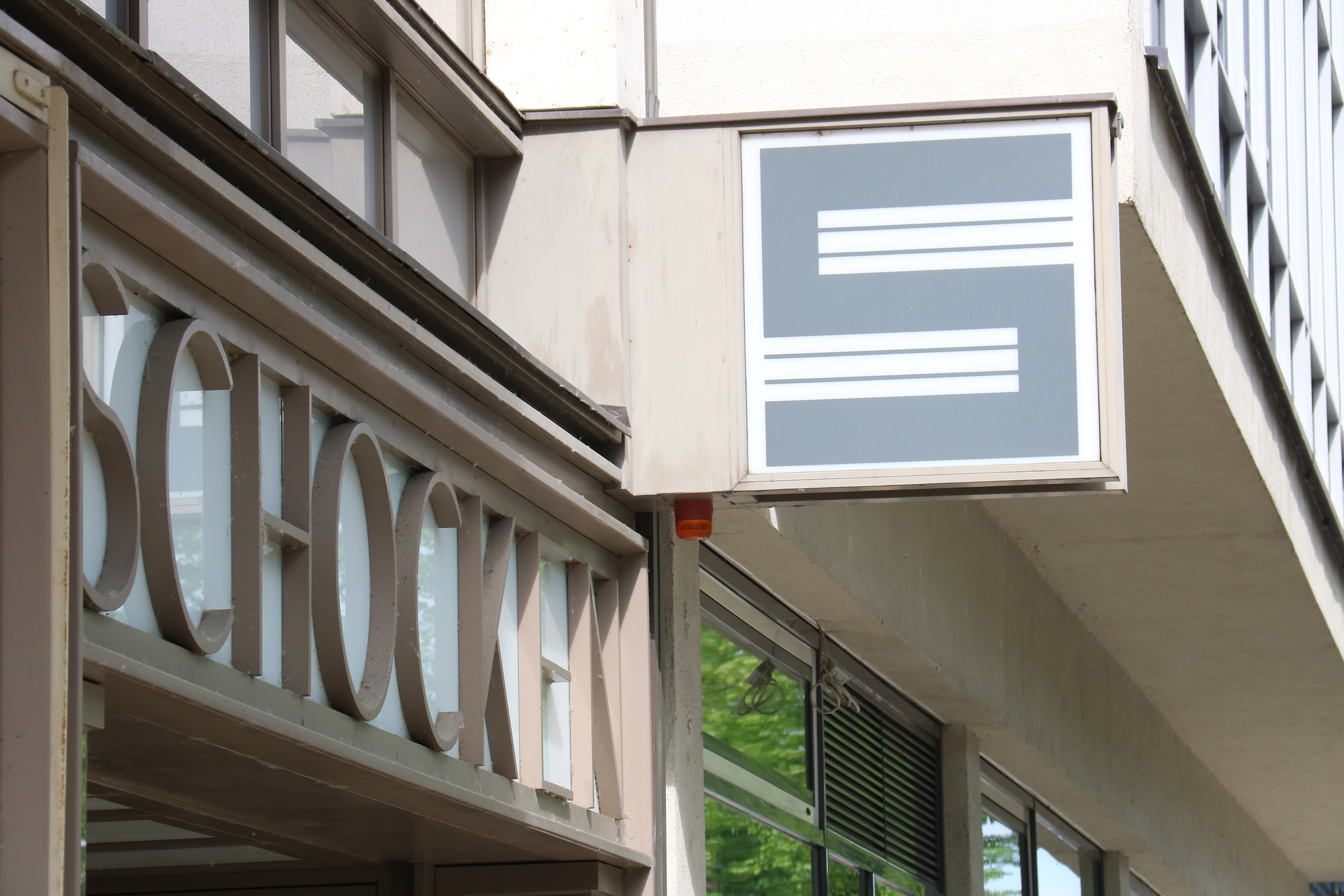
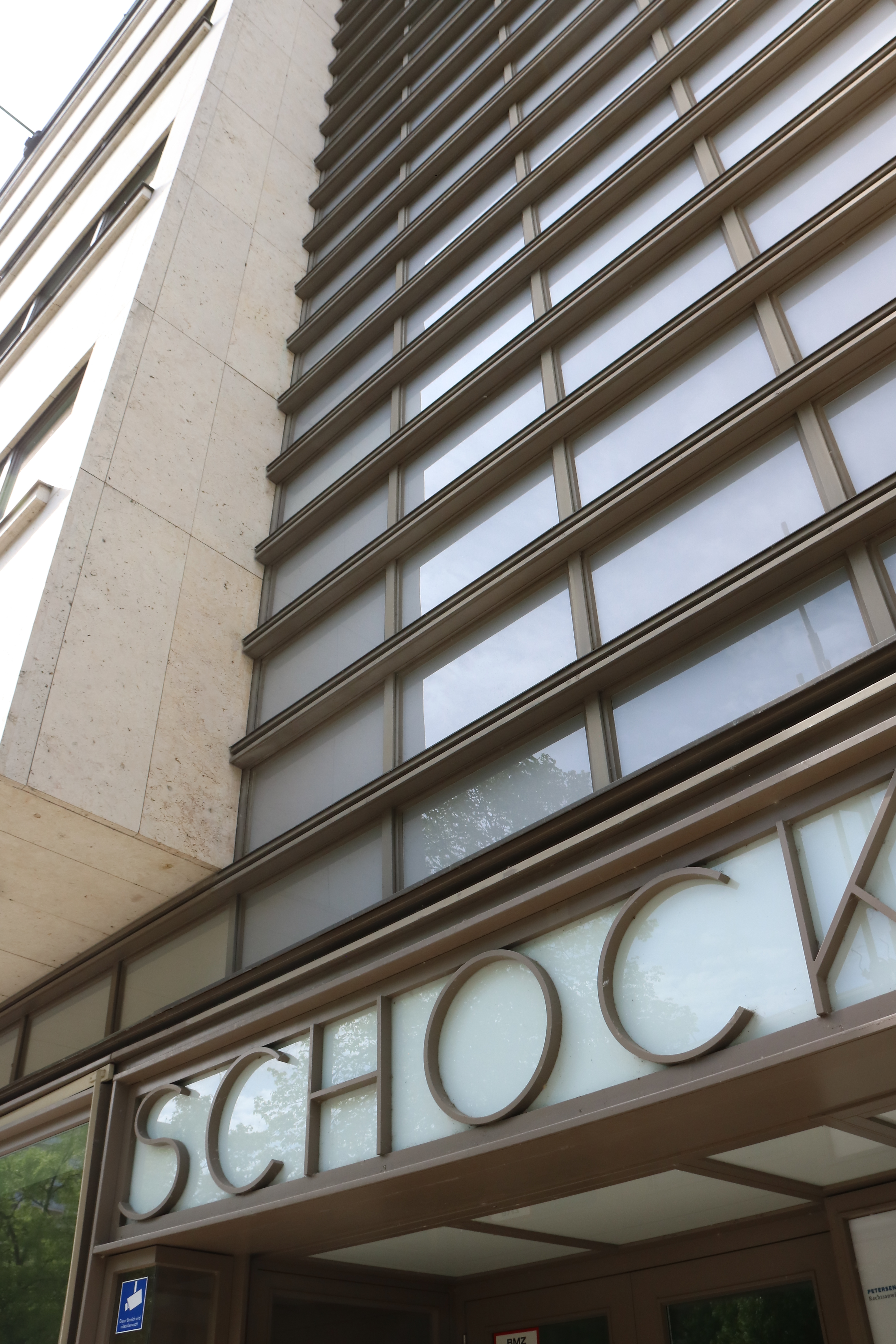
Ein quadratisch gestaltetes „S“ zierte bis 1938 die Werbebroschüren der Schocken-Kaufhäuser in Zwickau, Chemnitz und vielen anderen deutschen Städten; ein „ש“ wurde als hebräisches Pendant Ende der 1930er Jahre das Signet des Schocken-Verlags in Jerusalem/Tel Aviv und, wieder als geometrisches „S“, nach 1945 das Erkennungszeichen von Schocken Books New York. „S.“ stehe für „Betrieb und Idee ‚Schocken‘“, konstatierte bereits 1932 der Journalist Hans Siemsen – und legte damit die Fährte, ein Prinzip in der großen Vielfalt der Aktivitäten Salman Schockens zu suchen.
Ausgehend von einem 1907 begründeten Geschäft in Zwickau baute Schocken mit seinem Bruder Simon eine der modernsten Kaufhausketten der Weimarer Republik auf. Er unterstützte Kultureinrichtungen, jüdische Literatur und Forschung, erwarb Bücher, Kunst und Autographen, förderte die Entwicklung der Hebräischen Universität Jerusalem und gründete schließlich 1931/32 mit dem Schocken-Verlag Berlin einen der wichtigsten jüdischen Verlage während des Nationalsozialismus. 1938 brach dieses Leben in Deutschland mit dem erzwungenen Verkauf des Konzerns und der Abwicklung des Verlags ab – und setzte sich in Jerusalem und New York unter völlig anderen Bedingungen fort.
Teilansichten der letzten Bauten des Schocken-Konzerns (ca. 1930) – Schocken Archive, JTS Schocken Institute for Jewish Research, Jerusalem
Das Archiv, das all dies dokumentiert, rettete Schocken nach Jerusalem. Es bildet heute einen der bedeutendsten und umfangreichsten erhaltenen Archivbestände zur jüdischen Geschichte Deutschlands, speziell Sachsens vor 1945 und ihrer Weiterentwicklung nach dem 2. Weltkrieg. Schockens Wirken zeichnete sich durch enge Verbindungen zwischen einzelnen Tätigkeitsfeldern aus, d.h. durch das Zusammendenken von Ökonomie, Sozialem, Kunst und Literatur. Das DI wird diesen Zusammenhang mit der Forschungsstelle Judentum der Universität Leipzig entlang der Geschichte und der Wissensordnungen des translozierten Archivs herausarbeiten.
Das Projekt basiert auf einer langfristigen Zusammenarbeit zwischen dem Dubnow-Institut, dem JTS Schocken Institute for Jewish Reseach und der Familie Schocken.