
Mati Shemoelof ist Autor und Kurator und lebt in Berlin
»Ich glaube weiterhin, dass ein friedliches Zusammenleben möglich ist«
Interview mit dem arabisch-jüdischen Autor Mati Shemoelof in/auf iz3W
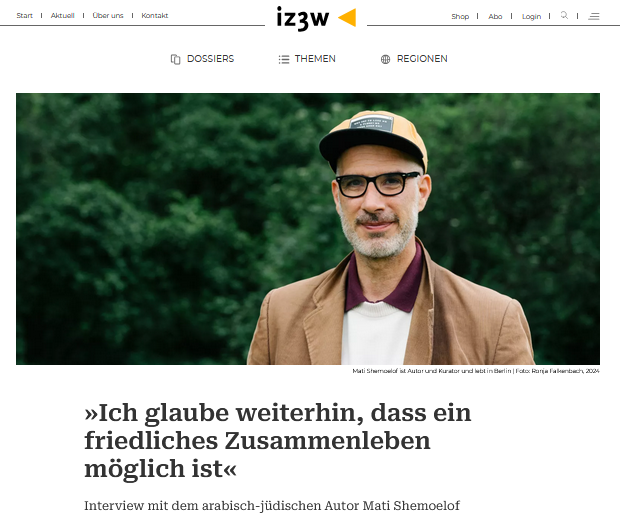
Mati Shemoelof ist Autor und Kurator und lebt in Berlin
Interview mit dem arabisch-jüdischen Autor Mati Shemoelof in/auf iz3W
Aus der musikalischen Tradition der Judentums in Marokko hat der israelische Künster Amit Hai Cohen zusammen mit dem Piyut Ensemble und weiteren Künstler:innen eine beeindruckende Performance geschaffen… [wer ein wenig gedanklich in West-Jerusalem unterwegs ist, wird die Brücke über die Derek Hebron/Tareek al-Khalil in Talpioth, nahe der britischen Pill-Box erkennen, über die hier u.a. getanzt wird…]
Bittere Wirklichkeiten …
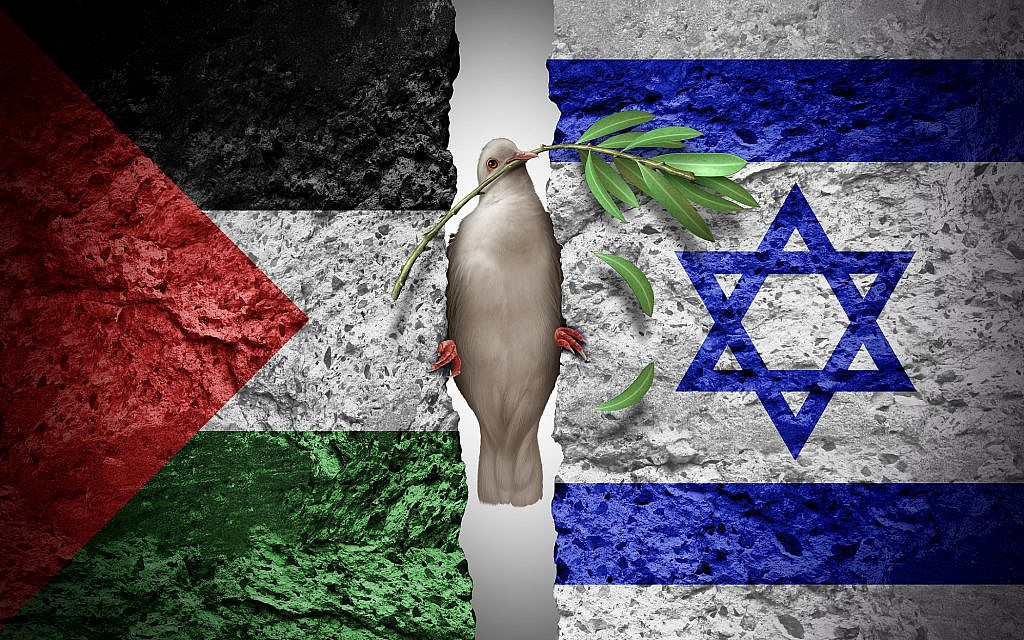
Aus dem heutigen (18. August) Blog der ToI (Times of Israel)
Hüte, Haare, Haut – Köpfe in Jerusalem … –
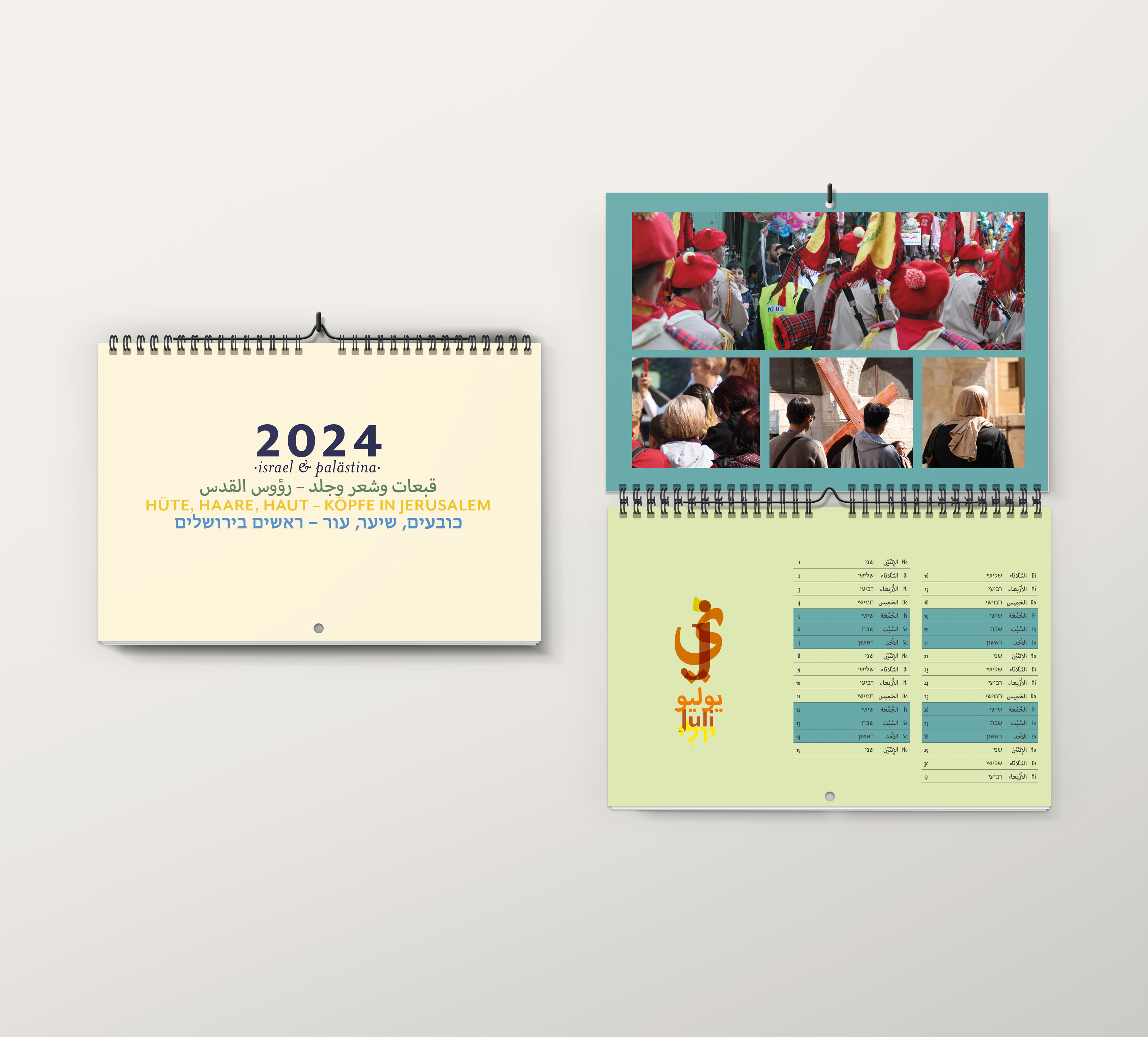
Ein Begleiter durch das Jahr 2024 – Mit Photos von Bärbel Doering

Photos: Doering
israel & palästina – Zeitschrift für Dialog | Ausgabe 4-2023
Es ist das neunte Mal, daß im Rahmen von israel & palästina | Zeitschrift für Dialog ein Photobegleiter in Kalenderform für das kommende Jahr erscheint: Hüte, Haare, Haut – Köpfe in Jerusalem, dieses Thema war schon lange festgelegt …
Das Thema begleitet uns dieses Jahr, auch wenn die täglichen Nachrichten einen eher verzweifeln lassen und sich die Frage, war unter den Hüten, den Haaren eigentlich steckt … schon naheliegt …
Hüte, Haare, Haut – Köpfe in Jerusalem … (2024)

Und der Nachtrag vom Juli 2024
Where Olive Trees Weep offers a searing window into the struggles and resilience of the Palestinian people under Israeli occupation. It explores themes of loss, trauma, and the quest for justice.
We follow, among others, Palestinian journalist and therapist Ashira Darwish, grassroots activist Ahed Tamimi, and Israeli journalist Amira Hass. We also witness Dr. Gabor Maté offer trauma-healing work to a group of women who were tortured in Israeli prisons.
Ancient landscapes bear deep scars, having witnessed the brutal reality of ancestral land confiscation, expulsions, imprisonment, home demolitions, water deprivation, and denial of basic human rights. Yet, through the veil of oppression, we catch a glimpse of resilience—deep roots that have carried the Palestinian people through decades of darkness and shattered lives.
This emotional journey bares the humanity of the oppressed while grappling with the question: what makes the oppressor so ruthlessly blind to its own cruelty?

Auszeichnung für Berliner Gastronome
Die Betreiber des israelisch-palästinensischen Restaurants „Kanaan“ in Berlin (Prenzlauer Berg), Jalil Dabit und Oz Ben David, erhalten den diesjährigen Moses-Mendelssohn-Preis des Landes Berlin. Das gab die Senatsverwaltung für Kultur und Gesellschaftlichen Zusammenhalt bekannt.

Ermordung der letzten überlebenden Sinti und Roma im Vernichtungslager Auschwitz-Birkenau durch die SS.

„Wir rufen Euch auf zum gemeinsamen Protest für den Erhalt unseres Denkmals für die im Nationalsozialismus ermordeten Sinti und Roma Europas!
Unser Denkmal ist durch den geplanten Bau einer S-Bahnlinie massiv bedroht.
Dieses Denkmal hat für uns eine große Bedeutung: Es erinnert an den Völkermord an Rom:nja und Sinti:zze, der über 500.000 Menschen das Leben kostete. Einige Historiker:innen schätzen die Opferzahl sogar auf 1,5 bis 2 Millionen Menschen. Für Nachkommen der Verfolgten, wie uns, ist es ein Ort der Anerkennung dieses Verbrechens und ein wichtiges Mahnmal gegen heutigen Rassismus. Es hat eine zentrale Funktion in der Erinnerungskultur, besonders angesichts des wieder erstarkenden Rassismus in Deutschland.
Die geplanten Baumaßnahmen werden das Denkmal erheblich beeinträchtigen durch: die Abholzung zugehöriger Bäume, Störung durch Emissionen und Lärm, der Beeinträchtigung des charakteristischen Geigentons, mehrmonatige Schließung für Umbauarbeiten, langfristige Veränderung der Umgebung, da voraussichtlich keine Wiederanpflanzung großer Bäume möglich sein wird.
Dank des unermüdlichen Engagements unserer Selbstorganisationen und solidarischer Zivilgesellschaft wurde 2012 unser Denkmal endlich nach Jahrzehnten der Leugnung des Völkermords und Verweigerung des Gedenkens eingeweiht. Nun bedrohen
massive Eingriffe die Integrität des Denkmals und damit die Erinnerung an den an Rom:nja und Sinti:zze begangenen Völkermord. Die Beeinträchtigung des Denkmals kommt einer Rücknahme der hart erkämpften Anerkennung unseres Leids gleich!
Besonders erschütternd ist die Tatsache, dass ausgerechnet die Deutsche Bahn den Auftrag erhält, unser Denkmal zu schädigen. Dies ist umso empörender, als dass die Deutsche Reichsbahn, Vorgängerorganisation der heutigen Deutschen Bahn, während der NS-Zeit an der massenhaften Deportation unserer Menschen Blutgeld verdient hat. Diese historische Verantwortung wird durch die geplanten Baumaßnahmen völlig missachtet.“
Das Theaterstück „Die Ermittlung“ von Peter Weiss (erstmals erschienen 1965) wurde gerade verfilmt – ein Hybrid aus Theater und Kino über den ersten Frankfurter Auschwitzprozeß.
Eine Würdigung und Empfehlung von Walli Müller auf NDR.de
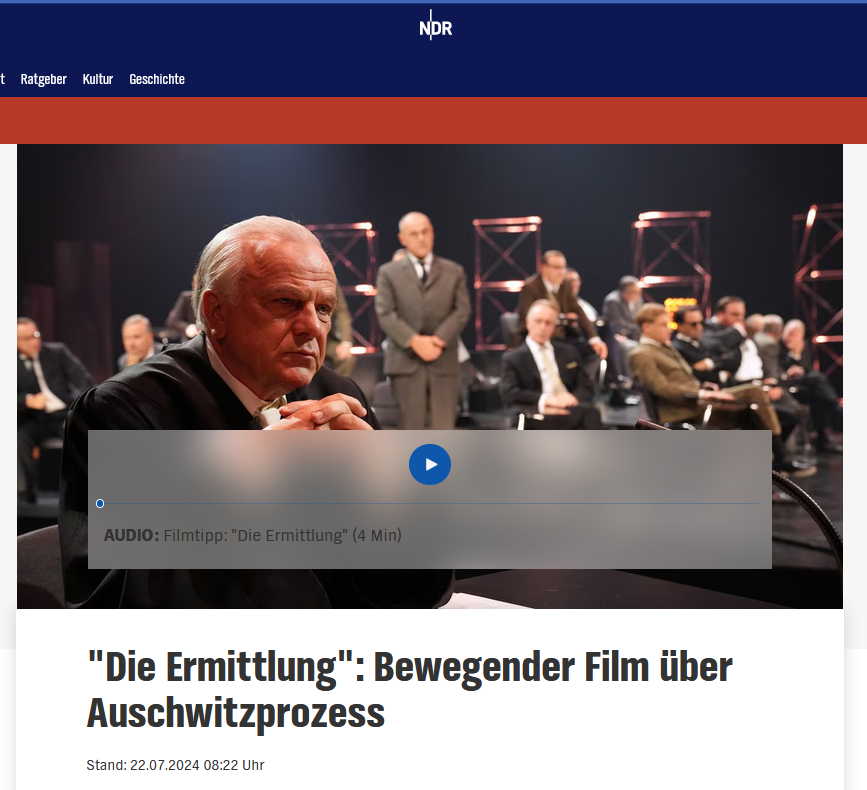
Kinostart am 25. Juli 2024
***
Ergänzung 29. Juli 2024
Filmkolumne von Tilman Schumacher (Perlentaucher)
Kooperationsprojekt der Staatsbibliothek mit dem Deutschen Zentrum Kulturgutverluste: „Das Zentralantiquariat der DDR: Verkaufswege. Empfänger. Provenienzen“
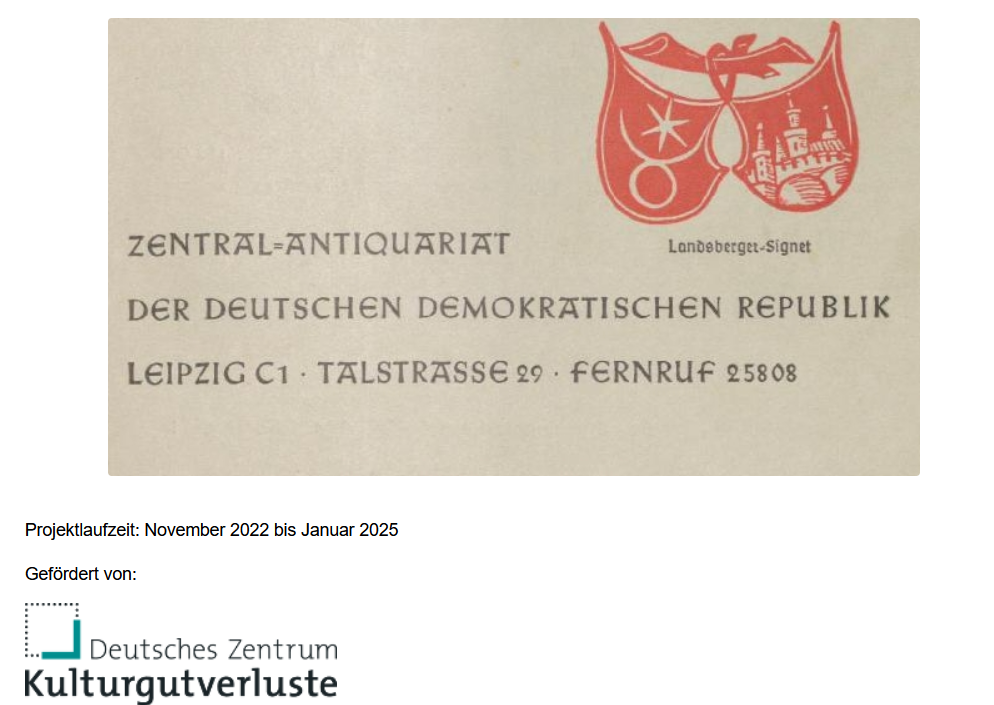
Das 1959 gegründete Zentralantiquariat der DDR (ZA) spielte bei der Fragmentierung und Verteilung historisch gewachsener öffentlicher und privater Buchsammlungen eine zentrale Rolle. Das ZA hatte als Handelsunternehmen Devisen für die DDR zu erwirtschaften. Zu diesem Zweck verkaufte es Buchbestände in das – nach DDR-Sprachgebrauch – Nichtsozialistische Wirtschaftssystem (NSW), insbesondere in die Bundesrepublik, nach Schweden, in die Niederlande und in die Schweiz. Die Verkäufe des ZA erfolgten über die Deutsche Buch-Export und -Import GmbH (ab 1971/1972 Außenhandelsbetrieb Buchexport) meist an als Zwischenhändler fungierende Antiquariate im sog. NSW, so dass relevante Erwerbungen in Bibliotheken nur schwer nachvollziehbar sind. …
Mehr Infos:
